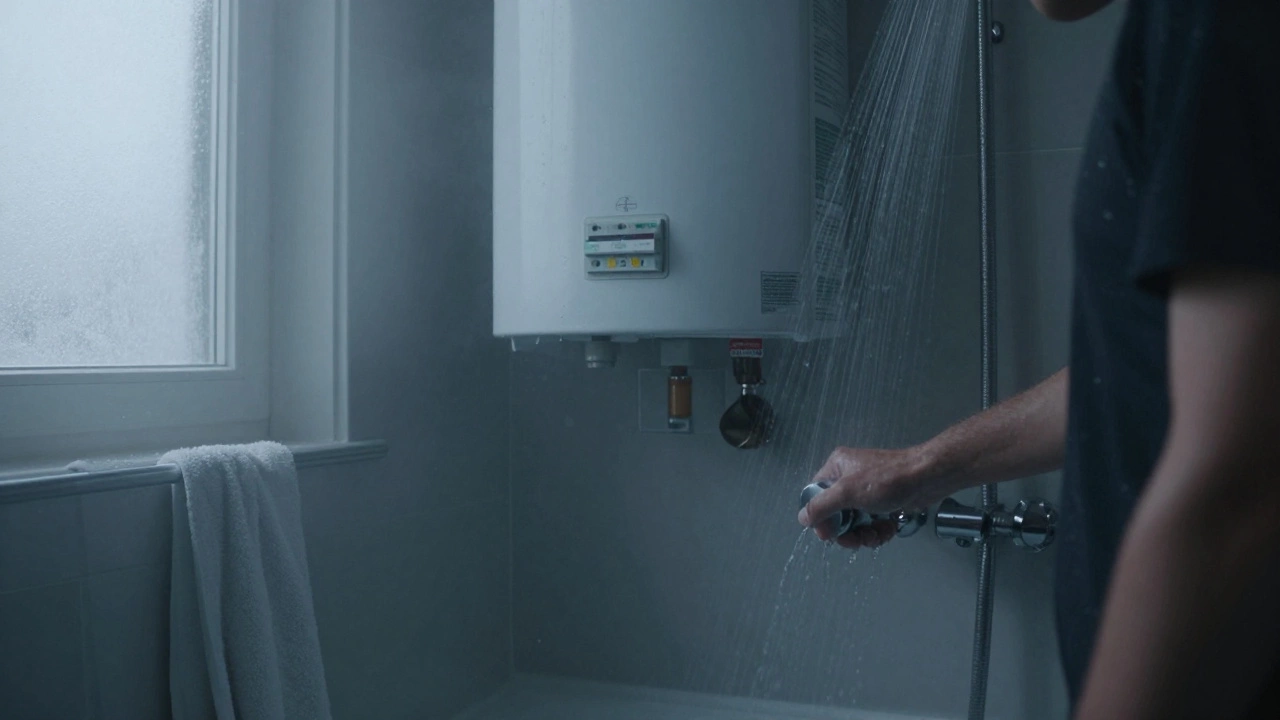
It’s a cold Dunedin morning. You step into the shower, turn the knob, and nothing but icy water comes out. Your coffee’s cold. Your dishes are piled up. And now you’re stuck wondering: what can I do when my water heater is not working? Before you panic-call a plumber, try these simple steps. Most water heater problems aren’t emergencies - they’re fixable with a little know-how and maybe 15 minutes of your time.
Check the power first
If you’ve got an electric water heater, the simplest fix is often the most overlooked: is it even getting power? Look at your circuit breaker panel. Find the breaker labeled "Water Heater" or "Hot Water." If it’s tripped - meaning the switch is in the middle or off position - flip it fully off, then back on. You’ll hear a click. That’s it. Sometimes, a power surge or a loose connection trips it. This fixes 30% of no-hot-water calls in winter months, especially in older homes with aging wiring.
Don’t just assume the breaker is fine. Test it. Flip it off and on again. If it trips right back, stop. That means there’s a short circuit or a faulty heating element. Don’t keep resetting it. Call a professional. But if it stays on, give it an hour. Electric heaters take time to reheat a full tank.
Check the thermostat settings
It’s easy to accidentally turn the temperature down. Maybe a kid fiddled with it. Maybe you turned it low to save energy and forgot. Most water heaters are set to 60°C by default. That’s hot enough to kill bacteria but not so hot it scalds. If yours is set below 50°C, you’ll get lukewarm water at best.
On electric models, the thermostat is usually behind a panel on the side of the tank. Turn off the power before removing the cover. You’ll see two dials - one for the upper element, one for the lower. Both should be set to 60°C. If one is lower, adjust it. Then restore power and wait. If your heater is gas-powered, the thermostat is at the bottom, near the gas valve. Turn the dial to "Medium" or "High" and wait 30-60 minutes.
Reset the high-limit switch
Electric water heaters have a safety feature called a high-limit switch. If the water gets too hot - say, because a thermostat failed - this switch cuts power to prevent overheating or explosion. It’s designed to reset manually. You’ll find it as a red button, usually near the top thermostat on electric models. Press it firmly. You should hear a click. Then wait an hour for the water to reheat.
This reset button trips often in older units, especially if the heating elements are failing or if there’s heavy sediment buildup. If you’re resetting it more than once a month, your heater is signaling it’s nearing the end of its life.
Look for leaks or puddles
If you see water pooling around the base of your water heater, that’s a red flag. A small drip from a valve or pipe might be fixable. But if the tank itself is leaking, it’s done. Water heaters last 8-12 years. If yours is older than 10, a leak usually means corrosion has eaten through the steel lining. No patch will fix that.
Check the temperature and pressure relief valve (TPR valve). It’s the copper pipe sticking out the side near the top. If water is dripping from it constantly, that’s not normal. The valve might be faulty, or your water pressure is too high. Test it by lifting the lever briefly. If water shoots out and then stops, it’s working. If it keeps dripping after you let go, replace it. You can buy one at any hardware store for under $30.
Flush out the sediment
Hard water leaves behind minerals - calcium, magnesium - that sink to the bottom of your tank. Over time, this sludge builds up. It insulates the heating element from the water, so the heater works harder, uses more power, and heats slower. In Dunedin, where water is moderately hard, this is a common cause of lukewarm showers after a few years.
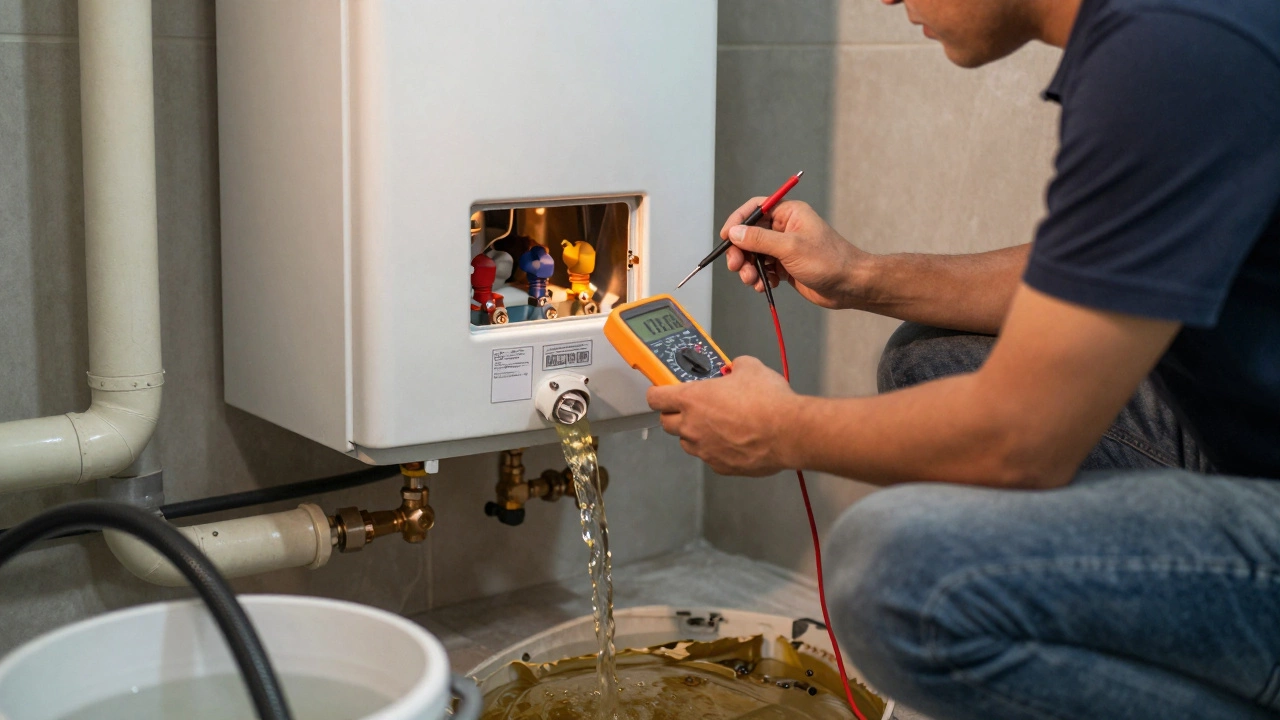
Flushing the tank takes about 30 minutes. Turn off the power or gas. Close the cold water inlet valve. Attach a garden hose to the drain valve at the bottom. Run the other end to a floor drain or outside. Open the drain valve and let it flow until the water runs clear. Don’t rush it. If the water comes out brown or gritty, keep going. Do this once a year. It can extend your heater’s life by 3-5 years.
Test the heating elements (electric only)
If you’ve got power, the thermostat is set right, and you’ve reset the switch - but still no hot water - the heating elements might be dead. Electric heaters have two: one at the top, one at the bottom. If the top one fails, you get a little warm water. If the bottom one fails, you get cold water after the top layer runs out.
To test them, you need a multimeter. Turn off the power. Drain a few liters of water to lower the level below the elements. Remove the access panels and insulation. Set your multimeter to ohms (Ω). Touch the probes to the terminals on each element. A reading between 10-16 ohms means it’s good. Zero or infinite resistance means it’s dead. Replace both at the same time - if one failed, the other is close behind. Parts cost around $50 each. If you’re not comfortable with electrical work, call a technician.
Check the pilot light (gas heaters)
If you’ve got a gas water heater and no hot water, the pilot light might be out. Look at the front of the unit. There’s usually a small window or a dial with "On, Off, Pilot." Turn the dial to "Pilot." Press and hold it down. Use a long lighter or match to ignite the pilot. Keep holding for 30 seconds after it lights. Then release. If it stays lit, turn the dial to "On." If it goes out again, the thermocouple is faulty.
The thermocouple is a thin metal rod next to the pilot flame. It senses heat and keeps the gas valve open. If it’s dirty or broken, the gas shuts off. Clean it gently with sandpaper. If that doesn’t work, replace it. They cost $20-$40 and are easy to swap. Just match the model number when buying.
When to call a professional
Some problems need a licensed plumber or electrician. Call one if:
- The circuit breaker trips repeatedly
- You smell gas (leave the house immediately and call your gas provider)
- The tank is leaking from the body, not a valve
- You’ve tried all the fixes and still no hot water
- Your heater is over 12 years old
Don’t wait until your water heater bursts. Old tanks can fail suddenly, flooding your laundry or garage. If yours is nearing 10 years, start thinking about replacement. Modern units are 20-30% more efficient. You’ll save on bills and avoid the stress of a breakdown.
Prevent future issues
Here’s what you can do to avoid another cold shower:
- Flush the tank once a year
- Set the thermostat to 60°C - not higher
- Install a water softener if you have hard water
- Check the TPR valve every six months
- Replace the anode rod every 3-5 years (it protects the tank from rust)
Keeping your water heater maintained isn’t just about comfort. It’s about safety. A poorly maintained heater can overheat, leak, or even explode in rare cases. Regular care costs less than a single emergency call.
Why is my water heater making strange noises?
Sizzling, popping, or rumbling sounds usually mean sediment has built up at the bottom of the tank. Water gets trapped under the sludge and boils, creating noise. Flushing the tank will fix this. If the noise continues after flushing, the heating element may be damaged and needs replacing.
How long should hot water last in a typical household?
A standard 120-litre tank should provide 30-45 minutes of hot water for showers, depending on usage. If you’re running out in under 10 minutes, the tank may be too small, the heating elements are failing, or sediment is blocking heat transfer. Upgrading to a 160-litre tank or switching to a continuous-flow system can solve this.
Can I replace my water heater myself?
If you’re handy with tools and understand plumbing and electrical safety, yes - you can replace it yourself. But in New Zealand, gas water heaters must be installed by a licensed gasfitter. Electric models can be DIY if you turn off the power and follow local regulations. Always check with your local council before replacing a water heater - permits may be required.
Is it worth repairing an old water heater?
If your heater is over 8 years old and you’re spending more than $200 on repairs, it’s usually better to replace it. Newer models are more efficient, quieter, and come with longer warranties. A 10-year-old heater using 20% more electricity than a new one adds up to hundreds in wasted energy each year.
What’s the difference between electric and gas water heaters?
Electric heaters are easier to install and cheaper upfront, but cost more to run. Gas heaters heat water faster and are cheaper to operate, especially in winter. However, they need proper ventilation and a gas line. In Dunedin, where winters are long and damp, many homeowners choose gas for faster recovery and lower running costs.
Final thoughts
Water heater trouble is stressful, but rarely hopeless. Most issues are simple fixes you can handle yourself. Start with the basics: power, thermostat, reset button. Then move to flushing, testing elements, or relighting the pilot. If you’re unsure, don’t guess - call someone who knows. A little effort now saves a flooded floor later. And if your heater’s older than a decade, consider upgrading. You’ll save money, get better performance, and never have to shiver through another cold shower again.