
Fridge Repair vs. Replace Cost Calculator
Estimated Repair Cost
$0It’s 2:00 AM. You open the fridge for a glass of water, and the light is on, but the air feels warm. That sinking feeling in your stomach is real. Food spoilage costs can hit hard fast, especially if you’ve got a week’s worth of groceries inside. But before you panic or book an emergency call-out, let’s figure out what actually happened. Most sudden fridge failures aren’t mysterious mechanical ghosts; they’re usually one of a few specific components giving up the ghost.
Understanding why your refrigerator is a household appliance that uses a vapor-compression cycle to keep food cold by circulating refrigerant through a sealed system failing helps you decide whether this is a DIY fix or a job for a pro. In my experience fixing appliances here in Dunedin, about 40% of "dead" fridges are just clogged coils or tripped breakers. The other 60% involve electrical components like the compressor is the motor-driven pump that circulates refrigerant gas, creating pressure differences essential for cooling or the control board. Here is how to diagnose the problem step-by-step, starting with the simplest causes.
The Quick Check: Power and Settings
Before touching any screws, check the basics. It sounds obvious, but it saves hundreds of dollars in unnecessary service calls. First, look at the display panel. If it’s completely black, there’s no power reaching the unit. Check the wall outlet. Is the plug firmly seated? Try plugging in a lamp or phone charger. If that doesn’t work, go to your fuse box. Look for a tripped breaker labeled "Kitchen" or "Fridges." Reset it if it’s flipped off. If the breaker trips again immediately, you have a short circuit, likely in the cord or the internal wiring, which requires a technician.
If the display is on but the fridge isn’t cold, check the temperature settings. Sometimes, a bump against the door or a child playing with the buttons resets the thermostat to "Eco" mode or turns off the cooling function entirely. On modern units, the thermostat is a sensor and controller that monitors internal temperature and signals the compressor when to turn on or off might be set too high. Set the fridge to around 3-4°C (37-39°F) and the freezer to -18°C (0°F). Wait two hours. If nothing changes, move to the next step.
The Silent Killer: Dirty Condenser Coils
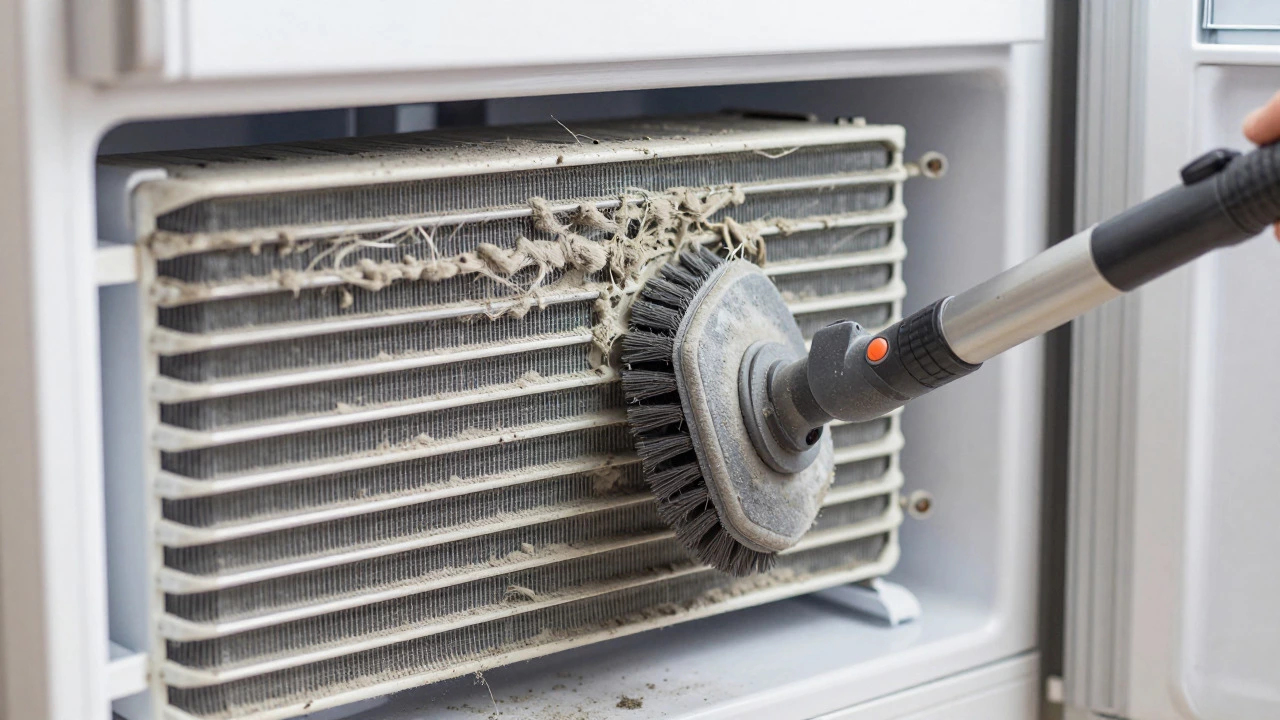
This is the most common reason for a gradual loss of cooling that suddenly becomes total. Your fridge has a condenser coil, usually located behind the kick plate at the bottom or on the back of the unit. This coil releases heat from the refrigerant into the room air. When dust, pet hair, and debris build up over months, the coil can’t release heat efficiently. The compressor works harder and harder, eventually overheating and shutting down to protect itself.
You can check this easily. Pull the fridge away from the wall (unplug it first!). Look at the coils. If they look like a gray blanket of fuzz, they need cleaning. Use a vacuum cleaner with a brush attachment to suck up the loose dirt. For stuck-on grime, use a coil comb tool and a damp cloth. Avoid using compressed air, as it can push dirt deeper into the fins. After cleaning, plug the fridge back in and listen. If the compressor kicks on and stays running, you’ve solved the problem. This maintenance task should be done every six months, especially if you have pets.
Electrical Components: Start Relays and Capacitors
If the fridge is quiet-no humming, no fan noise-but the compressor isn’t running, the issue is often electrical. The compressor needs a jolt of extra voltage to start spinning. This comes from the start relay is an electromechanical device that provides the initial torque needed to start the compressor motor and the run capacitor is a component that maintains the current flow to the compressor motor once it is running. These parts are cheap and easy to replace if you’re comfortable with basic tools.
Locate the compressor at the bottom rear of the fridge. You’ll see a small cylindrical or block-like component attached to it. That’s the start relay. Tap it gently with a screwdriver handle. If it makes a clicking sound, it might be stuck. Unplug the fridge and remove the old relay. Take it to a hardware store to get an exact match. Installation takes five minutes. If the relay looks burnt or melted, it definitely needs replacing. The run capacitor looks similar but is usually larger. Test it with a multimeter if you have one; if it reads below its rated microfarads, it’s dead. Replacing these two parts fixes roughly 20% of non-cooling fridge issues.
The Expensive One: Compressor Failure
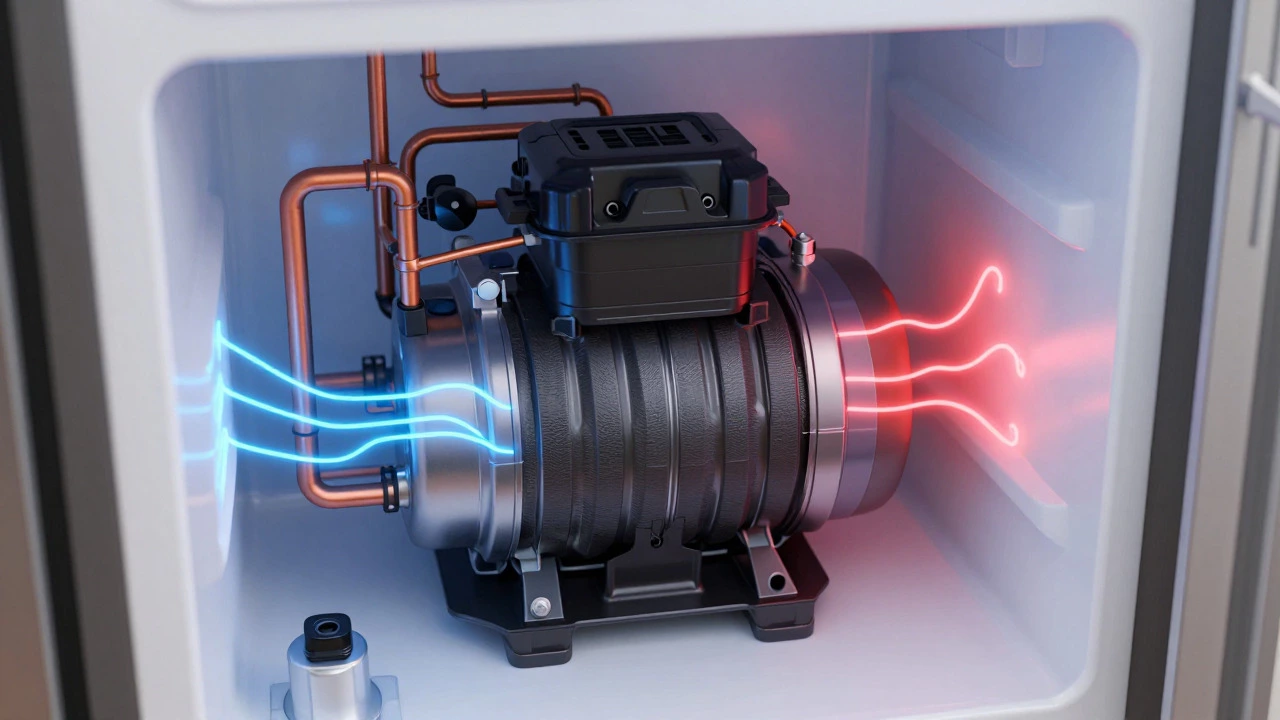
If the compressor hums loudly but the fridge stays warm, or if it clicks repeatedly without starting, the compressor itself may be failing. The compressor is the heart of the refrigeration system. It pumps refrigerant through the system. When it dies, the fridge stops cooling completely. Signs include excessive heat radiating from the compressor area, strange rattling noises, or a smell of burning oil. A failed compressor is expensive to replace because it also requires evacuating and recharging the refrigerant system, which must be done by a certified technician due to environmental regulations.
Is it worth repairing? If your fridge is less than 8 years old and otherwise in good condition, yes. If it’s older than 10 years, compare the repair cost (often $500-$800 NZD plus labor) to the price of a new energy-efficient model. Newer models use significantly less electricity, so the savings can offset the purchase price within a few years. Before calling a tech, confirm the diagnosis. A technician will use a multimeter to check for continuity in the compressor windings. If there’s no continuity, the compressor is shot.
Airflow Blockages and Fan Issues
Cooling doesn’t happen in a vacuum. Air needs to circulate. If the evaporator fan in the freezer section fails, cold air won’t reach the fresh food compartment. You might notice frost buildup on the back wall of the freezer while the fridge section stays warm. Listen for the fan. If it’s silent, it could be blocked by ice or the motor could be dead. Defrosting the freezer manually (unplug, leave doors open for 24 hours) can clear ice blockages. If the fan still doesn’t spin after defrosting, the motor or its wiring is faulty. This is a moderate-difficulty repair involving removing panels and accessing the interior mechanics.
Also check the air vents. Many fridges have adjustable vents between the freezer and fridge sections. If they’re closed or blocked by food containers, airflow stops. Ensure there’s at least 2 inches of space between food and the back wall. Overloading shelves blocks airflow, forcing the compressor to run constantly. Rearrange your food to allow air to circulate freely. Simple adjustments like this can restore cooling performance without any parts replacement.
| Symptom | Likely Cause | Fix Difficulty | Estimated Cost (NZD) |
|---|---|---|---|
| No power, dark display | Tripped breaker, loose plug, failed main board | Easy to Moderate | $0 - $300 |
| Warm fridge, loud compressor | Dirty condenser coils | Easy | $0 (DIY) |
| Compressor clicks, no start | Failed start relay or capacitor | Moderate | $50 - $150 (parts + labor) |
| Frost in freezer, warm fridge | Evaporator fan failure or ice blockage | Moderate | $100 - $250 |
| Total silence, no cooling | Compressor failure | Hard (Pro only) | $500 - $800+ |
When to Call a Professional
Know your limits. If you’re not comfortable working with low-voltage electricity or handling refrigerant lines, call a professional. Refrigerant leaks are hazardous and require specialized gauges to detect and recharge. Also, if your fridge is under warranty, check the terms. DIY repairs might void the warranty. A licensed technician can diagnose complex electronic faults on the control board, which is often cheaper to replace than to repair. In Dunedin, humidity can affect electronics, so corrosion on terminals is a known issue. A pro can clean and treat these connections to prevent future failures.
Prevention is always better than cure. Clean the coils twice a year. Check the door seals monthly by closing a piece of paper in the door; if it pulls out easily, the seal is worn and needs replacing. Keep the fridge level so the door closes properly. And don’t overload it. These simple habits extend the life of your appliance by years, saving you from the stress of a sudden breakdown.
How long should I wait after resetting the breaker before checking if the fridge works?
Wait at least 15 minutes. The compressor has a built-in delay timer to prevent immediate restarts after a power outage. If you plug it in too soon, it might trip the breaker again. Give it time to cool down and reset its internal logic.
Can I use a hair dryer to melt ice on the evaporator fan?
Yes, but carefully. Use the cool setting or low heat, keeping the dryer moving to avoid melting the plastic housing. Never use boiling water or sharp objects, as they can damage the aluminum fins on the evaporator coil, causing a refrigerant leak.
What does it mean if the fridge compressor runs constantly but the fridge is still warm?
This usually indicates a low refrigerant charge or a failing compressor. The system is trying to compensate for lost cooling capacity. This requires a professional to check the pressure levels and inspect the compressor for wear.
Is it worth repairing a 12-year-old fridge?
Generally, no. If the repair cost exceeds 50% of the price of a new model, consider replacing it. Older models are less energy efficient, so the electricity savings from a new unit can pay for itself within 3-5 years, depending on usage.
Why does my fridge make a loud buzzing noise but still cools?
This is often caused by a loose wire touching the metal chassis or a vibrating compressor mount. While it may still cool, the vibration can loosen connections over time, leading to failure. Tighten any loose screws or pads near the compressor to stop the noise.