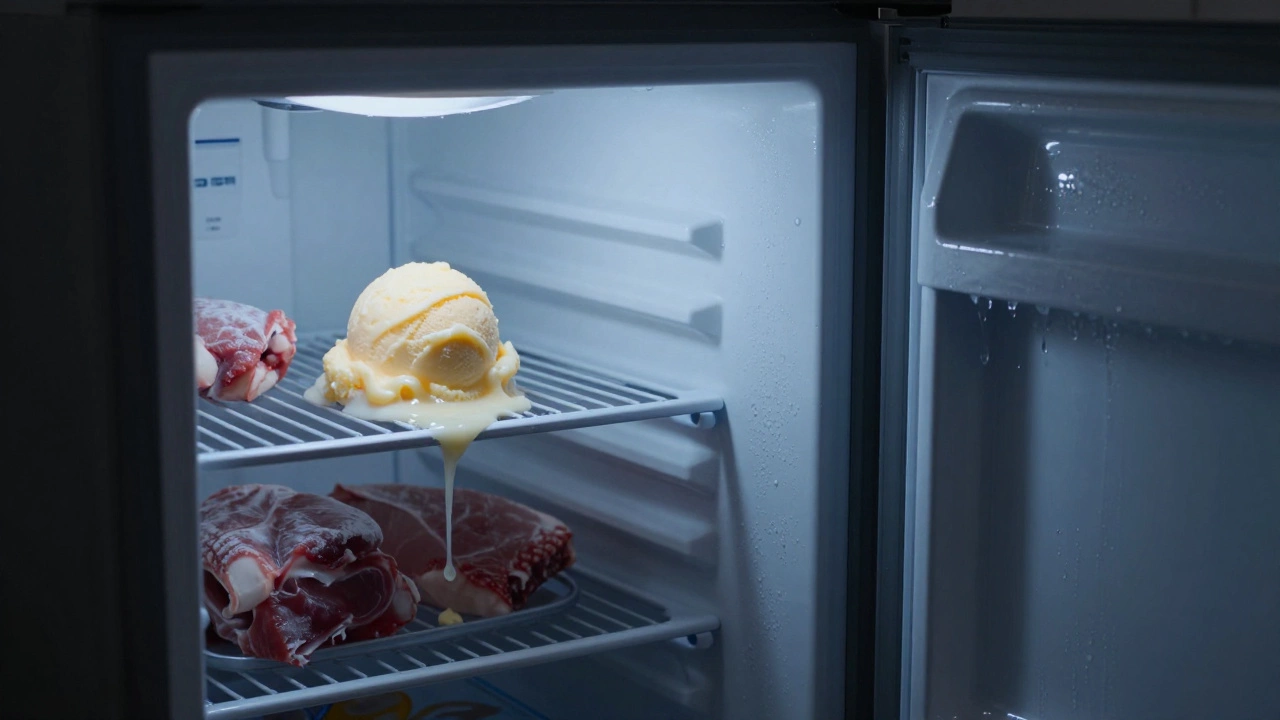
It’s 3 a.m. You wake up because the fridge light is on, but the freezer feels warm. You open the door - and your ice cream is soft. Your meat’s thawing. Your frozen veggies? Gone. You didn’t hear a noise. No warning. One minute it was fine, the next - nothing. Why would a freezer suddenly stop working?
Power issues are the easiest to check - and often the culprit
Before you panic, unplug the freezer and plug it back in. Sounds silly? It’s not. A loose connection, a tripped breaker, or a blown fuse can kill power without warning. In Dunedin, where winter storms knock out power more than you’d think, a brief outage can leave your freezer dead for hours. Even if the light inside turns on, the compressor might not be getting full voltage. Check the outlet with another device. If it’s on a GFCI circuit (common in garages or basements), reset the button. If the freezer still doesn’t kick on, the problem isn’t the power source - it’s inside.
The compressor is the heart - and it can fail without warning
If you hear nothing at all when the freezer should be running - no hum, no click - the compressor might be dead. This is one of the most common reasons a freezer stops working overnight. Compressors don’t usually wear out slowly. They just quit. Maybe the start relay fried. Maybe the motor windings burned. Maybe the refrigerant leaked out. You can’t fix a broken compressor yourself. But you can tell if it’s dead: unplug the unit, wait five minutes, plug it back in, and listen. If you hear a loud click but no humming after 30 seconds, the compressor isn’t starting. If you hear nothing, it’s likely gone. Replacing it costs between $400 and $800, depending on the model. For older freezers (over 10 years), it’s rarely worth it.
Thermostat failure - silent, simple, and often ignored
A faulty thermostat is one of the most common reasons a freezer stops cooling. It doesn’t always show signs. It just stops sending the signal to turn the compressor on. You might think the freezer is broken, but really, it’s just asleep. Test it: turn the temperature dial all the way to the coldest setting. Wait 10 minutes. If you still hear nothing, the thermostat is probably bad. Some models have a manual override switch. If yours does, flip it. If the compressor kicks on, you’ve found your problem. Replacing the thermostat costs under $50 and takes less than an hour. It’s one of the few freezer repairs you can do without calling a technician.
Dust and dirt are silent killers
Freezers don’t just need electricity - they need airflow. The condenser coils (usually on the back or bottom) get clogged with dust, pet hair, and lint. In a dusty garage or a home with shedding pets, this builds up fast. When coils are blocked, the freezer can’t release heat. It overheats. The safety switch shuts it down. Clean the coils every six months. Unplug the unit. Use a vacuum with a brush attachment. If you’ve got a coil on the bottom, pull the freezer out, get on your knees, and clean underneath. You’d be surprised how many people think their freezer is broken - when all it needed was a good vacuuming.
Defrost system failure - ice builds up, then everything stops
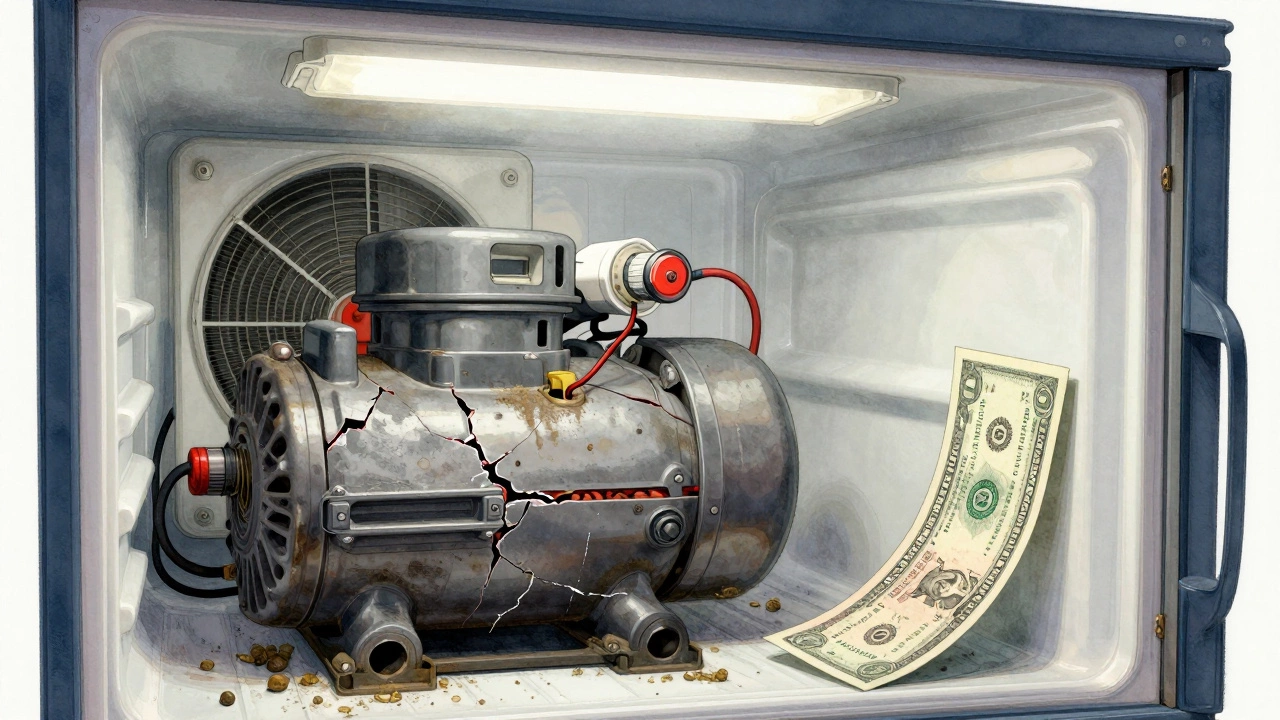
If your freezer is cold but not freezing, or if you see thick ice on the back wall, the defrost system is likely broken. Every freezer has a timer or electronic control that turns off the compressor every 6-12 hours to melt ice buildup. If that system fails, ice grows until it blocks the airflow. The freezer thinks it’s cold enough - but the cold air can’t reach the food. You’ll notice frost on the back wall, or water pooling under the unit. The fix? Replace the defrost heater, thermostat, or timer. Most models have a diagnostic mode - check the manual. If you’ve got a digital display, it might flash an error code. Code F2? That’s often the defrost sensor. Code D2? Defrost heater failure. You can replace these parts yourself if you’re handy. Parts cost $30-$70. Labor? $150 if you call someone.
Refrigerant leaks - rare, serious, and expensive
If the freezer was working fine, then suddenly stopped, and you notice oil around the pipes or a hissing sound, you’ve got a refrigerant leak. This is rare but serious. Freon and other refrigerants aren’t just coolant - they’re pressurized chemicals. A leak means the system has lost its ability to transfer heat. The compressor runs, but nothing gets cold. You can’t top it off like a car’s AC. The entire system must be evacuated, the leak sealed, and the refrigerant recharged. This costs $300-$600, and many technicians won’t touch old units because the refrigerant is phased out. If your freezer is more than 12 years old, this is usually the death knell.
Door seals aren’t glamorous - but they’re critical
Think about this: a cracked or warped door seal lets warm air in every time you open the door. Over time, that extra heat forces the compressor to run nonstop. Eventually, it overheats and shuts down. You might not notice the seal is bad until the freezer stops working. Test it: close the door on a dollar bill. Try to pull it out. If it slides out easily, the seal is weak. Replace it. Most seals cost $40-$80 and snap into place. It’s one of the cheapest fixes you can make.
What to do next - step-by-step
Here’s what to do if your freezer suddenly stops working:
- Unplug it. Wait 5 minutes. Plug it back in. Listen for a hum.
- Check the outlet with another device. Test the circuit breaker.
- Feel the back of the freezer. Is it hot? That means the compressor is running but can’t cool.
- Look inside. Is there thick ice on the walls? That’s a defrost issue.
- Check the door seal. Can you pull a dollar bill out easily?
- Listen. Is there a click but no hum? That’s likely the compressor or start relay.
- If none of this helps, call a technician - but ask if they’ll check the defrost system and compressor first.
When to replace - not repair
Here’s the hard truth: if your freezer is over 12 years old, and you’re facing a compressor or refrigerant leak, it’s time to replace it. Modern freezers use 40% less energy than models from 2010. A new chest freezer costs $500-$800. It’ll pay for itself in electricity savings within 3-4 years. Plus, you’ll get better temperature stability, quieter operation, and fewer surprises. Don’t throw money into an old machine that’s one breakdown away from being a paperweight.
Prevent future failures
Keep your freezer healthy:
- Clean the coils every 6 months.
- Check the door seal twice a year.
- Don’t overload it - air needs to circulate.
- Keep it in a cool, dry place. Garages in Dunedin get too cold in winter - that can cause the thermostat to misread.
- Set the temperature to -18°C. Anything colder wastes energy.
Freezers don’t usually die slowly. They go quiet. One moment, they’re doing their job. The next, they’re just a metal box. But most of the time, the problem isn’t mysterious. It’s simple. And often, fixable - if you know where to look.
Why would a freezer stop working suddenly without any warning?
A freezer can stop working suddenly due to several reasons: a tripped circuit breaker, a failed compressor, a broken thermostat, a clogged condenser coil, a faulty defrost system, or a refrigerant leak. Often, there’s no noise or warning - the unit just stops cooling. The most common cause is a failed start relay or a compressor that can’t engage. Checking power, cleaning coils, and testing the door seal are the first steps to diagnose the issue.
Can a freezer stop working if it’s too full?
Yes - but not directly. A freezer doesn’t stop working because it’s full. But if it’s packed so tight that air can’t circulate, the cold air gets trapped. The compressor runs longer to compensate, overheats, and shuts off. This can trigger a safety shutdown. Keep at least 20% of space open for airflow. Don’t stack bags or boxes against the back wall - that blocks the cooling vents.
Is it worth repairing a 15-year-old freezer?
Generally, no. Freezers older than 12 years use significantly more energy and have parts that are hard to find. A compressor replacement can cost $500-$800 - nearly the price of a new, energy-efficient model. New freezers are 40-50% more efficient. You’ll save $75-$120 a year on electricity. Plus, modern units have better temperature control and quieter operation. If it’s over 15 years old, replacement is almost always the smarter choice.
Can a power surge damage a freezer’s compressor?
Yes. A power surge - like from a lightning strike or faulty wiring - can fry the compressor’s start relay or the control board. This often happens without warning. If your freezer died right after a storm or a flickering light, that’s likely the cause. Installing a surge protector for major appliances can prevent this. It’s a $30 investment that can save you hundreds.
What does it mean if the freezer is cold but not freezing?
If the freezer is cold (say, 0°C) but not freezing (should be -18°C), the defrost system is likely failing. Ice builds up on the evaporator coils, blocking airflow. The compressor runs, but the cold air can’t reach the food. Check for thick frost on the back wall. If you see it, the defrost heater, thermostat, or timer is broken. Replacing one of these parts usually fixes it.