Tumble Dryer Diagnostic Tool
Follow the steps below. Click "Yes" or "No" for each check to narrow down the issue.
Check Lint & Vents
Is the lint filter clean and exhaust vent unblocked?Ready to diagnose.
There is nothing more frustrating than loading your clothes into the tumble dryer, hitting start, and hearing a hum but seeing absolutely no movement. The drum sits still while the machine runs, leaving you with damp laundry and a growing sense of annoyance. You might wonder if you’ve broken it by overloading it or if a major component has failed. In most cases, the issue is far simpler than a total replacement.
A tumble dryer that won’t spin is usually suffering from one of three problems: a blocked airflow path, a mechanical obstruction, or an electrical fault in the drive system. Before calling a technician, you can rule out several common causes yourself. These fixes often take less than ten minutes and save you hundreds of dollars in service calls. Let’s walk through the most likely culprits, starting with the easiest checks.
The Lint Filter and Venting System
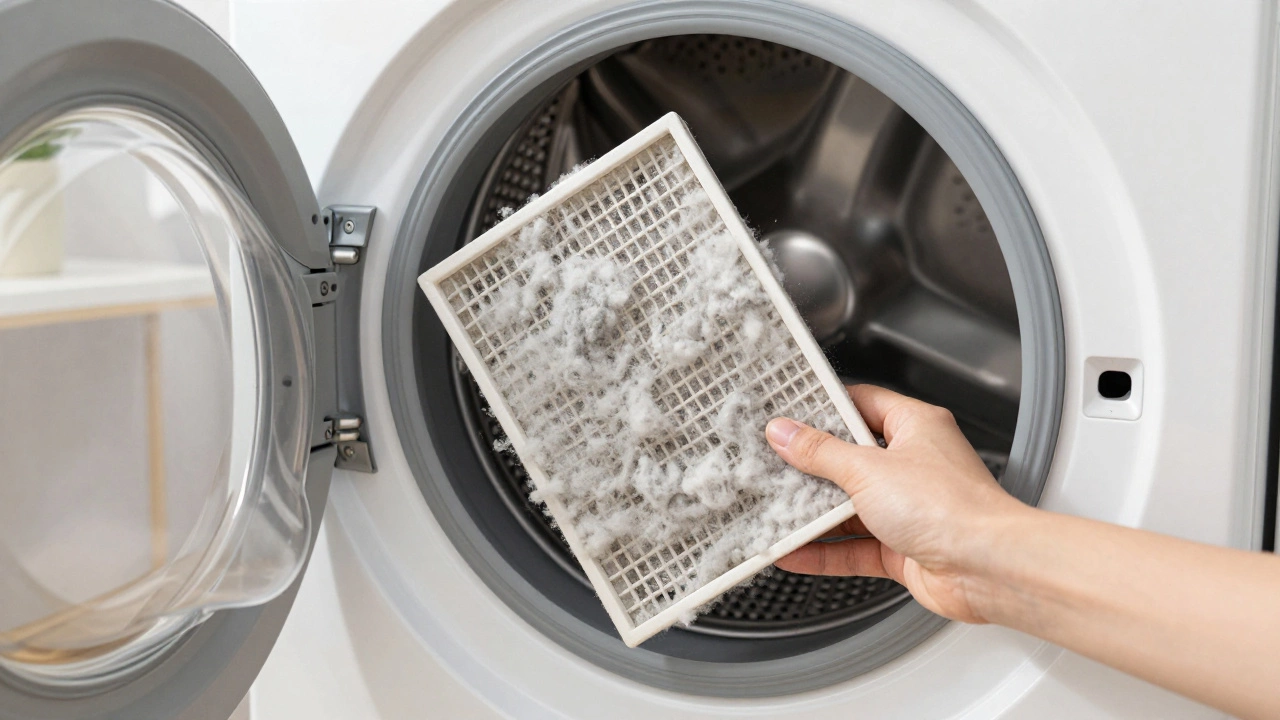
The first place to look is always the lint filter. It sounds too simple to be true, but a clogged filter is the number one reason dryers stop spinning properly. When the filter is packed with lint, air cannot circulate. The dryer’s thermal sensors detect overheating and shut down the drum rotation as a safety measure to prevent fire. Even if the fan is running, the drum may stall because the machine thinks it is in a dangerous state.
Clean the mesh screen thoroughly. Use a soft brush or your fingers to remove all trapped fibers. If the filter looks clean but the dryer still struggles, check the exhaust vent hose at the back of the unit. Over time, this hose accumulates thick layers of lint that restrict airflow. Detach the hose from the dryer and inspect it. If you see significant buildup, vacuum it out or replace the hose entirely. A restricted vent forces the motor to work harder, which can lead to premature failure.
- Check frequency: Clean the lint filter before every load.
- Vent inspection: Inspect the exhaust hose every six months.
- Safety note: Never run the dryer without the lint filter installed, even for testing.
Foreign Objects Blocking the Drum
Small items have a habit of escaping pockets and finding their way into the gaps between the drum and the cabinet. Coins, buttons, hair ties, and even small socks can slip through the seal and jam the mechanism. When these objects get caught under the drum or near the idler pulley, they create physical resistance that stops the drum from turning. You might hear a rattling or grinding noise before the drum stops completely.
To check for obstructions, you need to access the interior of the dryer. Unplug the machine first. Remove the front panel or the rear access panel, depending on your model. Shine a flashlight into the drum cavity. Look for any debris lodged around the edges. If you find something stuck, carefully remove it with pliers. Be gentle to avoid damaging the drum seals. After removing the object, try rotating the drum by hand. It should turn smoothly without catching.
The Drive Belt and Idler Pulley
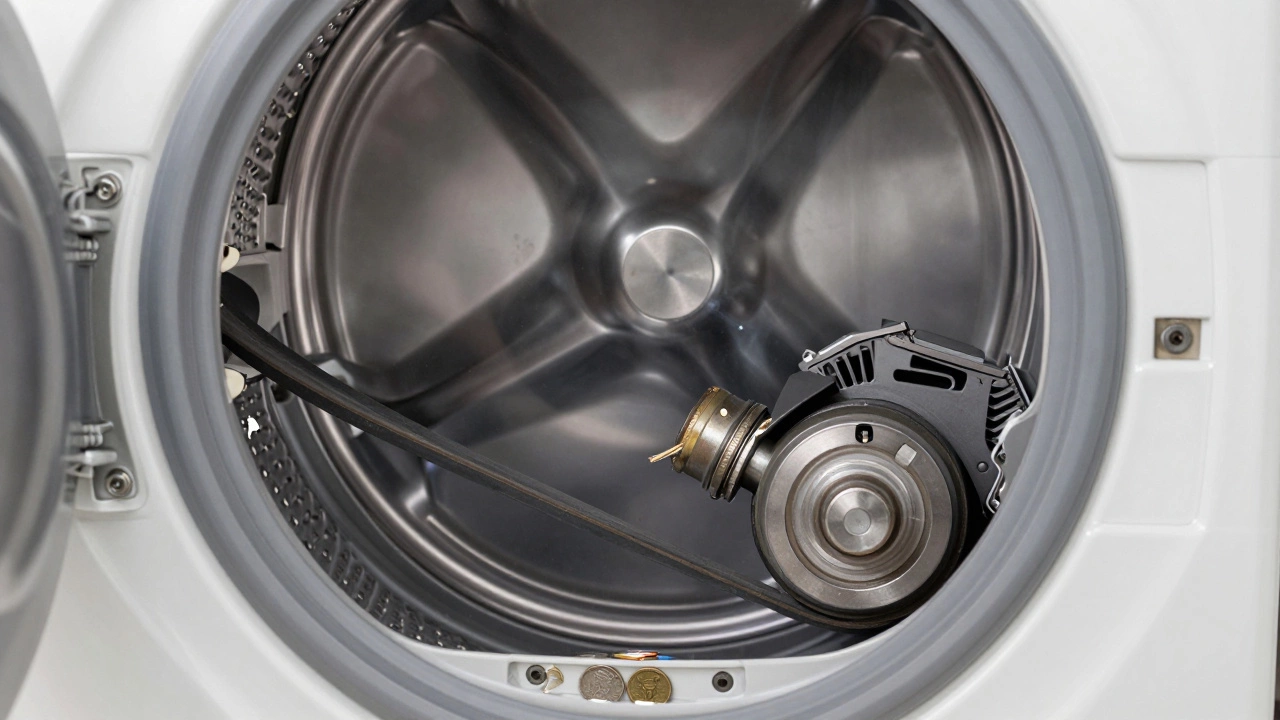
If the drum spins freely by hand but doesn’t move when powered on, the issue likely lies with the drive belt. This rubber belt wraps around the drum, the motor pulley, and the idler pulley. Its job is to transfer power from the motor to the drum. Over time, belts stretch, crack, or snap due to heat and friction. A broken belt means the motor runs, but the drum stays still.
Inspect the belt for signs of wear. Look for fraying edges, cracks, or complete separation. If the belt is intact but loose, it might be slipping off the pulleys. Realign it according to the diagram inside the dryer cabinet. If the belt is damaged, replace it with an exact match from the manufacturer. While you are there, check the idler pulley. This wheel keeps tension on the belt. If the pulley bearing is seized or worn, it will prevent the belt from moving smoothly. Spin the pulley by hand; it should rotate quietly and easily.
| Component | Symptom | Solution |
|---|---|---|
| Drive Belt | Dryer hums but drum doesn't move | Replace belt if cracked or snapped |
| Idler Pulley | Squealing noise or jerky movement | Replace pulley assembly |
| Motor Pulley | Belt slips off frequently | Check motor alignment and pulley condition |
Motor and Capacitor Failures
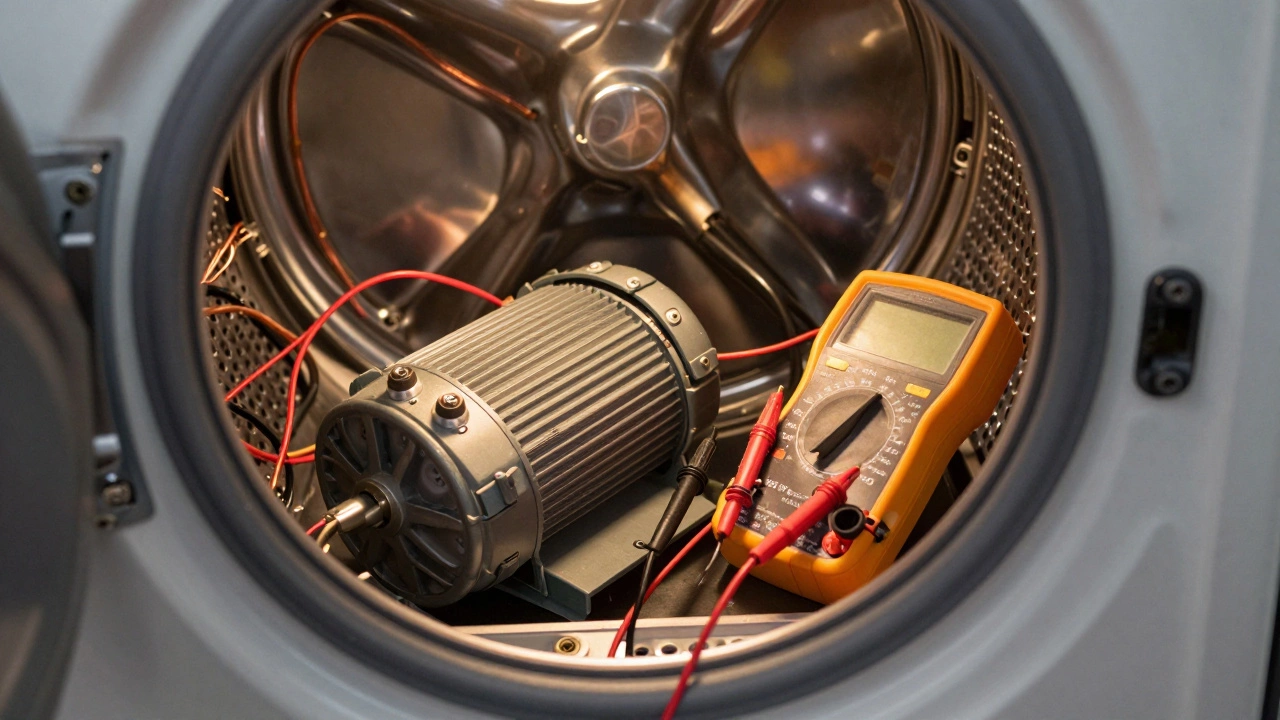
When the belt and pulleys are in good condition, the problem might be electrical. The dryer motor provides the force to turn the drum. If the motor brushes are worn out, it may not receive enough power to start spinning. You might hear a buzzing sound or smell burning insulation. Another possibility is a faulty start capacitor. This component gives the motor an initial boost to get going. If the capacitor is weak or dead, the motor will hum but fail to turn.
Testing a motor requires a multimeter. Check for continuity across the motor terminals. If there is no continuity, the motor windings are open and need replacement. For the capacitor, discharge it safely first, then test its capacitance value against the rating printed on the casing. If the value is significantly lower than specified, replace the capacitor. Note that some modern dryers use direct-drive motors without belts, so consult your manual to understand your specific configuration.
Door Switch and Control Board Issues
Sometimes the mechanical parts are fine, but the electronics refuse to engage the motor. The door switch ensures the dryer only runs when the door is fully closed. If the switch is misaligned or broken, the control board won’t send power to the motor. You might notice that the display lights up, but the cycle never starts. Press firmly on the door latch area to see if the drum engages. If it does, the switch needs adjustment or replacement.
In rare cases, the control board itself fails. This happens more often in older models or after power surges. Symptoms include erratic behavior, error codes flashing on the display, or complete unresponsiveness. Resetting the dryer by unplugging it for five minutes can sometimes clear temporary glitches. If the problem persists, professional diagnosis is recommended, as control boards are complex and require precise troubleshooting.
When to Call a Professional
You should seek help from a qualified technician if:
- The dryer makes loud banging or screeching noises.
- You smell burning plastic or ozone.
- The drum wobbles excessively or feels loose.
- Electrical components show signs of arcing or damage.
- You are uncomfortable working with internal appliance parts.
Attempting to fix electrical faults without proper training can be dangerous. Always prioritize safety over cost savings. A professional repair service can diagnose hidden issues quickly and ensure the repair meets safety standards.
Is it expensive to fix a tumble dryer that won't spin?
Costs vary widely. Simple fixes like cleaning vents or replacing a belt cost $20-$50 in parts. Motor replacements can range from $150-$300 including labor. Always get a quote before authorizing major repairs.
Can I run my dryer if the drum isn't spinning?
No. Running a dryer with a stationary drum can cause severe overheating, damage the motor, and create a fire hazard. Stop using the appliance immediately until the issue is resolved.
How long does a dryer belt last?
Most dryer belts last between 4 to 8 years, depending on usage frequency and maintenance. Heavy loads and high heat settings accelerate wear. Regular inspection can extend lifespan.
Why does my dryer make noise but not spin?
This usually indicates a broken belt, seized idler pulley, or failing motor. The noise comes from the motor trying to turn a blocked mechanism. Check the belt first as it is the most common cause.
Should I replace or repair my old dryer?
If the repair cost exceeds 50% of the price of a new unit and the dryer is over 10 years old, replacement is often more economical. Newer models are also more energy-efficient.