Dryer Problem Finder
Enter your dryer's symptoms to find the most likely cause and fix
What's happening with your dryer?
What details can you provide?
Diagnosis Confirmed
Most Likely Cause:
Recommended Fix:
If your dryer’s been sitting there, humming away but not drying your clothes, you’re not alone. It’s one of the most common appliance frustrations in homes across Dunedin and beyond. Dryers are built to last, but when they start acting up, it’s rarely one big failure-it’s usually a small part wearing out, a vent clogging, or something simple getting overlooked. Most of the time, you don’t need to replace the whole machine. You just need to know what to check.
It’s not heating up
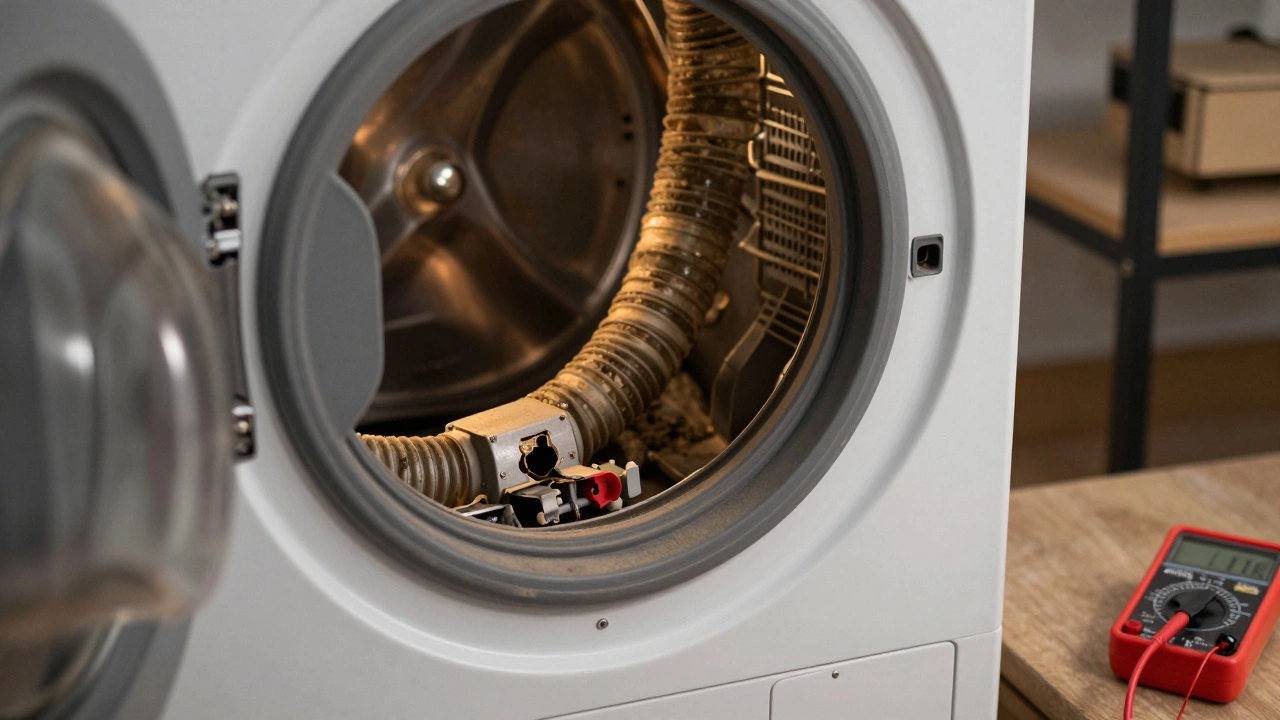
This is the number one complaint. Clothes come out damp, warm, but never dry. The most likely culprit? A blown thermal fuse. It’s a small safety device that cuts power if the dryer overheats. When it blows, the heating element stops working, but the drum still spins. You can test it with a multimeter-it should show continuity. If it doesn’t, replace it. But don’t just swap it out and call it done. If the fuse blew, something caused it to overheat. Check the vent hose for lint buildup, make sure the exhaust flap outside opens freely, and clean the lint trap after every load. A clogged vent can make your dryer run hotter than it should, killing fuses and even creating a fire risk.
Another common issue is a faulty heating element. It’s a coil inside the dryer that glows red-hot when working. If it’s broken, you won’t see any glow, even when the dryer runs. It’s easy to test with a multimeter too. If the coil is open (infinite resistance), it needs replacing. The good news? These parts aren’t expensive. The bad news? Getting to them means pulling the dryer apart. If you’re not comfortable with that, call a technician. But if you’ve got a basic toolkit and patience, you can fix this yourself in under an hour.
The drum won’t spin
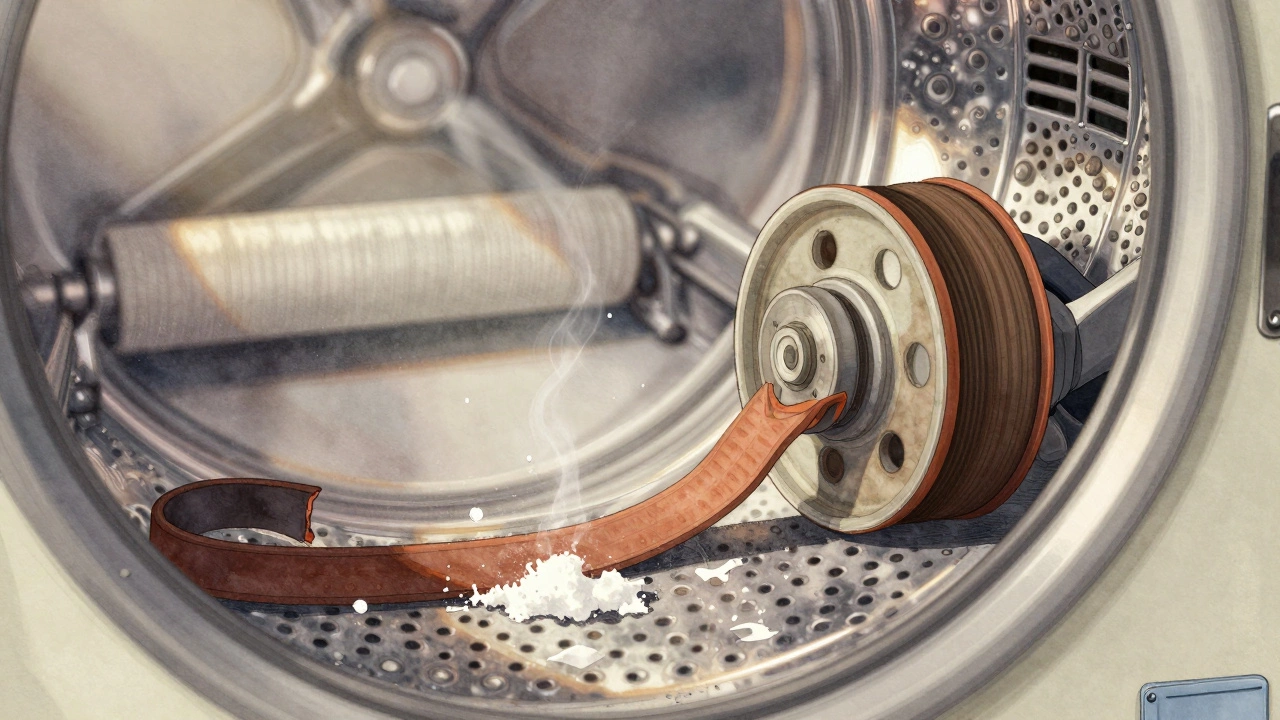
If the dryer turns on and heats up but the drum stays still, the belt is the usual suspect. Dryer belts are made of rubber and stretch over time. After a few years, they snap or slip off the pulley. You’ll hear the motor running, but no tumbling. Open the dryer and look for the belt-it’s a long, thin loop that wraps around the drum. If it’s broken or hanging loose, that’s your problem. Replacement belts cost less than $30. Replacing it takes about 45 minutes. You’ll need to remove the front panel and lift the drum slightly to slide the new belt on. Keep the old one as a reference for routing.
Less common, but still possible, is a bad motor coupling. This small plastic and rubber part connects the motor to the drum. If it cracks or wears out, the motor spins but doesn’t turn the drum. You’ll hear a grinding or clicking noise. It’s easy to spot-just look between the motor and the transmission. If it’s broken, replace it. It’s a cheap fix, but you’ll need to move the dryer out from the wall and disconnect the power first.
Strange smells or smoke
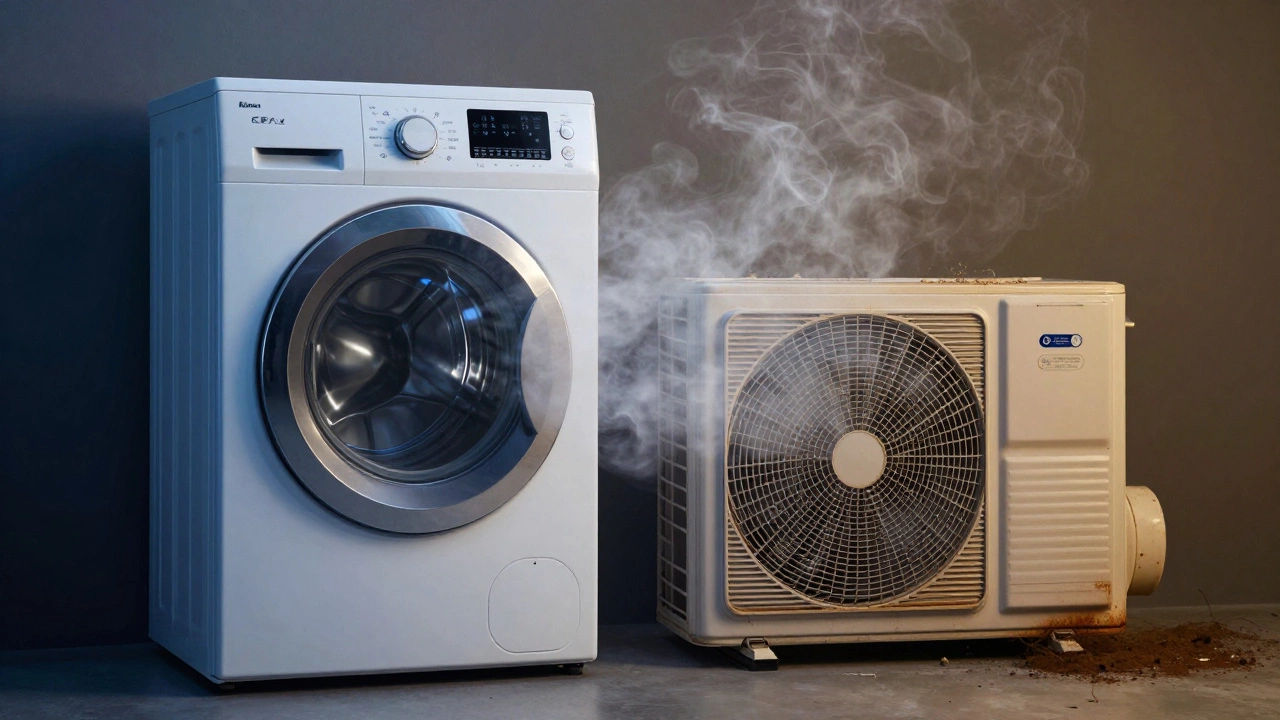
A little warm, dusty smell after a long cycle is normal. But if you’re smelling burning rubber, plastic, or actual smoke, stop the dryer immediately. This isn’t just annoying-it’s dangerous. The most common cause is lint trapped in places it shouldn’t be. Lint builds up behind the drum, around the heating element, or inside the exhaust duct. Over time, it can get hot enough to smolder. Clean the lint trap religiously, but also take the time every six months to vacuum out the inside of the dryer and the vent hose. Use a shop vac with a long nozzle. Don’t forget the exterior vent flap-birds and leaves love to nest there.
Another cause? Worn-out drum rollers or glides. These are small plastic or nylon wheels that support the drum. When they wear out, the drum can rub against the housing, creating friction and heat. You might hear a squeaking or grinding noise before the smell starts. If you see black marks on the drum or the cabinet, those rollers are likely gone. Replacing them is simple, but you’ll need to take the drum out. Keep spare rollers on hand if you live in a humid climate-they wear faster in damp conditions.
Dryer takes forever to dry
Even if the dryer heats up and spins, if it’s taking two or three cycles to dry a normal load, something’s off. The biggest offender? A blocked or restricted vent. Even if the lint trap is clean, the duct running from the dryer to the outside wall can get clogged with lint, dust, or even nests. A 10-foot vent with three bends can cut drying time in half. Try running a cycle with the vent temporarily disconnected (only do this briefly and never leave the dryer unattended). If clothes dry much faster, your vent is the issue. Replace flexible plastic or foil ducts with rigid metal ones-they don’t sag, trap lint, or melt. Clean the whole duct system at least once a year.
Also check the moisture sensor. Many modern dryers have two metal strips inside the drum that detect moisture levels. If they’re coated in fabric softener residue, they’ll think clothes are dry when they’re not. Wipe them down with a vinegar-soaked cloth every few months. If the sensor’s faulty, the dryer will shut off too early. You can test it with a multimeter, but it’s often easier to just replace it-it’s usually under $25.
It’s noisy
A dryer isn’t supposed to sound like a jackhammer. Rattling, thumping, or squealing noises usually point to worn parts. A thumping sound during rotation? One of the drum support rollers has gone bad. A high-pitched squeal? The idler pulley is worn out. It’s the little wheel that keeps tension on the belt. When it fails, the belt slips and screams. Both parts are cheap and easy to replace. You’ll need to remove the front panel to get to them. Keep a small magnet handy-you’ll drop a lot of screws.
Also, check for foreign objects. Coins, keys, or even socks can get stuck between the drum and the housing. They don’t cause major damage, but they make a lot of noise. Run your hand along the inside of the drum while it’s empty. If you feel anything sharp or loose, remove it.
What to do before calling a pro
Before you pay for a service call, do these five things:
- Unplug the dryer and clean the lint trap thoroughly-wipe the slot behind it too.
- Check the exhaust vent outside. Is air blowing out when the dryer runs? If not, the duct is blocked.
- Inspect the power cord and outlet. Plug something else in to make sure the outlet works.
- Listen for unusual sounds. A clicking noise might mean the timer or control board is failing.
- Look at the age. If your dryer is over 10 years old, parts are harder to find, and energy efficiency is poor. It might be time to upgrade.
Most repairs cost between $80 and $200 if you hire someone. But if you’re handy, you can fix 80% of common problems yourself for under $50 in parts. Save the pro for complex electrical issues or if you’re not comfortable opening up the machine.
Prevention is cheaper than repair
The best way to avoid dryer trouble? Routine care. Clean the lint trap before every load. Vacuum the vent duct once a year. Don’t overload the drum-air needs to circulate. Use low heat for synthetic fabrics. And never dry items with rubber backing or foam-those can melt and stick to the drum.
Also, consider switching to a heat pump dryer if you’re due for a replacement. They use up to 50% less energy, run cooler, and don’t rely on venting. They’re more expensive upfront, but they last longer and cost less to run. In New Zealand’s damp climate, they’re becoming the smart choice.
Why does my dryer run but not heat?
The most common reasons are a blown thermal fuse, a broken heating element, or a faulty thermostat. Start by checking the lint trap and vent-clogs cause overheating, which kills the fuse. If those are clear, test the fuse and element with a multimeter. If either shows no continuity, replace it.
Can a clogged vent cause a dryer to stop working?
Yes. A blocked vent forces the dryer to work harder, causing it to overheat. This can trigger safety shutdowns, blow fuses, or damage the motor. It also makes drying take much longer. In extreme cases, lint buildup can ignite. Clean the vent annually and use rigid metal ducting instead of flexible plastic.
How often should I clean my dryer vent?
At least once a year. If you use your dryer daily, especially with heavy loads like towels or bedding, clean it every six months. Signs you need it sooner: longer drying times, hot exterior, or lint around the vent outside. Use a vent cleaning brush or a shop vac with a long nozzle to reach deep into the duct.
Is it worth repairing an old dryer?
If it’s under 8 years old and the repair costs less than half the price of a new one, yes. But if it’s 10+ years old, energy inefficiency and frequent breakdowns add up. Modern dryers, especially heat pump models, use far less power and last longer. Consider upgrading if you’re spending more than $150 on repairs annually.
Why does my dryer smell like burning?
A burning smell usually means lint is trapped near the heating element or motor. Stop using the dryer immediately. Unplug it, clean the lint trap, and vacuum inside the drum area and vent duct. If the smell persists after cleaning, the belt or motor might be overheating. Don’t ignore it-this is a fire hazard.