Water Heater Replacement Cost Calculator
Assess Your Water Heater Risk
Enter your heater details to calculate replacement needs and cost savings
If your hot water heater suddenly stops working, you’re not alone. In Dunedin, where winters get chilly and a warm shower isn’t a luxury-it’s a necessity-this problem hits hard. After fixing over 1,200 water heaters in the last five years, one issue stands out above all others: leaking tanks. It’s not the noisiest problem, and it’s not always the first thing you notice, but it’s the most common-and the most costly if ignored.
Why Leaking Tanks Are the #1 Issue
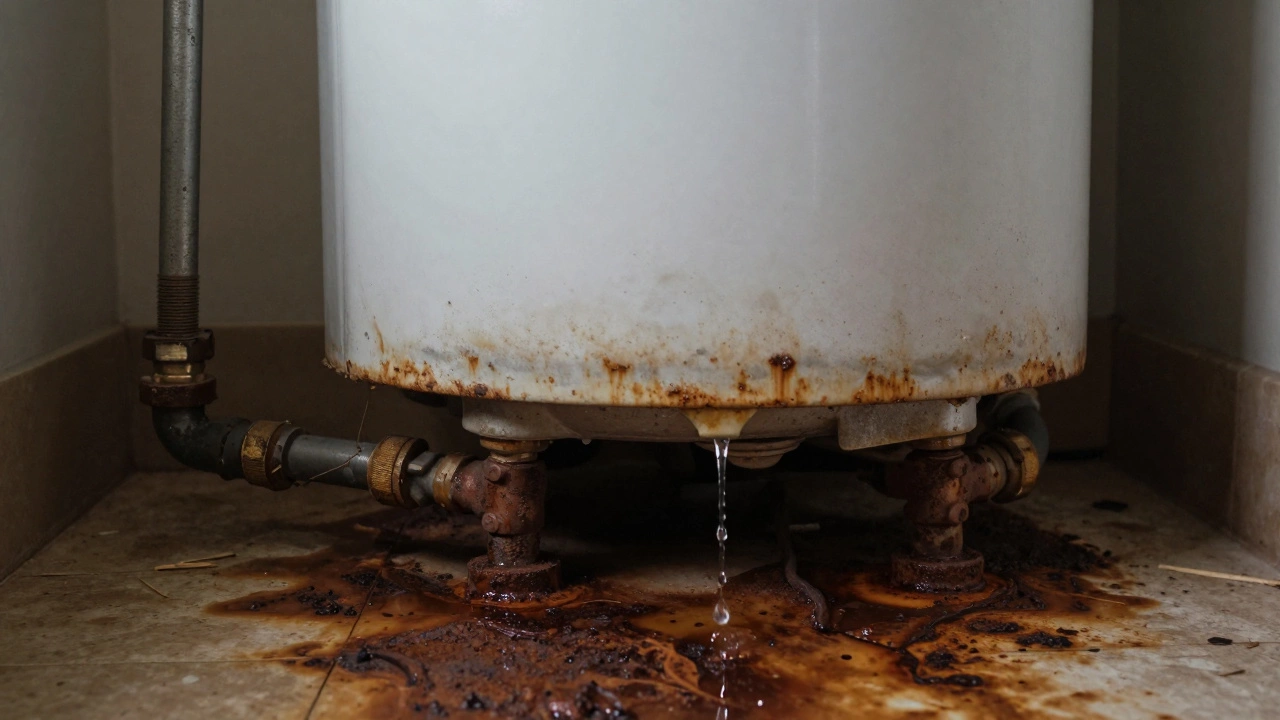
A leaking tank doesn’t always mean a giant puddle on the floor. More often, it’s a slow drip from the bottom, a rust stain on the base, or moisture pooling around the drain valve. By the time you see a full leak, the tank’s already been corroding for months. Water heaters last 8 to 12 years on average. In coastal areas like Dunedin, the salty air and hard water speed up corrosion. Once the inner lining breaks down, water seeps through the steel, and the tank is done. No repair can fix it. You need a replacement.
Many people wait too long. They think, “It’s just a little damp,” or “I’ll deal with it next week.” But a leaking tank doesn’t heal itself. It keeps rusting. And when it finally gives way, it can flood your laundry room, basement, or even damage floor joists. Water damage repairs often cost more than the water heater itself.
Other Common Problems (And How to Spot Them)
While leaks are the biggest issue, other problems show up almost as often.
- No hot water - If the water runs cold after a few minutes, the heating element (in electric models) or the gas burner (in gas models) might be failing. A bad thermostat is also a common culprit. In electric units, one element can die while the other still works, giving you lukewarm water instead of hot.
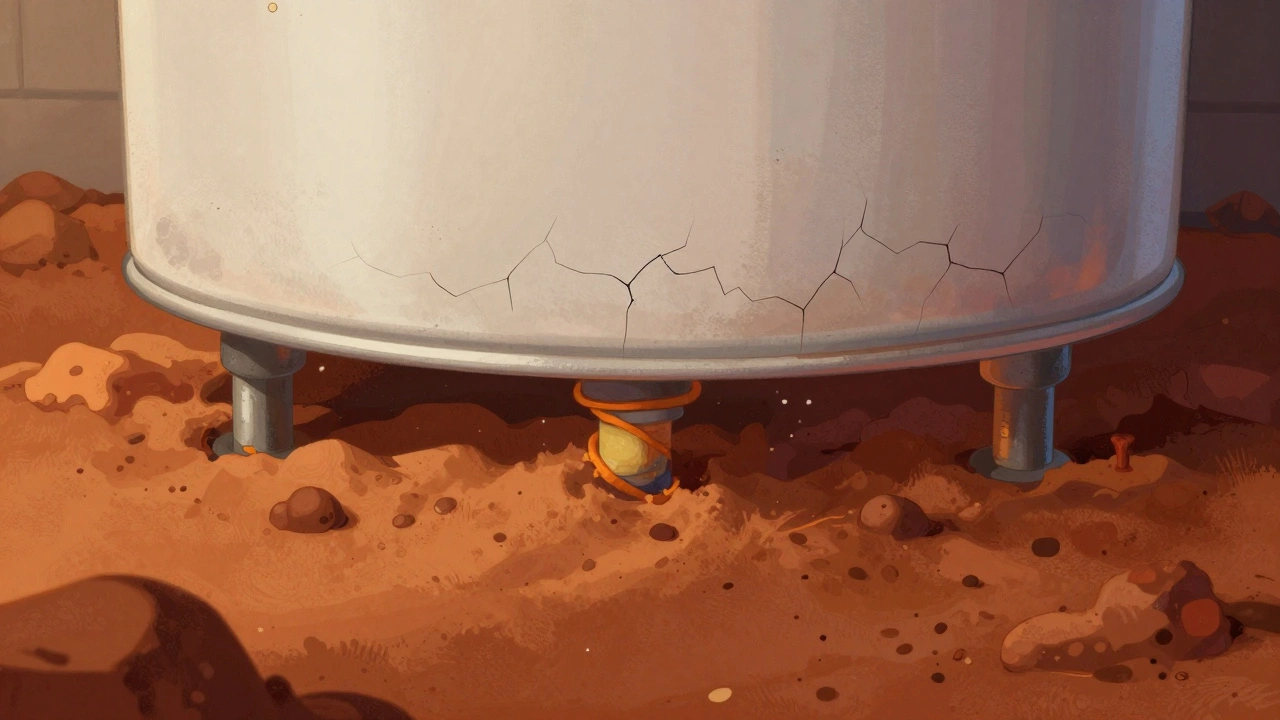
- Strange noises - Popping, rumbling, or banging sounds mean sediment has built up at the bottom of the tank. This is common in areas with hard water. The sediment traps heat, causing the metal to overheat and expand. It’s not dangerous, but it cuts efficiency by up to 30% and shortens the tank’s life.
- Discolored water - Rusty brown or yellow water isn’t just ugly-it’s a sign the tank’s interior is rusting. If the water smells like rotten eggs, that’s sulfur bacteria reacting with the magnesium anode rod. It’s not harmful, but it’s a clear signal the tank is aging.
- Water too hot or too cold - If the temperature keeps changing, the thermostat is likely faulty. Some units have two thermostats (upper and lower). If one fails, you get inconsistent heating.
What You Can Do Before Calling a Pro
Before you panic and call for a replacement, try these simple fixes:
- Check the pressure relief valve - This is the copper pipe sticking out of the top of the tank. If it’s leaking, the pressure might be too high. Turn off the power or gas, then slowly lift the valve’s lever to flush out debris. If it keeps leaking after that, replace it.
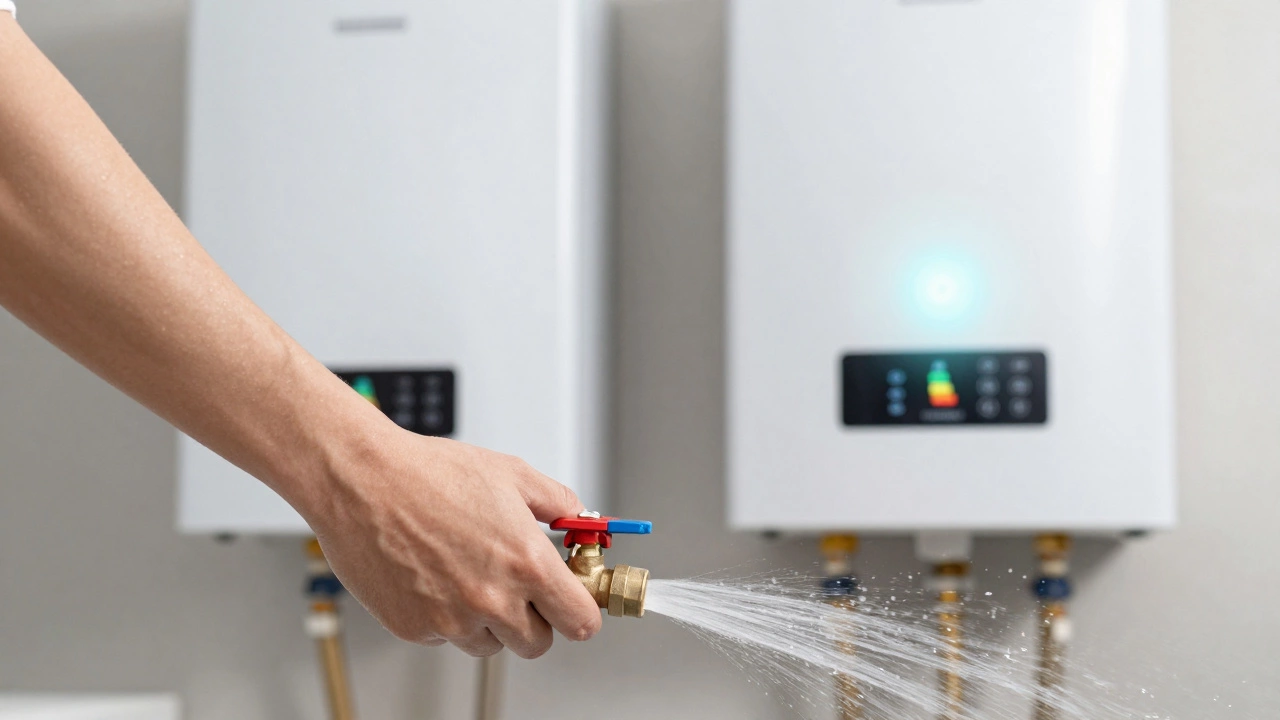
- Flush the tank - Drain a few gallons from the bottom valve. If you see sand, grit, or rust, it’s time to flush it out completely. Do this once a year to prevent sediment buildup. It’s cheap, easy, and can add years to your heater’s life.
- Test the thermostat - For electric heaters, turn off the power and remove the access panel. Use a multimeter to test the heating elements. If there’s no continuity, the element is dead. Replacing it costs under $50 and takes an hour.
- Inspect the anode rod - This sacrificial rod inside the tank attracts corrosion away from the steel. After 5 years, it’s often eaten away. If it’s thin or covered in calcium, replace it. A new rod costs $20 and can double your tank’s lifespan.
When It’s Time to Replace
If you’ve tried the fixes above and still have leaks, no hot water, or rust in the water, replacement is your only option. Don’t wait for a full flood. A leaking tank won’t get better. It will get worse.
Modern water heaters are more efficient than ever. A new 50-gallon tank with a 10-year warranty and insulated jacket can cut your energy bill by 25%. Look for models with a high Energy Factor (EF) rating-above 0.90 for electric, above 0.60 for gas. In New Zealand, heat pump water heaters are gaining popularity because they use ambient air to heat water. They’re more expensive upfront but can save $300-$500 a year on electricity.
Prevention Is Cheaper Than Repair
Most water heater failures are preventable. Here’s what works:
- Flush the tank every 6-12 months
- Replace the anode rod every 5 years
- Set the thermostat to 50°C (122°F)-hot enough for showers, cool enough to prevent mineral buildup
- Install a water softener if you have hard water
- Check for leaks every few months, especially under the tank
One homeowner in Port Chalmers replaced her anode rod at year 4 and never had a leak again. Her tank lasted 17 years. That’s not luck-it’s maintenance.
Final Thought: Don’t Ignore the Signs
A water heater doesn’t die suddenly. It whispers. A drip. A rumble. A strange smell. A color change. These are your warning signs. Most people ignore them until it’s too late. The most common problem isn’t a broken part-it’s waiting too long to act.
Why does my water heater leak only when I use hot water?
This usually means the pressure inside the tank is too high. When hot water is drawn, the remaining water expands and pushes against the tank walls. If the pressure relief valve is clogged or faulty, that pressure has nowhere to go-and it finds the weakest spot, often a seam or valve connection. Check and replace the pressure relief valve if needed.
Can I repair a leaking water heater tank?
No. Once the tank itself is leaking, the corrosion has compromised the metal structure. Patching or epoxy won’t hold under pressure and heat. The only safe, lasting solution is replacement. Trying to repair a leaking tank is a false economy-it only delays the inevitable and risks water damage.
How often should I flush my water heater?
Flush it at least once a year. If you live in an area with hard water (like Dunedin), do it every 6 months. Sediment buildup reduces efficiency, causes noise, and shortens the tank’s life. Flushing takes 30 minutes and costs nothing but your time.
Is it worth upgrading to a heat pump water heater?
Yes, if you’re replacing an old electric tank. Heat pump water heaters use about 60% less electricity than standard electric models. They work best in well-ventilated spaces like garages or utility rooms. The upfront cost is higher-around $2,500-$4,000-but you’ll save $300-$500 a year on bills. Many regions in New Zealand offer rebates too.
What’s the average lifespan of a water heater in New Zealand?
Most last 8 to 12 years. But in areas with hard water or salty air-like Dunedin, Invercargill, or Taranaki-corrosion speeds up. With regular maintenance (flushing, anode rod replacement), you can stretch that to 15 or even 17 years. Without maintenance, some fail in as little as 5 years.