Refrigerator Diagnostic Tool
Answer the questions below to identify the likely cause of your refrigerator's issue.
Are the interior lights working?
Is the thermostat set correctly?
Check if someone accidentally turned it to 'Off' or a very high number (warm setting).
Are vents blocked or coils dirty?
Check internal air vents for food blocking them. Pull fridge out to check condenser coils for dust/hair.
What do you hear when listening closely?
Door Seal Test:
Close a dollar bill in the door. Does it resist pulling out?
Recommended Action:
You walk into the kitchen, open the refrigerator door, and hit a wall of warm air. Your milk smells sour, your leftovers are sweating, and panic starts to creep in. Before you grab your phone to call an expensive technician or start Googling "how much does it cost to replace a compressor," stop. Take a breath. In about 90% of cases, the fix doesn't require a screwdriver, let alone a new appliance.
The first thing to check when a refrigerator stops working isn't the motor, the gas levels, or the circuit board. It is the power supply. Yes, really. It sounds too simple to be true, but we’ve all been there-kicking the plug loose while vacuuming behind the unit, or tripping a GFCI outlet in the garage. Before assuming the worst, you need to rule out the obvious. This guide walks you through the logical diagnostic path, starting from the simplest checks to more complex mechanical failures, so you can save money and maybe even fix it yourself before the ice cream melts completely.
Verify Power and Electrical Connections
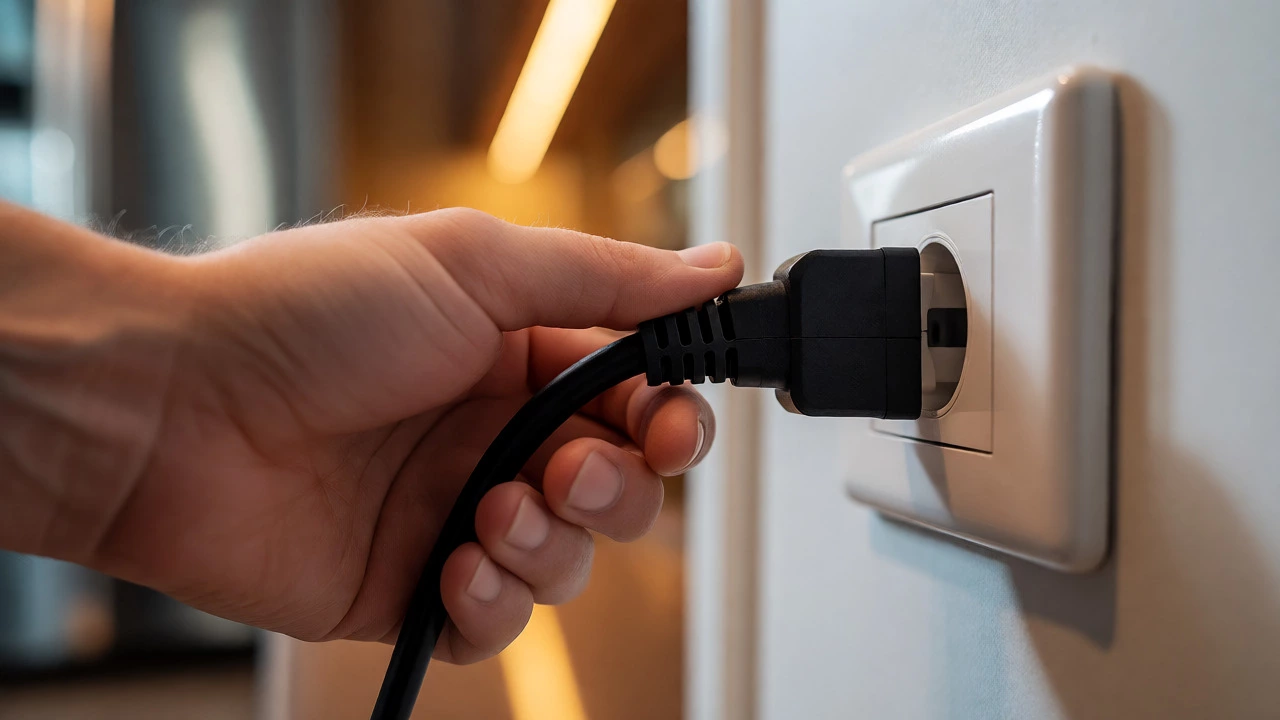
Your fridge needs electricity to run its compressor and fans. If it’s not getting power, it won’t cool. Start by checking the plug. Is it firmly seated in the wall socket? Sometimes, moving the fridge for cleaning dislodges the prongs just enough to break the connection. If the plug looks fine, test the outlet itself. Plug in a lamp or a phone charger. If that device doesn’t work, the problem isn’t your fridge; it’s your home’s electrical system.
If the outlet works, check your circuit breaker panel. Look for a breaker labeled "Kitchen," "Refrigerator," or "Appliances." If the switch is in the middle position (neither fully on nor off), it has tripped. Flip it fully off, then back on. If it trips again immediately, you might have a short circuit in the fridge’s wiring or compressor, which usually requires a pro. But if it stays on, wait ten minutes and listen. Do you hear the hum of the compressor kicking in?
For older homes or specific installations, some fridges use a dedicated fuse box rather than a standard breaker. Check those fuses too. A blown fuse is cheap to replace and often the culprit after a power surge.
Inspect Thermostat and Temperature Settings
Once you’ve confirmed the fridge has power, the next most common issue is user error or accidental adjustment. Did someone bump the dial? Kids love turning knobs. If the thermostat is set to "Off" or a very high number (which means warmer temperatures in many models), the fridge will appear dead because the compressor isn’t running.
Most modern refrigerators have digital controls, but older ones use a mechanical dial numbered 1 to 5 or 1 to 9. On these dials, higher numbers usually mean colder settings. However, this varies by brand. Check your manual or look for labels like "Colder" or "Warmer." Reset the setting to the mid-range (usually 3 or 4) and give it time. The compressor should kick on within a few minutes. If you hear it running but the inside remains warm, move to the next step.
Check Airflow and Ventilation
A refrigerator works by moving heat from inside the box to the outside. If it can’t dump that heat, it can’t cool. Two things block this process: blocked vents inside and dirty coils outside.
Internal Vents: Open the fridge and freezer compartments. Are food items stacked against the back wall or covering the air vents? Cold air circulates through these vents. If they’re blocked by a giant bag of frozen peas or a stack of Tupperware, airflow stalls. The sensor thinks the compartment is cold enough because the air near the sensor is cold, but the rest of the fridge is warm. Clear space around the vents.
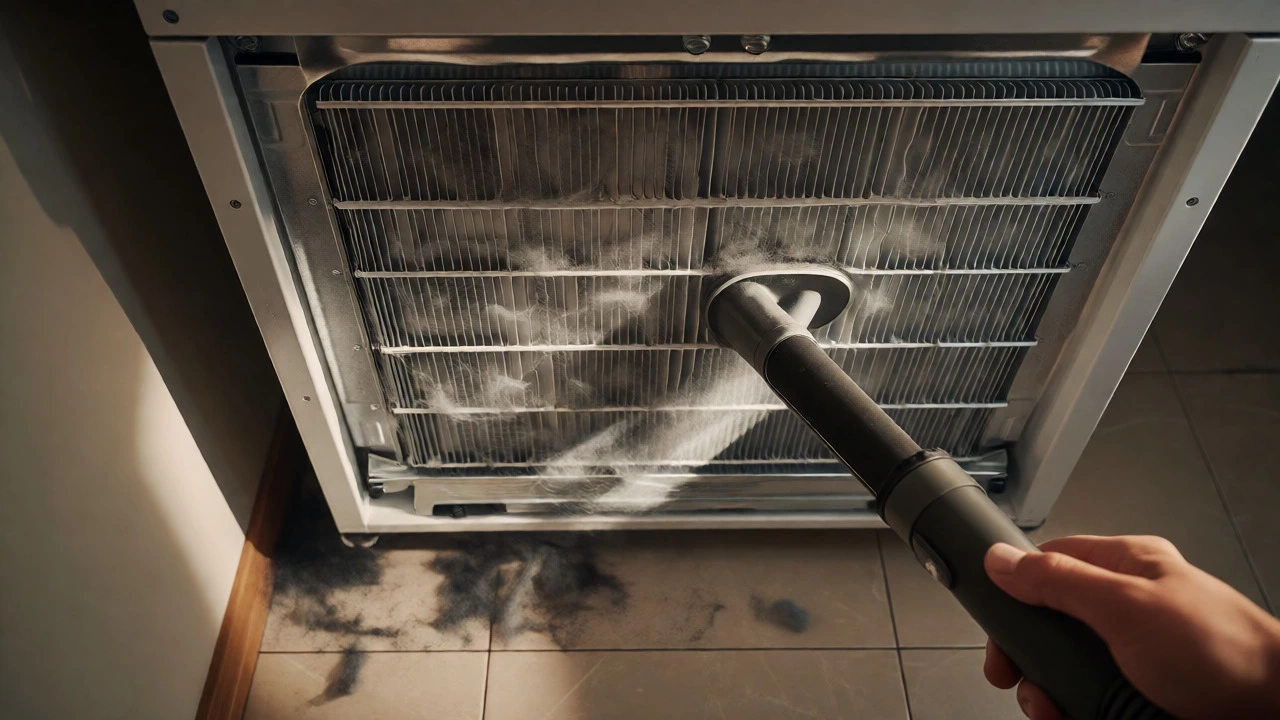
External Coils: Pull the fridge away from the wall. Most units have condenser coils either at the back or under a grille at the bottom front. Over time, dust, pet hair, and lint coat these coils. They act like a wool sweater on a hot day-insulating the heat instead of releasing it. If the coils are fuzzy with dust, the compressor works overtime but fails to cool effectively. Use a coil brush or a vacuum cleaner with a brush attachment to clean them. This simple maintenance task can restore cooling performance instantly.
Listen for Compressor and Fan Issues
If power is good, settings are correct, and airflow is clear, but the fridge is still warm, put your ear close to the back or bottom of the unit. What do you hear?
- Silence: No sound at all suggests a failed start relay, capacitor, or control board. These components tell the compressor when to start. If they fail, the compressor sits idle.
- Clicking: A rapid clicking sound followed by silence usually indicates a bad start relay or a seized compressor. The compressor tries to start, gets stuck, overheats, and shuts off via a thermal overload protector. It cools down, clicks again, and repeats. This is a serious mechanical fault.
- Humming without cooling: The compressor runs, but the temperature doesn’t drop. This could mean low refrigerant levels (a leak) or a faulty evaporator fan.
The evaporator fan circulates cold air from the freezer to the fridge section. If this fan breaks, your freezer might stay cold, but the fridge section turns into a tropical rainforest. You can often hear this fan running if you open the freezer door and press the door switch manually. If you don’t hear a whirring sound, the fan motor may be burnt out or blocked by ice buildup.
Examine Door Seals and Gaskets
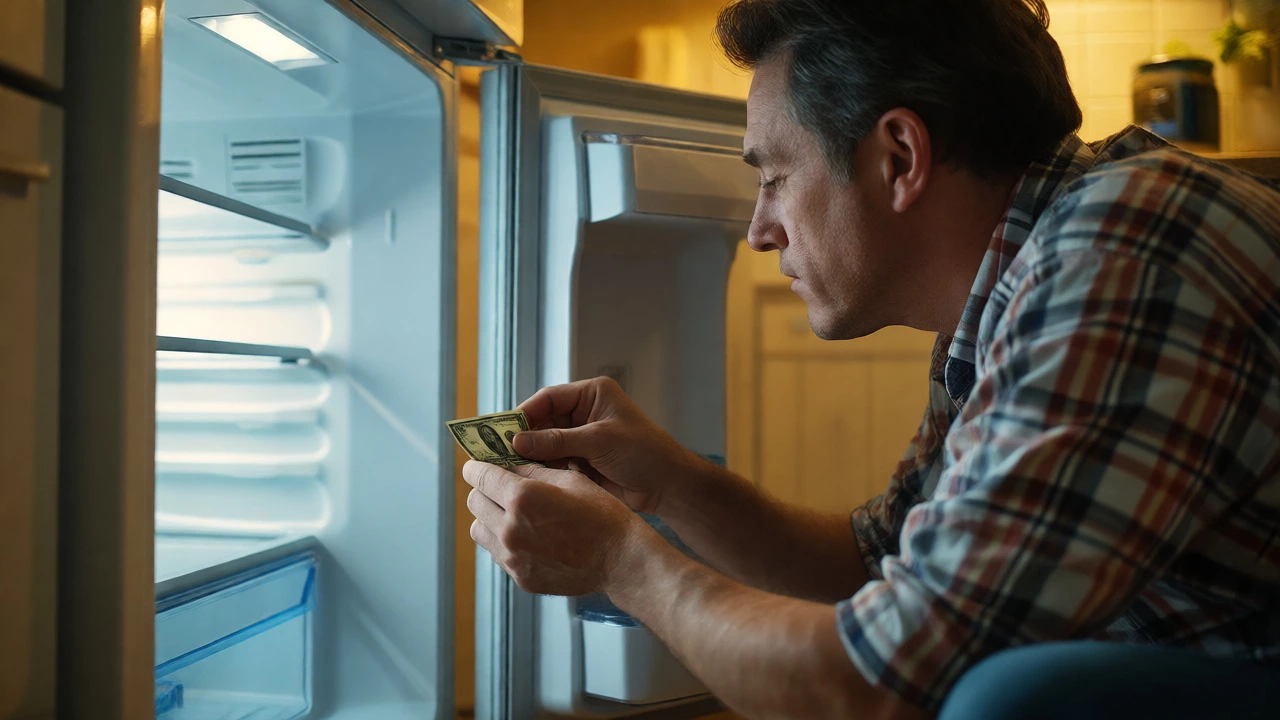
This seems minor, but a broken seal lets cold air escape and warm air enter, forcing the fridge to work harder until it gives up. Inspect the rubber gaskets around the doors. Are they cracked, torn, or warped? Perform the "dollar bill test": close a dollar bill (or any piece of paper) in the door. If you can pull it out easily without resistance, the seal is compromised. Warm air infiltration prevents the interior from reaching the set temperature, making it seem like the fridge isn't working.
When to Call a Professional
You’ve checked the power, cleaned the coils, adjusted the thermostat, and listened for noises. If the fridge still isn’t cooling, you’re likely dealing with one of three major repairs:
- Refrigerant Leak: Fixing this requires specialized tools and handling hazardous gases. It’s rarely a DIY job.
- Compressor Failure: The heart of the fridge. Replacement costs often approach the price of a new unit, especially for older models.
- Control Board Malfunction: Modern fridges rely on electronic boards to manage defrost cycles and cooling. Diagnostics here require multimeters and technical knowledge.
| Symptom | Likely Cause | First Action |
|---|---|---|
| No lights, no sound | Power loss | Check outlet, breaker, and plug |
| Lights on, no cooling | Thermostat or Relay | Reset temp, listen for click |
| Cold freezer, warm fridge | Evaporator Fan/Ice | Defrost manually, check fan noise |
| Warm everywhere, loud hum | Dusty coils or Leak | Clean coils, check door seals |
Frequently Asked Questions
How long should I wait after plugging in a fridge before putting food in?
Wait at least 2 to 4 hours. The fridge needs time to reach its operating temperature. Putting food in immediately forces the compressor to work harder to cool both the air and the room-temperature food, potentially straining the system. Ensure the interior is sufficiently cold before loading perishables.
Why is my fridge running constantly but not cooling?
This often points to a refrigerant leak or a dirty condenser coil. If the coils are clean and the fan is working, the system may lack the necessary gas to absorb heat. Another possibility is a faulty defrost timer causing ice buildup on the evaporator coils, blocking airflow. Cleaning coils is a free fix; leaks require a technician.
Can I reset my refrigerator myself?
Yes, most modern fridges have a soft reset capability. Unplug the unit from the wall or flip the circuit breaker off for 30 to 60 seconds. Plug it back in. This clears temporary electronic glitches in the control board. For mechanical thermostats, simply adjusting the dial and waiting serves as a reset.
Is it worth repairing an old refrigerator?
It depends on the age and repair cost. If the fridge is over 10-15 years old and the compressor or sealed system fails, replacement is usually more cost-effective due to energy efficiency gains in newer models. For simple fixes like fans, relays, or thermostats, repair is almost always cheaper than buying new.
What does a clicking sound in a fridge mean?
A rhythmic clicking usually indicates a failing start relay or a struggling compressor. The relay attempts to send power to the compressor, fails, clicks off, and tries again. This cycle causes the clicking noise. Replacing the start relay is a relatively inexpensive and easy DIY repair, but if the compressor itself is seized, it’s a major job.