Boiler Problem Diagnostic Tool
What is the main issue you are experiencing?
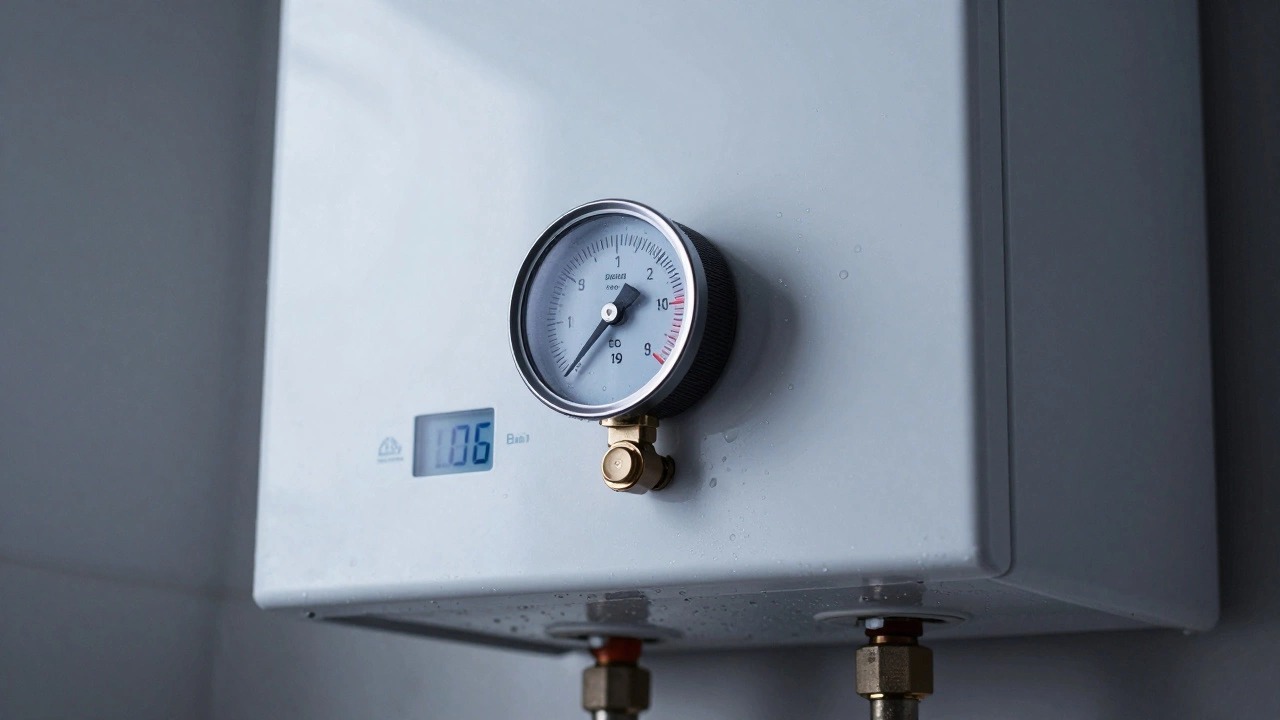
Check your pressure gauge. What does it read?
What kind of noise is the boiler making?
Describe the radiator temperature pattern:
Do you see an error code? If so, which one?
⚠️ SAFETY ALERT ⚠️
1. Turn off the gas supply immediately.
2. Open all windows and doors.
3. Evacuate the building.
4. Call emergency services from outside.
Do NOT use electrical switches or open flames.
There is nothing worse than turning up your thermostat on a freezing morning only to find no heat coming from the radiators. Your home goes cold, the hot water stops, and panic sets in. You are not alone. According to industry data, over 60% of boiler breakdowns occur during winter months when demand is highest. The good news? Many of these issues are predictable, preventable, or easy to fix if you catch them early.
In this guide, we will walk through the most common boiler problems homeowners face. We will look at what causes them, how to spot the warning signs, and when it is time to call a professional. Understanding these issues can save you money on emergency repairs and keep your family safe.
The Silent Killer: Low Water Pressure
If your boiler has stopped working, the first thing you should check is the pressure gauge. This small dial, usually located on the front of the unit, tells you how much water is inside your system. For most modern boilers, the ideal pressure sits between 1 and 1.5 bar. If the needle drops below 1 bar, many systems will automatically shut down to protect themselves from overheating.
Why does pressure drop? It happens slowly over time due to minor leaks in the pipes or radiators. Sometimes, air escapes from the system, taking water with it. You might notice that your radiators feel lukewarm at the bottom but hot at the top. This is a classic sign of trapped air and low pressure.
| Cause | Symptom | Quick Fix |
|---|---|---|
| Minor leak in radiator valve | Damp patch under radiator | Tighten valve or call plumber |
| Air bleeding needed | Banging noises in radiators | Bleed radiators manually |
| Faulty expansion vessel | Pressure rises then falls quickly | Requires professional repair |
You can often fix this yourself by using the filling loop-a flexible hose connected to your boiler. Open the valves slowly until the pressure reaches 1.5 bar, then close them immediately. Do not leave it open, or you could damage the system. However, if the pressure keeps dropping every few days, you have a leak that needs professional attention.
The Frozen Heart: Condensate Pipe Freezing
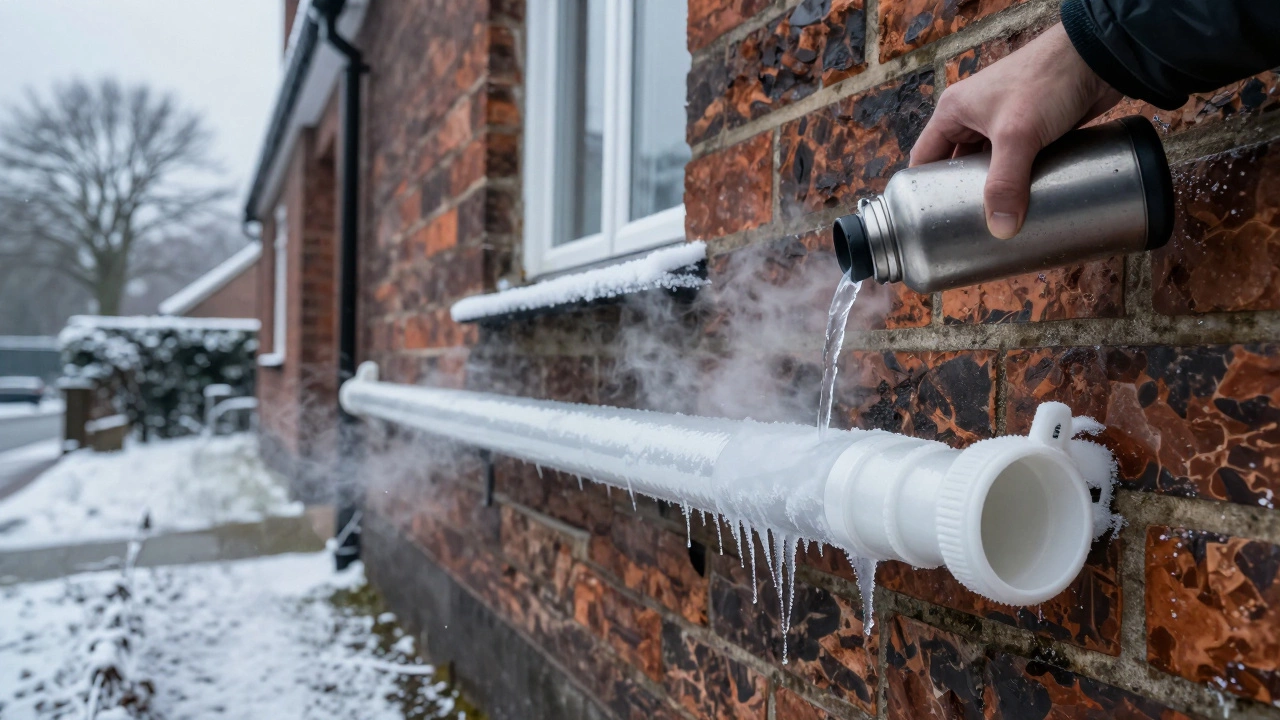
If you live in an area with harsh winters, you know the pain of a frozen condensate pipe. Modern condensing boilers produce a waste liquid called condensate. This acidic water travels through a white plastic pipe that runs outside your home. When temperatures drop below zero, this water freezes into ice, blocking the flow.
Your boiler detects this blockage and triggers an error code, shutting down the heating to prevent overflow. You might see a small puddle of water forming near the pipe outlet. The fix is surprisingly simple. Take a thermos of warm (not boiling) water and pour it over the frozen section of the pipe. The ice will melt within minutes, allowing the boiler to restart.
To prevent this from happening again, insulate the external pipe with foam lagging. It costs less than $20 and can save you from a costly emergency call-out in the middle of the night.
When Silence Screams: Noisy Boilers
A quiet boiler is a happy boiler. If yours starts making gurgling, banging, or whistling noises, something is wrong. These sounds are not just annoying; they are warnings.
- Gurgling: This usually means air is trapped in the system. You need to bleed your radiators. Place a towel under the valve, turn it slightly counter-clockwise until you hear a hiss, then close it when water flows steadily.
- Banging or Kettling: Imagine a kettle boiling dry. That is what kettling sounds like. It happens when limescale builds up inside the heat exchanger. The scale acts as an insulator, causing parts of the metal to overheat and expand rapidly. This requires a power flush by a professional to remove the debris.
- Whistling: High-pitched whistling often points to a problem with the pump or a blocked filter. It can also indicate high water velocity due to a partially closed valve.
Ignoring kettling can lead to cracked heat exchangers, which are expensive to replace. Addressing noise early extends the life of your appliance significantly.
The Cold Shoulder: Radiators Not Heating Up
Your boiler is running, but your radiators are cold? Or maybe some are hot and others are cold? This is a distribution issue, not necessarily a boiler failure. There are three main culprits here.
First, check for air locks. As mentioned earlier, bleeding radiators solves this. Second, look at your thermostatic radiator valves (TRVs). If the battery in your TRV dies, the valve may lock open or closed. Replace the battery and try again. Third, consider sludge. Old systems accumulate magnetic dirt and rust particles. These settle at the bottom of radiators, blocking heat transfer. A magnet filter installed on the return pipe can catch this sludge before it causes damage.
Error Codes: Decoding the Language of Your Boiler
Modern boilers speak in codes. When something goes wrong, the display shows a number or symbol. While every brand is different, some codes are universal.
| Code/Symbol | Typical Meaning | Action Required |
|---|---|---|
| E1 / E01 | Ignition Failure | Check gas supply; reset boiler |
| E2 / E02 | Flue Blockage | Call engineer immediately |
| E3 / E03 | Low Water Pressure | Repressurize system |
| E4 / E04 | Pump Fault | Check for stuck impeller |
Always consult your user manual first. Never ignore a flue blockage code. This means exhaust gases cannot escape properly, posing a serious carbon monoxide risk.
The Dangerous Sign: Carbon Monoxide Leaks
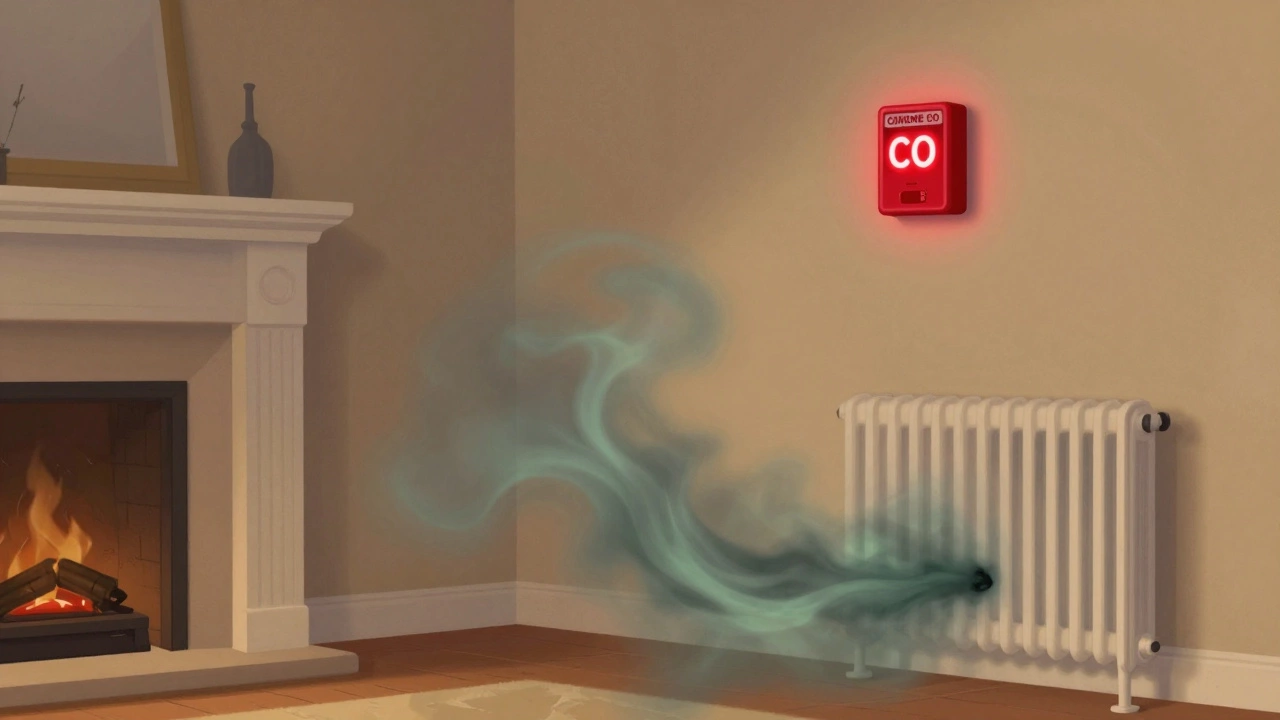
This is the most critical topic in boiler safety. Carbon monoxide is a colorless, odorless gas produced by incomplete combustion of fuel. If your boiler cracks or the flue blocks, CO can enter your home. It kills silently.
Symptoms of CO poisoning include headaches, dizziness, nausea, and fatigue. If you experience these symptoms at home and they improve when you leave, suspect CO. Install a certified CO alarm near your boiler and on each level of your home. Test it monthly. If the alarm sounds, evacuate immediately and call emergency services. Do not re-enter until a professional has cleared the air.
Preventive Maintenance: The Best Defense
You cannot fix everything yourself, but you can prevent most major failures. Annual servicing is non-negotiable. A qualified technician will clean the burners, check the heat exchanger for cracks, test the gas pressure, and ensure the flue is sealed correctly.
Think of it like changing the oil in your car. Skipping it saves money today but costs thousands tomorrow. During service, ask your engineer to check the expansion vessel pressure and the condition of the seals. Small wear-and-tear items are cheap to replace now but catastrophic later.
Also, keep the area around your boiler clear. Dust and debris can clog intake vents, reducing efficiency and increasing fire risk. Leave at least one foot of clearance on all sides.
When to Call a Professional
Some jobs are DIY-friendly, like bleeding radiators or resetting a tripped switch. Others require a Gas Safe registered engineer (or equivalent certification in your region). Call a pro if:
- You smell gas. Turn off the supply, open windows, and call from outside.
- The boiler leaks water internally. This indicates a failed seal or component.
- Error codes persist after a reset.
- You hear loud banging or see soot around the burner.
- The pilot light keeps going out.
Attempting complex repairs without certification voids your warranty and puts your life at risk. Always verify your engineer’s credentials before letting them work on your gas appliance.
How much does it cost to fix a common boiler problem?
Costs vary widely. Repressurizing a system is free if you do it yourself. Bleeding radiators is also free. A professional service call ranges from $75 to $150. Replacing a faulty pump costs between $300 and $600 including labor. Major components like heat exchangers can run $1,000 to $2,500. Regular maintenance reduces these risks significantly.
Can I reset my boiler myself?
Yes, most boilers have a reset button. Press and hold it for 3-5 seconds. If the boiler restarts, great. If it shuts down again within an hour, stop resetting. You have an underlying issue that needs diagnosis. Repeated resets can mask serious faults.
Why is my boiler making a whistling noise?
Whistling usually indicates high water velocity or a blocked filter. It can also mean the pump is struggling. Check if any radiator valves are fully open. If the noise persists, call an engineer to inspect the pump and internal filters.
Is it dangerous to use a boiler with low pressure?
Operating with very low pressure can cause the boiler to overheat and shut down. It is not immediately dangerous like a gas leak, but it stresses the system. Repressurize it promptly to avoid triggering further errors or damaging internal components.
How long does a boiler last?
With annual servicing, a modern gas boiler lasts 10 to 15 years. Older models may reach 20 years. Neglecting maintenance cuts this lifespan in half. If your boiler is over 10 years old and breaking down frequently, replacement may be more economical than repeated repairs.