Oven Wiring: Common Issues, Safety Risks, and When to Call a Pro
When your oven won’t heat up, flickers, or trips the breaker, it’s often not the element or thermostat—it’s the oven wiring, the internal electrical pathways that deliver power to heating elements, controls, and safety sensors. Also known as appliance wiring, it’s the hidden backbone that keeps your oven running safely. If this wiring frays, overheats, or gets loose, your oven doesn’t just stop working—it becomes a risk.
Electric oven repair, the process of diagnosing and fixing faults in household electric ovens, often starts with checking the wiring. Many people assume a broken oven means a bad element or control board, but over 30% of oven failures traced back to wiring issues—especially in units older than 10 years. Heat builds up over time, insulation breaks down, and rodents can chew through wires. You might notice a burning smell, a spark when you turn it on, or the oven turning off mid-cycle. These aren’t normal. They’re red flags.
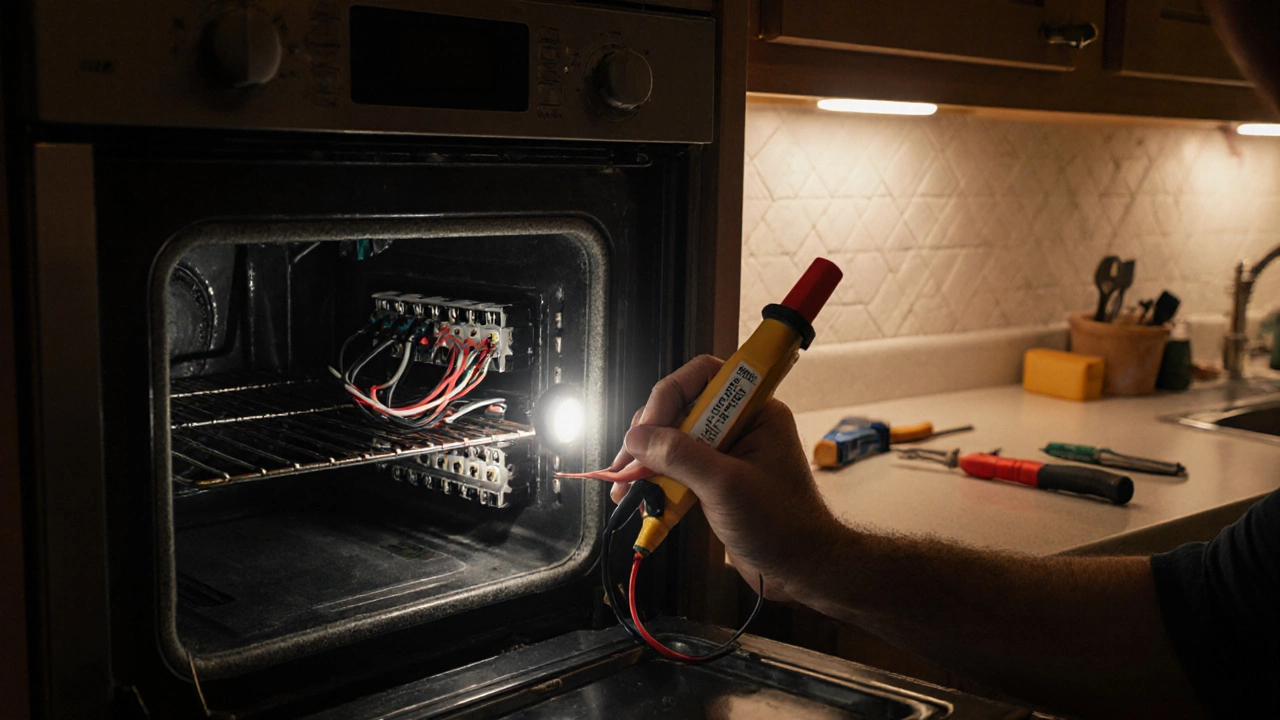
Appliance wiring, the system of cables, connectors, and terminals that power home appliances, isn’t something you should guess at. Unlike replacing a light bulb or cleaning a filter, wiring demands proper tools, knowledge of voltage, and understanding of safety codes. A loose connection can cause arcing, which can melt plastic, damage circuit boards, or start a fire. Even if you’re handy, opening your oven’s back panel without turning off the main power is dangerous. And if you’ve got aluminum wiring, older homes, or a fuse box instead of a breaker panel, the risks go up fast.
Some DIY guides say you can fix oven wiring yourself. But most of those skip the part where you need a multimeter, know how to read a wiring diagram, and understand which wires are live. If you’ve ever seen a melted terminal block or a charred wire nut inside an oven, you know this isn’t a simple fix. That’s why most professional electric oven repair techs start with a full electrical inspection before touching anything else.
You don’t need to be an electrician to spot trouble. If your oven acts up after a power surge, if the display goes blank but the lights still work, or if you hear a buzzing sound from the back—those are all signs the wiring might be failing. And if you’ve tried replacing the heating element and the problem comes back, it’s not the element. It’s the path that feeds it.
Below, you’ll find real-world fixes, common mistakes people make when they try to DIY oven wiring, and what to expect when a pro comes out. Whether you’re dealing with a cracked wire, a blown fuse in the control panel, or a faulty terminal block, the posts here cut through the noise. No fluff. Just what actually works—and what could get you hurt.
Nov 23, 2025
Is It Hard to Replace an Electric Oven? A Realistic Guide
0 Comments
Replacing an electric oven is doable with the right tools and care, but it’s not a simple plug-and-play job. Learn the real risks, steps, and when to call a pro.
Read More