Microwave Troubleshooting Guide
If your microwave is acting up, microwave troubleshooting starts with a quick safety check: unplug it, look for obvious damage, and make sure the door closes snugly. When working with microwave troubleshooting, the systematic process of identifying why a microwave won’t heat, spins, or respond to buttons. Also known as microwave repair, it often shares tools and steps with oven troubleshooting, checking heating elements, temperature sensors, and control panels in ovens. Both fall under the broader practice of appliance repair, the service of diagnosing and fixing household machines to restore proper function, which requires basic electrical safety skills and a few handy tools.
Typical Microwave Faults and How to Diagnose Them
Most microwave issues boil down to three core components: the power supply, the door latch, and the magnetron. First, verify that the outlet delivers 120‑240 V using a multimeter; a dead outlet mimics a broken microwave. Next, inspect the door latch switch – a loose or burnt latch will keep the unit from starting, and you’ll hear a click without any heat. If the door and power check out, the magnetron is the likely culprit; a humming sound with no heat usually means the magnetron has failed. These steps mirror the process used for oven heating element failures, where you test continuity and replace the element if it’s dead. Both appliances rely on a sealed heating component (magnetron or element) that converts electricity into heat, so understanding one helps with the other. When the control board is at fault, you’ll notice erratic button responses or display glitches – a symptom shared by many modern ovens and refrigerators. In those cases, a visual inspection of the board for burnt traces, followed by a professional voltage test, is the safest route. By following this logical flow – power → safety interlock → heating component → control logic – you can isolate most problems without opening the cabinet further than necessary.
Knowing when to stop yourself and call a qualified technician can save time and prevent injury. If you encounter broken high‑voltage capacitors, a cracked waveguide, or signs of water intrusion, it’s best to let a certified appliance specialist, a trained professional who diagnoses and repairs household appliances safely handle the job. This collection below covers everything from simple door‑switch checks to full magnetron replacements, plus related guides on oven heating element swaps, fridge compressor resets, and extractor fan fixes. Dive into the articles to see step‑by‑step instructions, tool lists, and safety tips that will help you decide whether a DIY fix is realistic or a pro call is the smarter move.
Oct 16, 2025
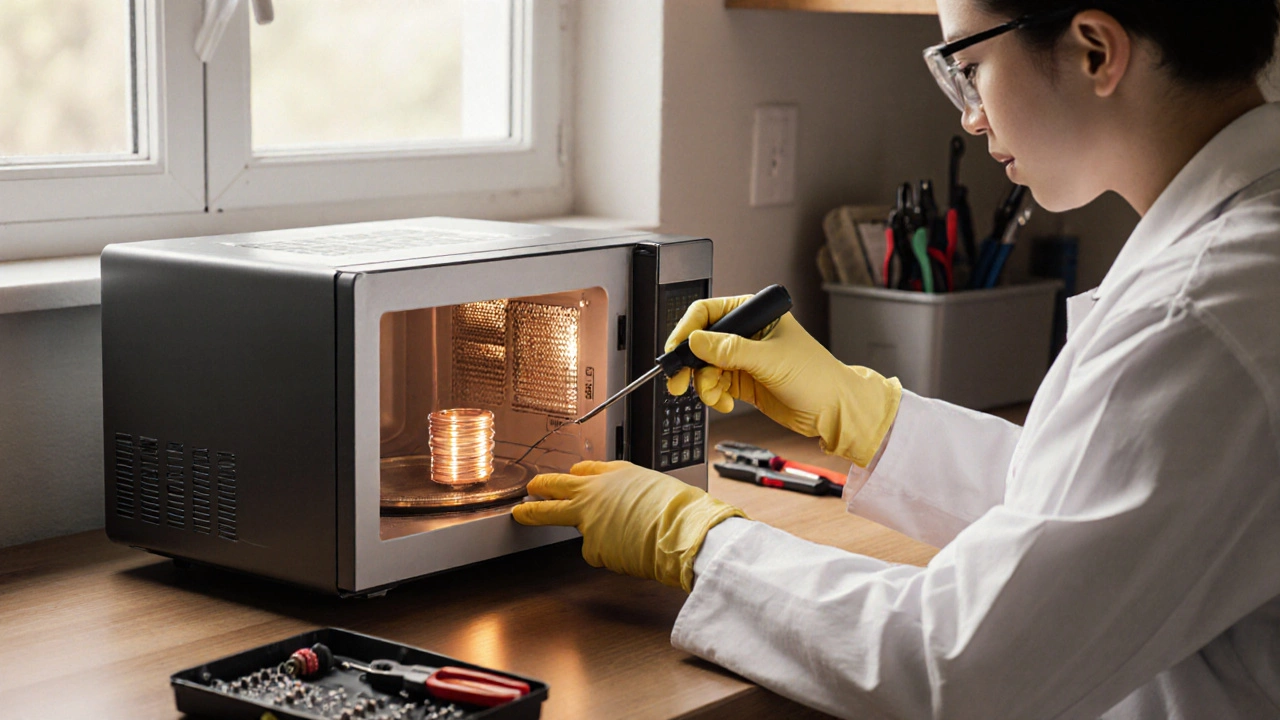
DIY Microwave Repair: Step‑by‑Step Fixes for Common Issues
0 Comments
A step-by-step DIY guide to troubleshoot and repair common microwave problems at home, covering safety, tools, fixes for heating, turntable, arcing, and more.
Read More