Fridge Thermostat: Signs It's Failing and What to Do Next
When your fridge won’t stay cold, the problem isn’t always the compressor or the seals—it could be the fridge thermostat, a small but critical component that controls the temperature inside your refrigerator by turning the cooling system on and off. Also known as a temperature control, it’s the brain behind keeping your food at the right chill without freezing everything or letting it spoil. Most people don’t think about it until the milk goes sour or the veggies turn to mush. But this tiny device does the heavy lifting every single day.
A broken fridge thermostat doesn’t always scream for attention. Sometimes it just quietly lets the temperature drift. You might notice your fridge is warmer than usual, ice cream is soft, or condensation forms inside even when the door’s closed. If the freezer works fine but the fridge side is lukewarm, that’s a classic sign the thermostat isn’t reading the right zone. It’s not always a power issue or a blocked vent—it’s often the thermostat failing to send the signal to kick the compressor back on. And if you’ve checked the door seals, cleaned the coils, and still nothing changes, the thermostat is next on the list.
The fridge thermostat, a mechanical or electronic switch that responds to internal air temperature. Also known as temperature sensor, it’s usually located behind a panel in the fridge compartment or near the top of the unit doesn’t need frequent replacement—most last 10 to 15 years. But if your fridge is older, has been moved around a lot, or has had power surges, it can wear out faster. Replacing it isn’t always expensive, but it does require knowing where to look and how to test it. Some models use a dial you can turn, others are digital. And if you’re replacing it, make sure you get the right part for your brand and model—there’s no one-size-fits-all.
Before you buy a new one, try a simple test: unplug the fridge, turn the thermostat dial to its coldest setting, plug it back in, and listen. If the compressor kicks on after a minute or two, the thermostat is likely still working. If it doesn’t, or if the fridge runs nonstop without cooling, that’s a strong clue the thermostat is stuck. You can also use a multimeter to check for continuity, but if you’re not comfortable with that, it’s better to call a pro. Many fridge repair techs carry spare thermostats and can swap it out in under an hour.
What you’ll find in the posts below are real fixes from people who’ve been there—how to diagnose a bad thermostat without tools, why some replacements fail even when installed right, and which fridge models are most prone to thermostat issues. You’ll also see how a faulty thermostat can mess with your energy bill, why it sometimes looks like a compressor problem when it’s not, and how to avoid buying the wrong part online. No fluff. Just what actually works when your fridge stops doing its job.
Dec 1, 2025
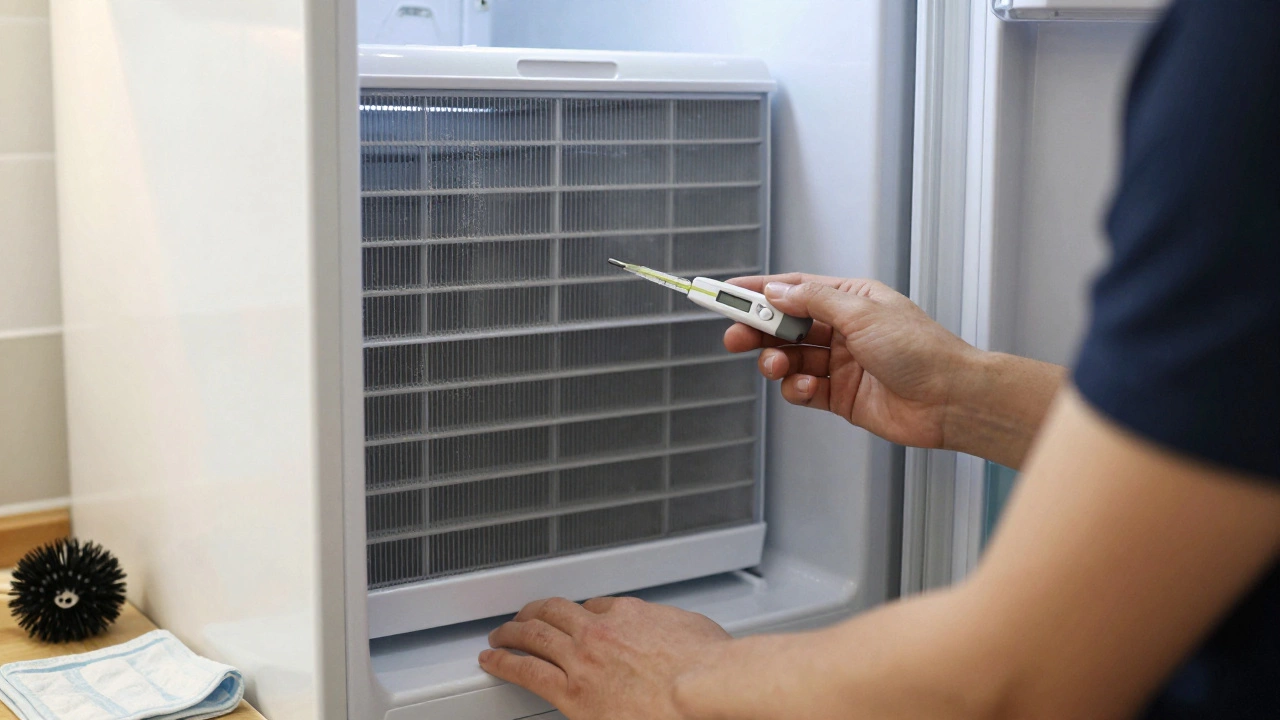
How to Fix a Refrigerator Not Cooling: Simple Steps That Actually Work
0 Comments
If your fridge isn't cooling, don't rush to replace it. Learn the 6 most common fixes-from cleaning coils to checking door seals-that solve the problem in most cases. Save money and avoid unnecessary repairs.
Read More