Fridge Repair Cost Calculator
If your refrigerator isn’t cooling, your food is spoiling, and you’re staring at a warm fridge like it’s broken on purpose. It’s frustrating, but it’s rarely a total loss. Most of the time, a fridge that’s not cooling can be fixed with basic checks and a little elbow grease-no need to replace it yet.
Check the temperature setting first
It sounds simple, but people forget this all the time. Maybe someone adjusted the dial accidentally, or the fridge reset after a power outage. Most fridges run best between 2°C and 4°C. The freezer should be at -18°C. If the dial is set to "Off" or "Warm," that’s your problem. Turn it back to medium or the manufacturer’s recommended setting. If your fridge has a digital display, make sure it’s not in demo mode. Some models have a "Showroom" or "Demo" setting that turns off cooling to save energy in stores. Hold the door light switch for 5 seconds or check the manual for how to exit it.Clear the condenser coils
Dust and pet hair build up on the condenser coils over time. These coils sit at the back or bottom of the fridge and are meant to release heat. When they’re clogged, the fridge can’t cool properly. Unplug the fridge. Pull it away from the wall. Look for a grid of metal fins-usually gray or silver. Use a coil brush or a vacuum with a brush attachment to clean them. Do this every six months. If you have pets or live in a dusty area, do it every three months. I’ve seen fridges come back to life after 20 minutes of cleaning coils that hadn’t been touched in five years.Inspect the door seals
A bad seal is like leaving your front door open in winter. Cold air leaks out, warm air sneaks in, and the compressor runs nonstop. Test your door gaskets by closing a dollar bill in the door. Try pulling it out. If it slides out easily, the seal is weak. If it grips tightly, you’re good. If the seal is cracked, brittle, or warped, replace it. Most fridge models have replacement gaskets available online for under $50. Don’t try to glue or tape a damaged seal-just swap it out. A new seal can cut your energy bill and fix cooling issues in one go.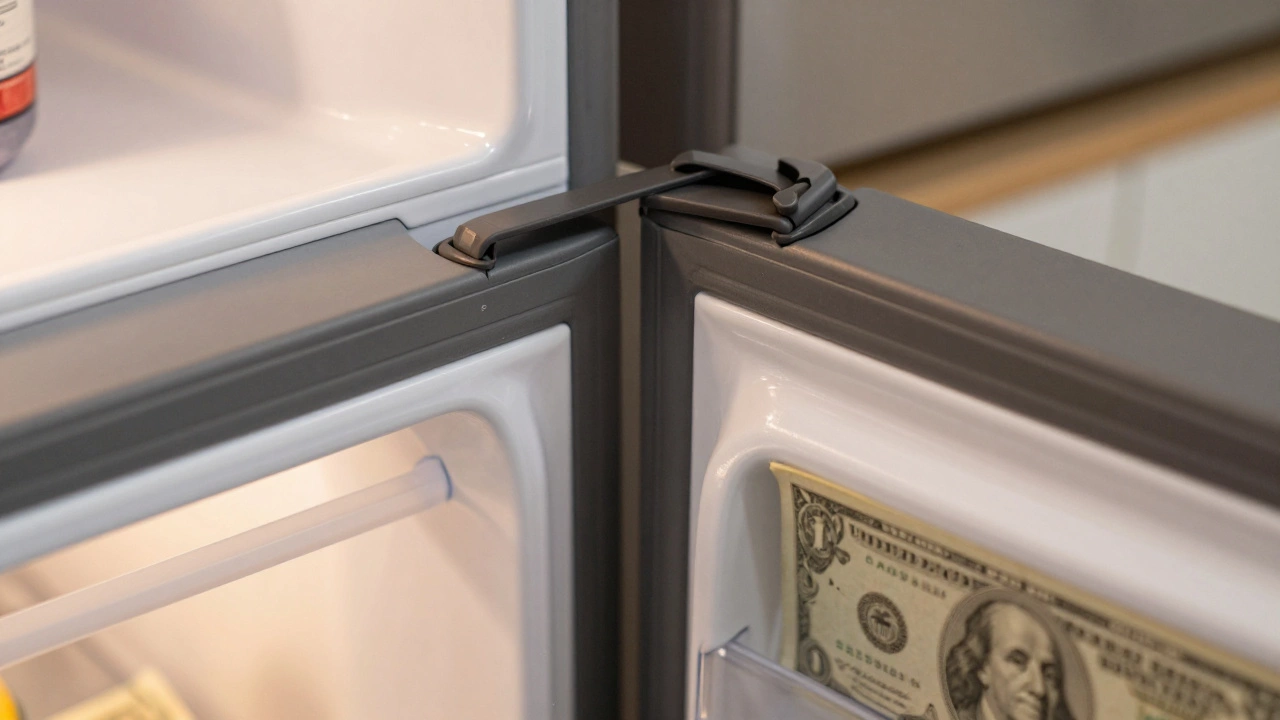
Make sure the fridge is level
A fridge that’s tilted forward or backward messes with how the door closes. Even a slight angle can stop the door from sealing right. Use a small bubble level on top of the fridge. Adjust the front legs-most fridges have screw-in feet you can turn by hand. You want the fridge to lean back just a tiny bit (about 1/4 inch). This helps the door swing shut on its own. If the fridge rocks or wobbles, it’s not level. Fixing this often stops air leaks that people blame on the compressor.Check the evaporator fan
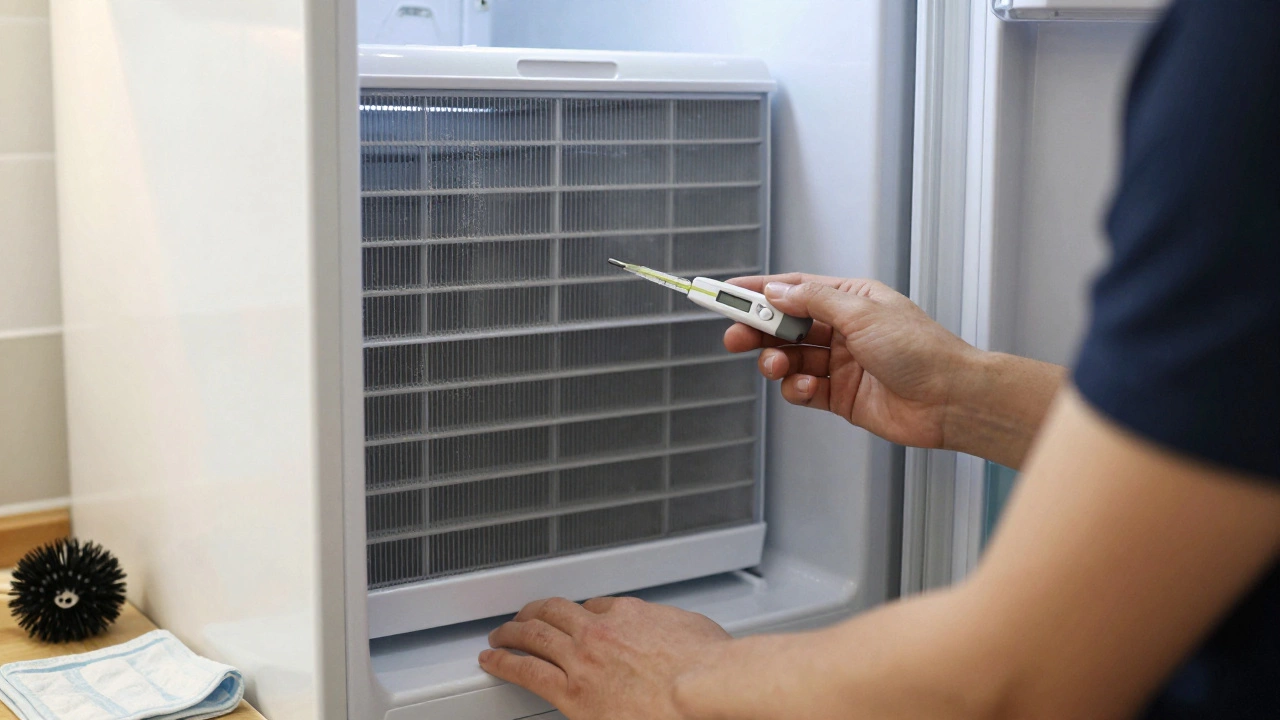
The evaporator fan circulates cold air from the freezer into the fridge compartment. If it’s not spinning, your fridge stays warm even if the freezer is icy. To check it, unplug the fridge. Remove the back panel in the freezer (usually held by screws). Look for a small fan near the coils. Spin it by hand. If it’s stuck, covered in ice, or makes a grinding noise, it’s bad. Ice buildup often means the defrost system isn’t working. If the fan is frozen, defrost the freezer completely with a hairdryer (keep it at least 12 inches away). If the fan still doesn’t spin after thawing, you’ll need a new one. Most fans cost $40-$80 and are easy to swap.Test the defrost timer or thermostat
If your freezer is cold but the fridge isn’t, the defrost system might be stuck. Ice builds up on the evaporator coils, blocking airflow. This is common in older fridges with mechanical defrost timers. Newer models use electronic control boards. You can’t always test these yourself, but you can look for signs: heavy frost on the back wall of the freezer, water pooling under the fridge, or the compressor running constantly. If you see frost, manually defrost the freezer by turning off the fridge for 24 hours with the door open. If the fridge cools normally afterward, the defrost system is broken. Replacing the defrost thermostat (around $30) or timer ($50) often fixes it. If you’re unsure, take a photo of the frost pattern-techs can diagnose it from that.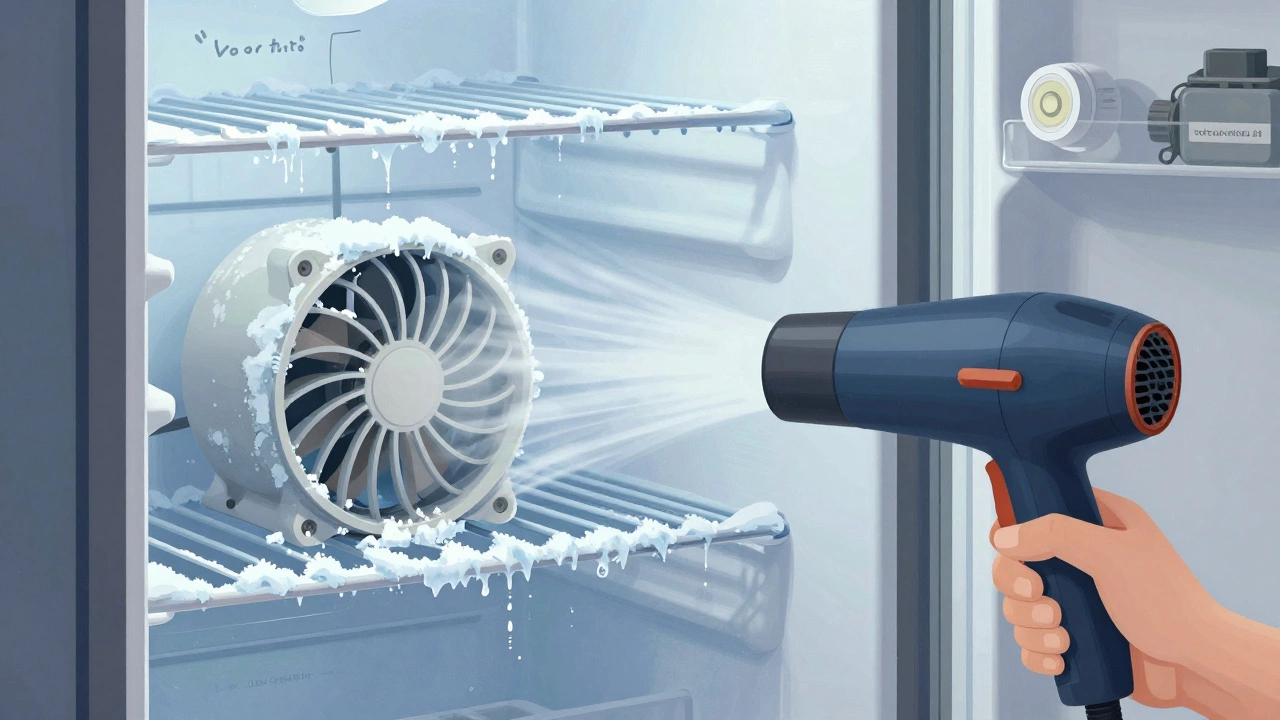
Don’t overfill or block airflow
A fridge needs space for air to move. If you’ve stuffed it full of containers, boxes, or grocery bags, you’re blocking the vents. Look inside for vents near the top or back wall. Make sure nothing is touching them. Keep items at least 5 cm away. Don’t put hot food directly inside-let it cool first. Hot items make the compressor work overtime and can cause condensation that freezes into ice blocks. A well-organized fridge with airflow in mind runs cooler and lasts longer.When to call a professional
If you’ve checked all the above and the fridge still isn’t cooling, the problem is likely deeper. The compressor might be failing, the refrigerant could be leaking, or the control board is faulty. These aren’t DIY fixes. A leaking refrigerant requires special tools and licensing to handle. A bad compressor costs $400-$800 to replace-sometimes more than a new fridge. If your fridge is over 10 years old, it’s worth comparing repair cost to replacement. New energy-efficient models use 40% less power and come with better warranties. But if it’s under 7 years and you’ve ruled out the simple fixes, call a certified technician. Bring the model number and a list of what you’ve already tried. That saves time and money.Prevent future cooling problems
Once it’s fixed, keep it running smoothly. Clean the coils every six months. Wipe the door seals weekly with vinegar water to stop mold and stickiness. Don’t leave the door open longer than needed. Keep the fridge at least 5 cm from the wall for airflow. Avoid putting it near the oven or in direct sunlight. Check the temperature with a standalone fridge thermometer once a month. Most built-in sensors are off by a few degrees. A $10 thermometer gives you real data.Fixing a fridge that’s not cooling doesn’t require a degree in engineering. It just takes patience, a little cleaning, and knowing what to look for. Most problems are simple. Don’t rush to replace it-check the basics first. You might save yourself hundreds.
Why is my fridge warm but the freezer is cold?
This usually means the evaporator fan isn’t working or the defrost system is stuck. Cold air is made in the freezer but can’t reach the fridge compartment. Check for ice buildup on the back wall of the freezer. If you see thick frost, the defrost heater or thermostat is likely faulty. The fan might also be frozen or broken. Unplug the fridge, defrost it fully, then test the fan. If it doesn’t spin after thawing, replace it.
Can a dirty filter cause my fridge not to cool?
Most fridges don’t have air filters like air conditioners. If you’re thinking of a water filter, that only affects ice and water dispensers-it doesn’t impact cooling. The only filters that matter are the condenser coils, which are on the back or bottom. Dust on those coils blocks heat release, forcing the compressor to work harder. Clean those coils every 3-6 months to prevent cooling issues.
Is it worth repairing a 12-year-old fridge?
If the repair cost is over half the price of a new fridge, it’s usually not worth it. A 12-year-old fridge is past its energy-efficient prime. New models use 40-50% less electricity. If you’re spending $500 to replace a compressor, you’re better off buying a new Energy Star-rated fridge for $800-$1,200. You’ll save on power bills within two years. But if it’s a high-end model or you’re attached to it, repair might make sense-just get a quote first.
My fridge clicks but doesn’t start. What’s wrong?
That clicking sound usually means the start relay on the compressor is failing. It’s trying to turn on but can’t get enough power. You can buy a replacement start relay for under $25. It’s usually a small black or white box clipped onto the side of the compressor. Unplug the fridge, locate the relay (check your manual or search your model online), unplug it, and swap it. This fixes the issue in about 60% of cases where the compressor itself is still good.
How long should a fridge last?
Most refrigerators last between 10 and 15 years with proper care. Factors like how often you open the door, whether you clean the coils, and if you live in a humid climate affect lifespan. Fridge models with ice makers and water dispensers tend to fail sooner because they have more parts that can break. Stick to brands with good service networks-Samsung, LG, and Whirlpool have strong support in New Zealand. Regular maintenance doubles your fridge’s life.