Appliance Electrical Safety: What You Need to Know to Stay Safe at Home
When you plug in an appliance, you’re connecting it to a system that can deliver enough power to start a fire—or worse. Appliance electrical safety, the set of practices and standards that prevent electrical faults in home devices from causing shocks, fires, or system failures. Also known as home appliance electrical compliance, it’s not just about following codes—it’s about making sure your fridge, oven, or boiler won’t turn into a hidden danger. Most people think appliances are safe because they’re bought from stores and installed by pros. But safety isn’t automatic. A frayed cord, a faulty thermostat, or a corroded wire inside a water heater can be ticking time bombs. And if you’ve ever smelled burning plastic from your dishwasher or seen sparks from your electric hob, you know this isn’t theoretical.
Appliance electrical safety ties directly to electric oven safety, the specific risks and protections around high-wattage cooking appliances that draw heavy current and often run at extreme temperatures. A broken element or a miswired control board can cause overheating without tripping the breaker. That’s why knowing the signs—like uneven heating, error codes, or a warm control panel—isn’t just about fixing the oven, it’s about preventing a house fire. Similarly, water heater electrical risks, the potential for electrical faults in heating elements, thermostats, or grounding systems that can lead to shocks or tank failure are often ignored until the water goes cold—or worse, the circuit breaker trips for good. Even something as simple as a dirty coil on a fridge can cause the compressor to overwork, drawing excess current and overheating the wiring behind the unit.
It’s not just about the device itself. boiler electrical compliance, the legal and technical requirements for wiring, grounding, and safety controls in gas heating systems that include electronic components matters because boilers aren’t just gas machines—they’re hybrids. Modern boilers use circuit boards, sensors, and pumps that rely on electricity. If those parts aren’t installed or repaired by someone certified for both gas and electrical work, you’re risking a leak, a short, or a system that shuts down in the middle of winter. That’s why not every plumber can fix a boiler—and why not every electrician should touch the gas line.
These aren’t isolated issues. They’re part of a bigger picture: appliance electrical safety is the layer between your daily convenience and real danger. It’s why standards exist, why certifications matter, and why skipping a simple coil cleaning or ignoring a strange smell can cost you more than money—it can cost you safety. The posts below cover real cases: how a water heater’s anode rod failure leads to electrical grounding issues, why a cracked electric hob isn’t just a cosmetic problem, and when a boiler’s electrical fault means it’s time to replace, not repair. You’ll find practical checks you can do now, red flags that mean call a pro, and the truth about what happens when safety gets ignored. No fluff. Just what you need to keep your home safe and your appliances running right.
Nov 30, 2025
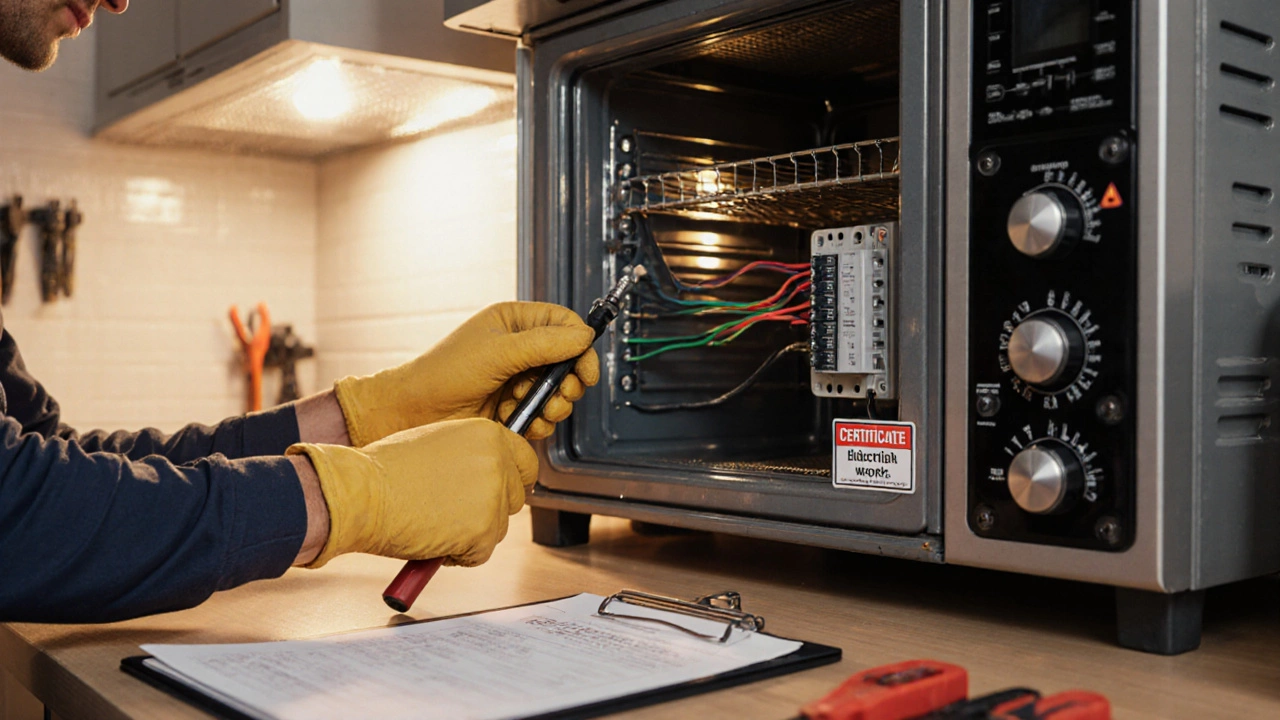
Do I Need an Electrician to Replace an Electric Oven?
0 Comments
Replacing an electric oven isn't a DIY job. Learn why hiring a licensed electrician is required by law in New Zealand, the risks of doing it yourself, and what the process actually involves.
Read More