Electric Oven Repair vs. Replace Calculator
Enter Your Details
Ready to Calculate
Enter your oven details to see if you should repair or replace.
That moment when your electric oven stops heating evenly or won't turn on at all is never a good time. Maybe you're in the middle of preparing dinner for guests, or perhaps it's just another Sunday roast that has suddenly become impossible. The immediate question isn't really "what broke?" but rather "is it worth fixing?" You are staring down a repair bill that could range from $150 to $400, while a brand-new model sits online for $800 to $1,200. It feels like a trap.
The answer isn't always black and white, but there is a reliable way to decide without guessing. By looking at the age of your appliance, the specific part that failed, and the current market value of new units, you can make a decision that saves both money and sanity. Let’s break down exactly how to calculate whether a repair makes sense in 2026.
The 50% Rule: A Simple Financial Heuristic
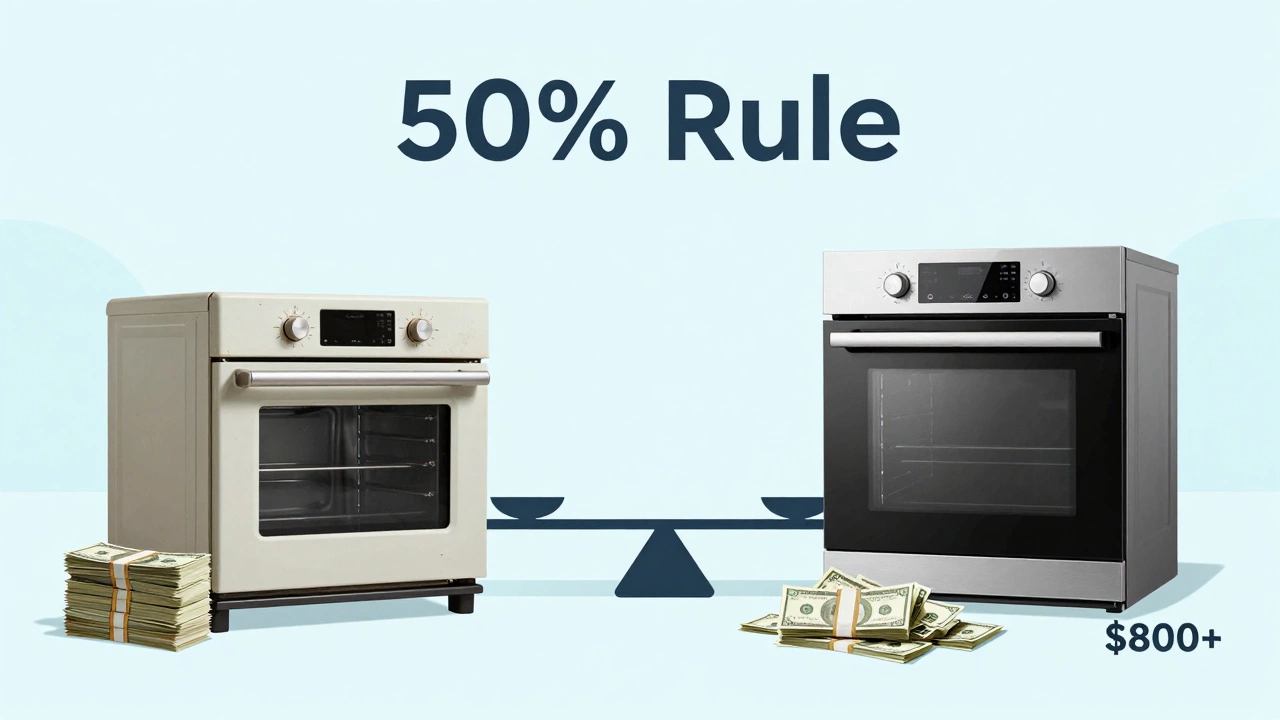
If you want a quick rule of thumb, professionals often use the 50% rule. If the cost of the repair is more than 50% of the price of a comparable new oven, you should usually replace it. However, this is a starting point, not the final verdict. You need to look deeper because a cheap new oven might lack the features or durability of your current one.
Consider the lifespan of your appliance. Most modern electric ovens have an average lifespan of 10 to 13 years. If your unit is within that window, repairing it is often a smart move. These appliances are built to last, and a single component failure doesn't mean the whole machine is dying. But if your oven is 15 years old, that same repair might be throwing good money after bad. An older unit is likely to face other failures soon-perhaps the door seal wears out next month, or the control board glitches later this year.
Think of it like your car. If your ten-year-old sedan needs a new transmission, you weigh the cost against buying a newer, more reliable vehicle. The same logic applies here. A repair extends the life of a known quantity; a replacement introduces a new variable, albeit with a warranty.
Common Failures and Their Repair Costs
Not all repairs are created equal. Some issues are minor and inexpensive to fix, while others signal major internal decay. Understanding what typically breaks can help you gauge the severity of the problem before calling a technician.
| Component | Typical Symptoms | Average Repair Cost (Parts + Labor) | Lifespan Impact |
|---|---|---|---|
| Heating Element | Oven won't heat, visible burns or blisters on element | $150 - $250 | Low (Element is wear-and-tear) |
| Thermostat / Temperature Sensor | Food burns or undercooks, oven runs too hot/cold | $200 - $350 | Medium (Critical for accuracy) |
| Control Board | Display errors, unresponsive buttons, random shutdowns | $300 - $500+ | High (Brain of the oven) |
| Door Gasket / Seal | Heat escapes, oven takes longer to preheat | $100 - $200 | Low (Seal degradation is normal) |
| Igniter (for self-clean) | Self-clean cycle won't start | $150 - $250 | Low (Specific function only) |
Notice the pattern here. Replacing a heating element is relatively cheap. It’s a consumable part, much like brake pads on a car. If this is the issue, and your oven is otherwise healthy, fixing it is almost always worth it. On the flip side, a failing control board is expensive and complex. This is the computer that manages everything. If the brain dies, it’s often a sign that voltage spikes or moisture damage have affected the entire system. In these cases, replacement becomes a stronger candidate.
When Replacement Makes More Sense
There are scenarios where even a cheap repair doesn’t justify keeping the old oven. First, consider energy efficiency. Ovens manufactured before 2015 often lack the insulation and precise temperature controls of modern units. Newer models can be up to 20% more energy efficient. If you bake frequently, that savings adds up over time, offsetting the initial purchase price of a new oven.
Second, look at feature obsolescence. Do you rely on convection cooking? Does your current oven have a broken self-clean cycle that you actually use? Modern convection ovens offer better air circulation, leading to faster cook times and more even browning. If your current oven struggles with basic tasks, a repair might fix the symptom but not the underlying performance deficit.
Finally, consider safety. If your oven has frayed wiring, frequent tripping of circuit breakers, or signs of electrical arcing inside the cavity, do not repair it. Replace it immediately. Electrical fires in kitchens are a serious risk, and no amount of saving money is worth the danger.
DIY vs. Professional Repair
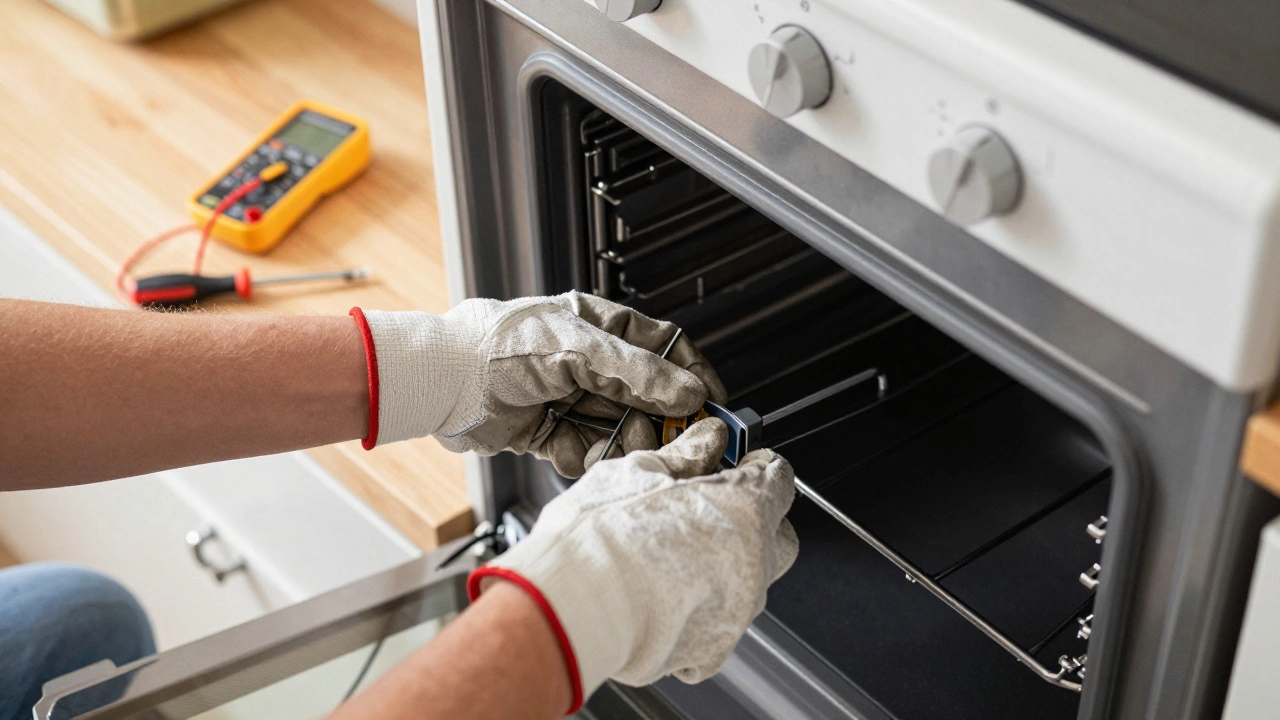
Some oven issues are simple enough for a handy homeowner to tackle. Swapping out a baking element often involves removing two screws and plugging in a new connector. If you are comfortable working with household electricity and can safely disconnect power at the breaker box, this can save you the labor fee, which typically accounts for 60-70% of the total repair cost.
However, diagnostics are tricky. What looks like a broken element might actually be a faulty thermostat sending incorrect signals. If you replace the element and the problem persists, you’ve wasted money and time. For anything involving the control board, gas lines (if it's a dual-fuel), or complex wiring, hire a professional. Certified technicians have multimeters and diagnostic tools to pinpoint the exact failure. They also provide warranties on their work, giving you peace of mind.
Factors Influencing Your Decision in 2026
The appliance market in 2026 offers more choices than ever, but also some complexities. Supply chain issues have stabilized, meaning parts are generally available, but prices remain firm. Here are three key factors to weigh right now:
- Warranty Status: If your oven is still under manufacturer warranty, repair is free or low-cost. Always check this first. Even extended warranties can cover major components like control boards.
- Smart Features: Many new ovens come with Wi-Fi connectivity and app integration. While these are nice-to-haves, they don't necessarily improve cooking performance. Don't let flashy tech distract you from the core function: heating food evenly.
- Installation Costs: Replacing an oven isn't just about the unit price. If your new oven requires different electrical hookups (e.g., upgrading from a 240V standard plug to a hardwired connection) or cabinetry modifications, installation costs can add $200-$500 to the project.
Also, consider the environmental impact. Manufacturing a new oven consumes significant resources. Extending the life of your current appliance by five years through a simple repair is a genuinely eco-friendly choice. E-waste is a growing global problem, and keeping large appliances out of landfills whenever possible is a responsible decision.
How to Get an Accurate Quote
Before making a final call, get at least two estimates from reputable local repair services. Be specific about the symptoms. Instead of saying "my oven is broken," say "the oven light works, but the interior doesn't heat up, and I see a blister on the bottom element." This helps the technician prepare the right parts and reduces diagnostic fees.
Ask for a breakdown of parts versus labor. Some companies charge a flat rate for diagnosis, which may be waived if you proceed with the repair. Others charge hourly. Know the difference. Also, ask if the quote includes disposal of the old parts and any necessary testing after the repair.
If the quote comes back high, ask the technician why. Is it a rare part? Is the labor intensive because the oven is built into a tight cabinet? Understanding the 'why' behind the cost helps you validate whether the price is fair or inflated.
Final Checklist: Repair or Replace?
To simplify your decision, run through this mental checklist:
- Is the oven less than 10 years old? (Yes = Lean toward repair)
- Is the repair cost less than 50% of a new comparable model? (Yes = Lean toward repair)
- Is the failed part a simple wear-and-tear item (element, seal)? (Yes = Lean toward repair)
- Are there safety concerns (electrical arcing, burning smells)? (Yes = Replace immediately)
- Do you desire significantly better performance or efficiency? (Yes = Lean toward replace)
If you answered 'yes' to most of the repair-leaning questions, go ahead and fix it. You’ll extend the life of a functional appliance and save money upfront. If you leaned toward replacement, invest in a new, energy-efficient model that will serve you reliably for the next decade. Either way, you’re making an informed choice based on data, not emotion.
How long does an electric oven typically last?
Most electric ovens last between 10 and 13 years with regular use. High-end models with stainless steel interiors and quality components may last up to 15 years. Frequent use of self-clean cycles can shorten lifespan due to high heat stress on seals and electronics.
Can I replace an oven heating element myself?
Yes, replacing a heating element is one of the few oven repairs suitable for DIY. It usually involves unscrewing the old element and plugging in the new one. Always ensure the power is disconnected at the circuit breaker before starting. If the element is corroded or stuck, professional help is recommended.
What are the signs that my oven thermostat is broken?
A broken thermostat often causes inconsistent baking results. Food may burn on the outside but remain raw inside, or vice versa. You might also notice the oven running continuously without reaching the set temperature, or shutting off too early. Using an independent oven thermometer can help verify if the internal temperature matches the display.
Is it cheaper to repair or replace a 15-year-old oven?
For a 15-year-old oven, replacement is usually more cost-effective. At this age, multiple components are likely near the end of their life. Even if one part is fixed, another may fail soon. Additionally, newer models are significantly more energy-efficient, saving you money on electricity bills over time.
Does repairing an oven void the warranty?
No, repairing an oven does not void the warranty unless the repair was performed by an unauthorized technician who caused damage. However, if the oven is still under manufacturer warranty, you must use authorized service centers to keep the warranty valid. Unauthorized repairs on a warranted unit can indeed void coverage.
How much does it cost to replace an oven control board?
Replacing an oven control board typically costs between $300 and $500, including parts and labor. The board itself can cost $150-$300 depending on the brand and model. Labor adds another $100-$200. Due to the high cost, this is often a tipping point for deciding to replace the entire oven, especially if the unit is older than 8 years.