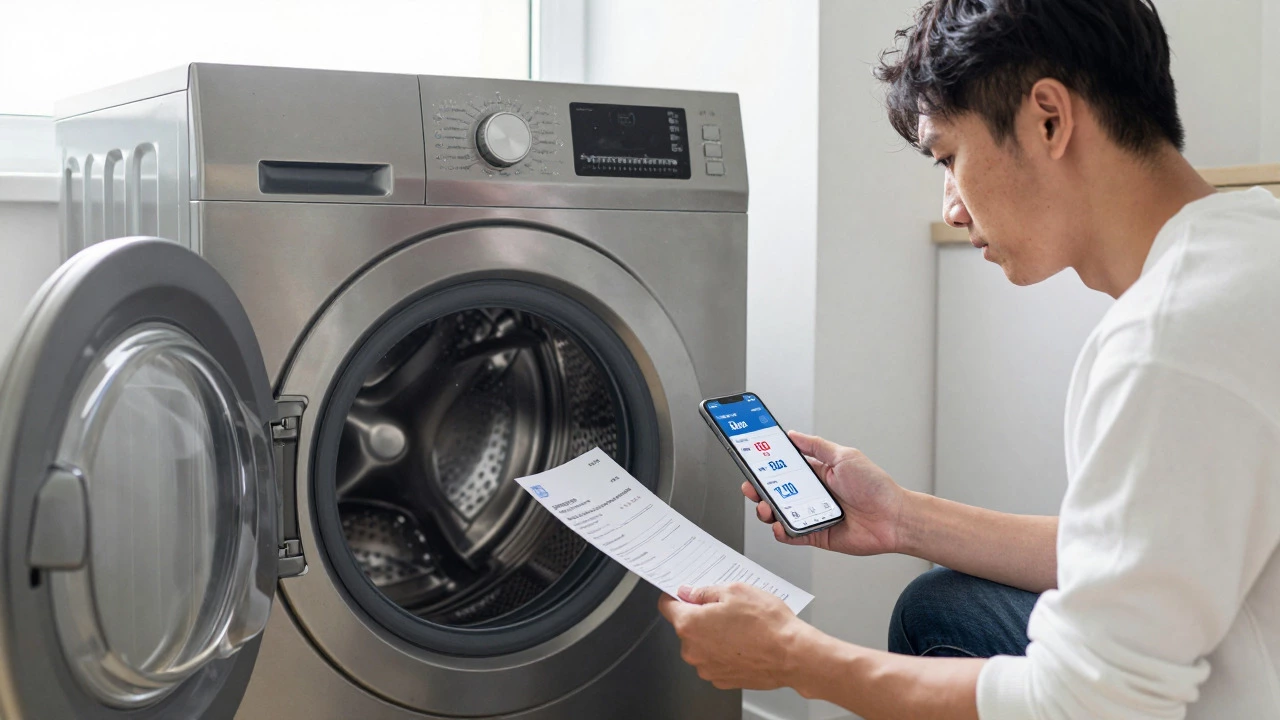
Tumble Dryer Repair vs. Replace Calculator
You press start on your tumble dryer is a household appliance designed to remove moisture from laundry using heated air., and instead of the comforting hum of spinning drums, you get silence. Or worse, a burning smell. The immediate question isn't just "what's wrong?" but "is it worth fixing?" This decision sits at the intersection of your budget, your timeline, and the environmental impact of throwing away electronics. In 2026, with energy prices stabilizing but still significant, and new models packed with smart sensors, the calculus has changed.
There is no single answer that applies to every machine. A £40 belt replacement on a ten-year-old unit might be a steal, while a £150 heating element swap on a two-year-old premium model could be a no-brainer fix. Conversely, spending £100 to fix a £120 budget dryer bought five years ago is financial suicide. To make the right call, you need to look beyond the immediate repair quote and evaluate the machine's total lifecycle value.
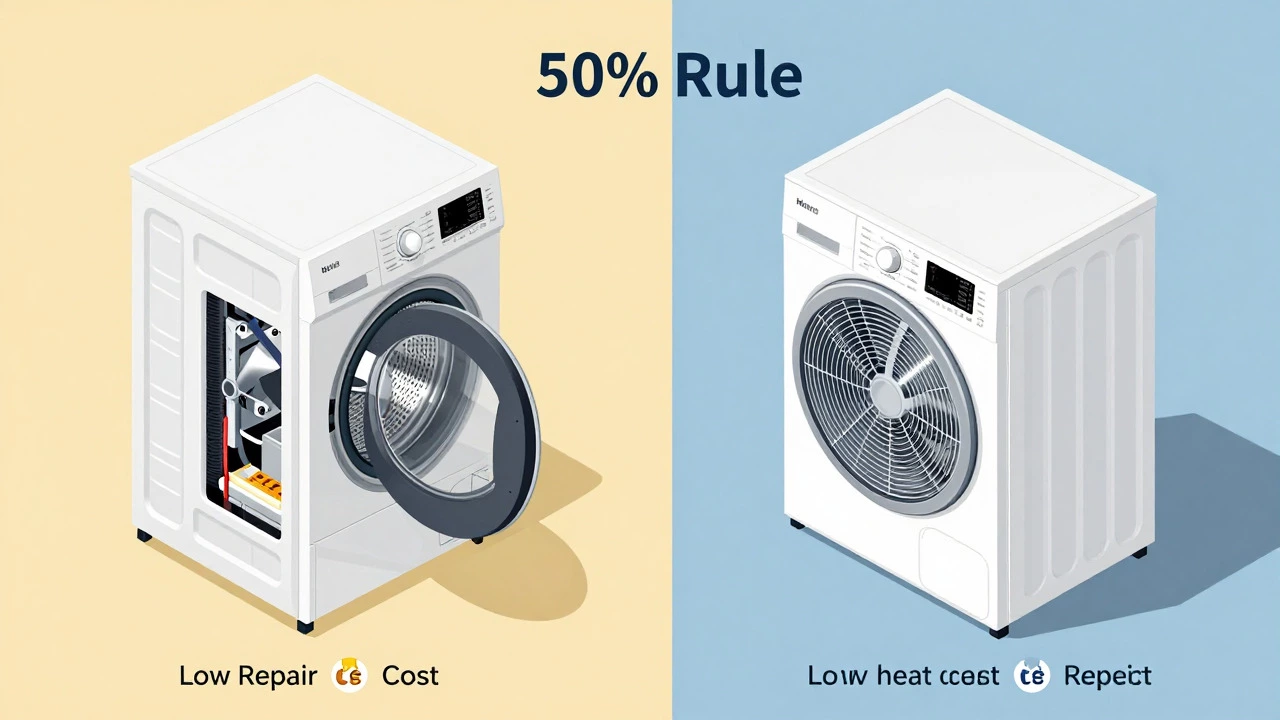
The 50% Rule: A Simple Financial Benchmark
The most reliable heuristic for any major home appliance is the 50% rule. If the cost of the repair exceeds 50% of the price of a comparable new unit, replacement is usually the smarter financial move. However, in 2026, you must adjust this based on the type of dryer you own.
Consider a standard condenser tumble dryer is a dryer that uses internal heat exchangers to cool moist air and collect water in a tank or drain line.. These are common, efficient enough, and widely available. If yours costs £300 to replace and the repair is £180, you are pushing the limit. But if you own a heat pump tumble dryer is an energy-efficient dryer that recycles hot air within the drum, consuming up to 50% less electricity than condenser models., the stakes are different. Heat pump dryers often cost between £400 and £800 new due to their complex compressors and refrigerant systems. A £200 repair on a £600 machine is only 33% of the replacement cost, making repair highly attractive.
This rule also accounts for installation costs. New dryers may require professional hookup, especially if you are switching from vented to condenser types or dealing with tricky electrical setups. Factor in the potential £50-£100 for disposal of the old unit and delivery of the new one. Suddenly, that "cheap" repair looks even better.
Age Matters: When Time Runs Out
Average lifespan for a modern tumble dryer is between eight and twelve years. This range depends heavily on usage frequency and maintenance. If your machine is under five years old, repair is almost always the correct choice unless the damage is catastrophic (like a cracked drum). Manufacturers build these units to last; early failures are often covered by warranty or indicative of isolated component defects rather than systemic decay.
If your dryer is between five and eight years old, you are in the "grey zone." Here, the condition of the interior matters more than the age. Have you cleaned the lint filter after every load? Have you descaled the condenser or heat exchanger annually? A well-maintained seven-year-old dryer can easily have three more years of life left. A neglected five-year-old one might be on its last legs due to clogged airflow causing overheating and premature motor failure.
Once a dryer passes the ten-year mark, the risk of cascading failures increases. Even if you fix the heating element today, the thermal cut-out switch, the door seal, or the drive belt might fail next month. Old rubber seals harden and leak heat, reducing efficiency. Old motors draw more power. At this stage, unless the repair is minor (under £50), replacement is often more economical in the long run because you avoid the "death spiral" of repeated small fixes.
Diagnosing Common Faults: What Can You Fix?
Not all repairs are created equal. Some issues are cheap and quick to resolve, while others signal deep-seated problems. Understanding what’s broken helps you apply the 50% rule accurately.
| Symptom | Likely Cause | Est. Repair Cost (Parts + Labor) | Repair Worth It? |
|---|---|---|---|
| Won't start / No power | Faulty door switch or thermal fuse | £40 - £80 | Yes (Cheap fix) |
| Takes forever to dry / Clothes damp | Clogged condenser, blocked vent, or faulty thermostat | £60 - £120 | Yes (If cleaned first) |
| No heat | Failed heating element or thermistor | £80 - £150 | Maybe (Depends on age) |
| Loud banging / Screeching | Worn rollers, damaged belt, or bearing failure | £100 - £200 | No (If bearings failed) |
| Error codes (E1, E2, etc.) | Control board issue or sensor fault | £150 - £250+ | Rarely (High labor cost) |
Notice the distinction between mechanical and electronic faults. Mechanical parts like belts, rollers, and heating elements are standardized. They are relatively inexpensive and easy for a technician to access. Electronic faults involving the main control board are different beasts. Circuit boards are proprietary, expensive, and often labor-intensive to replace. If your dryer’s brain is dead, the repair cost frequently exceeds the value of the machine, regardless of its age.
The Hidden Cost of Efficiency
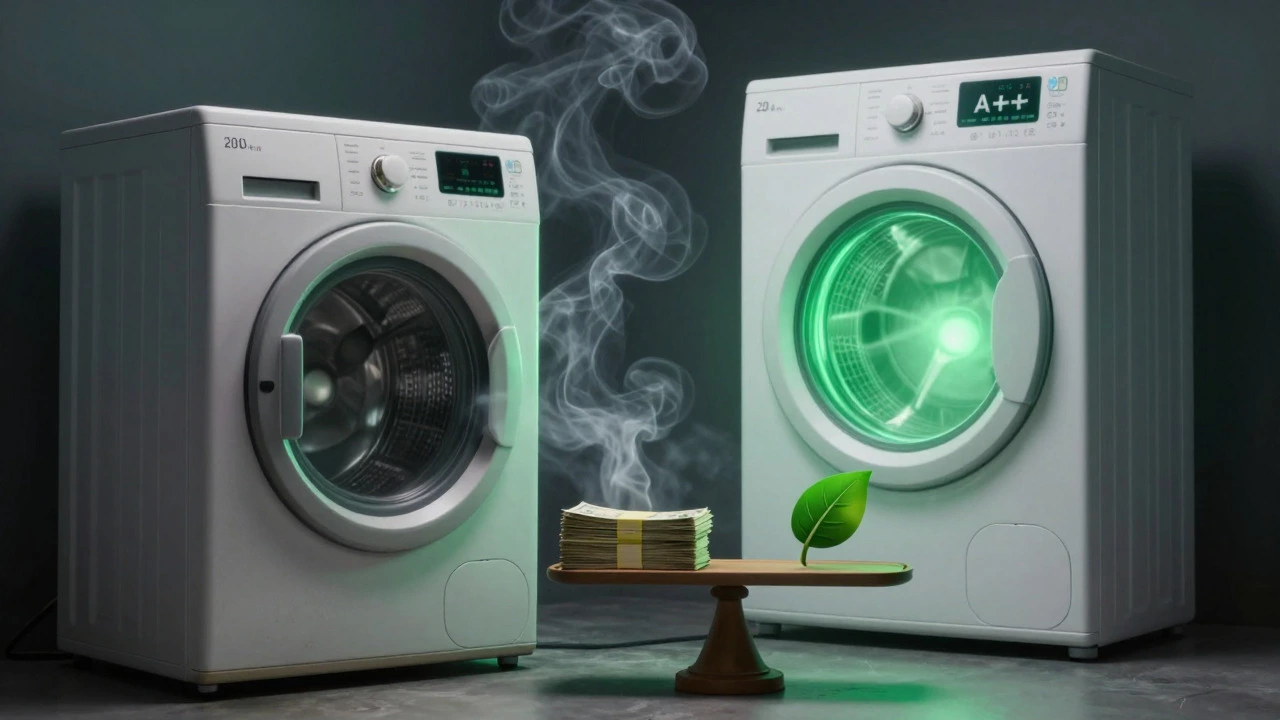
In 2026, energy efficiency is not just an environmental talking point; it’s a direct hit to your wallet. Older tumble dryers, particularly those manufactured before 2015, are notoriously inefficient. A standard condenser dryer from that era might consume 2.5 kWh per cycle. A modern A+++ rated heat pump dryer is the highest efficiency rating for dryers, indicating minimal energy consumption through advanced heat recovery technology. uses roughly 1.2 kWh for the same load.
Let’s do the math. If you run four loads a week, that’s 16 cycles a month. The difference in energy consumption is 1.3 kWh per cycle. Over a year, that’s roughly 676 kWh saved. At an average electricity rate of £0.28 per kWh (a realistic estimate for 2026), you save approximately £189 per year. If your old dryer is inefficient, replacing it pays for itself in energy savings within three to four years. This changes the repair equation significantly. Fixing an inefficient machine locks you into high running costs for another decade. Replacing it upgrades your home’s energy profile.
Environmental Impact: Repair vs. Replace
We cannot ignore the ecological footprint. Manufacturing a new tumble dryer requires significant resources: steel, plastics, rare earth metals for motors, and refrigerants for heat pumps. Transporting these components globally adds carbon emissions. Disposing of an old unit sends heavy metals and non-biodegradable plastics to landfills, where they leach toxins over centuries.
From a purely environmental standpoint, repairing is almost always superior. Extending the life of your appliance by even two years drastically reduces its per-year carbon footprint. If your dryer is functional except for a minor issue, fixing it is the greenest choice. However, if the repair involves replacing a large component like a compressor or motor, the embodied energy of that new part narrows the gap. Still, reusing the existing chassis, drum, and housing saves more material waste than buying new.
That said, if your current dryer is a gas-guzzling relic from 2010, the long-term environmental benefit of switching to a high-efficiency heat pump model may outweigh the initial manufacturing impact of the new unit. Think of it as trading short-term waste for long-term sustainability.
DIY vs. Professional Repair
Before calling a technician, consider your own skill level. Many tumble dryer faults are accessible to DIY enthusiasts. Replacing a drive belt, cleaning a blocked condenser, or swapping a door switch requires basic tools and a YouTube tutorial. These tasks can save you £50-£100 in labor fees, making a marginal repair worthwhile.
However, caution is essential. Tumble dryers involve high-voltage electricity and, in some cases, gas lines. If you are uncomfortable working with live circuits or removing heavy panels, hire a professional. Look for engineers certified by bodies like NICEIC (for electrical work) or Gas Safe Register (if applicable). An unqualified repair can void insurance or create fire hazards. Always ensure the power is disconnected at the mains before attempting any DIY work.
When to Definitely Replace
Some scenarios make repair a poor decision:
- Cracked Drum: The drum is the heart of the machine. Cracks usually indicate severe imbalance or bearing failure. Replacement is costly and complex.
- Repeated Failures: If you’ve already replaced the heating element and the motor recently, the underlying issue (likely poor ventilation or voltage instability) will kill the next part too.
- Obsolete Parts: If the manufacturer has discontinued support for your model, finding genuine parts becomes impossible. Aftermarket alternatives may fit but lack durability.
- Noisy Operation: Excessive vibration or noise often points to worn suspension springs or bearings. Fixing these is labor-intensive and rarely extends life significantly.
Making the Final Decision
To decide whether to repair or replace your tumble dryer, follow this checklist:
- Check the Age: Is it under 5 years? Lean towards repair. Over 10 years? Lean towards replacement.
- Get a Quote: Obtain a written estimate including parts and labor. Compare it to 50% of the cost of a new, similar-specification machine.
- Assess Efficiency: Is your current model A-rated or lower? If so, factor in annual energy savings from a new heat pump model.
- Evaluate Complexity: Is the fault mechanical (belt, heater) or electronic (control board)? Mechanical is cheaper and easier to fix.
- Consider Maintenance History: Has the machine been well-cared for? Neglected machines are prone to repeat failures.
Ultimately, the best choice balances immediate cost with long-term value. A cheap repair on an old, inefficient machine might save money today but cost you more in energy bills tomorrow. A pricey repair on a newer, high-efficiency model preserves investment and performance. Use the data, trust your instincts, and prioritize safety above all else.
How much does it cost to repair a tumble dryer?
Repair costs vary widely depending on the fault. Minor issues like a faulty door switch or thermal fuse typically cost between £40 and £80. More complex problems such as a failed heating element range from £80 to £150. Major repairs involving control boards or motor replacements can exceed £200. Always request a detailed quote before authorizing work.
What is the average lifespan of a tumble dryer?
Most modern tumble dryers last between 8 and 12 years. Regular maintenance, such as cleaning the lint filter after every use and descaling the condenser annually, can extend this lifespan. Poor maintenance or frequent heavy loads may shorten it to 5-7 years.
Is it cheaper to repair or replace a tumble dryer?
It depends on the repair cost relative to the machine's age and value. As a general rule, if the repair costs more than 50% of the price of a new comparable unit, replacement is more economical. Additionally, older, inefficient models may cost more to run, making replacement financially beneficial despite higher upfront costs.
Can I fix a tumble dryer myself?
Yes, many common issues are DIY-friendly. Replacing a drive belt, cleaning a blocked condenser, or swapping a door switch are manageable for beginners with basic tools. However, always disconnect the power supply first. For complex electrical faults or gas-related issues, hire a qualified professional to ensure safety and compliance.
Why is my tumble dryer taking longer to dry clothes?
This is usually caused by restricted airflow. Check if the lint filter is clogged, the condenser is dirty, or the exhaust vent is blocked. Other causes include a faulty thermostat, low heating element output, or overloading the drum. Regular cleaning of the filter and condenser resolves most drying time issues.
Are heat pump dryers worth the extra cost?
Yes, heat pump dryers are significantly more energy-efficient than traditional condenser or vented models. They use up to 50% less electricity, leading to substantial savings on utility bills over time. While they have a higher purchase price, the long-term operational savings and gentler treatment of fabrics make them a worthwhile investment for most households.