Boiler Repair vs. Replacement Calculator
Enter your current heating details below to see if replacing your 20-year-old boiler pays for itself.
Total Cost (Over 5 Years)
$0
- + Immediate Repair: $0
- + Higher Fuel Bills: $0
- + Maintenance Risks: High
Total Cost (Over 5 Years)
$0
- + Installation: $0
- + Lower Fuel Bills: $0
- + Maintenance Risks: Low
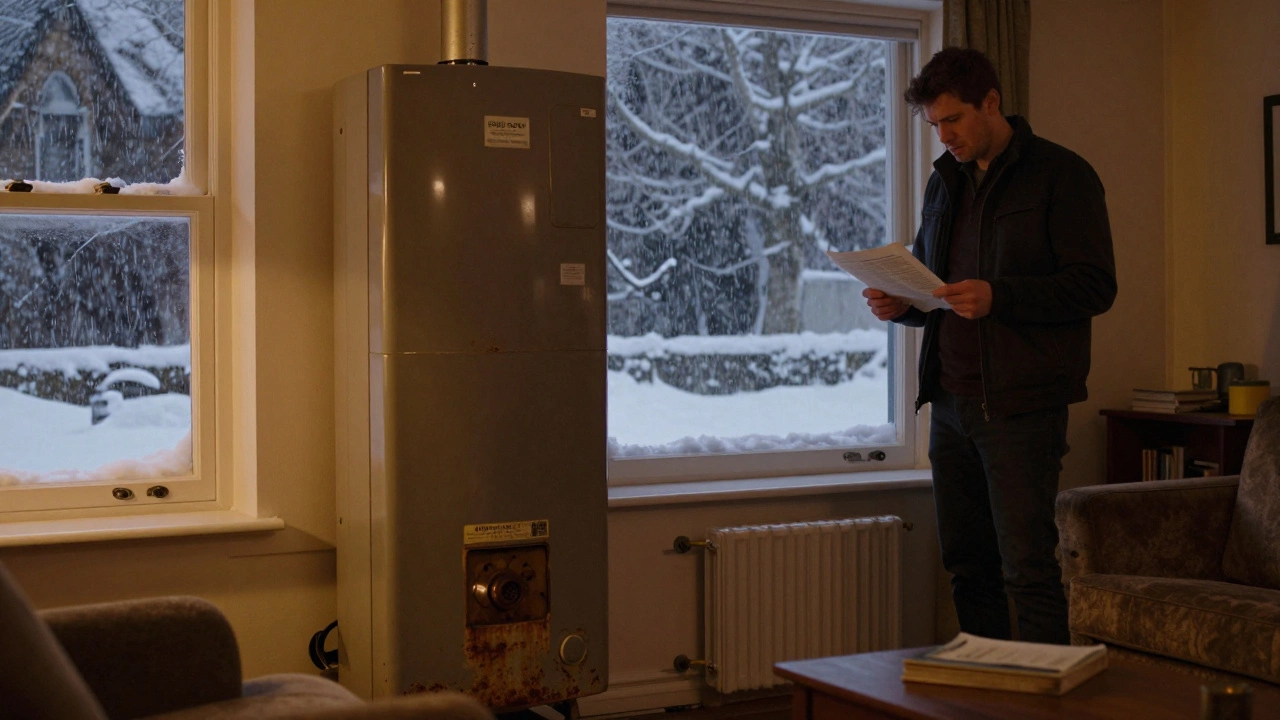
Imagine this: it’s the middle of winter, the wind is howling outside, and your central heating decides to quit. You call a technician, they open up the unit, and you’re told the system is twenty years old. The quote for parts and labor looks steep. Now you’re stuck with a classic homeowner’s dilemma. Do you spend money fixing something that’s already at the end of its life, or do you bite the bullet and buy a new one?
This isn’t just about comfort; it’s about your wallet and your home’s safety. A 20-year-old boiler is a heating system that has exceeded its typical operational lifespan, often resulting in higher energy bills and increased safety risks. In most markets, including New Zealand where standards are strict, a boiler hitting the two-decade mark is essentially running on borrowed time. While some units can squeeze out a few more years, the economics rarely favor repair over replacement.
The Lifespan Reality Check
Let’s talk numbers. Most modern gas boilers are designed to last between fifteen and twenty years. If your unit is exactly twenty years old, it has survived its expected life expectancy. Think of it like a car that has clocked three hundred thousand kilometers. Sure, it might still run if you keep pouring money into the engine, but eventually, the chassis starts to rust, and the reliability drops off a cliff.
When a boiler reaches this age, the internal components-like the heat exchanger, pumps, and valves-have undergone thousands of thermal cycles. Metal expands when hot and contracts when cold. Over two decades, this constant stress leads to micro-fractures and corrosion. These aren't always visible until a catastrophic failure occurs. At this stage, the boiler is no longer just an appliance; it’s a liability waiting to happen.
- Average lifespan: 15-20 years for standard condensing boilers.
- Peak efficiency window: First 10 years.
- Risk zone: After year 15, failure rates increase by approximately 40% annually.
The Efficiency Gap: Money Down the Drain
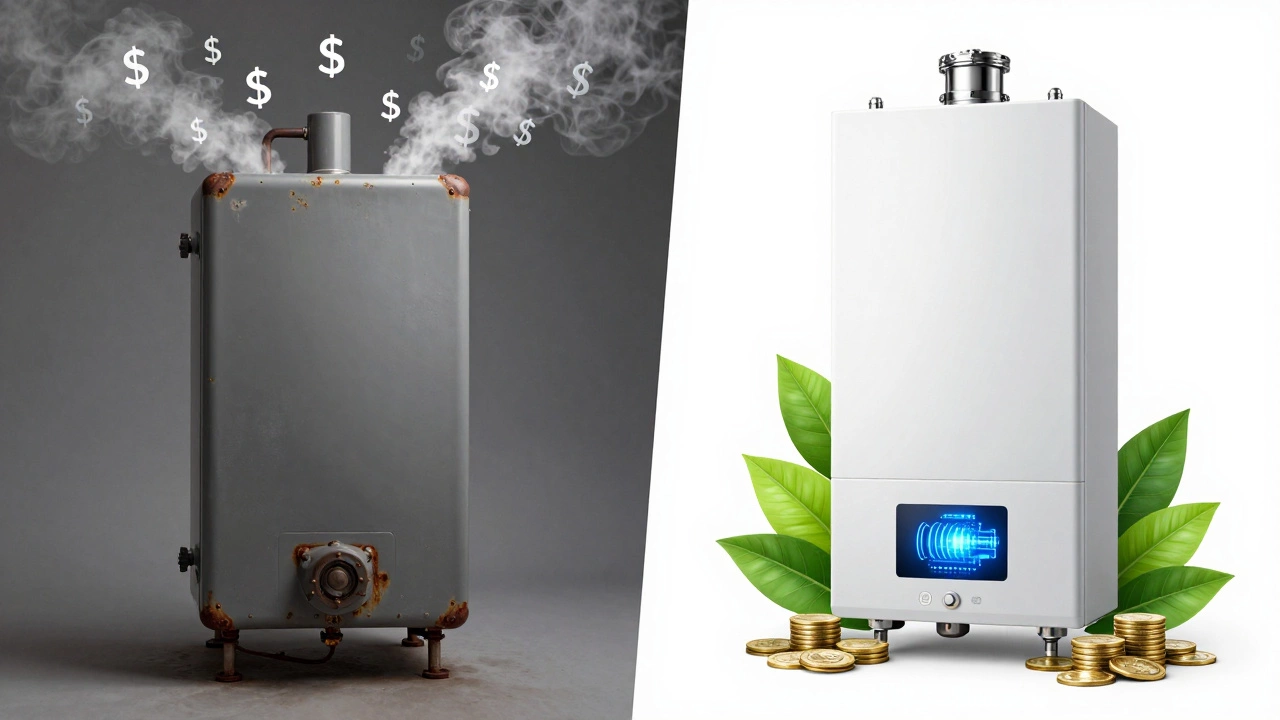
Here is the part that hurts your bank account the most: efficiency. Boilers from twenty years ago were vastly different from today’s models. Older non-condensing boilers typically operated at around 60% to 70% efficiency. That means for every dollar you spent on gas, forty cents was literally going up the chimney as wasted heat.
Modern condensing boilers are high-efficiency heating systems that recover waste heat from exhaust gases, achieving efficiencies above 90%. These newer units capture that wasted heat and use it to warm your water, pushing efficiency ratings to 90% or even 95%. When you replace a twenty-year-old unit with a new high-efficiency model, you are effectively getting almost half the heat for the same amount of fuel.
| Feature | 20-Year-Old Boiler | New Condensing Boiler |
|---|---|---|
| Efficiency Rating | 60-70% | 90-98% |
| Annual Fuel Waste | High (30-40%) | Low (2-10%) |
| Emissions (CO2) | Higher | Lower |
| Maintenance Needs | Frequent | Minimal |
If you are spending $2,000 a year on heating, an old boiler might be wasting $600 to $800 of that annually. Over five years, that’s $3,000 to $4,000 gone. That money could have paid for a significant portion of a new boiler installation. You aren't just paying for repairs; you are subsidizing inefficiency.
Safety Concerns: Carbon Monoxide Risks
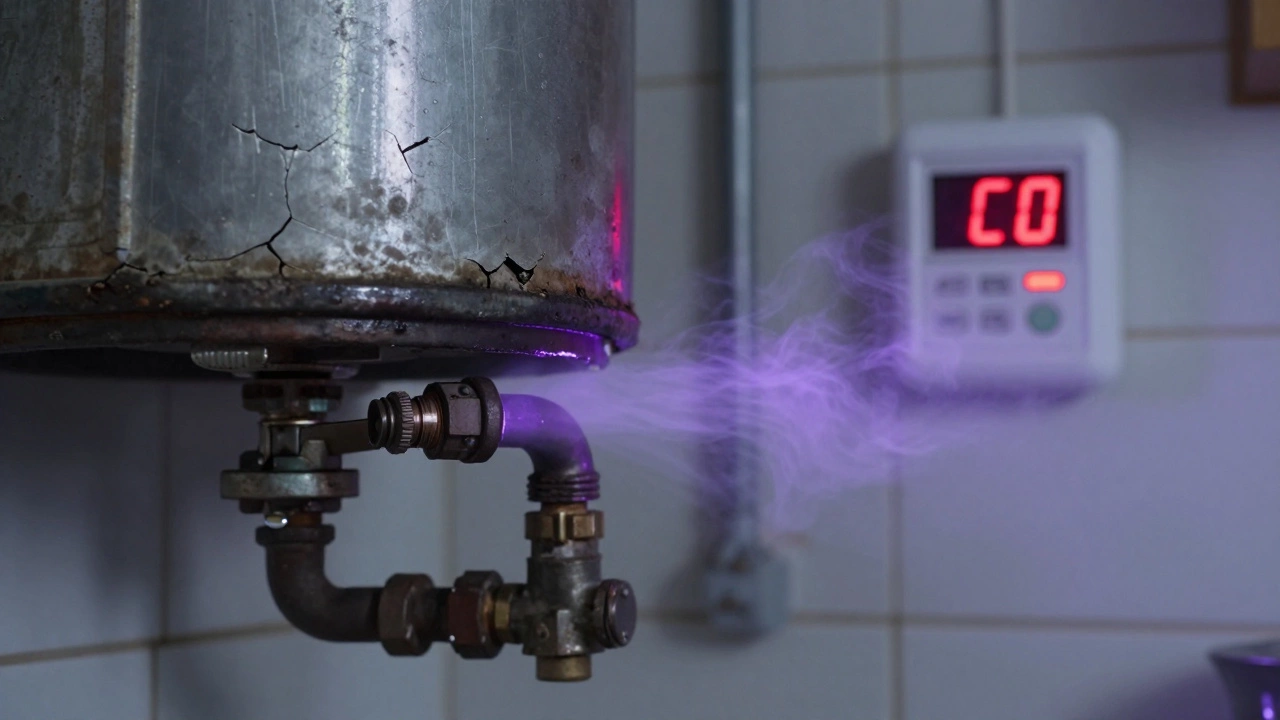
We need to address the elephant in the room: safety. Gas appliances degrade. Seals dry out, pipes corrode, and combustion chambers crack. One of the biggest risks with an aging boiler is carbon monoxide (CO) leakage. CO is odorless, colorless, and deadly. It sneaks into your home without you knowing.
In many regions, including New Zealand, regulations regarding gas safety have tightened significantly over the last two decades. An older boiler may not meet current emission standards or safety protocols. Even if it works, it might burn fuel unevenly, producing dangerous levels of CO. Replacing a faulty part doesn't fix the underlying structural degradation of the entire unit. You might fix the leak today, but what fails next month? The pump? The pressure valve? The control board?
Every time you repair an old boiler, you are buying temporary peace of mind. But you are also keeping a potentially hazardous device in your home. For families with children or elderly relatives, this risk is often not worth the savings.
The Cost Calculation: Repair vs. Replace
Let’s look at the financials. This is where most people get stuck. They see a repair quote for $500 and think, "That’s cheaper than $3,000 for a new one." But that’s looking at the price tag, not the total cost of ownership.
- Immediate Repair Cost: Parts and labor. Let’s say $400-$800 depending on the issue.
- Ongoing Maintenance: Older boilers require more frequent servicing. Expect annual service calls costing $150-$200.
- Energy Bills: As noted, you’ll pay 30-40% more for fuel compared to a new unit.
- Future Failures: The likelihood of another major breakdown within 12 months is high.
If you repair the boiler, you might spend $1,000 in the first year on fixes and services, plus extra on bills. If you replace it, you pay upfront, but your bills drop, and maintenance becomes predictable. Most experts suggest the "50% Rule": if the cost of the repair is more than 50% of the cost of a new unit, replace it. However, for a twenty-year-old unit, I’d argue the threshold should be much lower. Any major component failure (heat exchanger, main PCB) is a signal to replace.
Environmental Impact
It’s not just about your wallet; it’s about the planet. Older boilers burn more fossil fuels to produce the same amount of heat. By sticking with an inefficient unit, you are contributing unnecessarily to greenhouse gas emissions. Newer models are designed to minimize environmental impact. Some are even compatible with hybrid systems that integrate with solar thermal or heat pumps, future-proofing your home against rising energy costs and stricter environmental regulations.
In places like Dunedin, where winters are damp and cold, efficient heating is crucial. Reducing your carbon footprint while staying warm is a win-win. Upgrading supports broader sustainability goals and aligns with modern building codes that prioritize energy conservation.
When Might Repair Make Sense?
Are there exceptions? Yes, but they are rare. Repairing a twenty-year-old boiler might make sense only if:
- You are selling the house soon: If you need the heating to work for viewings and plan to sell within six months, a minor repair might suffice. Disclose the age to buyers.
- The repair is trivial: A simple thermostat replacement or a clogged filter cleaning is cheap and easy. Don’t confuse minor maintenance with major component failure.
- Budget constraints are absolute: If you literally cannot afford a new system right now, a repair buys you time. But treat it as a stopgap, not a solution. Start saving immediately for the replacement.
Even in these cases, understand that you are delaying the inevitable. The boiler will fail again, likely at the worst possible time.
Steps to Take Before Deciding
Don’t rush into a decision. Follow this checklist to ensure you’re making an informed choice:
- Get a professional assessment: Have a certified technician inspect the boiler. Ask specifically about the condition of the heat exchanger and flue.
- Check your warranty: Unlikely for a 20-year-old unit, but verify if any extended coverage exists.
- Calculate annual energy costs: Compare your last year’s gas bill with neighbors who have newer systems.
- Research rebates: Some local councils or energy providers offer incentives for upgrading to high-efficiency models.
- Get quotes for replacement: Know the full cost of a new installation, including removal of the old unit.
Armed with this data, the decision usually becomes clear. The emotional attachment to the old machine fades when faced with the reality of rising bills and safety risks.
How long does a boiler typically last?
Most modern gas boilers last between 15 and 20 years. With excellent maintenance, some may reach 25 years, but efficiency and safety decline significantly after the 15-year mark.
Is it safe to use a 20-year-old boiler?
While it may function, a 20-year-old boiler poses higher safety risks, including carbon monoxide leaks and gas fires. Regular inspections are critical, but replacement is strongly recommended for optimal safety.
How much can I save by replacing my old boiler?
You can save 20-30% on annual heating bills by switching from an old non-condensing boiler to a new high-efficiency condensing model. Savings vary based on usage and local energy prices.
What are the signs my boiler needs replacing?
Signs include frequent breakdowns, rising energy bills, unusual noises, yellow burner flames (instead of blue), and water leaks around the unit. Age itself is a primary indicator.
Can I install a new boiler myself?
No. Boiler installation involves complex gas and electrical work that requires licensed professionals. DIY installation is illegal in many areas and voids warranties, posing severe safety risks.