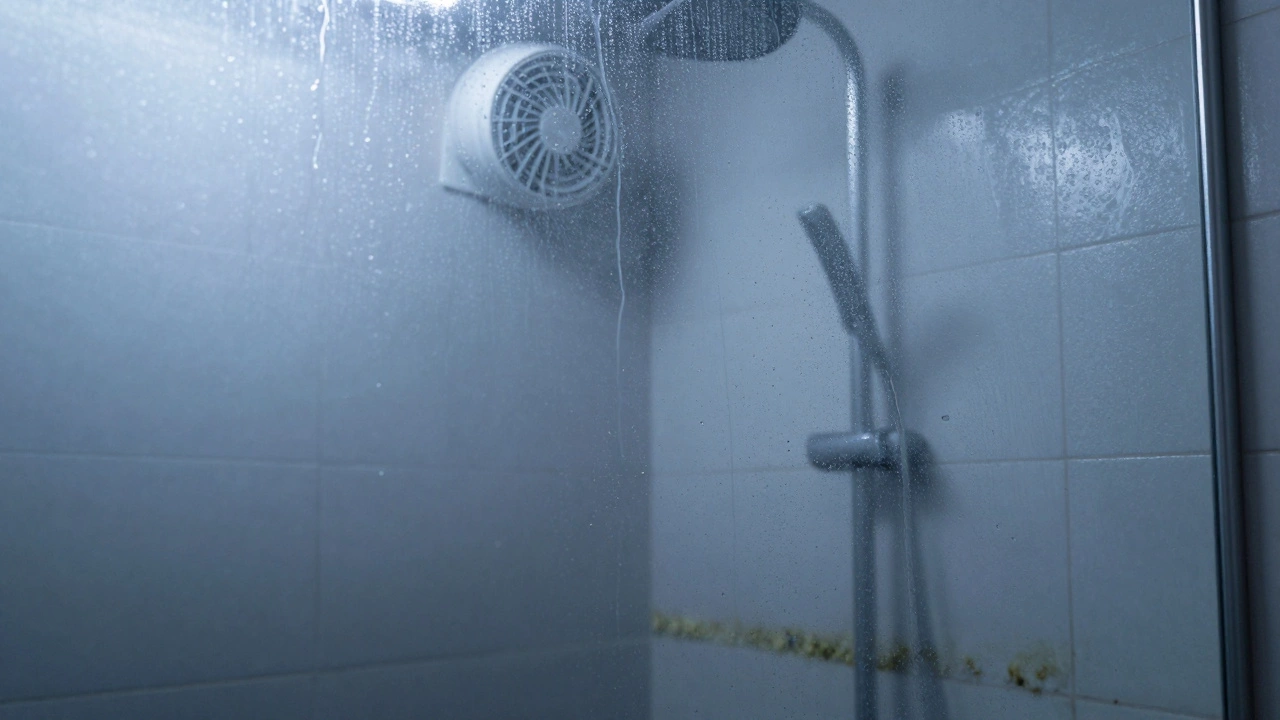
Extractor Fan Size Calculator
Recommended Fan Size
For your space
--- mm
Important: This calculation follows NZ Building Code standards. Fans must exhaust air directly outside to prevent mold growth.
You’re standing in your kitchen after cooking a big meal, and the air still smells like fried onions. Or you step into the bathroom after a hot shower and the mirror’s fogged up for hours. You think: Is it OK not to have an extractor fan? The truth? It’s not just about comfort-it’s about your home, your health, and your wallet.
What Happens When You Skip the Extractor Fan
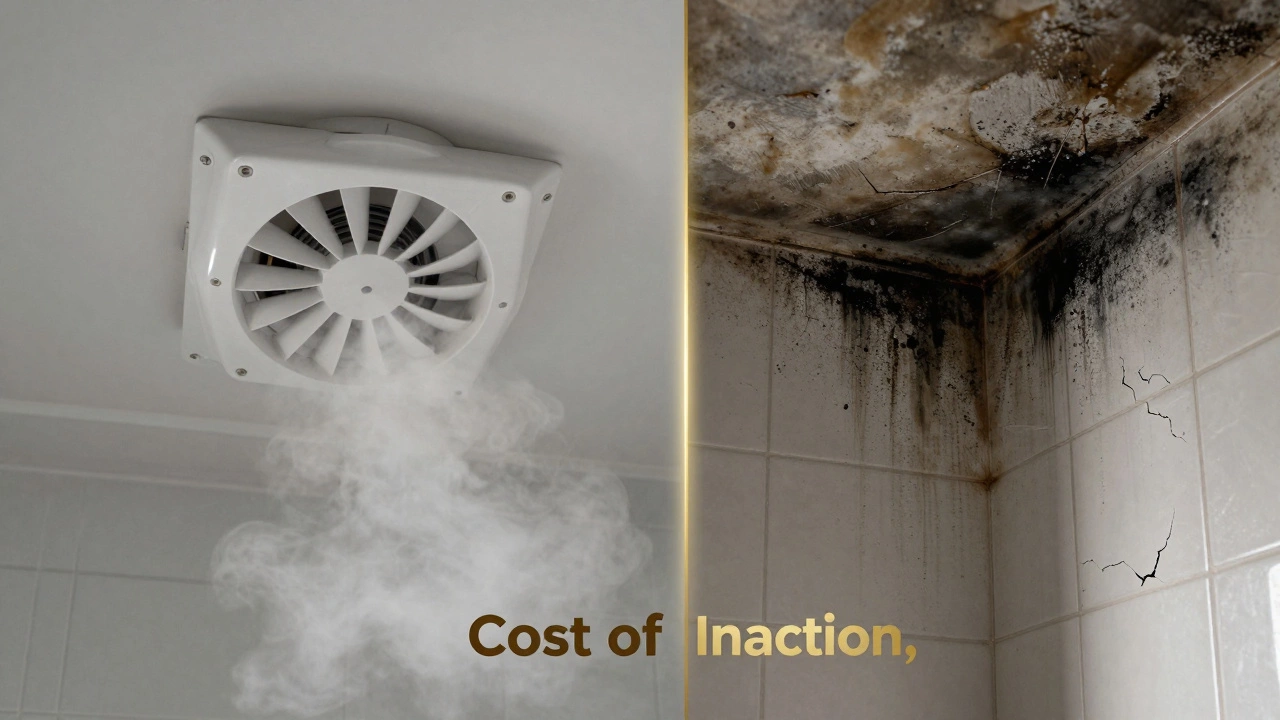
Without an extractor fan, moisture doesn’t escape. It lingers. In kitchens, steam from boiling pots and frying pans sticks to walls, ceilings, and cabinets. In bathrooms, humidity from showers soaks into tiles and grout. Over time, that moisture turns into mold. Not the kind you can wipe off with bleach. The kind that grows behind tiles, under floorboards, inside walls. A 2023 study by the New Zealand Building Research Association found that homes without proper ventilation had 3.7 times more airborne mold spores than homes with functioning extractor fans. That’s not a small difference. It’s a health risk. Mold triggers allergies, asthma, and even long-term respiratory issues-especially for kids and older adults. And it’s not just mold. Grease from cooking builds up on surfaces. It gets into your clothes, your curtains, even your books. That sticky film? It’s hard to clean. And it attracts dust mites and insects. You might not notice it right away, but over months, your home starts to feel damp, stale, and just… off.Is It Legal to Not Have One?
In New Zealand, the Building Code (Clause G12) says every kitchen and bathroom must have adequate ventilation. That doesn’t always mean a fan, but it does mean a way to remove moisture and pollutants. If you’re building or renovating, an extractor fan is usually the easiest-and often the only-way to meet those standards. If you skip it and get caught during an inspection, you could be forced to install one anyway. Even if you’re not renovating, lenders and insurers are catching on. Some home insurance policies now require proof of adequate ventilation. If mold damage occurs and you didn’t have a fan, your claim might be denied. Banks have started asking about ventilation during property valuations, especially in older homes.What Are the Alternatives?
You might be thinking: “I open a window. Isn’t that enough?” Sometimes, yes. But not always. In Dunedin, winters are cold and wet. Opening a window for 20 minutes after a shower sounds fine-until you realize your walls are freezing and your heating bill just jumped 30%. In summer, humidity hangs in the air. Opening windows just lets in more moisture from outside. Other options? Exhaust vents that lead to the roof. Passive vents with dampers. Heat recovery ventilators (HRVs). But these are more expensive and complex. A basic extractor fan costs under $100 to buy and install. An HRV? $1,500+. And most of them still need a fan to move the air. The reality? There’s no cheap, easy, or reliable alternative to a properly installed extractor fan. If you want to avoid moisture damage, you need airflow. And fans are the most practical way to create it.
When You Can Get Away With It (Sort Of)
There are rare cases where a fan isn’t strictly necessary. If you have a large, well-ventilated kitchen with a window that opens wide and you rarely cook greasy food-maybe you’re mostly boiling pasta or microwaving meals-you might be okay. Same with a small bathroom that has a large window and you only take quick showers. But here’s the catch: “Okay” doesn’t mean “safe.” It means “you haven’t seen the damage yet.” Mold grows slowly. Water stains creep in over years. By the time you notice peeling paint or a musty smell, the problem is already inside the walls. Fixing it then costs hundreds-or thousands-more than installing a fan upfront.What to Do If You Don’t Have One
If your home doesn’t have an extractor fan, here’s what you can do right now:- Wipe down wet surfaces after showers and cooking. Use a microfiber cloth-don’t just leave water sitting.
- Open windows and doors after steamy activities, even in winter. Run a fan (like a standing fan) to push air out.
- Use a dehumidifier in damp rooms. A basic one costs $150-$250 and pays for itself in reduced mold cleanup.
- Check for mold behind towels, under sinks, and around window frames. If you see black spots or a sour smell, act fast.
- Install a simple extractor fan. You don’t need a fancy one. A 100mm model with a timer switch costs under $120 and takes under 2 hours to install.
How to Choose the Right Extractor Fan
Not all fans are created equal. Here’s what to look for:- Size matters: For a bathroom under 5m², a 60-80mm fan is enough. For a kitchen or larger bathroom, go for 100-125mm.
- Decibel rating: Look for 25 dB or lower. That’s quieter than a whisper. Anything above 40 dB is noticeable and annoying.
- Timer or humidity sensor: A fan that runs for 10-15 minutes after you turn off the light is ideal. Humidity sensors turn it on automatically when moisture rises.
- Exhaust to outside: Never vent into the roof space or under the floor. That’s how mold spreads inside walls.
Common Mistakes People Make
You’d be surprised how often people install fans wrong:- Using ducting that’s too long or has too many bends-this reduces airflow by up to 60%.
- Installing the fan too high on the wall or ceiling where moisture doesn’t rise-put it directly over the shower or stove.
- Buying a fan with no backdraft damper-cold air comes back in, making rooms colder.
- Thinking “it’s just a fan, I’ll fix it later.” By the time you notice the smell, the damage is done.
Bottom Line
No, it’s not OK not to have an extractor fan-not if you care about your home’s condition, your health, or your future repair bills. It’s not a luxury. It’s basic infrastructure, like plumbing or wiring. If you’ve been putting it off, now’s the time. A $120 fan and a few hours of your time can save you $3,000 in mold remediation later. And it makes your home feel fresher, cleaner, and more comfortable every single day.Frequently Asked Questions
Can I just open a window instead of installing a fan?
Opening a window helps, but it’s not reliable. In winter, you lose heat. In summer, you bring in more humidity. Windows don’t move air fast enough to remove steam or grease. A fan pulls moisture out in minutes. A window might take hours-and only if you remember to open it.
Do I need a fan in every bathroom?
Yes, if it’s a full bathroom with a shower or bath. Even small powder rooms benefit from ventilation. Moisture doesn’t care how big the room is-it still condenses on cold surfaces. One fan per bathroom is standard practice in modern building codes.
How long should an extractor fan run after I use the bathroom?
At least 10-15 minutes after you finish showering. That’s how long it takes to clear the moisture from the air and walls. A timer switch makes this automatic. If you’re manually turning it off, you’re probably turning it off too soon.
Can I install an extractor fan myself?
Yes, if you’re comfortable drilling holes and connecting wires. Most fans come with clear instructions. You’ll need a drill, screwdriver, ducting, and a wall or ceiling outlet. If you’re unsure about electrical work, hire a licensed electrician. The job usually takes under 2 hours.
What happens if I ignore a broken extractor fan?
Mold grows. Paint peels. Wood rots. Grout cracks. The longer you wait, the worse it gets-and the more expensive it is to fix. A $50 fan replacement now can prevent a $2,000 wall repair later. Don’t wait for the smell to get bad. Check your fan every few months. If it’s noisy, slow, or doesn’t spin, replace it.