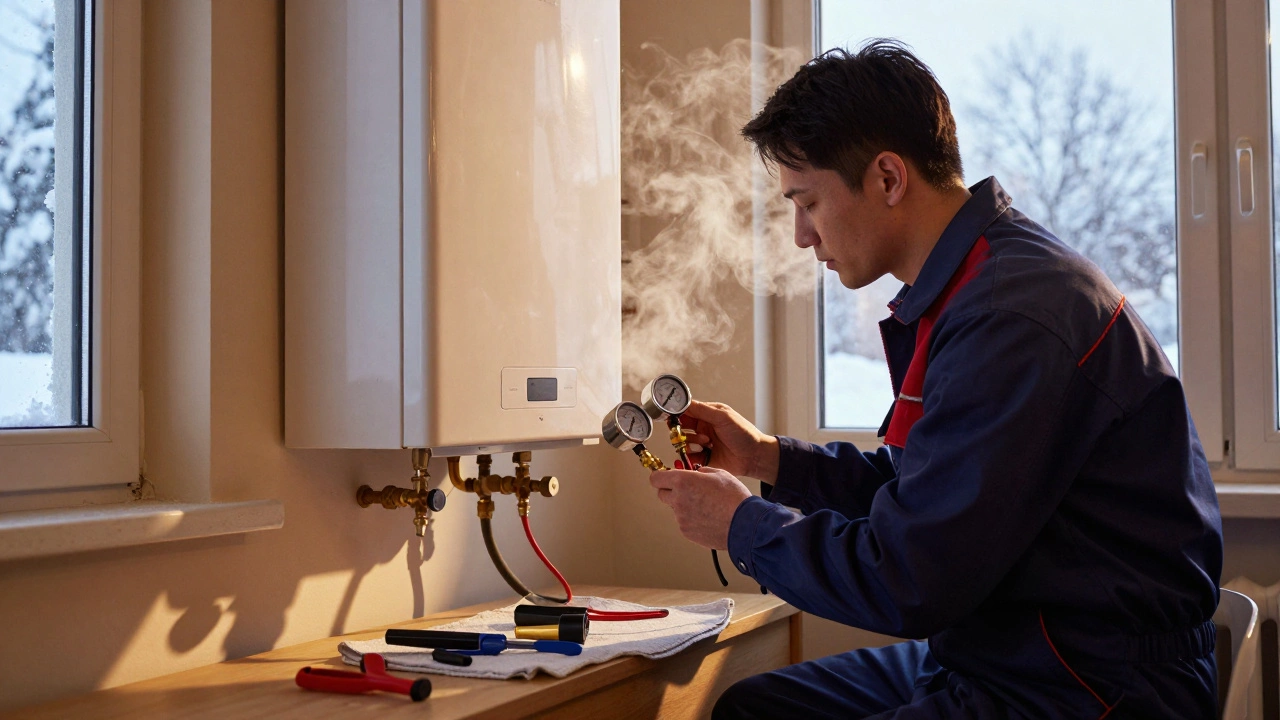
Boiler Repair Time Calculator
Estimate how long your boiler repair might take based on the specific issue and boiler type. This tool uses real-world data from professional gas fitters.
Repair Estimate
Select a problem to see the estimated repair time
When your boiler stops working in the middle of winter, every minute feels like an hour. You’re not just cold-you’re worried about frozen pipes, rising bills, and whether the repair will take days. The simple question, how long does a boiler take to fix? doesn’t have one answer. It depends on what’s broken, how old the unit is, and whether parts are in stock. But here’s the truth: most boiler repairs take between 2 and 6 hours. Some can be done in under an hour. Others might take a full day-or longer.
What’s Actually Broken?
Not all boiler problems are the same. A simple fix like resetting a thermostat or clearing a blocked pressure valve might only take 20 minutes. But if the heat exchanger is cracked, or the pump has seized, you’re looking at a much longer job.
Here’s what typically happens on-site:
- Pressure issues (low or high pressure): Usually fixed in 30-45 minutes. A technician will bleed the system or top up the water level.
- Thermostat or timer faults: Often just a wiring issue or a faulty sensor. Takes about an hour to diagnose and replace.
- Leaking pipes or valves: Can be a quick fix if it’s a loose joint, but if corrosion has set in, you might need to replace sections of pipework. That adds 1-2 hours.
- Ignition failure: Could be a faulty spark electrode or gas valve. Diagnosing this takes time because the technician has to test gas flow, electrical signals, and safety sensors. Expect 1.5 to 3 hours.
- Heat exchanger crack: This is serious. It can’t be patched. The entire unit must be replaced. This isn’t a repair-it’s a swap. It’ll take 4 to 8 hours, and you’ll need a new boiler.
One technician in Dunedin told me he once spent 40 minutes fixing a boiler that had been labeled ‘beyond repair’ by another company. All it needed was a cleaned flame sensor. That’s why diagnosis matters more than speed.
Age and Type of Boiler Matter
Boilers made before 2010 are harder to fix. Parts for older models-especially non-condensing units-are often discontinued. If your boiler is 15 years old and the control board fails, you might wait 3-5 days for a part to arrive from the UK or Germany.
Modern condensing boilers (installed after 2015) are more reliable, but also more complex. They have sensors everywhere, and one faulty sensor can shut the whole system down. That means more testing, more diagnostics, and longer time on site.
Combi boilers (the most common type in New Zealand homes) are faster to fix than system or regular boilers. Why? They’re simpler, with fewer external tanks and pipes. A combi boiler repair usually takes less time than a system boiler with a separate hot water cylinder.
Parts Availability Can Delay Everything
Here’s the hidden factor most people don’t think about: parts. If your boiler needs a specific pump, control board, or diverter valve, and the local supplier doesn’t stock it, you’re stuck waiting.
In Dunedin, most common boiler parts arrive within 24-48 hours. But if you have a less common brand-like a Worcester Bosch 8000 series or a Vaillant ecoTEC Plus-the wait can stretch to 5-7 days. Some parts even need to be ordered from Europe.
That’s why a good technician will always check part availability before they start. If they say, “I’ll need to order this,” don’t assume it’s a delay tactic. It’s a reality check.
What Happens If It’s Beyond Repair?
Sometimes, fixing the boiler isn’t the answer. If your unit is over 12 years old, has had multiple repairs in the last year, or uses outdated technology, replacement is smarter than repair.
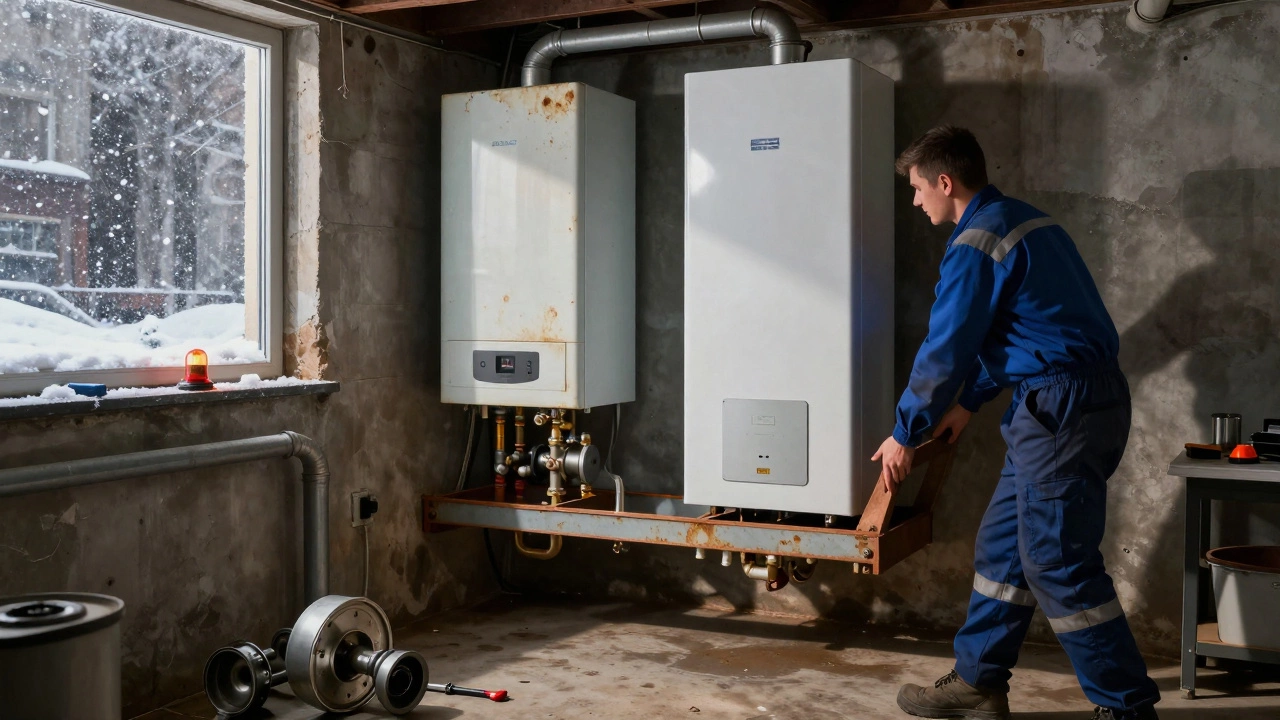
Installing a new boiler takes 1-2 days. Why? Because it’s not just swapping the unit. The technician has to:
- Turn off gas and water
- Remove the old boiler and dispose of it properly
- Check flue and venting for compliance
- Install new pipework if needed
- Fit the new boiler and connect it
- Test pressure, gas flow, and safety systems
- Set up the thermostat and smart controls
That’s why a boiler replacement isn’t a half-day job. It’s a full-day project, often running into the next day if there are complications.
Emergency Repairs vs. Planned Service
Emergency calls (like no heat in freezing weather) get priority. But that doesn’t mean they’re faster. In fact, emergency jobs often take longer because:
- Technicians are rushed and may need to double-check safety
- They’re working in dark, cold, or wet conditions
- They might not have the right tools or parts on the van
On the flip side, a planned service appointment gives the technician time to bring all the right tools, order parts ahead of time, and work without pressure. That often leads to a quicker, cleaner fix.
If you’re not in crisis, schedule your repair during business hours. You’ll get better service and avoid emergency call-out fees.
How to Speed Up the Process
You can’t control the weather or the part supply chain-but you can control how prepared you are. Here’s how to cut down repair time:
- Have your boiler model and serial number ready. Write it down or take a photo. This saves 15 minutes of searching.
- Clear space around the boiler. No boxes, bikes, or laundry piles blocking access.
- Know your system type. Is it a combi, system, or regular boiler? A quick Google search can help.
- Don’t try DIY fixes. Turning valves randomly or resetting the boiler 10 times can make the problem worse-and extend the repair time.
- Ask if they have the part in stock. If they say no, ask how long the wait is. Then decide if you want to wait or replace.
What’s Normal? A Quick Reference
Here’s a realistic breakdown of repair times based on common issues:
| Problem | Estimated Repair Time | Part Needed? |
|---|---|---|
| Low pressure | 20-45 minutes | No |
| Thermostat failure | 45-90 minutes | Yes |
| Ignition fault | 1.5-3 hours | Yes |
| Leaking pump | 2-4 hours | Yes |
| Cracked heat exchanger | 4-8 hours (replacement) | Yes (new boiler) |
| New boiler installation | 1-2 days | Yes |
When to Call a Pro (and When to Wait)
Some boiler problems are urgent. Others aren’t. Here’s a simple guide:
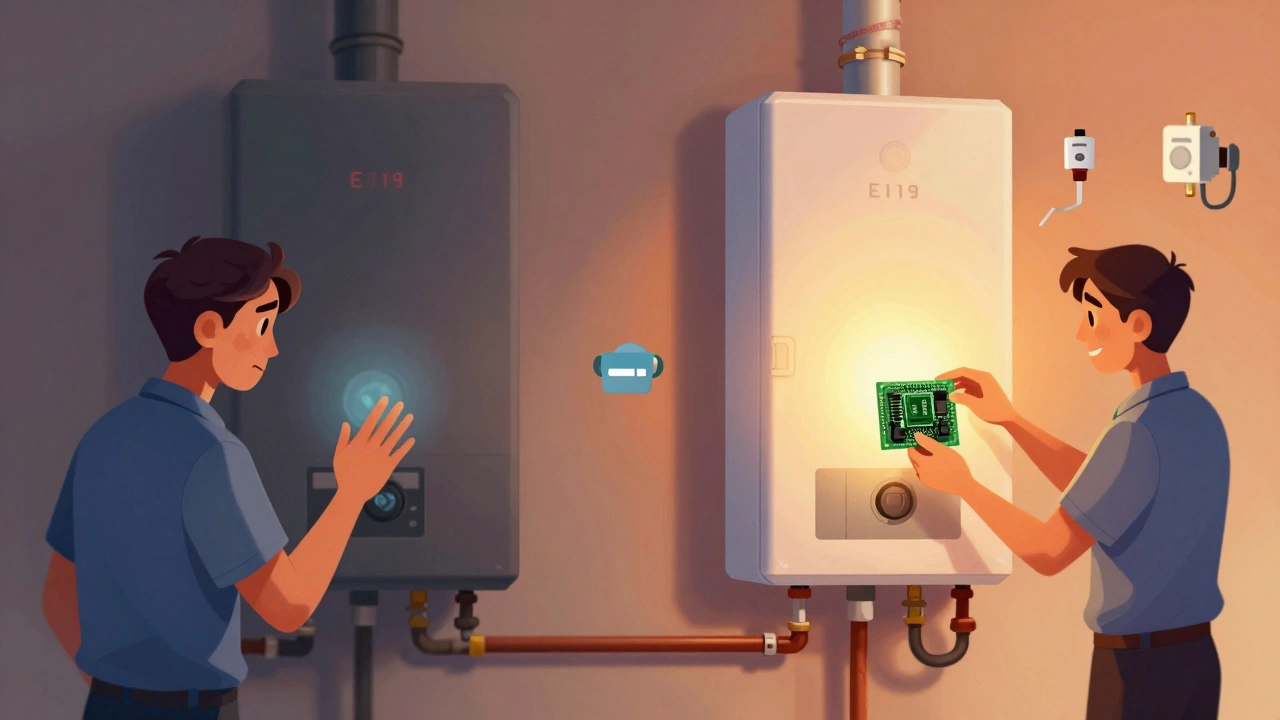
- Call immediately: No heat, no hot water, gas smell, water leaking from the boiler, or error codes like E119, E22, or F28.
- Can wait a day or two: Boiler makes noise but still heats, occasional pilot light outages, or slightly reduced hot water pressure.
Don’t ignore strange sounds. A banging or gurgling boiler isn’t just annoying-it’s a sign of limescale buildup or air trapped in the system. Left unchecked, that leads to bigger, costlier repairs.
How long does a boiler repair usually take?
Most boiler repairs take between 2 and 6 hours. Simple fixes like resetting pressure or replacing a thermostat can be done in under an hour. More complex issues like a cracked heat exchanger or faulty pump may take 4-8 hours. If the boiler needs replacing, plan for 1-2 full days.
Can I fix my boiler myself?
Only basic tasks like checking the pressure or resetting the boiler are safe for homeowners. Never touch gas lines, electrical components, or internal parts. DIY attempts often make problems worse, leading to longer repair times and higher costs. Gas work must be done by a licensed technician in New Zealand.
Why does my boiler repair take so long?
Repairs take time because technicians need to diagnose the root cause, not just fix the symptom. They test gas pressure, electrical signals, water flow, and safety sensors. If parts aren’t in stock, they have to order them. Rushing leads to mistakes-and repeat visits.
Is it worth repairing an old boiler?
If your boiler is over 12 years old and has had multiple repairs in the past year, replacement is usually more cost-effective. Older boilers are less efficient, use more gas, and are harder to service due to discontinued parts. A new A-rated boiler can cut your heating bill by 30% or more.
Do I need to be home during the repair?
Yes. Technicians need access to the boiler, and often need to test the system while it’s running. They may also need to ask you about when the problem started or if you’ve noticed strange noises. Being present helps them diagnose faster and avoid repeat visits.
What to Do Next
If your boiler’s broken right now, don’t panic. Turn off the gas and power if you’re comfortable doing so. Then call a licensed gas fitter. Ask them:
- What’s the likely cause?
- Do you have the part in stock?
- How long will the repair take?
- Is replacement a better option?
Get a quote in writing. Don’t pay upfront. Most reputable companies only charge after the job is done and tested.
And if you’re thinking ahead-schedule your boiler service every year. A quick 45-minute check-up in spring can prevent a winter breakdown. It’s cheaper, faster, and keeps your home warm when you need it most.