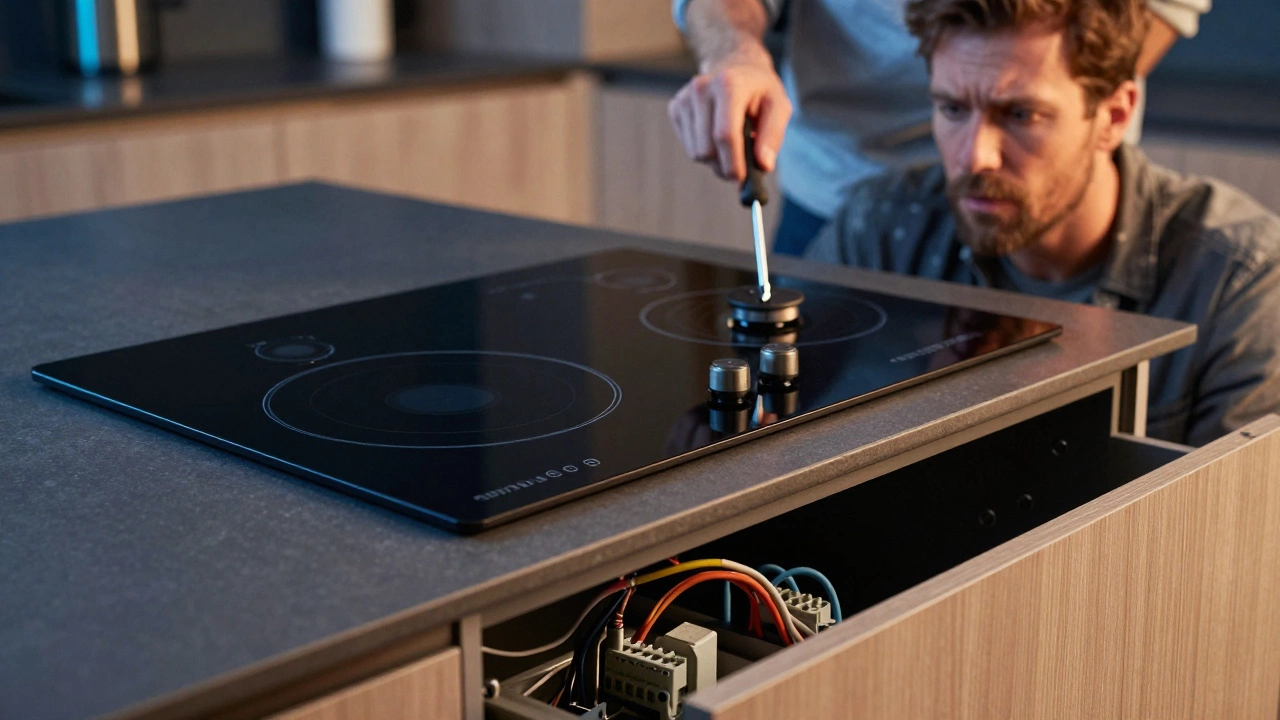
Electric Hob Installation Safety Checker
Answer these questions about your specific situation to get an immediate recommendation.
Analyzing...
Please wait.
Risk Assessment:
Loading summary...
Picture this: your old electric hob is sputtering, the heating elements are uneven, and you’ve just bought a sleek new induction model. You unplug the old one, slide it out, and plug in the new one. Done, right? Not so fast. While swapping a toaster is easy, messing with high-amperage kitchen appliances can trip breakers-or worse, start fires.
The short answer is: usually, yes, you need a qualified electrician. But there are exceptions depending on where you live, how your home is wired, and whether you’re doing a simple swap or a full rewiring job. Let’s break down exactly when you can do it yourself and when you absolutely must call a pro.
Why Kitchen Appliances Are Different
Kitchen appliances like electric hobs are high-power cooking surfaces that require dedicated electrical circuits aren't like your laptop charger. A standard household outlet handles about 10-15 amps. An electric hob, especially a modern induction one, can pull anywhere from 30 to 40 amps. That’s a massive amount of electricity flowing through wires that might be decades old.
If you plug a high-draw appliance into a circuit not designed for it, the wires heat up. Over time, this melts the insulation inside your walls. We don’t see the fire until it’s too late. This is why building codes worldwide treat fixed kitchen appliances differently from portable ones.
- Portable appliances: Plug into standard sockets (e.g., kettles, toasters).
- Fixed appliances: Hardwired directly into the consumer unit (fuse box) via a dedicated circuit breaker.
Your new hob likely falls into the "fixed" category. If the instructions say "hardwire only," you cannot just plug it into a wall socket. You need a permanent connection.
The Legal Side: Do You Actually Need a License?
Laws vary by country, but the general rule is strict. In the UK, for example, Part P of the Building Regulations requires that any electrical work in a kitchen be notified to the local authority. This doesn't mean you can't do it, but it means you have to prove you're competent. Most homeowners aren't registered electricians, so they hire one who then certifies the work.
In the US, the National Electrical Code (NEC) dictates similar standards. While some states allow homeowners to perform their own electrical work after pulling a permit, insurance companies often void coverage if unlicensed work causes damage. If your house burns down because of a DIY hob installation, your insurer might refuse to pay.
| Region | DIY Allowed? | Certification Required? | Insurance Risk |
|---|---|---|---|
| United Kingdom | Yes (if competent) | Yes (Part P notification) | High if uncertified |
| United States | Varies by state | Permit often required | Moderate to High |
| European Union | Generally No | Yes (Certificat de Conformité) | Very High |
When Can You DIY the Replacement?
There is one scenario where you might get away with a DIY swap: if the existing wiring is already correct and you are simply replacing the unit without touching the electrical connections behind the wall. Here’s what that looks like:
- Same Type Connection: The old hob was hardwired, and the new one is also hardwired using the same terminal block system.
- No Circuit Changes: You are not moving the fuse box, changing the breaker size, or adding new outlets.
- Visual Inspection Passes: The existing cables are thick enough (usually 6mm² or 10mm² copper) and show no signs of burning or melting.
Even then, you must turn off the main power at the consumer unit before touching anything. Use a voltage tester to confirm the circuit is dead. If you feel unsure at any point, stop. It’s not worth the risk.
However, most modern installations involve upgrading from an old ceramic hob to a new induction model. Induction hobs often require different wiring configurations or higher amperage ratings. This changes the game entirely.
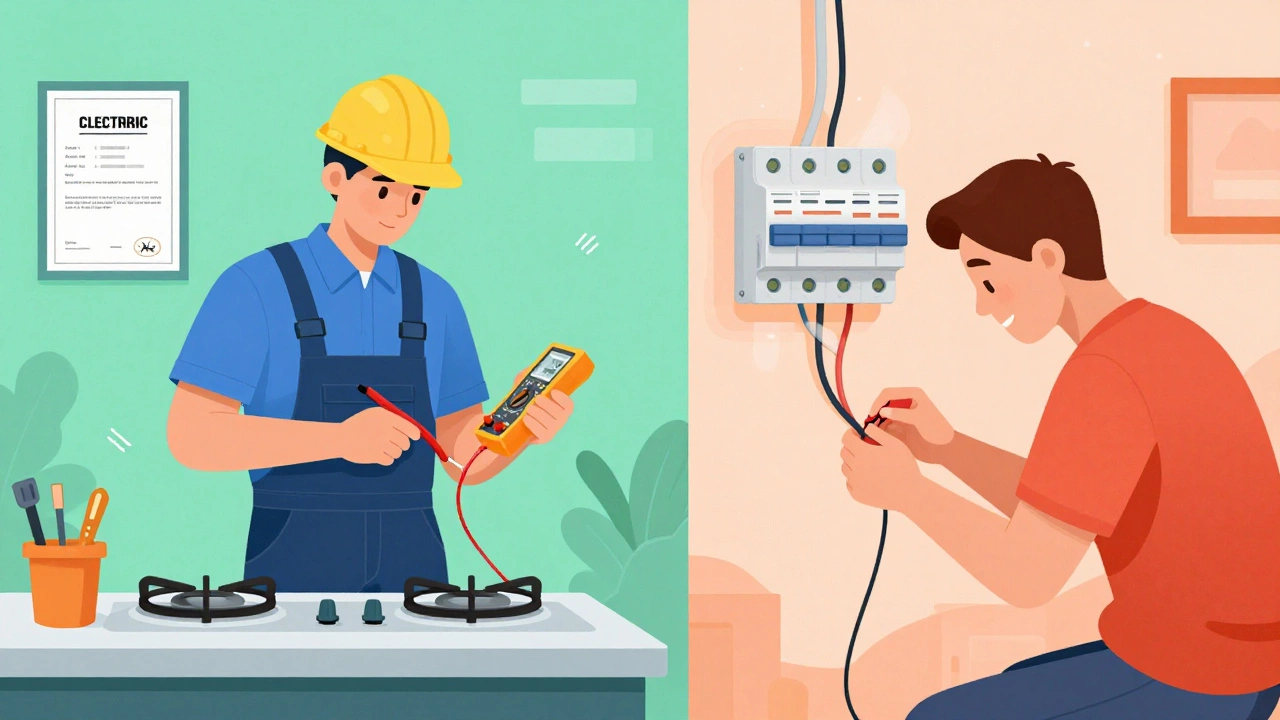
Signs You Must Call an Electrician
If any of these apply to your situation, put down the screwdriver and call a professional.
- Different Power Rating: Your new hob draws more amps than the old one. For example, going from a 7kW hob to a 10kW model requires thicker cables and a larger breaker.
- Old Wiring: Your home was built before 1980. Aluminum wiring or rubber-insulated cables may not meet current safety standards.
- No Dedicated Circuit: The hob shares a circuit with other kitchen appliances. This is a major fire hazard and needs immediate correction.
- New Location: You’re moving the hob to a different spot in the kitchen. Running new cable through walls requires drilling, chasing, and proper containment.
- Induction Upgrade: Switching from gas or traditional electric to induction often involves complex control boards and specific grounding requirements.
A qualified electrician will test the earth continuity, check for voltage drop, and ensure the RCD (Residual Current Device) protection is adequate. They’ll also issue a certificate that proves the work is safe-a document you’ll need when selling your home.
Cost Comparison: DIY vs. Professional
Let’s talk money. Hiring an electrician costs between £150 and £300 in the UK, or $200 to $500 in the US, depending on location and complexity. DIY saves that cash upfront. But consider the hidden costs:
- Tools: You need wire strippers, crimpers, voltage testers, and possibly a drill. That’s another £50-$100.
- Time: A pro takes 1-2 hours. A novice might spend a weekend troubleshooting why the hob won’t turn on.
- Rework: If you make a mistake, you might burn out the hob’s internal electronics. Replacing a £500 hob because of bad wiring hurts.
For most people, the peace of mind provided by a certified electrician outweighs the savings. Plus, many electricians offer warranties on their labor, which DIY projects lack.

Safety Checklist Before Installation
Whether you DIY or hire a pro, here’s what should happen during the installation process:
- Power Off: Turn off the main switch and lock it out if possible.
- Verify Dead: Use a multimeter to check for zero volts at the terminal block.
- Check Cable Size: Ensure the incoming cable matches the hob’s power rating (consult the manual).
- Tight Connections: Loose terminals cause arcing and fires. Torque screws to manufacturer specifications.
- Grounding: Verify the earth connection is solid. Never skip this step.
- Test Load: After turning power back on, monitor the breaker for tripping under load.
If you’re watching a YouTube tutorial, remember that videos often skip critical safety steps. Real-world conditions vary wildly. Always prioritize the manufacturer’s installation guide over online advice.
What Happens If You Get It Wrong?
Electrical faults don’t always announce themselves with sparks. Sometimes, they simmer quietly. A loose neutral connection can cause voltage fluctuations that fry your hob’s control board. Overloaded circuits can melt plastic junction boxes, releasing toxic fumes. And in the worst case, sustained overheating ignites surrounding materials.
Insurance claims for electrical fires are scrutinized heavily. Adjusters look for signs of amateur work-mismatched wire nuts, incorrect breaker sizes, missing permits. If they find these, they deny the claim. You’re left paying for repairs out of pocket, plus potential liability if neighbors are affected.
Don’t gamble with your home’s safety. When in doubt, ask an expert. It’s cheaper to pay for an inspection than to rebuild a kitchen.
Can I plug my electric hob into a regular wall socket?
No, unless the manufacturer explicitly states it is designed for standard socket use. Most electric hobs require a hardwired connection due to high power demands (30+ amps). Plugging them into a standard 15-amp outlet can overload the circuit, trip breakers, or start a fire.
How much does it cost to hire an electrician for hob replacement?
In the UK, expect to pay between £150 and £300. In the US, costs range from $200 to $500. Prices vary based on location, complexity of wiring, and whether new circuits need to be installed. Always get a written quote before starting work.
Is it legal to install an electric hob myself in the UK?
It is legal if you are competent, but you must comply with Part P of the Building Regulations. This usually means notifying your local building control body. Since most homeowners aren't registered electricians, hiring a pro ensures compliance and provides necessary certification for insurance and resale.
What wire size is needed for a 7kW electric hob?
A 7kW hob typically requires 6mm² twin and earth cable protected by a 32-amp double-pole MCB (Miniature Circuit Breaker). Always consult the appliance manual and local electrical codes, as requirements can vary based on cable length and installation method.
Will my home insurance cover damage from a DIY hob installation?
Likely not. Most policies exclude damage caused by unlicensed electrical work. If an investigation reveals non-compliant wiring, the insurer may deny the claim entirely. Using a certified electrician protects your financial interests and validates your policy.