Boiler Safety Task Checker
This tool helps you identify which boiler maintenance tasks you can safely perform yourself and which require a licensed professional. Never attempt tasks involving gas lines, burners, or internal components unless you're a certified gas fitter.
You can safely do these tasks yourself:
These tasks require a licensed gas fitter and should never be attempted DIY:
Most people think servicing a boiler is like changing a lightbulb-something you can just grab a wrench and fix. But here’s the truth: servicing a boiler yourself isn’t just risky, it’s often illegal in New Zealand. If you’re thinking about cutting corners to save a few hundred dollars, you need to know what’s actually safe-and what could cost you your home, your health, or your insurance.
What Boiler Servicing Really Means
Boiler servicing isn’t just cleaning the outside or checking the pressure gauge. A proper service includes inspecting the heat exchanger, testing gas pressure, checking for carbon monoxide leaks, verifying flue integrity, cleaning burners, and calibrating safety controls. These aren’t DIY tasks-they require calibrated tools, training, and legal certification.
In New Zealand, only a licensed gas fitter can legally service gas appliances like boilers. The Gas (Safety and Measurement) Regulations 2010 make this clear. Even if you’re good with tools, you don’t have the legal right to touch the gas line, burner assembly, or flue system unless you’re certified. That’s not a suggestion-it’s the law.
What You Can Do Without a License
You don’t need to be a professional to help your boiler run better. There are real, safe things you can do yourself that make a difference:
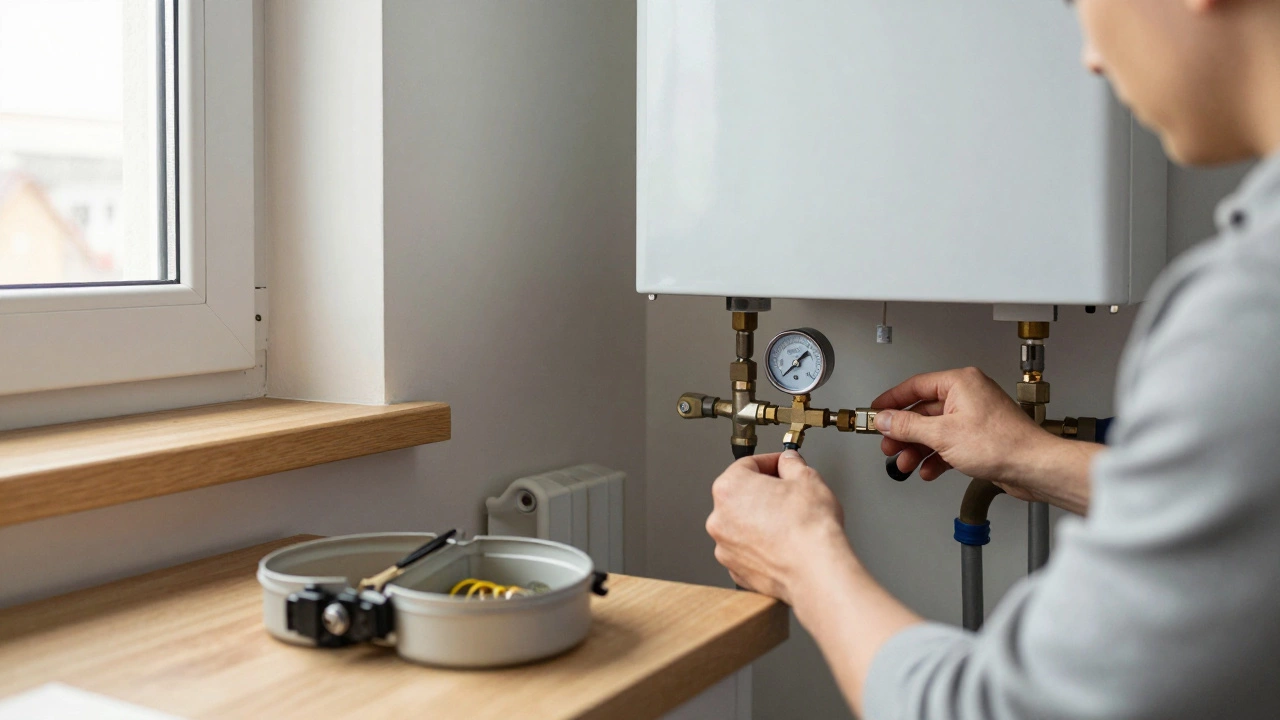
- Check the pressure: Most boilers run best between 1.0 and 1.5 bar. If it’s below 1.0, top it up using the filling loop (check your manual). Don’t overfill-it can cause leaks or damage.
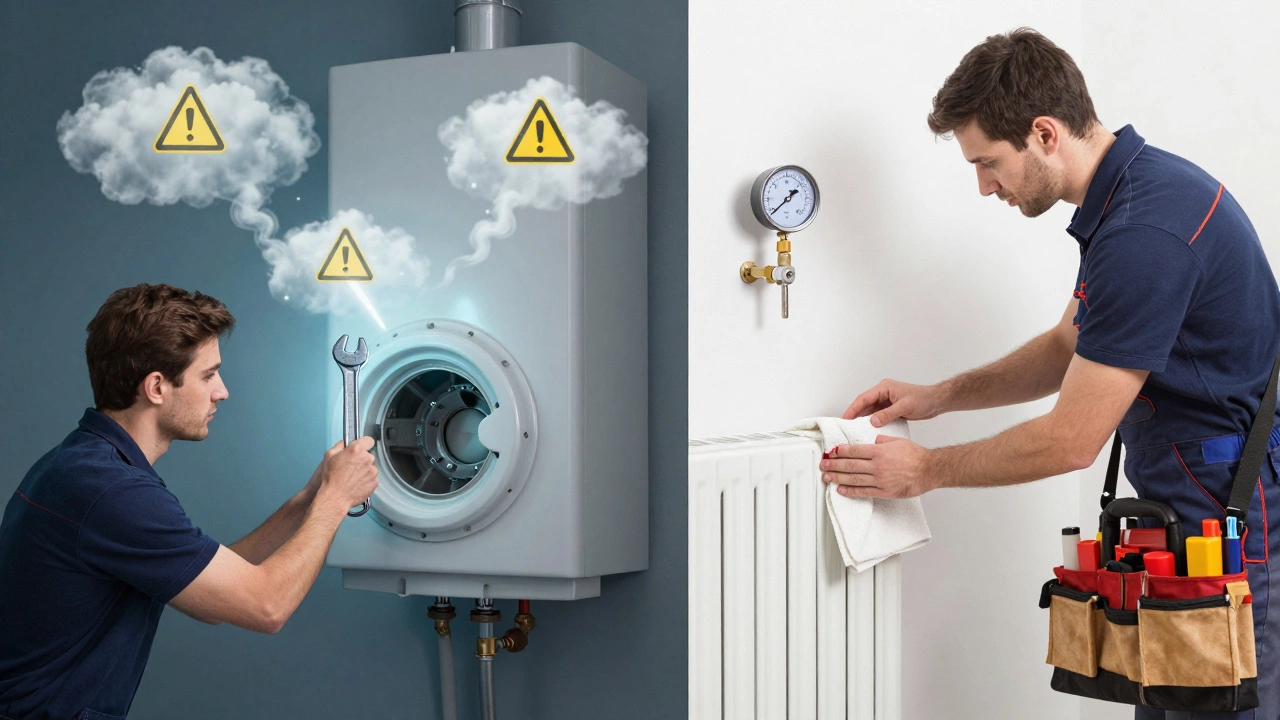
- Bleed the radiators: Cold spots at the top mean air is trapped. Turn off the boiler, place a towel under the bleed valve, and use a key to open it until water comes out. Close it tightly.
- Keep vents clear: Make sure the boiler’s air intake and flue aren’t blocked by snow, leaves, or storage boxes. In Dunedin’s wet winters, debris builds up fast.
- Listen for strange noises: Knocking, whistling, or gurgling can mean air in the system, limescale, or a failing pump. Note the sound and when it happens-it helps a technician diagnose faster.
- Check for leaks: Look under the boiler for puddles or rust. Even a slow drip can rot floorboards or cause electrical faults.
These tasks take five minutes and cost nothing. They won’t replace a service, but they’ll help you catch problems early and make the professional’s job easier.
Why DIY Boiler Work Is Dangerous
Gas boilers aren’t like toasters. A small mistake can lead to carbon monoxide poisoning-a silent, odorless killer. In New Zealand, there were 17 confirmed carbon monoxide deaths between 2015 and 2023, and over half were linked to faulty or poorly maintained gas appliances.
Even if you think you’re careful, you can’t see gas leaks. You can’t measure flue gases without a combustion analyzer. You won’t know if the heat exchanger has a hairline crack unless you’ve been trained to spot the signs.
And it’s not just health risks. If you service your boiler yourself and something goes wrong-say, a gas leak causes a fire-your home insurance will likely deny the claim. Most policies require proof of annual professional servicing. You could be left with no coverage, no payout, and no way to rebuild.
What Happens During a Professional Service?
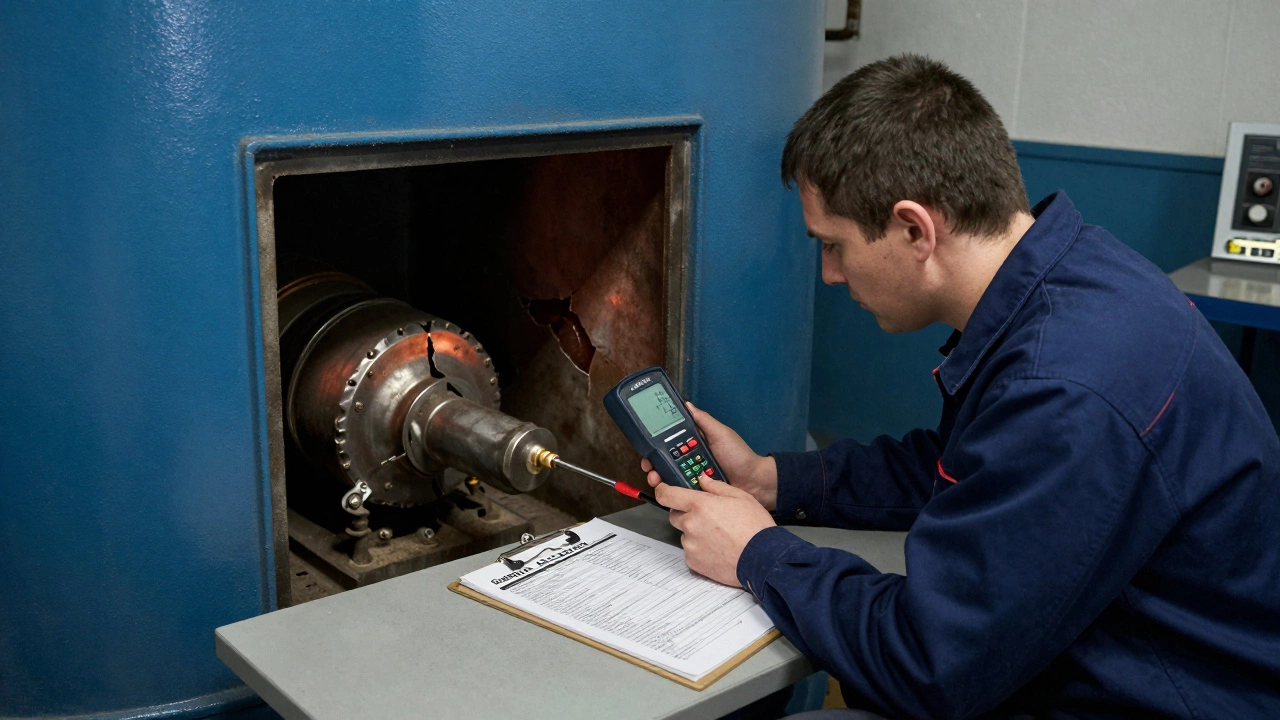
When a certified gas fitter shows up, here’s what they actually do:
- Turn off the gas and power, then remove the boiler casing
- Inspect the heat exchanger for corrosion or cracks
- Test gas pressure at inlet and outlet with a manometer
- Measure flue gas composition with a combustion analyzer
- Check the fan and pump for wear
- Clean burners and ignition electrodes
- Test safety devices like thermostats and overheat stats
- Check for carbon monoxide in the room
- Issue a Gas Safety Certificate
This takes 45 to 90 minutes. Most qualified technicians in Dunedin charge between $180 and $280 for a full service. That’s not expensive when you consider it prevents a $20,000 boiler replacement or worse.
When to Call a Pro (Even If the Boiler Seems Fine)
You don’t need to wait for a breakdown. Here’s when to book a service:
- It’s been over 12 months since the last service
- You’ve noticed a drop in heating performance
- The boiler makes unusual noises
- You smell gas (even faintly)-leave the house and call 0800 767 787
- You’re selling your home-buyers often require proof of recent servicing
- You’ve moved into a new house and don’t know the service history
Don’t wait until winter hits. In Dunedin, boiler failures spike in June and July. Book your service in April or May-technicians aren’t backed up, and you’ll avoid the rush.
How to Find a Licensed Gas Fitter
Not everyone who says they fix boilers is qualified. Here’s how to find someone you can trust:
- Ask for their Gas Safe registration number-they must show it on request
- Check the Gas Safe Register (New Zealand’s official registry)
- Look for reviews mentioning boiler servicing, not just repairs
- Ask if they provide a Gas Safety Certificate after the job
- Avoid anyone who offers a “quick fix” for $50
Reputable companies in Dunedin include local businesses like Dunedin Gas Services, Otago Plumbing & Heating, and several others listed on the Gas Safe Register. Don’t pick the cheapest-pick the most qualified.
What Happens If You Ignore Servicing?
Skipping annual servicing doesn’t mean your boiler will explode tomorrow. But it does mean:
- Energy bills climb by 15-25% over three years due to inefficiency
- Minor issues turn into major repairs-like a cracked heat exchanger ($1,200+ fix)
- Warranty voids-most boiler warranties require proof of annual service
- Carbon monoxide builds up slowly, unnoticed, until someone gets sick
- When it fails in the middle of winter, you’re stuck with emergency call-out fees of $300+
Think of it like car servicing. You don’t wait until the engine seizes to change the oil. Same with boilers.
Final Advice: Know Your Limits
You can maintain your boiler. You can’t service it. There’s a big difference.
Keep the radiators bled, the pressure up, and the area around the boiler clear. Keep a log of when you do these things. When the technician comes, give them your notes. That’s how you save money, stay safe, and get the most out of your system.
Boilers last 10-15 years. If you’ve had yours for more than 8, start thinking about replacement. A modern condensing boiler can cut your gas bill by 30%. But before you buy, get a professional assessment. They’ll tell you if it’s worth repairing-or if it’s time to upgrade.
Can I clean my boiler myself?
You can clean the outside casing and wipe down the area around the boiler, but never open the casing or touch internal parts like burners, heat exchangers, or gas valves. These require specialized tools and training. Cleaning the exterior helps with airflow and prevents dust buildup, but it’s not a substitute for professional servicing.
Is it illegal to service a boiler without a license in New Zealand?
Yes. Under the Gas (Safety and Measurement) Regulations 2010, only licensed gas fitters can work on gas appliances, including boilers. Doing it yourself is a legal violation and can result in fines. More importantly, it puts your life and others’ at risk if something goes wrong.
How often should a boiler be serviced?
Once a year. Annual servicing is the standard across New Zealand and required by most boiler manufacturers to keep warranties valid. Waiting longer increases the risk of breakdowns, inefficiency, and carbon monoxide leaks.
What are the signs my boiler needs immediate attention?
Yellow or orange flames instead of blue, a gas smell, soot around the boiler, unusual noises like banging or whistling, or the boiler shutting off unexpectedly. If you see any of these, turn off the gas supply at the main valve and call a licensed gas fitter immediately.
Can I service an electric boiler myself?
Electric boilers don’t use gas, so some tasks like flushing the system or checking pressure are safer to do yourself. But even then, opening the control panel or working on internal wiring requires a qualified electrician. Most electric boilers still have pressure systems and safety controls that need professional calibration. Always check your manual and local regulations.