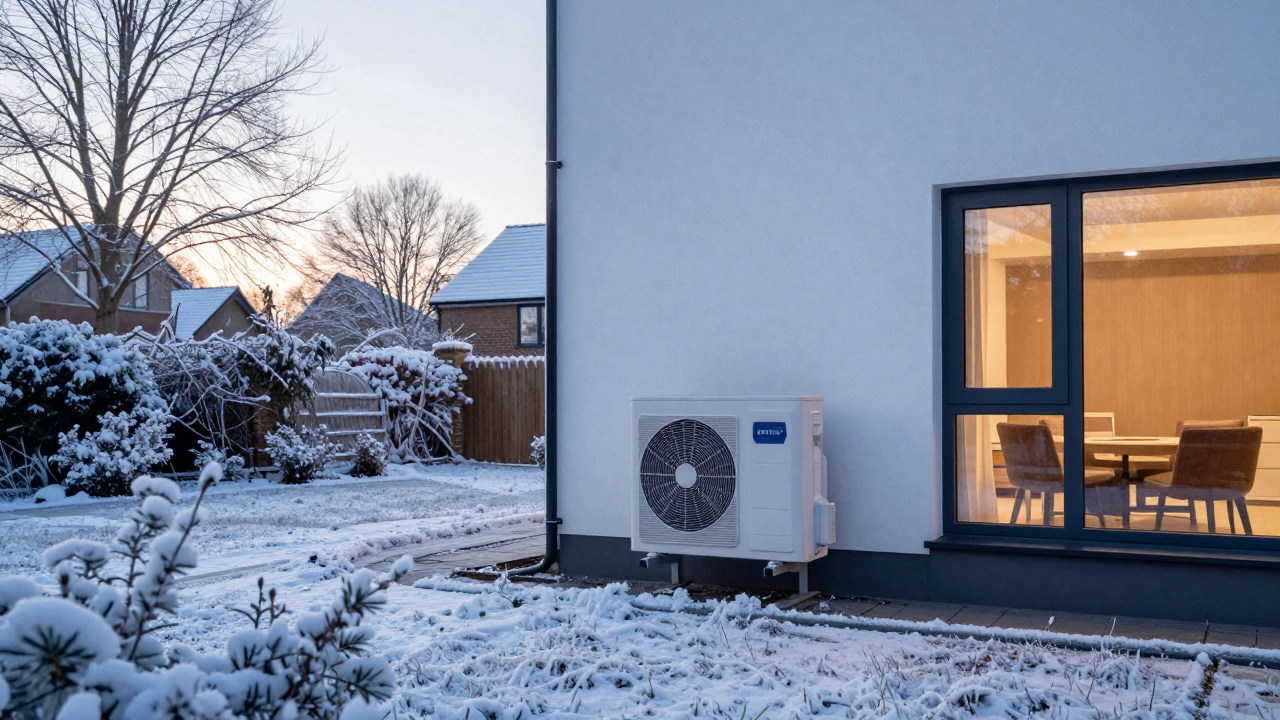
Heat Pump Efficiency Calculator
Performance Analysis
--
There is a persistent myth in the HVAC world that heat pumps are useless once the mercury drops below freezing. You hear it from neighbors, you see it on forums, and sometimes even old-school technicians will tell you that your system will quit working efficiently when winter hits hard. But here is the reality check: modern heat pumps do not just "stop" at a specific temperature. Instead, they slowly lose efficiency as it gets colder, until they hit a point where running them costs more than the alternative.
The short answer to "at what temperature is a heat pump no longer efficient?" is usually around -4°C to -7°C (25°F to 20°F) for standard air-source models. However, this number is shifting rapidly thanks to new technology. To understand why your bill might spike or why your house feels drafty in January, we need to look at how these machines actually pull heat out of the thin winter air.
How Efficiency Changes with Temperature
To get your head around this, you need to know one metric: the Coefficient of Performance (COP). Think of COP as the exchange rate for energy. A COP of 3 means for every 1 kilowatt-hour of electricity you pay for, you get 3 kilowatt-hours of heat into your home. That is three times better than an electric resistance heater, which has a COP of 1.
Heat pumps work by moving heat, not creating it. They use a refrigerant to absorb thermal energy from the outside air and compress it inside your house. The problem is physics. As the outdoor temperature drops, there is less thermal energy available in the air. The compressor has to work harder to squeeze that scarce heat into a usable form. This effort drains more electricity, lowering your COP.
| Outdoor Temp (°C) | Outdoor Temp (°F) | Estimated COP | Efficiency Status |
|---|---|---|---|
| 10°C | 50°F | 3.5 - 4.0 | Peak Efficiency |
| 0°C | 32°F | 2.5 - 3.0 | Good |
| -7°C | 20°F | 1.8 - 2.2 | Moderate |
| -18°C | 0°F | 1.0 - 1.4 | Poor (Near Resistance) |
Notice that drop? At 0°C, you are still getting great value. But by the time you hit -18°C, many older units are burning almost as much electricity as a simple space heater would, but producing far less comfort. That is the tipping point where "efficiency" becomes a losing game for most standard systems.
The Balance Point: When to Switch Systems
In the heating industry, we call the temperature where your heat pump can no longer keep up with the heat loss of your home the "balance point." If your house loses heat faster than the pump can replace it, your indoor temperature will drop unless you turn on backup heat.
Most residential heat pumps have a built-in auxiliary heating system-usually electric resistance strips. These kick in automatically when the thermostat senses the air isn't warming up fast enough. While this saves your toes from frostbite, it spikes your electricity bill because those strips are incredibly inefficient (COP of 1).
If you live in a place like Dunedin, New Zealand, where temperatures rarely plunge below zero for extended periods, a standard air-source heat pump is often all you need year-round. The balance point might sit at -5°C, a temperature you might only see for a few days a year. In those cases, the slight inefficiency during those cold snaps is outweighed by the massive savings you enjoy during the mild autumn and spring months.
However, if you are in a region with harsh winters, say Chicago or Minneapolis, relying solely on a standard heat pump means your backup heat will run constantly in January. In those scenarios, a dual-fuel system makes sense. This setup uses the heat pump down to a certain temperature (like 5°C) and then switches to a high-efficiency gas furnace for the deep freeze. Gas furnaces don't care about outdoor temperature; they burn fuel to create heat, maintaining consistent output regardless of the weather.
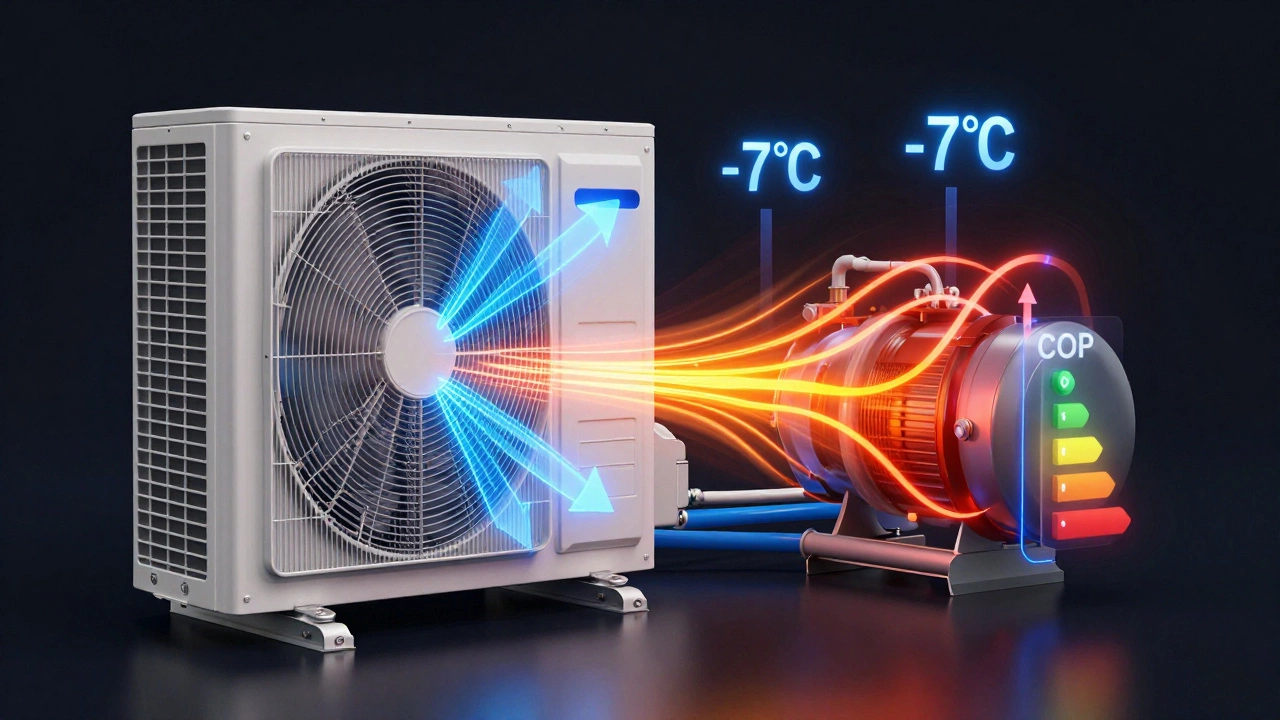
Cold Climate Heat Pumps: Changing the Game
Here is where things get interesting. The "-4°C limit" rule is becoming outdated. Manufacturers have developed Cold Climate Air Source Heat Pumps (CCASHPs). These units are engineered specifically to maintain high COPs well below freezing.
They achieve this through several design tweaks:
- Larger Compressors: They move more refrigerant per cycle, extracting more heat from thin air.
- Variable Speed Technology: Instead of turning on and off, these compressors ramp up and down smoothly. This prevents the system from struggling to restart in cold conditions and maintains steady airflow.
- Enhanced Refrigerants: Newer refrigerants like R-32 or R-454B operate more effectively at lower pressures and temperatures than the older R-410A.
A high-end cold climate model can maintain a COP of 2.0 even at -20°C (-4°F). For many homeowners, this eliminates the need for a gas furnace entirely, allowing for an all-electric, carbon-free heating solution even in snowy regions. If you are considering an upgrade, look for the HSPF2 (Heating Seasonal Performance Factor 2) rating. An HSPF2 of 8.0 or higher indicates excellent performance in cold weather.
Why Your Heat Pump Might Feel Inefficient Early
Sometimes, a heat pump seems to fail at 5°C, long before it should. Before you blame the physics, check these common issues that mimic low-temperature failure:
- Dirt-Clogged Filters: If your air filter is clogged, the system cannot circulate air. The coil gets too cold, freezes over, and the unit shuts down to protect itself. This looks like a breakdown, but it's just a maintenance issue.
- Refrigerant Leaks: Low refrigerant levels mean the system has nothing to absorb heat with. Efficiency plummets immediately, regardless of the weather.
- Dirty Outdoor Coil: Leaves, pollen, and dirt act as insulation on the outdoor unit. If the coil can't touch the air properly, it can't absorb heat. A simple hose-down can restore significant efficiency.
- Defrost Cycle Confusion: When humidity is high and temps are near freezing, the outdoor coil will freeze. The system enters "defrost mode," blowing cold air indoors for 5-10 minutes to melt the ice. People often think their heat broke. It hasn't; it's just cleaning itself.
Regular maintenance is the cheapest way to keep your COP high. A professional tune-up once a year can improve efficiency by 10-15%, pushing that balance point lower without buying new equipment.
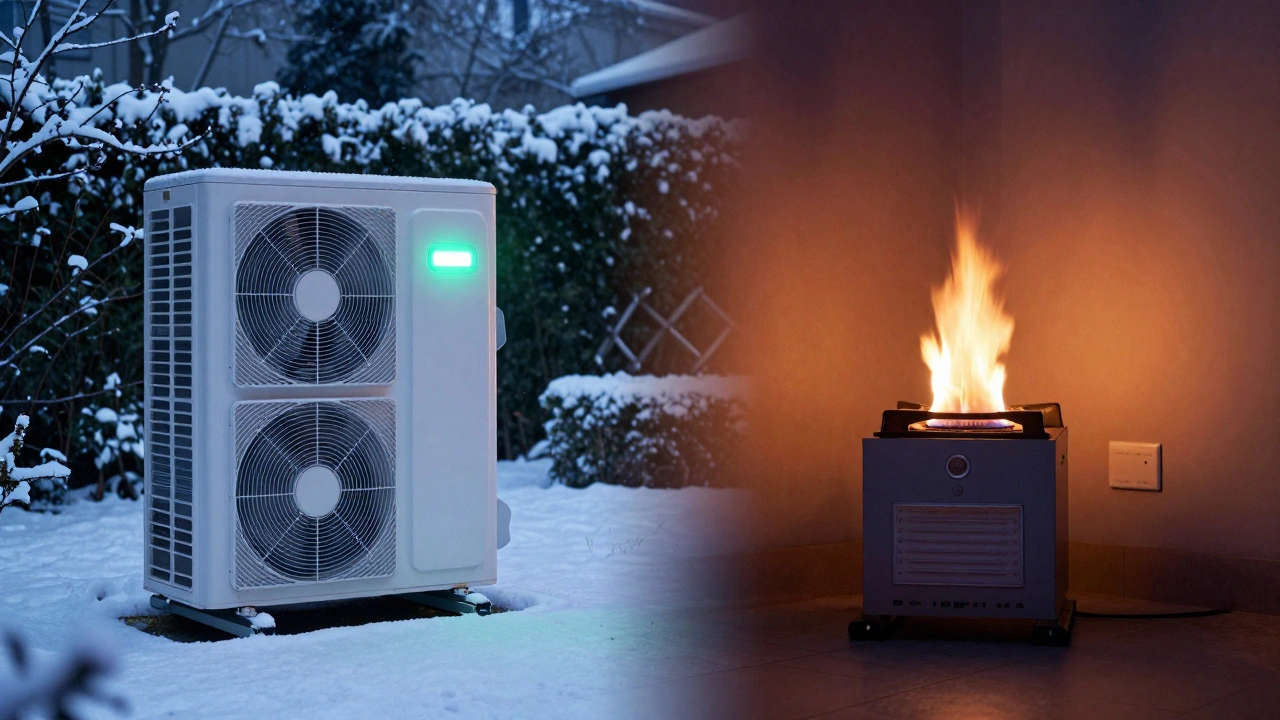
Geothermal: The Temperature-Proof Alternative
If air temperature worries you, consider ground source. Geothermal heat pumps don't pull heat from the air; they pull it from the ground. Below the frost line, the earth stays at a constant temperature year-round-roughly 10°C to 15°C (50°F to 60°F) depending on your latitude.
Because the source temperature never drops significantly, geothermal systems maintain a high COP (often 4.0+) even in the dead of winter. They are more expensive to install due to the drilling required, but they offer the most stable efficiency profile of any heating system. For new builds or major renovations where budget allows, geothermal removes the variable of outdoor weather entirely.
Deciding What Is Right for You
So, is your heat pump inefficient? It depends on your definition of "efficient" and your local climate. If you define efficiency as "lowest possible operating cost," then yes, it becomes less efficient as it gets colder. But "less efficient" does not mean "useless."
If you live in a moderate climate, stick with a standard air-source heat pump and ensure it is sized correctly. Oversizing a unit leads to short cycling, which ruins efficiency and comfort. Undersizing it forces the backup heat to run too often. Get a Manual J load calculation done by a pro to find the sweet spot.
If you face harsh winters, look into cold-climate models or dual-fuel systems. The upfront cost is higher, but the long-term savings and comfort gains justify the investment. And remember, a well-maintained heat pump is always more efficient than a neglected one, no matter the temperature.
Do heat pumps work when it is below freezing?
Yes, most modern air-source heat pumps work below freezing. However, their efficiency (COP) decreases as the temperature drops. Standard models may struggle below -7°C (20°F), while cold-climate models can operate efficiently down to -20°C (-4°F) or lower.
What is the balance point of a heat pump?
The balance point is the outdoor temperature at which your heat pump can no longer meet your home's heating demand on its own. Below this temperature, the system must engage backup heat (like electric strips or a gas furnace) to maintain the desired indoor temperature.
Is it cheaper to run a heat pump or a gas furnace in cold weather?
It depends on local energy prices and the specific efficiency ratings of your equipment. Generally, heat pumps are cheaper to run above 5°C (41°F). Below that, a high-efficiency gas furnace often becomes more cost-effective because its output doesn't drop with ambient temperature, whereas the heat pump's electricity consumption rises.
Why does my heat pump blow cold air in winter?
This is likely the defrost cycle. When moisture freezes on the outdoor coil, the system revers briefly to melt the ice. During this 5-10 minute period, it blows cool air indoors. This is normal operation and ensures the system continues to extract heat efficiently.
How can I improve my heat pump's efficiency in cold weather?
Keep filters clean, ensure the outdoor unit is free of debris and snow, and schedule annual professional maintenance. Additionally, upgrading to a variable-speed (inverter) heat pump or a cold-climate model can significantly boost performance in low temperatures.