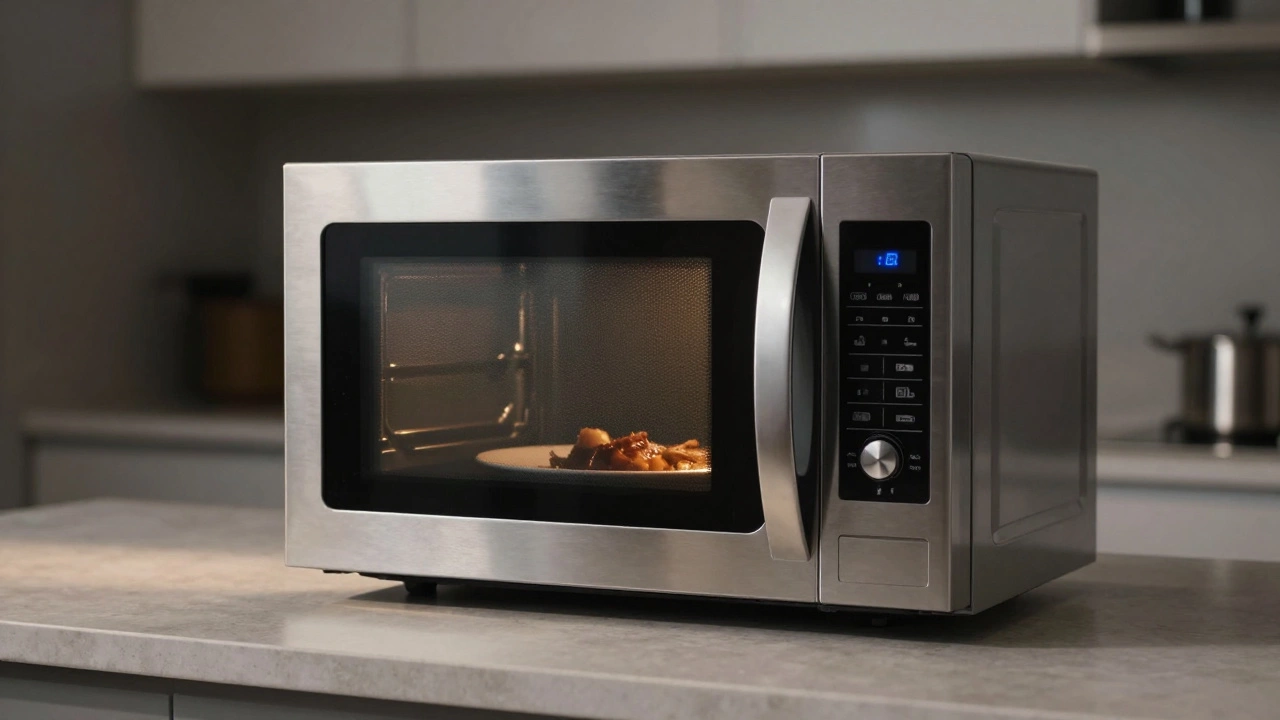
Microwave Repair vs. Replacement Calculator
Calculate Your Best Option
It happens to everyone. You’re halfway through reheating last night’s leftovers, the light flickers, and suddenly your kitchen is silent. The microwave oven has stopped working. Your first instinct might be to call a technician, but before you do, you need to ask the real question: Is it actually worth fixing?
The short answer depends on three things: the age of your unit, the specific part that broke, and your budget. In most cases, if your microwave is older than five years, replacing it is the smarter financial move. However, there are exceptions where a quick fix saves you money and keeps your kitchen running smoothly. Let’s break down exactly how to make that decision without getting ripped off.
The Age Factor: When to Walk Away
The single biggest factor in deciding whether to repair a microwave is its age. Unlike refrigerators or washing machines, microwaves have a relatively short lifespan. Most standard countertop models are designed to last between 5 to 10 years. If your appliance is nearing or past that mark, the internal components are likely worn out even if they haven’t failed yet.
Think of it like an old car. Sure, you can change the brakes, but eventually, the engine starts knocking. With microwaves, the main component-the magnetron-generates the energy that cooks your food. This tube degrades over time. If your microwave is eight years old and the magnetron fails, replacing it costs nearly as much as buying a new unit. Plus, you’re left with an aging chassis, worn door seals, and outdated technology.
If your microwave is less than three years old, especially if it was under warranty, repair is almost always the right choice. Between three and five years, it’s a gray area where cost analysis becomes critical. Over five years? Unless it’s a high-end built-in model, it’s probably time to let it go.
Repair Costs vs. Replacement Prices
Let’s talk numbers. In 2026, the average cost for a professional microwave repair ranges from $80 to $300, depending on the part and labor rates in your area. Labor alone often accounts for $50 to $100 just for the service call. Now compare that to the price of a new microwave. A decent basic model costs between $80 and $150. Even a premium convection microwave rarely exceeds $400 unless you’re looking at smart features or large capacity units.
| Scenario | Estimated Cost | Verdict |
|---|---|---|
| Simple Fix (Turntable Motor) | $80 - $120 | Worth repairing if under 3 years old |
| Moderate Fix (Door Switch) | $100 - $150 | Consider if under 5 years old |
| Major Fix (Magnetron/Control Board) | $200 - $350+ | Rarely worth it; buy new |
| New Basic Microwave | $80 - $150 | Best value for most households |
| New Premium Convection Model | $250 - $500 | Investment for serious cooks |
Here is the rule of thumb: If the repair cost exceeds 50% of the price of a new equivalent model, replace it. Why pay $150 to fix a $200 appliance when you could spend $150 on a brand-new one with a fresh warranty? It doesn’t make mathematical sense.
Common Failures: What’s Actually Broken?
Not all microwave problems are created equal. Some issues are cheap and easy to fix, while others signal the end of the line. Understanding what’s broken helps you decide faster.
- Turntable Motor Failure: The plate doesn’t spin. This is usually a cheap motor or a stripped gear. Repair cost is low ($80-$120). If the rest of the unit works fine, this is often worth fixing.
- Door Switch Issues: The microwave won’t start because it thinks the door is open. Door switches wear out from frequent use. This is a moderate repair ($100-$150) but involves handling high-voltage components, so DIY isn’t recommended.
- Control Board Malfunction: Buttons don’t respond, or the display glitches. Electronic boards are expensive to replace and prone to future failure. Usually not worth repairing unless under warranty.
- Magnetron Failure: The microwave runs but doesn’t heat. This is the heart of the machine. Replacing a magnetron is labor-intensive and costly ($200+). Almost never worth it for standard models.
- High Voltage Capacitor Blowout: You hear a pop or smell burning. This is dangerous and requires professional handling. Given the risk and cost, replacement is safer.
If your issue is cosmetic-like a cracked turntable ring or a loose hinge-you can often find replacement parts online for under $20. These are definitely worth addressing if you want to keep using the current unit.
Safety Risks: Why DIY Can Be Dangerous
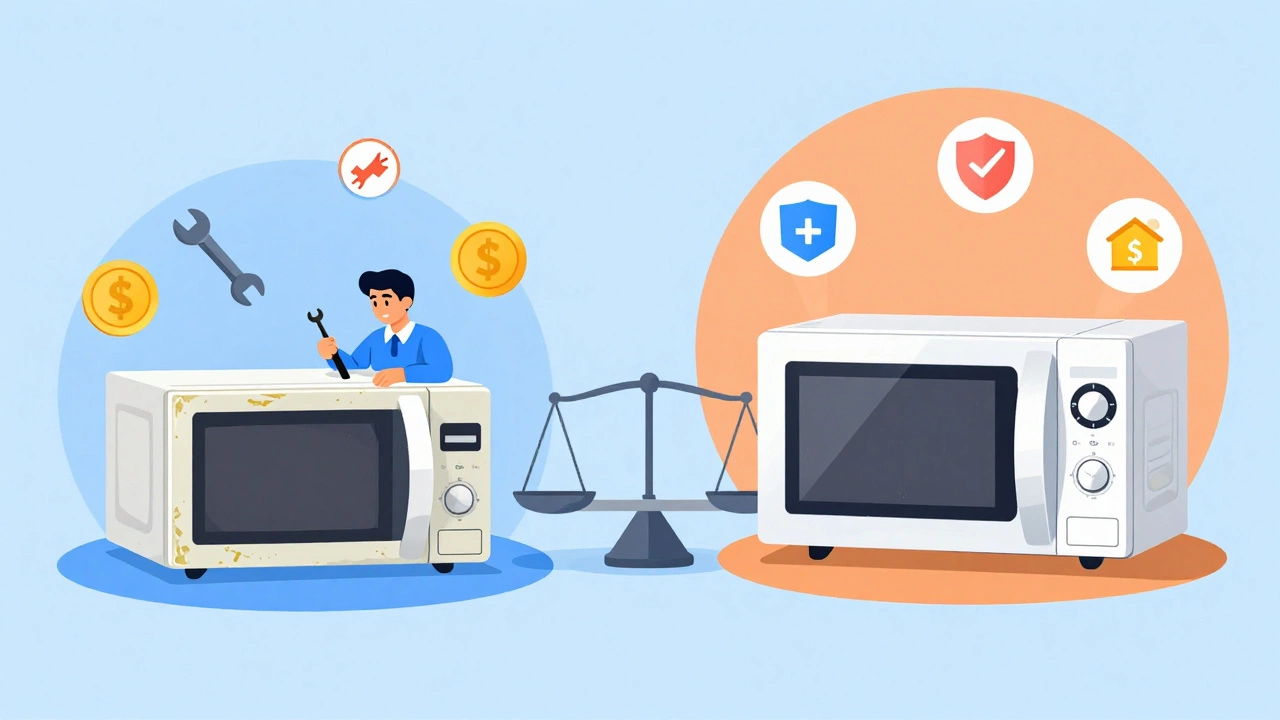
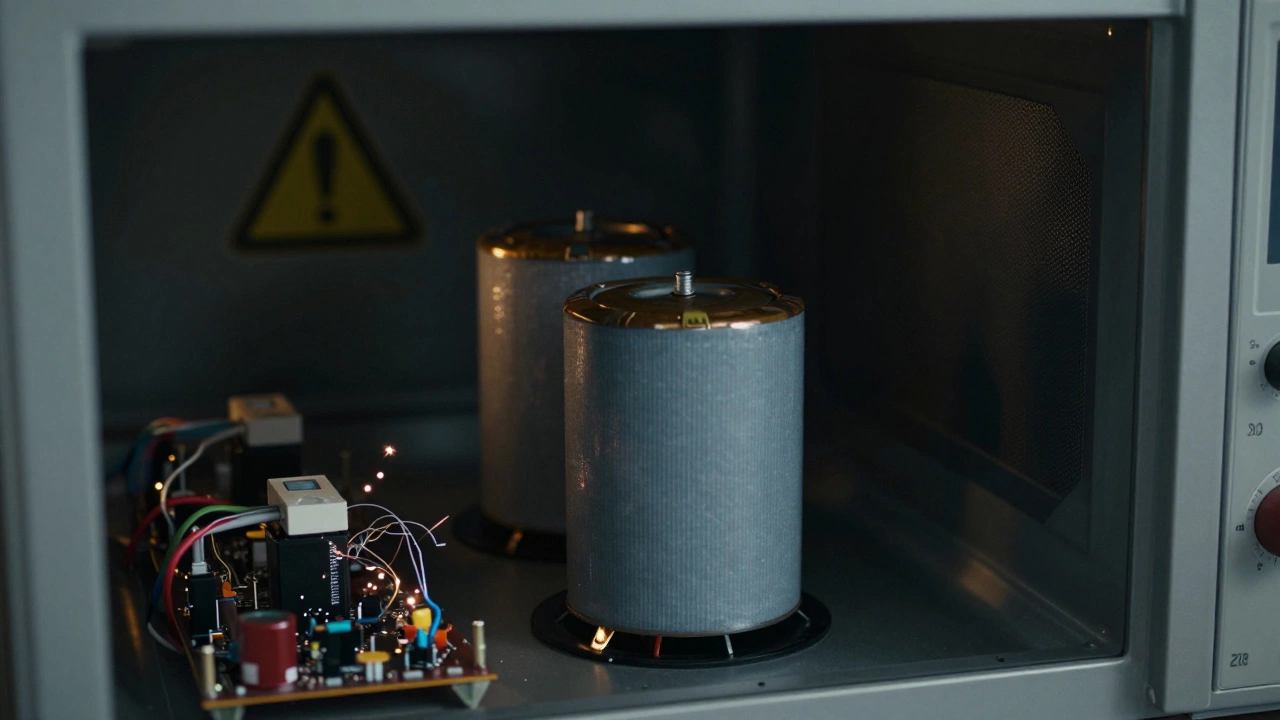
You might be tempted to save money by opening up the microwave yourself. Please don’t. Microwaves contain a high-voltage capacitor that can store a lethal electric charge even when the appliance is unplugged. We’re talking thousands of volts. One wrong move with a screwdriver, and you could suffer severe injury or death.
Additionally, microwaves emit non-ionizing radiation. While modern units are well-shielded, damaging the door seal or the waveguide cover can allow leakage. A qualified technician uses a gaussmeter to test for leaks after repairs. Doing this yourself without proper tools is a gamble with your health.
If you notice arcing (sparks inside the cavity), burning smells, or visible damage to the door latch, stop using the microwave immediately. These are signs of significant internal failure that pose fire hazards. In these cases, skip the repair quote and head straight to the store.
When Repair Makes Sense: The Exceptions
So, when should you actually pay for a repair? There are three scenarios where it makes financial and practical sense:
- Built-In or Over-the-Range Models: If your microwave is integrated into your cabinetry or sits above your stove, removing and installing a new one involves carpentry, electrical work, and potentially venting modifications. Installation costs can easily exceed $500. In this case, spending $150 to fix a door switch or control board is a no-brainer.
- Under Warranty: If your manufacturer’s warranty is still active, repair is free or heavily discounted. Always check your purchase date and warranty terms before calling a third-party technician.
- High-End Specialty Units: Did you buy a $600 steam-convection microwave that acts as an air fryer and sous vide? These complex appliances have higher residual value. Repairing a sensor or fan motor extends the life of a premium tool, making it worthwhile.
For the average countertop model used for defrosting and heating soup, the economics favor replacement once the warranty expires.
Choosing a New Microwave: What to Look For
If you’ve decided to replace your microwave, don’t just grab the cheapest option. Consider your cooking habits. Do you only reheat coffee? A basic 700-watt model will suffice. Do you cook frozen meals or bake casseroles? Look for at least 1000 watts and a larger interior volume (1.5 cubic feet or more).
Also, consider the type. Countertop models offer flexibility and lower upfront costs. Over-the-range models save counter space but require proper ventilation installation. Built-ins look sleek but demand precise cabinet measurements. In 2026, many new models also include sensor cooking features that automatically adjust time and power based on humidity levels, reducing the guesswork and preventing burnt food.
Check for easy-to-clean interiors. Stainless steel looks great but shows fingerprints and splatters. Enamel-lined cavities are easier to wipe down and resist staining. Small details like a smooth turntable rim instead of a raised track also make cleaning significantly faster.
Disposing of Your Old Microwave Responsibly
Once you decide to replace your microwave, don’t just toss it in the trash. Microwaves contain metals, plastics, and electronic components that shouldn’t end up in landfills. Many local waste management facilities accept small appliances for recycling. Some retailers also offer haul-away services when you purchase a new unit, often for a small fee.
If the microwave still works, consider donating it to a local charity shop or community center. Just ensure it’s clean and functional. This extends the lifecycle of the appliance and helps someone in need, which feels better than paying for landfill disposal.
Is it safe to use a microwave if the door seal is damaged?
No, it is not safe. The door seal prevents microwave radiation from leaking out. If the seal is torn, bent, or missing, radiation can escape, posing health risks. Stop using the appliance immediately and either repair the seal professionally or replace the unit.
How long does a typical microwave last?
Most standard countertop microwaves last between 5 to 10 years with regular use. High-end built-in models may last longer, up to 15 years, due to better build quality and less frequent handling. Factors like frequency of use and maintenance affect longevity.
Can I replace the turntable motor myself?
While the turntable motor itself is low voltage, accessing it requires opening the microwave casing. Inside, you will encounter high-voltage components that remain charged even when unplugged. Unless you are trained in electronics safety, it is safer to hire a professional.
Why is my microwave running but not heating?
This usually indicates a failure in the magnetron, high-voltage diode, or capacitor. Since these are core components involved in generating heat, the repair is often expensive. For microwaves older than 5 years, replacement is typically more cost-effective than repair.
Are over-the-range microwaves harder to repair?
Yes, they are more difficult to access. Technicians must remove the unit from the wall to inspect internal components, which adds labor time and cost. Additionally, reinstalling requires ensuring proper ventilation and electrical connections, making repairs pricier than for countertop models.