Extractor Fan Airflow Calculator
Calculate Your Ventilation Needs
Find out the minimum airflow requirements for your room according to New Zealand Building Code standards.
Ever noticed how your bathroom still smells like steam after a shower? Or how grease builds up on your ceiling even when you cook on low heat? Chances are, your extractor fan isn’t working right - or worse, it was never installed properly in the first place. So who actually puts in extractor fans? And why does it matter who does the job?
It’s Not Just a DIY Job
A lot of people think installing an extractor fan is as simple as drilling a hole and screwing in a box. But that’s where things go wrong. In homes built before 2010, especially in older New Zealand houses, extractor fans were often added as an afterthought. They’re stuck into ceilings without proper ducting, wired into light circuits, or worse - left unconnected entirely. You’d be surprised how many homes have fans that look like they’re working but aren’t moving any air at all.
When you hire someone to install an extractor fan, you’re not just paying for screws and a drill. You’re paying for knowledge of building codes, airflow science, and electrical safety. In New Zealand, the Building Code requires that extractor fans in bathrooms and kitchens must vent to the outside, not into the roof cavity. That’s not a suggestion - it’s a legal requirement. If moisture gets trapped in your ceiling space, it leads to mold, rot, and structural damage over time. And once that happens, repairs cost thousands.
Who Actually Installs Them?
There are three main types of people who install extractor fans - and only one of them should be doing it.
- Handymen - They’ll drill the hole, mount the fan, and plug it in. But they rarely check ducting length, airflow rates, or electrical load. Many use flexible plastic ducts that collapse under pressure, reducing airflow by 60%.
- Electricians - They know how to wire the fan correctly, often connecting it to the light switch so it turns on automatically. But many don’t understand ventilation requirements or how to seal ducts properly. They might leave gaps where condensation drips back into the ceiling.
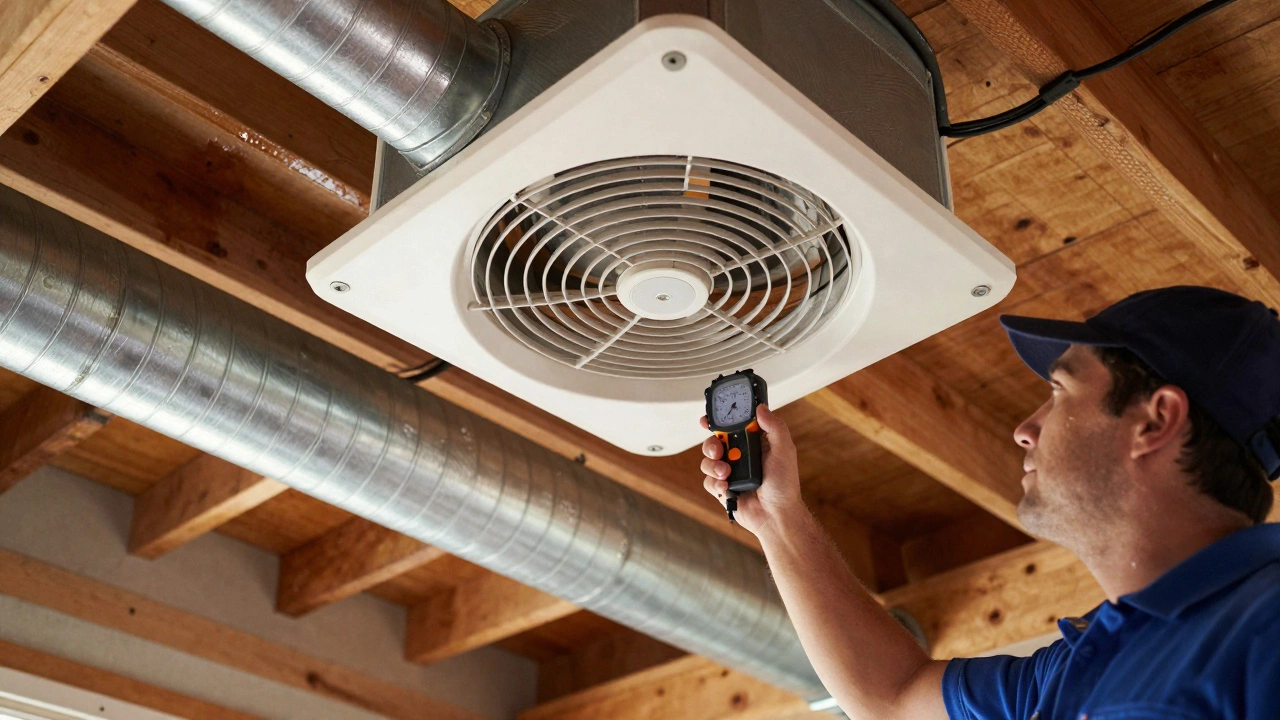
- Specialist ventilation installers - These are the people you want. They test airflow with anemometers, calculate CFM (cubic feet per minute) needs based on room size, use rigid metal ducting, and seal every joint. They know how to route ducts through walls without compromising insulation. In Dunedin, where damp winters are common, this makes all the difference.
A 2023 survey by the New Zealand Building Performance Institute found that 43% of extractor fans installed by general handymen failed to meet minimum ventilation standards within 18 months. The ones installed by ventilation specialists? 92% passed inspection after five years.
What Happens When It’s Done Wrong?
Bad installation isn’t just inconvenient - it’s dangerous. Here’s what you might not realize is happening in your home:
- Mold behind tiles - If the fan doesn’t remove humidity fast enough, moisture seeps into wall cavities. You won’t see it until the plaster starts peeling.
- Electrical overload - Tapping into a light circuit that’s already running a 60-watt bulb? That fan might draw 150 watts. Over time, that overheats wires.
- Noisy operation - A fan that rattles or buzzes? It’s probably not mounted right. Vibration travels through ceiling joists and turns into a low drone that drives people crazy.
- Condensation on windows - If your windows are always fogged up after cooking or showering, the fan isn’t pulling air out - it’s just circulating it.
I’ve seen homes where the extractor fan was installed above the stove but vented into the attic. The result? A layer of greasy dust coating every rafter. That’s not just dirty - it’s a fire hazard.
How to Know If Yours Needs Fixing
You don’t need to be a technician to spot trouble. Here’s a quick checklist:
- Hold a piece of tissue paper in front of the fan while it’s running. If it doesn’t stick firmly to the grille, airflow is too weak.
- Check the outside vent. Is air actually coming out? Or is it blocked by leaves, bird nests, or collapsed ducting?
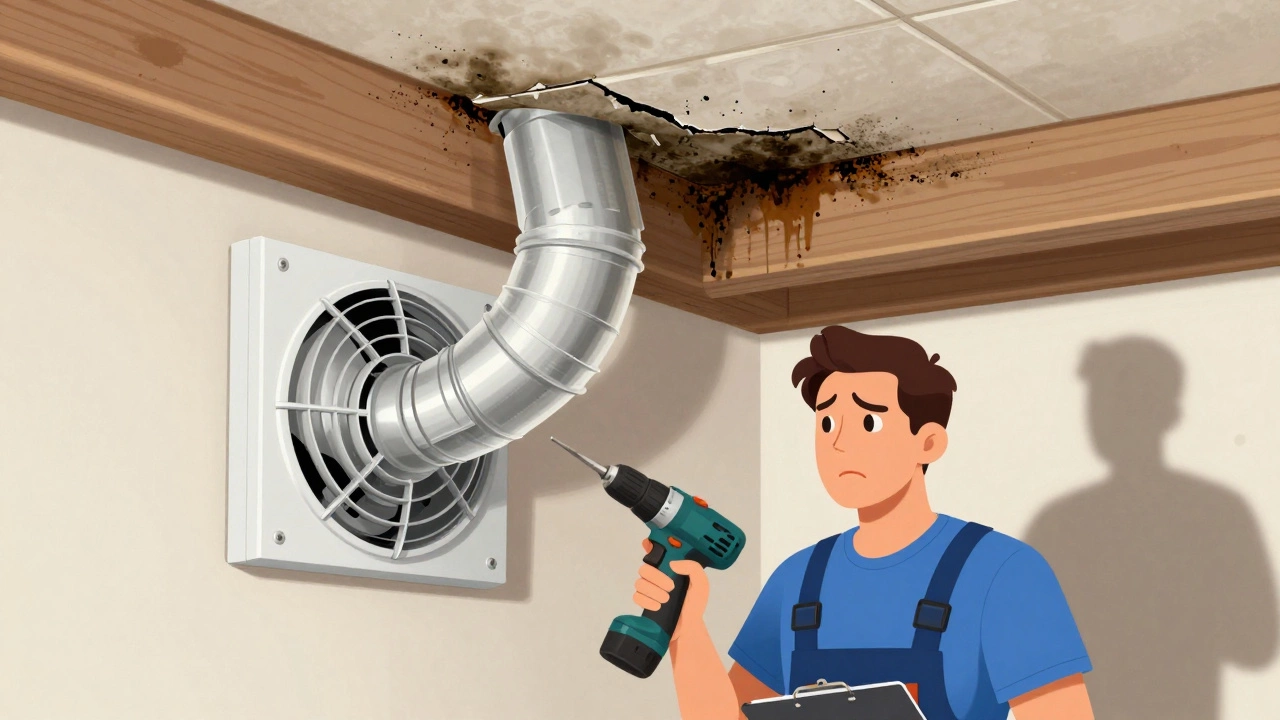
- Look for moisture stains on the ceiling near the fan. Brown or black spots? That’s mold.
- Does the fan run when you turn on the light? If yes, it’s probably wired to the wrong circuit.
- When you turn it off, does it make a loud clunk? That’s a sign the backdraft damper is broken or missing.
If any of these are true, your fan isn’t doing its job. And no, turning it up to high won’t fix the underlying problem.
What to Look for in a Professional
Not all repair companies are equal. Here’s what to ask before you sign off:
- Do you use rigid metal ducting? - Flexible ducts are cheaper but leak air. Metal lasts decades.
- Do you test airflow with a gauge? - A good installer measures CFM. For a bathroom, you need at least 15 CFM per square meter. For a kitchen, 25 CFM per square meter.
- Do you seal joints with mastic, not tape? - Aluminum tape dries out. Mastic is rubbery and lasts.
- Do you install a backdraft damper? - This stops cold air from coming back in when the fan is off.
- Are you licensed for electrical work? - In New Zealand, any wiring beyond plugging into a socket requires a licensed electrician.
Companies that skip these steps are cutting corners. And you’re the one who pays later.
What’s the Right Fan for Your Home?
Not all extractor fans are the same. The type you need depends on where it’s going:
| Room | Minimum Airflow | Recommended Type | Special Requirements |
|---|---|---|---|
| Bathroom | 15 CFM per m² | Centrifugal (low noise) | Must vent outside; avoid ceiling-mounted if shower is directly below |
| Kitchen | 25 CFM per m² | High-power axial or ducted range hood | Needs grease filter; should be on its own circuit |
| Laundry | 20 CFM per m² | Moisture-sensing fan | Should run 15 minutes after door closes |
| Ensuite | 20 CFM per m² | Timer-controlled centrifugal | Must operate independently from main bathroom fan |
Don’t just buy the cheapest fan on Amazon. A $50 fan might look fine, but if it only moves 50 cubic meters per hour, it’s useless in a 6m² bathroom. Look for models with airflow ratings clearly labeled in CFM or m³/h. Brands like Zehnder, Vent-Axia, and extractors from local New Zealand suppliers like Airflow Solutions are built for our damp climate.
Repair vs Replacement
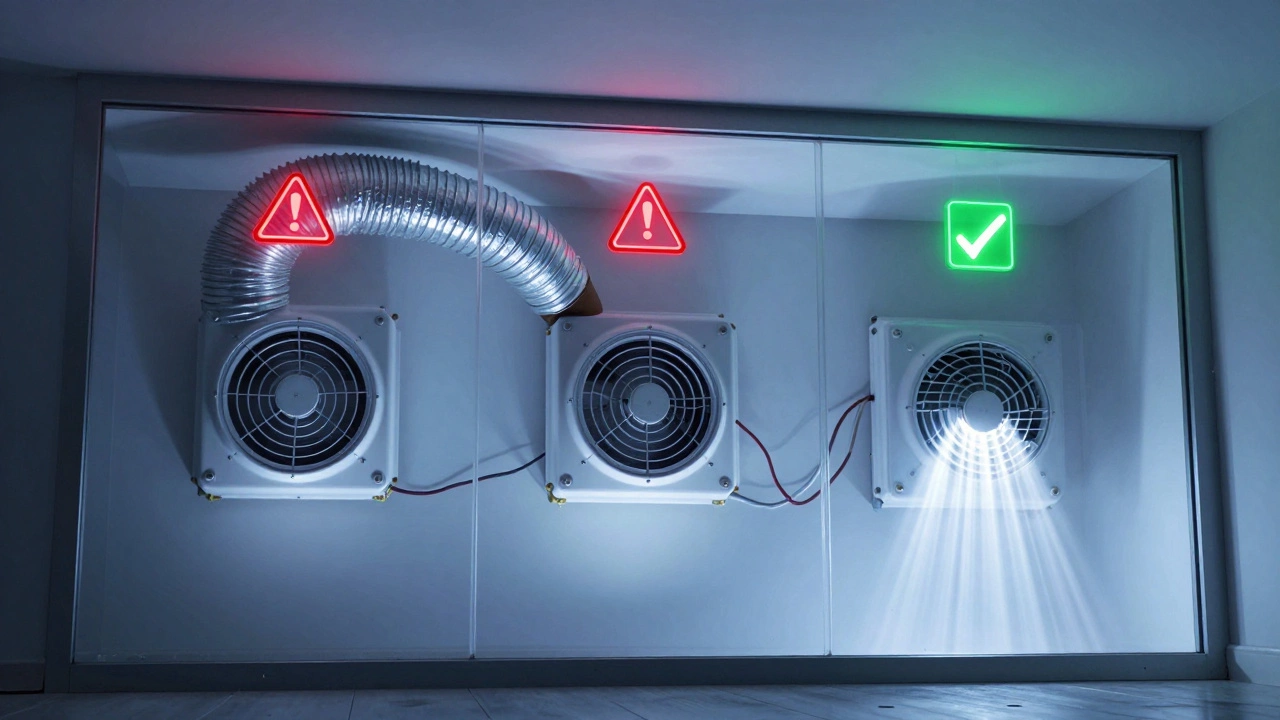
When your fan stops working, should you fix it or replace it? Here’s the rule of thumb:
- If the fan is over 10 years old - replace it. Older motors wear out, and parts are hard to find.
- If the housing is cracked or rusted - replace it. Sealing leaks won’t help if the structure is failing.
- If the noise is new - check the bearings. Sometimes a simple oiling fixes it.
- If the fan runs but no air moves - the ducting is blocked or disconnected. This is a job for a pro.
Most repairs cost between $80 and $150. But if ducting needs rerouting or electrical rewiring, expect $400-$800. That’s still cheaper than fixing mold damage that costs $5,000+.
What You Can Do Yourself
You don’t need to hire someone for everything. Here are safe, simple things you can do:
- Remove and clean the grease filter monthly - soak it in hot soapy water.
- Check the outside vent twice a year - clear leaves, spider webs, or bird nests.
- Test airflow with tissue paper - if it doesn’t stick, call a pro.
- Replace the fan’s carbon filter if it has one - they expire after 6-12 months.
But never attempt to rewire the fan, cut into ceiling joists, or reroute ducting yourself. That’s where things get dangerous - and illegal.
Final Thought: It’s Not About the Fan - It’s About Your Home
Extractor fans are invisible. Most people don’t think about them until the smell lingers or the ceiling starts peeling. But they’re one of the most important parts of your home’s health. A properly installed fan doesn’t just remove smells - it protects your walls, your air quality, and even your insurance claim if mold ever becomes a problem.
So next time you wonder who puts in extractor fans - remember: it’s not the handyman with the drill. It’s the person who understands airflow, building codes, and the long-term cost of cutting corners.
Can I install an extractor fan myself?
You can install a simple plug-in fan in a bathroom if it’s battery-powered or plugs into a standard outlet. But if you’re cutting into the ceiling, running ducting, or wiring into your home’s electrical system, you need a licensed electrician and building consent. In New Zealand, doing this without consent can void your home insurance.
How long should an extractor fan last?
A well-installed extractor fan should last 10-15 years. But cheap models or poorly installed ones often fail in 3-5 years. Motors burn out, bearings wear, and ducts collapse. The key isn’t the brand - it’s whether it was installed correctly from the start.
Do extractor fans use a lot of electricity?
No. Most modern extractor fans use between 15 and 50 watts - less than a single LED light bulb. A fan running for 30 minutes a day costs less than $10 a year. The real cost is what happens when you don’t run it: mold repairs, insulation damage, and health issues.
Why does my extractor fan make a loud noise?
Loud noises usually mean one of three things: the fan isn’t mounted securely, the ducting is kinked or too long, or the motor is failing. Loose mounting causes vibration. Kinked ducts force the motor to work harder. A failing motor hums or buzzes. Cleaning the blades won’t fix it - you need to check the installation.
Should I run the extractor fan all the time?
No. Running it constantly wastes energy and wears out the motor. Instead, use a timer or humidity sensor. In bathrooms, run it for 20 minutes after a shower. In kitchens, run it for 10-15 minutes after cooking. Modern fans have built-in timers - make sure you’re using them.