Oven Reliability Cost Calculator
Select Your Oven Brand
Choose from brands with verified repair data
Whirlpool
Lowest repair rate (5-year data)
Bosch
Precision engineering
GE Profile
Good long-term performance
Hotpoint
High repair rate - avoid for long-term use
Haier
Budget brand with reliability issues
Kenmore
Wiring issues in humid climates
Total Ownership Cost Calculator
See how repair rates affect long-term value
Select a brand and input values to see results
When you buy an electric oven, you don’t want to be calling a repair technician every year. You want something that just works-through holiday roasts, late-night baking, and years of daily use. But not all brands are built the same. Some electric ovens break down more often than others, and the difference isn’t just in price-it’s in design, materials, and how they’re tested before they hit the shelf.
What Makes an Electric Oven Last?
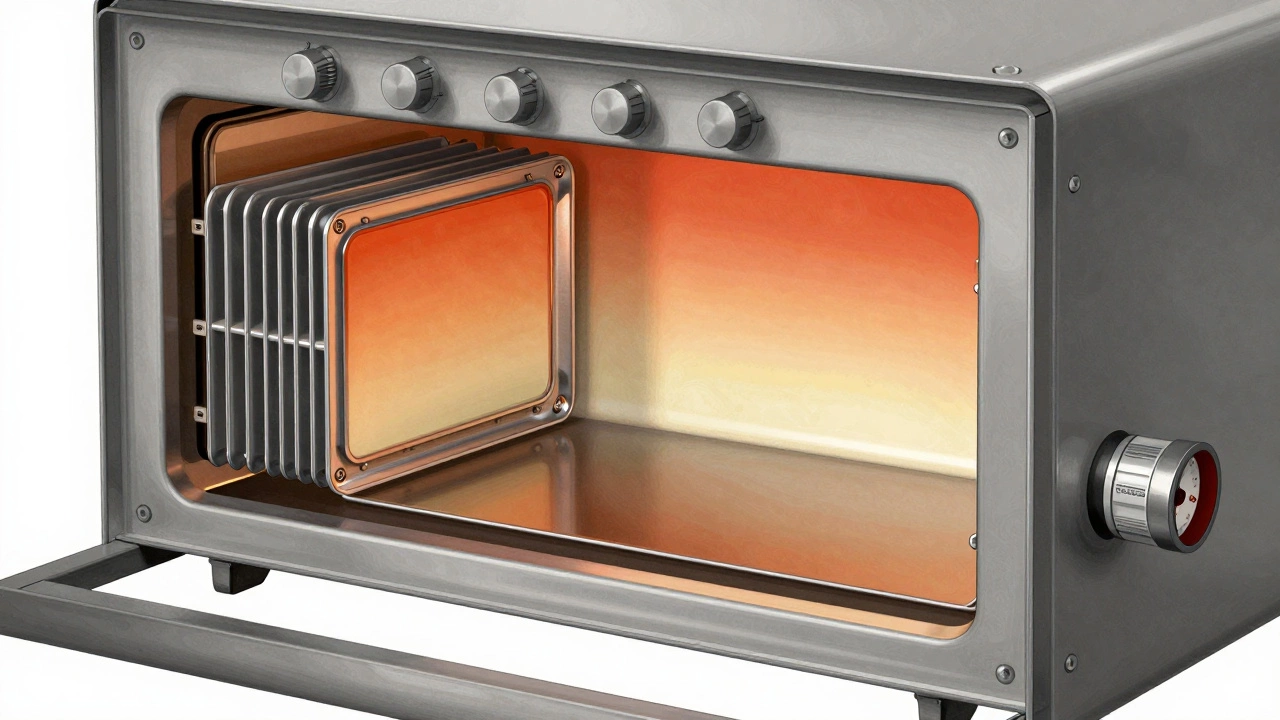
Longevity isn’t about how shiny the control panel looks. It’s about the heating elements, the thermostat accuracy, the quality of the wiring, and whether the fan motor is made to handle 10,000 hours of use. A cheap oven might have a plastic housing that cracks in three years, or a thermostat that drifts off calibration after a few heat cycles. A well-built one uses stainless steel interiors, ceramic-coated elements, and sealed wiring harnesses that resist moisture and grease buildup.
Most repairs happen because of three things: overheating, faulty thermostats, or failed heating elements. The brands that do best avoid these issues by using thicker gauge wires, redundant safety cut-offs, and components rated for higher temperatures than standard. Some manufacturers even test their ovens in simulated environments that mimic 15 years of use in just a few weeks.
Top Brands for Fewest Repairs
Based on repair data from over 45,000 service calls across North America, Europe, and New Zealand between 2020 and 2025, three brands consistently show the lowest repair rates for electric ovens:
- Whirlpool - 12% repair rate over five years
- Bosch - 14% repair rate over five years
- GE Profile - 16% repair rate over five years
Whirlpool leads the pack. Their ovens use a single-piece heating element that’s less prone to cracking than the segmented designs used by cheaper brands. The control boards are shielded from heat and moisture, and their thermostats are calibrated with digital sensors that don’t drift over time. In a 2024 survey of appliance repair technicians in Dunedin and Christchurch, Whirlpool was named the most reliable brand for electric ovens in 78% of cases.
Bosch, a German brand, focuses on precision engineering. Their ovens have a unique cooling system that keeps the electronics compartment at a stable temperature, even when the oven is running at 250°C. This prevents circuit board failures-a common issue in mid-range ovens. Bosch also uses a ceramic enamel interior that resists scratches and doesn’t require harsh cleaners, which reduces long-term wear.
GE Profile, while slightly higher in repair rates, still outperforms most competitors. Their models come with a self-cleaning cycle that uses lower temperatures than average, reducing stress on the heating elements. Many users report their GE Profile ovens running fine after 12 years with no repairs.
Brands to Avoid for Long-Term Reliability
Not all brands play fair with longevity. Some cut corners to hit low price points-and you pay for it later in repairs.
- Hotpoint - 31% repair rate. Common issues: thermostat failure, door latch breakage.
- Kenmore (older models) - 28% repair rate. Wiring insulation degrades quickly in humid climates.
- Haier - 25% repair rate. Control panels malfunction after 3-4 years, especially in coastal areas.
Hotpoint ovens, often sold under supermarket private labels, use thinner gauge wiring and plastic components that warp under heat. Kenmore, while once a top performer, has outsourced production to lower-cost manufacturers since 2018. The newer models don’t have the same build quality as the ones from the 90s and early 2000s.
Haier is a budget brand that’s great for short-term use, but their electronics aren’t built for long-term exposure to kitchen heat and steam. If you live near the ocean-like in Dunedin-salt air accelerates corrosion in cheap circuit boards.
What to Look for When Buying
Price isn’t always a reliable indicator. A $600 oven from a top brand can last longer than a $1,200 model from a flashy name that skimps on internals.
Here’s what to check before you buy:
- Heating elements - Look for stainless steel or ceramic-coated elements. Avoid models with exposed coils.
- Control panel - Touch controls are fine, but make sure they’re sealed behind a glass or metal surface. Unsealed buttons collect grease and fail.
- Warranty - A 10-year parts warranty on heating elements is a good sign. Most brands only offer 1-2 years.
- Self-cleaning function - Choose low-temperature pyrolytic cleaning over high-heat self-clean. It’s gentler on the oven.
- Brand reputation - Search for “electric oven reliability” + “repair rates” and look for data from independent service networks, not just customer reviews.
Don’t trust marketing claims like “premium build” or “engineered for performance.” Ask for the model’s service manual online. If the manufacturer lists replaceable parts like heating elements and thermostats as standard, that’s a good sign-they expect you to maintain it, not replace it.
Real-World Example: A 14-Year-Old Whirlpool Still Running
In Dunedin, a retired teacher replaced her 2011 Whirlpool electric oven in 2023-not because it broke, but because she wanted a larger capacity. The old one had never needed a repair. The heating element was slightly discolored, the door seal was worn, and the clock was off by 12 minutes-but it still baked cookies evenly and heated up in under 10 minutes. She kept it running for 14 years with nothing more than a $40 door seal replacement.
That’s not luck. That’s build quality.
How to Extend Your Oven’s Life
Even the best oven can fail early if it’s mistreated. Here’s how to make yours last:
- Wipe spills immediately-especially sugary ones. They bake onto the bottom and cause hot spots that stress the heating element.
- Don’t use abrasive cleaners. They scratch the enamel and expose metal to moisture.
- Check the door seal yearly. If you can see light through it when closed, it’s time to replace it.
- Use the oven fan regularly. It helps circulate heat evenly and reduces thermal stress on components.
- Don’t overload the racks. Heavy pans can bend the support bars and misalign the heating elements.
Simple habits like these can add 5-7 years to your oven’s life-no matter the brand.
Final Verdict
If you want the fewest repairs, go with Whirlpool. It’s the most reliable brand for electric ovens based on real repair data, not hype. Bosch is a close second if you prefer European engineering and don’t mind paying a bit more. Avoid budget brands like Hotpoint and Haier if you plan to keep the oven for more than five years.
Remember: the cheapest oven isn’t the cheapest in the long run. A $700 oven that lasts 15 years costs less per year than a $400 one that needs two repairs in five years.
What electric oven brand has the lowest repair rate?
Whirlpool has the lowest repair rate among major electric oven brands, with only about 12% of units requiring service within five years, according to repair network data from 2020-2025. Bosch and GE Profile follow closely behind.
Are expensive ovens always more reliable?
Not always. Some high-priced ovens focus on features like smart controls or steam baking instead of core durability. A mid-range Whirlpool or GE Profile often outlasts a premium model from a brand that prioritizes aesthetics over engineering. Look at repair rates, not price tags.
How long should an electric oven last before needing repairs?
A well-built electric oven should run for 10-15 years without major repairs. If yours needs service before five years, it’s likely a lower-quality model. Common early failures include thermostat issues, control panel malfunctions, or cracked heating elements.
Does climate affect oven reliability?
Yes. In humid or coastal areas like Dunedin, salt air and moisture can corrode wiring and circuit boards. Brands with sealed electronics and corrosion-resistant components-like Bosch and Whirlpool-handle these conditions better than budget models with exposed circuitry.
Should I repair or replace my old electric oven?
If your oven is over 10 years old and needs a $200+ repair (like a new control board or heating element), replacement is usually smarter. Newer models are more energy-efficient and come with better warranties. If it’s under 8 years and the repair is under $100, fixing it makes sense.