
When your washing machine stops mid-cycle, leaks all over the floor, or just spins silently like it’s on vacation, it’s not magic-it’s mechanics. Most washing machines last 10 to 12 years, but before that, certain parts wear out faster than others. If you’ve ever stared at a machine that won’t drain, won’t spin, or won’t even turn on, you’re not alone. These aren’t random failures. There’s a pattern. And knowing which parts fail most often can save you hundreds in service calls-or help you fix it yourself before the next load of laundry piles up.
Drain Pump: The Most Common Culprit
The drain pump is the heart of the drainage system. It’s a small electric motor with an impeller that pushes water out through the hose. In homes with hard water, lint, coins, or even socks can clog it. But even without debris, the pump bearings wear out. You’ll know it’s bad if your machine fills and agitates but never drains. The motor might hum, but no water moves. Or worse, it leaks from the bottom near the pump housing. Replacing it usually costs under $100 for the part, and it’s a 30-minute job if you’re handy. Most machines made after 2010 have easy-access pump filters. Check yours first before calling a technician.
Door Lock Assembly: When the Machine Won’t Start
If the drum won’t spin and the control panel shows an error like “LD” or “DL,” the door lock is often the issue. This isn’t just a safety switch-it’s a small electronic latch with a solenoid and sensor. Over time, the plastic housing cracks from heat and vibration. The sensor fails to tell the control board the door is closed, so the machine refuses to run. It’s not dangerous, but it’s annoying. You can test it with a multimeter for continuity, or just swap it out. It’s one of the cheapest fixes, usually under $40. And if you’ve ever had to yank the door open with a screwdriver after a power outage, you’ve felt this failure firsthand.
Drive Belt: The Silent Breakdown
When the machine fills and agitates but doesn’t spin-or spins slower than a snail-you’re probably looking at a broken or stretched drive belt. This rubber belt connects the motor to the drum. It doesn’t need oil, it doesn’t get hot, but it does wear out. In high-use households, it can snap in under five years. You’ll hear a squealing noise right before it goes, or maybe nothing at all. The drum just sits still. Replacing it takes about an hour. You’ll need to tip the machine back and access the back panel. Most belts are model-specific, so note your serial number before buying. A good belt lasts longer if you don’t overload the machine. Ten shirts and two jeans? Fine. A king-size comforter and five towels? That’s asking for trouble.
Water Inlet Valve: Why Your Machine Won’t Fill
If your washer sits there with a half-empty drum and no water coming in, the inlet valve is likely clogged or failed. This valve controls hot and cold water flow. Mineral buildup from hard water can block the screens inside it. Or the solenoid coil burns out. You might notice one temperature works (say, cold) but the other doesn’t (hot). Or no water at all. The valve has two coils-one for each line. If one fails, the machine might still run but never fill properly. Cleaning the inlet screens is easy: just shut off the water, disconnect the hoses, and pull out the mesh filters. If that doesn’t help, replace the whole valve. It’s a $50 part, and you’ll need a wrench and patience.
Motor Coupler: The Forgotten Link
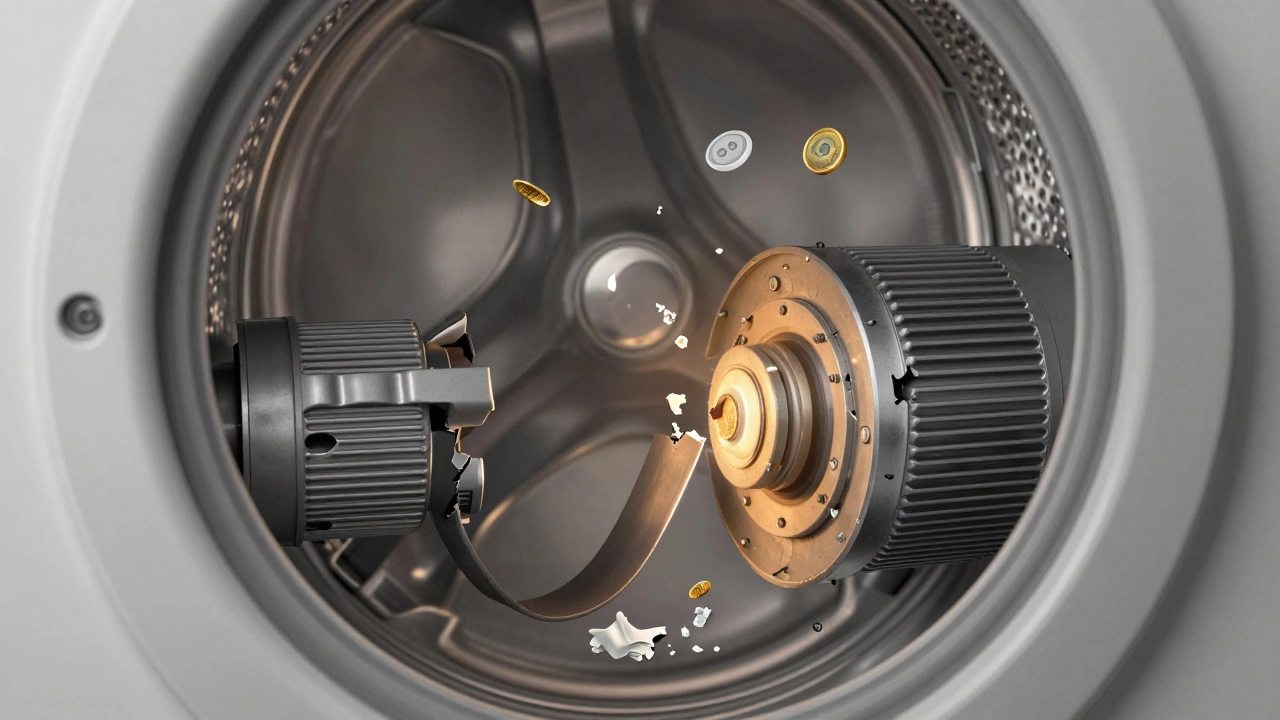
Older machines-especially those made before 2015-use a motor coupler. It’s a small plastic-and-rubber piece that connects the motor shaft to the transmission. It’s designed to break before anything else does, acting as a fuse. If the drum stops turning but the motor still runs, that coupler is probably shredded. You’ll hear a clicking noise as the motor spins but the drum doesn’t move. Replacing it is simple: unplug the machine, remove the cabinet, and swap the coupler. It’s a $15 part. But if you have a newer machine, this part doesn’t exist. Modern machines use direct-drive motors, which are more reliable but harder to fix if they fail.
Control Board: The Brain That Goes Silent
Control boards get blamed for everything. But they’re not always the problem. Still, when lights flash in weird patterns, the display goes blank, or the machine resets itself randomly, the board might be fried. Power surges are the usual killer. If you live in an area with unstable electricity-or if your machine is plugged into an old outlet without surge protection-this is common. Before replacing the board, check simpler things: the door lock, the lid switch, the thermal fuse. A blown thermal fuse (a small white component near the motor) can mimic a board failure. It’s cheap and easy to test. If all else checks out, and the board is visibly burnt or smells like smoke, it’s time to replace it. But be warned: a new control board can cost $200 or more. Sometimes, it’s cheaper to replace the whole machine.
Drum Bearings: The Noisy Endgame
That loud grinding or rumbling noise during the spin cycle? That’s probably the drum bearings. They’re inside the outer tub, supporting the inner drum. When they wear out, the drum wobbles and scrapes against the casing. It sounds like a jet engine trying to escape. This isn’t a quick fix. Replacing the bearings means taking the whole machine apart, removing the drum, and pressing out the old bearings. It’s labor-intensive. Most repair techs charge $300+ for this job. And if the tub is cracked from the wobble, you’ll need a new outer tub too. In many cases, if your machine is over eight years old, it’s not worth repairing. Newer models have sealed drum units that last longer and don’t make that noise until they’re done.
Thermal Fuse: The Safety Net That Blows
This little fuse protects the machine from overheating. It’s usually near the motor or the heating element. If the vent gets blocked, the motor runs too hot, or the thermostat fails, the fuse cuts power. The machine won’t turn on at all. No lights. No sounds. Just dead. It’s not a sign of a broken motor-it’s a sign of something else overheating. Replace the fuse, and the machine might work again. But if the root cause isn’t fixed-like a blocked vent or a bad thermostat-it’ll blow again in weeks. Always check the dryer vent hose if your washer has a hot water heater built in. And never ignore a burning smell. That’s not just a fuse-it’s a warning.
What to Check Before Calling a Pro
Before you call a repair technician, do this quick checklist:
- Is the machine plugged in? (Yes, people unplug it and forget.)
- Are the water taps fully open?
- Is the drain hose kinked or clogged?
- Did you overload it? (Too much laundry = no spin.)
- Is the door locked? (Try opening and closing it firmly.)
- Are the inlet filters clean? (Remove hoses and check screens.)
- Is there error code on the display? (Look it up by model number.)
If you’ve checked these and the machine still won’t work, you’re likely dealing with one of the parts above. Most of these fixes can be done with basic tools: screwdrivers, pliers, a multimeter, and patience. YouTube has videos for nearly every model. And parts are cheap if you know where to look-sites like RepairClinic or AppliancePartsPros have filters by brand and model.
When to Repair vs. Replace
Here’s a simple rule: if the repair cost is more than half the price of a new machine, walk away. A new mid-range washing machine costs $600-$800. So if your drain pump is $80, your belt is $25, and your door lock is $40-fix it. But if the control board is $220 and the drum bearings are $180? That’s $400 just to get back to where you started. And you’re still stuck with a 10-year-old machine that will likely break again soon. Newer machines use less water, spin faster, and have better diagnostics. If you’re spending over $300 on repairs, consider upgrading. Look for models with direct-drive motors-they’re quieter and last longer.
Prevention Tips That Actually Work
You can’t stop wear and tear, but you can slow it down:
- Don’t overload the drum. Leave a hand’s width of space at the top.
- Use HE detergent. Regular detergent creates too many suds and strains the pump.
- Run a cleaning cycle with vinegar or washing machine cleaner every month.
- Leave the door slightly open after use to prevent mold and bearing corrosion.
- Check pockets. Coins, keys, and tissues are the #1 cause of pump clogs.
- Install a surge protector. Power spikes kill control boards.
Washing machines are built to last. But they’re not indestructible. The parts that fail most often are the ones that move, heat, or handle water. If you know what to look for, you can catch problems early-before the floor turns into a swamp.
Why does my washing machine leak only during the spin cycle?
Leaks during spin usually mean the drum bearings are worn out or the tub seal has failed. As the drum spins faster, pressure builds and water escapes through damaged seals. If the leak is under the machine near the center, it’s likely the tub seal. If it’s coming from the back or sides, check the drain hose and pump connections.
Can a clogged filter cause my washing machine not to spin?
Yes. If the drain pump filter is clogged with lint or debris, water can’t exit the drum. The machine’s sensors detect standing water and prevent the spin cycle to avoid flooding. Cleaning the filter often fixes this. Most machines have a small door at the bottom front-open it, catch the water with a towel, and pull out the filter.
Is it worth replacing the motor in an old washing machine?
Rarely. A new motor costs $200-$400, and labor adds another $150. If your machine is over eight years old, the rest of the components are aging too. You’re better off spending that money on a new model with a 10-year warranty, better energy ratings, and quieter operation.
What causes a washing machine to smell like burning rubber?
A burning rubber smell usually means the drive belt is slipping or worn out. It can also happen if the drum is overloaded and the motor is straining. Turn off the machine immediately. If the smell returns after replacing the belt, the motor or drum alignment may be damaged.
Why won’t my washing machine start even though the power light is on?
If the power light is on but nothing else happens, the issue is likely the door lock, thermal fuse, or control board. Test the door lock first-it’s the easiest. If the door doesn’t click shut properly, the machine won’t start. A blown thermal fuse will also kill power to the motor even if the display works. Check both before assuming the board is faulty.