Water Heater Sediment Risk Calculator
Determine your water heater's sediment buildup risk based on water hardness, age, and maintenance history. Sediment is the #1 cause of premature water heater failure.
Most water heaters don’t just die suddenly. They fade out slowly-first the hot water runs out faster, then it smells funny, then it makes strange noises. By the time you notice, it’s often too late to fix it cheaply. The number one reason water heaters fail isn’t a broken element, a leaky pipe, or a faulty thermostat. It’s something simple, silent, and completely preventable: sediment buildup.
Sediment Is the Silent Killer
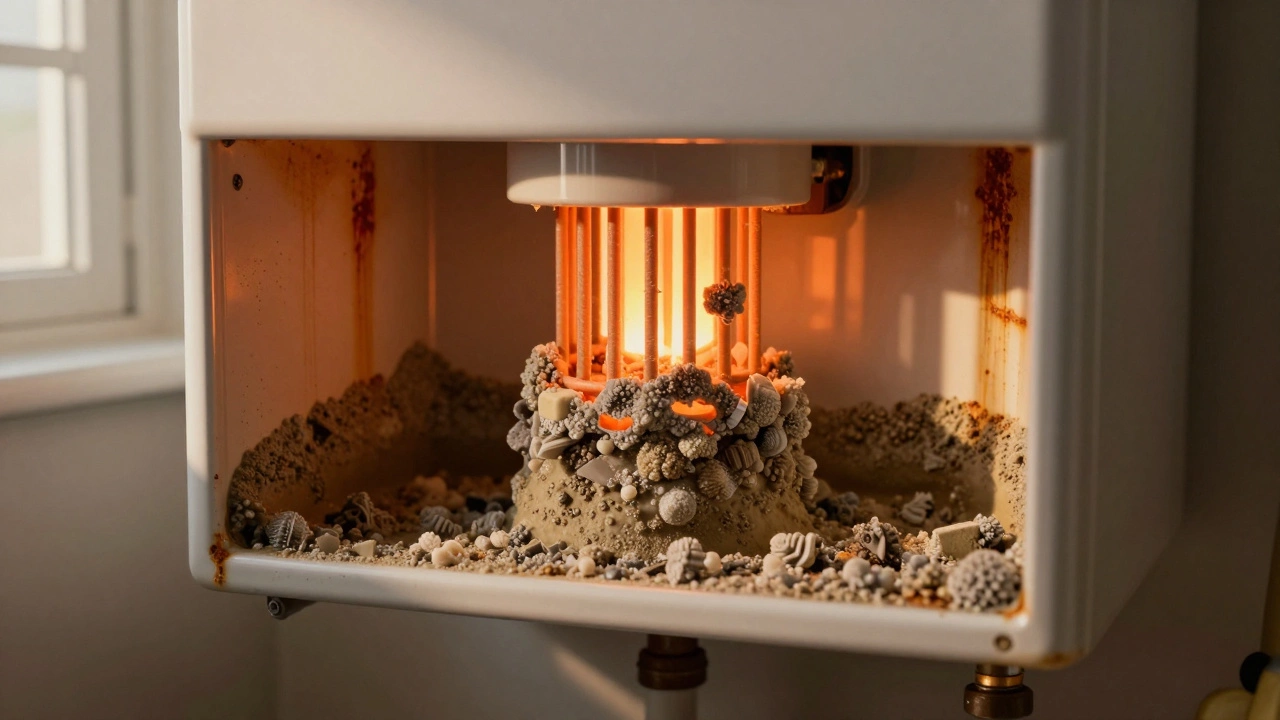
Hard water is full of minerals like calcium and magnesium. When water heats up, those minerals drop out of solution and sink to the bottom of the tank. Over time, they form a thick layer of sediment-sometimes several inches deep. This isn’t just dirt. It’s like a blanket of rock that traps heat and forces your heater to work harder.
Think of it like putting a thick pot holder under a saucepan. The flame still burns, but the pan takes twice as long to boil. That’s exactly what happens inside your water heater. The burner has to run longer, use more gas or electricity, and stress the tank’s metal lining. Eventually, the tank overheats in spots, the metal weakens, and it starts to rust from the inside out.
In Dunedin, where water hardness averages 120-180 mg/L of calcium carbonate, sediment builds up faster than in softer water areas. A 50-gallon tank can accumulate 5-10 pounds of sediment in just five years. That’s not a minor issue-it’s a structural threat.
Why You Can’t See It Coming
Sediment doesn’t leak. It doesn’t make loud bangs like a failing element. It doesn’t show up on a thermostat. You won’t know it’s there unless you check. But there are warning signs:
- Your hot water runs out faster than it used to
- You hear popping or rumbling sounds when the heater fires up
- The water smells like rotten eggs (sulfur bacteria feed on sediment)
- Your energy bills creep up without any change in usage
These aren’t just annoyances-they’re red flags. The rumbling? That’s sediment boiling underneath the heating element. The short hot water? The sediment is acting like insulation, trapping heat where it shouldn’t and keeping it from reaching the outlet pipe.
The Anode Rod Is Your First Line of Defense
Every water heater has a sacrificial anode rod-a metal stick, usually made of magnesium or aluminum, hanging down from the top of the tank. Its job is to attract corrosive elements away from the steel tank. Think of it as a bodyguard that takes the bullet so the tank doesn’t have to.
But here’s the catch: if sediment builds up around the rod, it gets buried. The rod can’t do its job. And if you haven’t checked it in five years, it’s probably worn down to a nub. A fully corroded anode rod doesn’t mean your heater is broken-it means it’s already dying. Replacing the rod every 3-5 years can double the life of your tank.
Most homeowners don’t know where the anode rod is. It’s under a plastic cap on top of the heater, often hidden behind insulation. You’ll need a 1-1/16 inch socket wrench. If you’ve never opened it, don’t panic-it’s not hard. But if it’s crumbled like chalk, you’re overdue.
What Happens When You Ignore It
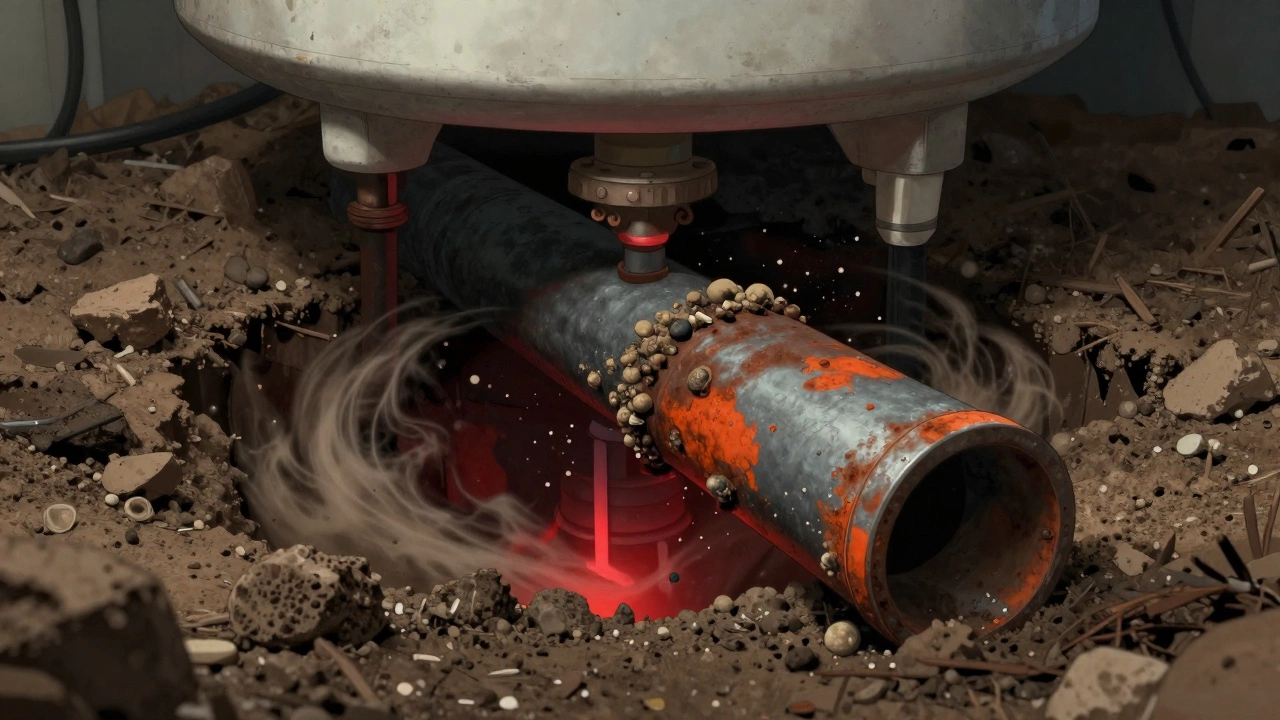
Let’s say you’ve got a 10-year-old water heater. You’ve never flushed it. The sediment layer is 3 inches thick. The anode rod is gone. The tank’s bottom is now a rusted, brittle shell.
One morning, you turn on the shower. The water is lukewarm. You wait. Nothing. Then you hear a low gurgle. A few hours later, water starts pooling under the heater. It’s not a leak from a fitting. It’s the tank itself-ruptured from the inside.
That’s not a repair. That’s a full replacement. And it’s expensive. A new 50-gallon electric water heater costs $900-$1,500 installed. A gas model runs $1,200-$2,000. You’ve spent that much already in wasted energy and failed repairs.
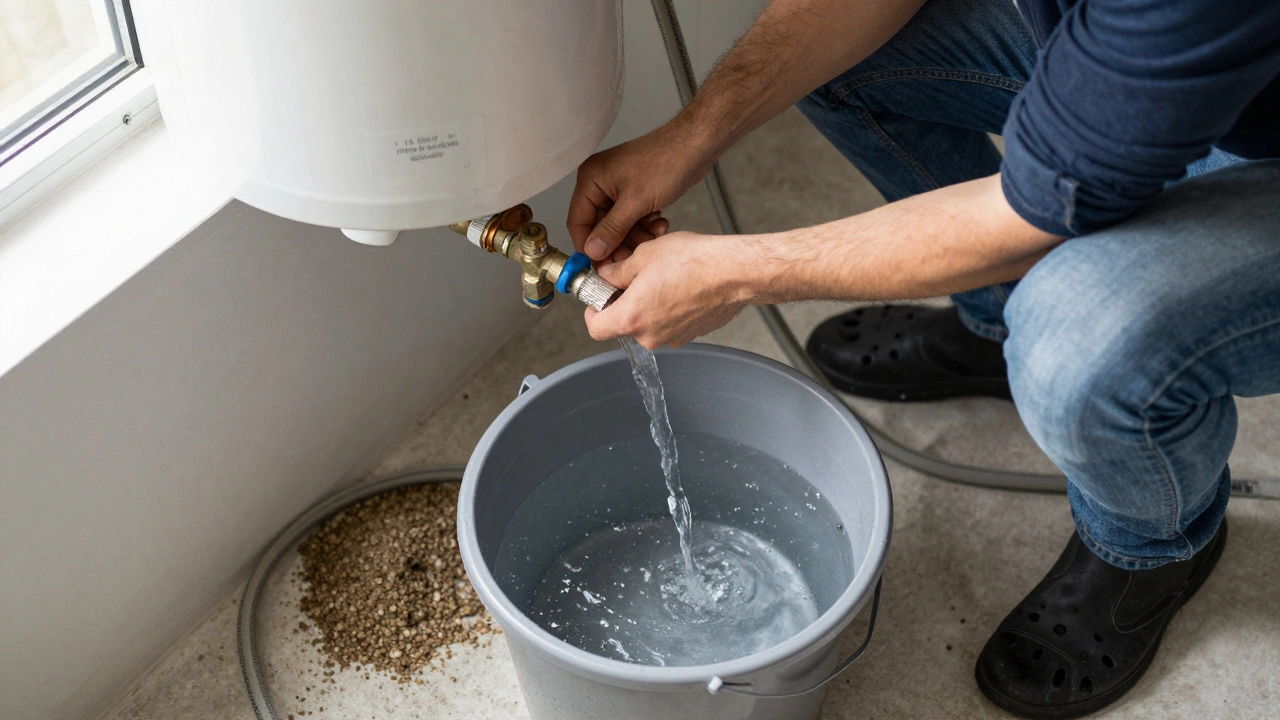
And it’s avoidable. Flushing your tank once a year takes less than an hour. You need a garden hose, a bucket, and 20 minutes of your time. Open the pressure relief valve, attach the hose to the drain spigot, and let it run until the water runs clear. No tools. No plumber. No cost.
What About Other Causes?
Yes, other things break. Elements burn out. Thermostats fail. Pressure relief valves get stuck. But these are individual parts. They’re easy to replace. A $40 element or a $60 thermostat can fix those issues.
Sediment isn’t a part. It’s a process. It eats away at everything else. It kills the anode rod. It overheats the element. It causes corrosion that cracks the tank. It’s the root cause behind 70% of premature water heater failures, according to the American Society of Plumbing Engineers.
Compare it to a car. You can replace a spark plug. You can fix a flat tire. But if you never change the oil, the engine seizes. Sediment is the oil in your water heater.
How to Prevent It
Here’s what actually works:
- Flush your tank once a year-ideally in spring before heavy use
- Check the anode rod every 3 years. Replace it if it’s less than half its original thickness
- Install a water softener if your water hardness is above 150 mg/L
- Set your thermostat to 120°F (49°C). Higher temps speed up mineral deposition
Some people swear by water heater blankets. They help with heat loss but do nothing for sediment. Others install whole-house filters. They help with chlorine and rust, but not calcium. Only flushing and anode rod replacement directly target the core issue.
If you live in an older home with galvanized pipes, sediment can come from the pipes too. That’s another reason to flush regularly. The tank isn’t the only source.
When to Replace Instead of Repair
There’s a point where repair doesn’t make sense. If your heater is over 10 years old and you’ve never flushed it, you’re playing Russian roulette. Even if you fix the element now, the tank is already corroded. The next leak could come at 2 a.m. with a flooded basement.
Look at the cost of a new unit versus the cost of repeated repairs. A single repair might cost $200-$400. Do that three times, and you’ve spent enough for a new heater. Plus, newer models are 20-30% more efficient. You’ll save money on bills too.
Don’t wait for the flood. If your heater is over 8 years old and you’ve never maintained it, start budgeting for a replacement. It’s not a question of if-it’s when.
Bottom Line
The most common cause of water heater failure isn’t bad luck. It’s neglect. Sediment buildup is slow, quiet, and predictable. You can see it coming if you know where to look. And you can stop it with a simple annual flush.
Water heaters last 8-12 years on average. With proper care, they can last 15-20. That’s not magic. That’s maintenance. Don’t wait for the puddle. Do it now. Your wallet-and your floor-will thank you.