
Range Oven Repair or Replace Calculator
Input Your Oven Details
Most people assume their range oven will last forever-until it stops heating properly, the control panel glitches, or the door won’t close right. Then you start wondering: how long should a range oven actually last? The answer isn’t a single number. It’s a mix of build quality, how often you use it, and whether you treat it like a machine that needs care-or just a big box you throw food into.
Typical Lifespan of a Range Oven
On average, a well-maintained electric range oven lasts between 13 and 15 years. That’s the number most appliance manufacturers and repair technicians agree on. But that’s just the baseline. Some units make it past 20 years with minimal issues. Others fail before 10, especially if they’re cheap models or were used heavily in a busy household.
Brand matters, but not as much as you think. A $2,000 Wolf or Viking won’t necessarily outlive a $800 Frigidaire if the latter gets cleaned regularly and isn’t slammed shut every day. What really makes the difference is how the oven is used and maintained.
What Kills a Range Oven Early?
Most range ovens don’t die from old age. They die from neglect or abuse. Here are the top five killers:
- Spills left to bake on - Food residue, grease, and sugar buildup eat away at heating elements, insulation, and control boards over time. A single burnt-on casserole won’t break your oven, but five years of it? That’s a recipe for failure.
- Overloaded racks - Dropping heavy roasting pans or stacking multiple racks under extreme heat warps the internal frame and stresses the heating elements. It’s not the weight-it’s the sudden thermal shock.
- Ignoring error codes - Modern ovens show codes like F1, E2, or E9. People ignore them, thinking it’s just a glitch. But those codes often mean a failing thermostat, a shorted sensor, or a damaged control board. Waiting too long turns a $150 fix into a $600 replacement.
- Wet cleaning methods - Spraying oven cleaner directly on the control panel or using steam cleaners near the electronics? That’s asking for corrosion. Moisture gets into the wiring, and once it does, the damage is permanent.
- Power surges - A lightning storm or faulty home wiring can fry the control board in seconds. No warning. No second chance.
How to Make Your Range Oven Last Longer
You don’t need to be a technician to extend your oven’s life. Just follow these simple habits:
- Clean spills right away - Wait 10 minutes after turning off the oven, then wipe down the interior with a damp cloth and baking soda paste. No harsh chemicals needed.
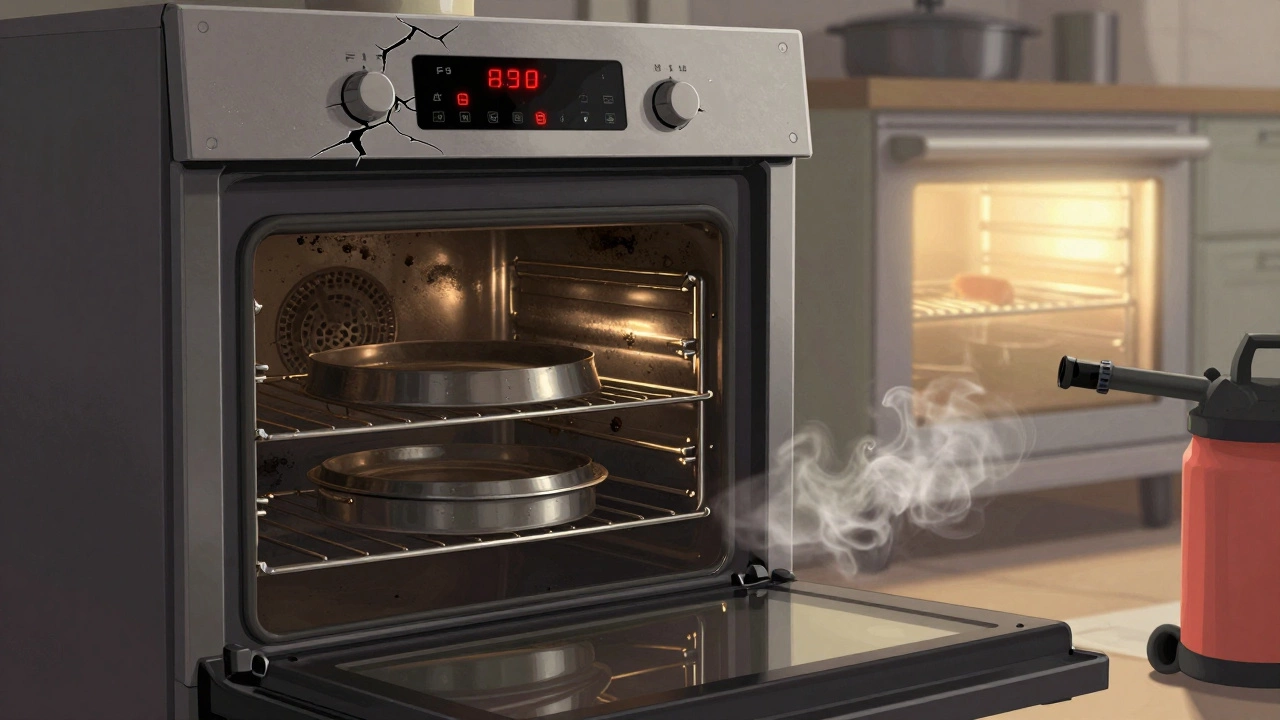
- Use the self-clean function sparingly - Self-cleaning heats the oven to over 900°F. That’s great for grease, but it also ages the insulation, seals, and wiring faster. Do it twice a year at most.
- Check the door seal - If you can see light around the door when it’s closed, or if the seal feels brittle, replace it. A bad seal makes the oven work harder, wasting energy and straining the heating elements.
- Install a surge protector - Plug your oven into a dedicated surge-protected outlet. It doesn’t need to be fancy-just one rated for 15 amps and 120V. It’s a $30 shield against a $1,000 problem.
- Don’t ignore strange noises - Clicking, buzzing, or grinding sounds? Don’t wait. A failing fan motor or relay switch is an easy fix-until it isn’t.
When to Repair vs. Replace
Here’s the rule most repair techs follow: If the repair cost is more than half the price of a new oven, walk away.
Let’s say your oven is 8 years old and the control board fails. A new control board costs $250, plus $120 labor. Total: $370. A basic new range oven starts at $600. You’re paying 60% of a new unit’s price to fix an 8-year-old one. That’s not a smart investment.
But if your oven is only 4 years old and the heating element needs replacing-$80 part, $100 labor-that’s only 15% of a new oven’s cost. Fix it. You’re saving money and extending a still-reliable machine.
Also, consider this: if your oven is over 12 years old and you’re facing a major repair, think about upgrading. Newer models are 20-30% more energy efficient. That adds up over time.
Signs Your Range Oven Is Near the End
These aren’t vague warnings-they’re red flags that mean your oven is running on borrowed time:
- It takes twice as long to preheat
- Food cooks unevenly-even with the fan on
- Display lights flicker or go blank randomly
- The door doesn’t latch properly or feels loose
- You’re resetting the clock or timers more than once a month
- There’s a burning smell that doesn’t go away after cleaning
If you’re seeing two or more of these, it’s not a coincidence. It’s a pattern. Your oven is wearing out.

Real-World Example: A 17-Year-Old Oven That Still Works
One customer in Dunedin had a 1998 GE electric range. The oven heated fine, but the digital display was dead. The control panel was cracked. The door seal was brittle. She called us thinking it was done for.
We replaced the control board ($180), the door gasket ($45), and cleaned the heating elements. Total cost: $320. She’s still using it in 2025. That’s 27 years old. Why? She wiped spills daily. Never used the self-clean function. Plugged it into a surge protector. And she never slammed the door.
It’s not magic. It’s maintenance.
What About Gas Ranges?
Gas range ovens last about the same-13 to 15 years on average. But they have different failure points. Gas valves, igniters, and thermocouples wear out faster than electric elements. They also need annual professional checks to avoid gas leaks or carbon monoxide buildup. If you have a gas range, schedule a service every two years. It’s cheaper than replacing a damaged unit.
Final Thought: It’s Not About Age. It’s About Care.
A range oven isn’t a disposable gadget. It’s a core appliance that works hard every day. Its lifespan isn’t written in stone-it’s shaped by how you treat it. Clean it. Respect it. Fix small things before they become big ones. And if you’re unsure whether to repair or replace? Ask a technician. Most offer free estimates.
Your oven doesn’t need to die at 12. It just needs you to pay attention.
How long should a range oven last before needing replacement?
A typical range oven lasts 13 to 15 years with normal use and basic care. High-quality models can last 20 years or more if maintained well. Cheaper or heavily used ovens may fail before 10 years.
Is it worth repairing a 10-year-old range oven?
Yes, if the repair cost is less than half the price of a new oven. For example, replacing a heating element or thermostat in a 10-year-old oven is usually worth it. But if the control board or main wiring is failing, it’s often better to replace the unit.
Can cleaning extend the life of a range oven?
Absolutely. Regular cleaning prevents grease and food residue from damaging heating elements, sensors, and insulation. Wiping spills after each use and avoiding harsh chemical cleaners can add 5-7 years to your oven’s life.
Do power surges damage range ovens?
Yes. Power surges can instantly fry the control board, which is one of the most expensive parts to replace. Using a dedicated surge protector for your oven is one of the cheapest ways to protect your investment.
Should I use the self-clean feature on my oven?
Use it sparingly-no more than twice a year. Self-cleaning heats the oven to over 900°F, which stresses seals, insulation, and wiring. Manual cleaning with baking soda and water is gentler and just as effective for most messes.
What’s the most common reason range ovens fail?
The most common cause is a failed control board, often triggered by moisture, heat buildup, or power surges. Other frequent issues include worn heating elements, broken door seals, and faulty temperature sensors-all of which are fixable if caught early.