Water Heater Sediment Calculator
How Sediment Affects Your Water Heater
Calculate potential savings from regular maintenance and estimated time remaining before failure.
Most people don’t think about their water heater until it stops working. But if you’ve never flushed it, you’re silently paying the price - in higher bills, weaker showers, and a heater that dies years sooner than it should. In Dunedin, where hard water is common, this isn’t just a minor annoyance. It’s a slow-motion breakdown waiting to happen.
The Sediment Problem
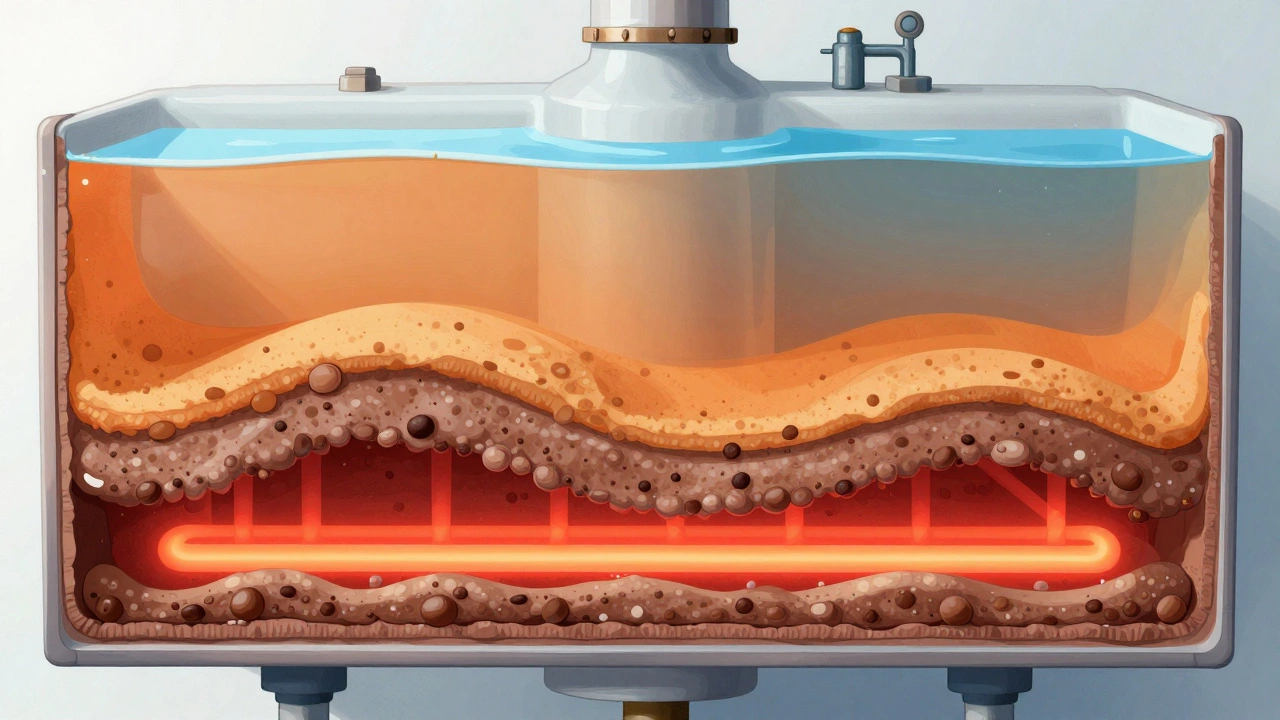
Every time your water heater runs, minerals like calcium and magnesium drop out of the water and settle at the bottom. This isn’t dirt. It’s not rust. It’s scale - hard, rocky sediment that builds up over time. After five years, you might have a layer an inch thick. After ten, it could be three inches or more. That layer acts like insulation, but the wrong kind. Instead of keeping heat in, it traps heat below the tank, forcing the heating element or gas burner to work harder to warm the water above it.
That’s why your hot water takes longer to come on. That’s why your energy bill creeps up each winter. And that’s why you hear banging or popping sounds when the heater turns on. That’s sediment overheating and cracking under pressure. It’s not dangerous - yet - but it’s a warning.
How It Breaks Your Heater
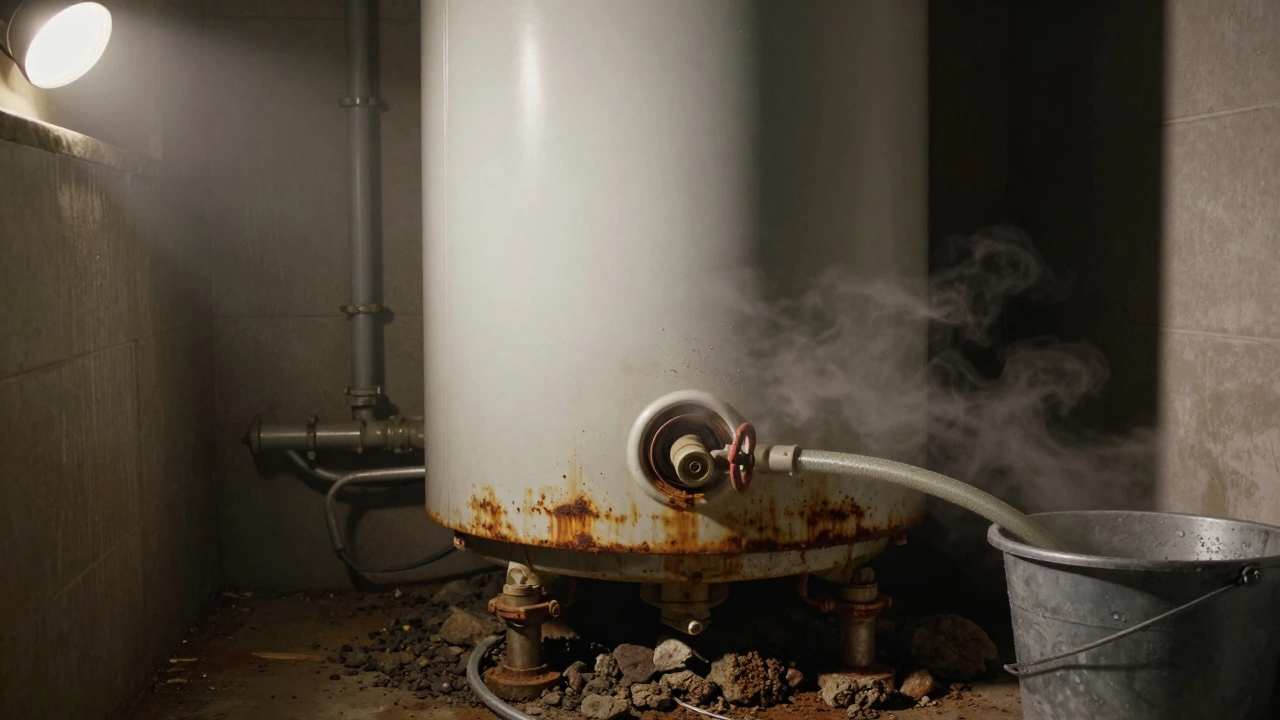
Water heaters don’t die from old age. They die from sediment. The bottom of the tank is the weakest point. When sediment builds up, the metal gets exposed to extreme heat without water to cool it. Over time, that metal weakens. Tiny cracks form. Then, slowly, water leaks out. You might not notice at first. Just a puddle under the tank. Then rust stains. Then a full flood.
One study by the Plumbing-Heating-Cooling Contractors Association found that water heaters with regular flushing lasted an average of 12 years. Those never flushed? Only 7. That’s half the life. And replacing a water heater isn’t cheap. A new 50-gallon unit in New Zealand costs between $1,200 and $2,500, not including installation.
What You’ll Notice Before It Fails
You don’t need a plumber to tell you something’s wrong. Your senses will. Here’s what to watch for:
- Discolored water - Rusty brown or cloudy water from your hot taps means sediment’s getting stirred up.
- Strange noises - Banging, popping, or rumbling sounds mean sediment is overheating and cracking.
- Less hot water - You used to get 20 minutes of shower. Now you’re freezing after 8. That’s sediment blocking the heat transfer.
- Higher bills - Your electricity or gas usage goes up, but your comfort goes down.
- Smelly water - A rotten egg smell? That’s sulfur bacteria feeding on the sediment.
These aren’t signs you need a new heater. They’re signs you need to flush it - yesterday.
How to Flush Your Water Heater (Simple Steps)
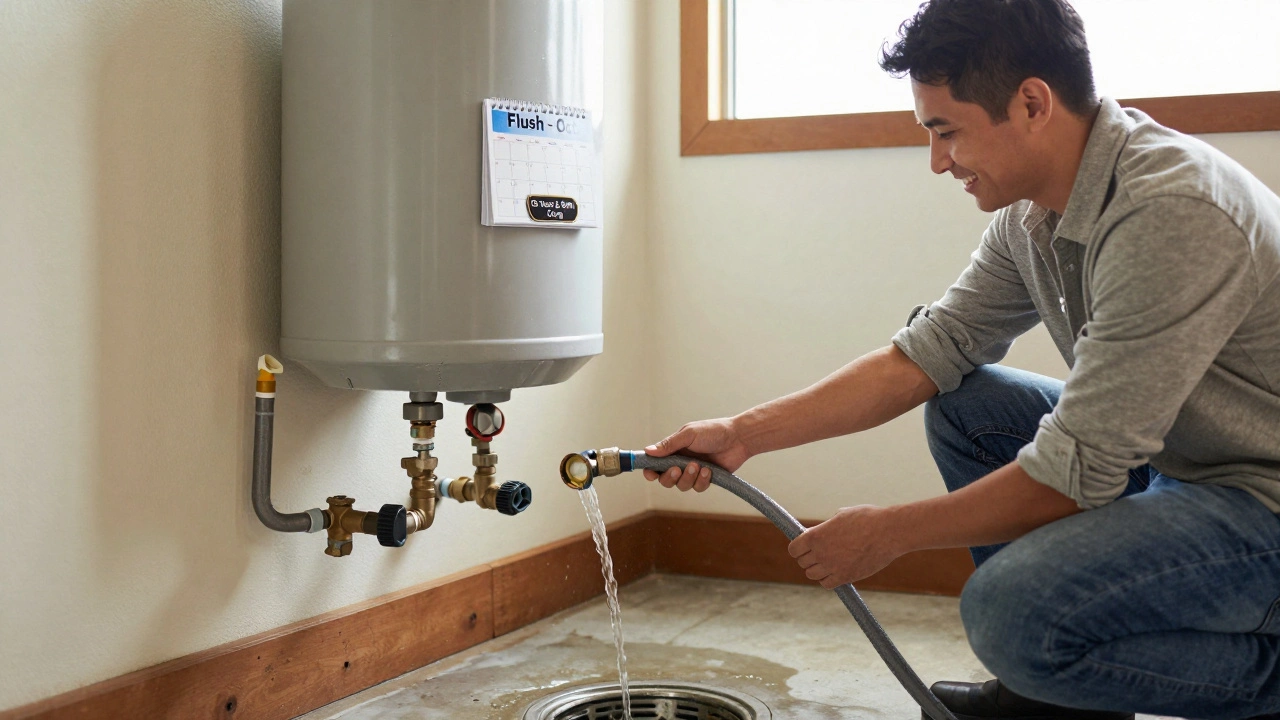
You don’t need a license. You don’t need fancy tools. Just a garden hose and 30 minutes.
- Turn off the power. For electric heaters, flip the breaker. For gas, turn the dial to “Pilot.”
- Turn off the cold water inlet valve - usually a handle near the top of the tank.
- Attach a garden hose to the drain valve at the bottom. Run the other end to a floor drain, outside, or a large bucket.
- Open the drain valve. Then open a hot water tap somewhere in the house. This lets air in and lets the water flow out.
- Let it drain until the water runs clear. This could take 10 minutes or 40, depending on how much sediment’s built up.
- Close the drain valve. Remove the hose. Turn the cold water back on. Wait for the tank to refill. Then turn the power or gas back on.
Do this once a year. If you live in a hard water area like Dunedin, do it every six months. It’s faster than making coffee.
Why Most People Skip It
People think, “It’s working fine.” Or, “I’ll get around to it.” Or, “It’s too much hassle.” But skipping it isn’t saving time - it’s trading time for money. One homeowner in Invercargill flushed his heater every six months. His 15-year-old unit still works perfectly. His neighbor, who never flushed, replaced his after 8 years. The difference? $1,800.
It’s not about being perfect. It’s about being consistent. Even flushing every two years cuts sediment buildup by 70%. That’s enough to add years to your heater’s life.
What Happens If You Wait Too Long
If you’ve gone 10+ years without flushing, the damage might already be done. You might see rust on the tank’s base. You might hear constant popping. You might get barely warm water. At this point, flushing won’t fix it. It might even cause a leak - because the sediment has held the tank together like a plaster cast. Removing it exposes the weakened metal.
If your heater is over 10 years old and you’ve never flushed it, don’t just drain it. Call a professional. They can check the anode rod (which protects the tank from corrosion) and test for pressure buildup. If the tank is already compromised, flushing could make things worse.
Flush or Replace? The Decision
Ask yourself these two questions:
- Is your heater older than 8 years?
- Have you ever flushed it?
If you answered “yes” to both, you’re in the danger zone. You have two choices:
- Flush it now, and plan to replace it in the next 2 years.
- Replace it now, and install a model with a self-flushing feature or better sediment resistance.
Modern water heaters like the Rheem Performance Platinum or the Bradford White M-100 have better tank coatings and built-in sediment traps. They’re more expensive upfront, but they last longer and need less maintenance.
Final Thought: It’s Not a Chore - It’s Insurance
Flushing your water heater isn’t maintenance. It’s insurance. For your wallet. For your home. For your peace of mind. You don’t wait until your car’s engine seizes to change the oil. Don’t wait until your water heater floods your laundry room to flush it.
Do it once a year. Do it before winter. Do it while you’re watching TV. It takes less time than scrolling through your phone. And it might just save you a thousand dollars - or more.