Dishwasher Repair vs. Replace Calculator
Enter the details below to determine if you should fix your current machine or buy a new one. This tool applies the "50% Rule" and considers component reliability.
Recommendation
Financial Analysis
- New Unit: $0
- Repair Cost: $0
- Savings if Repaired: $0
Risk Assessment
--
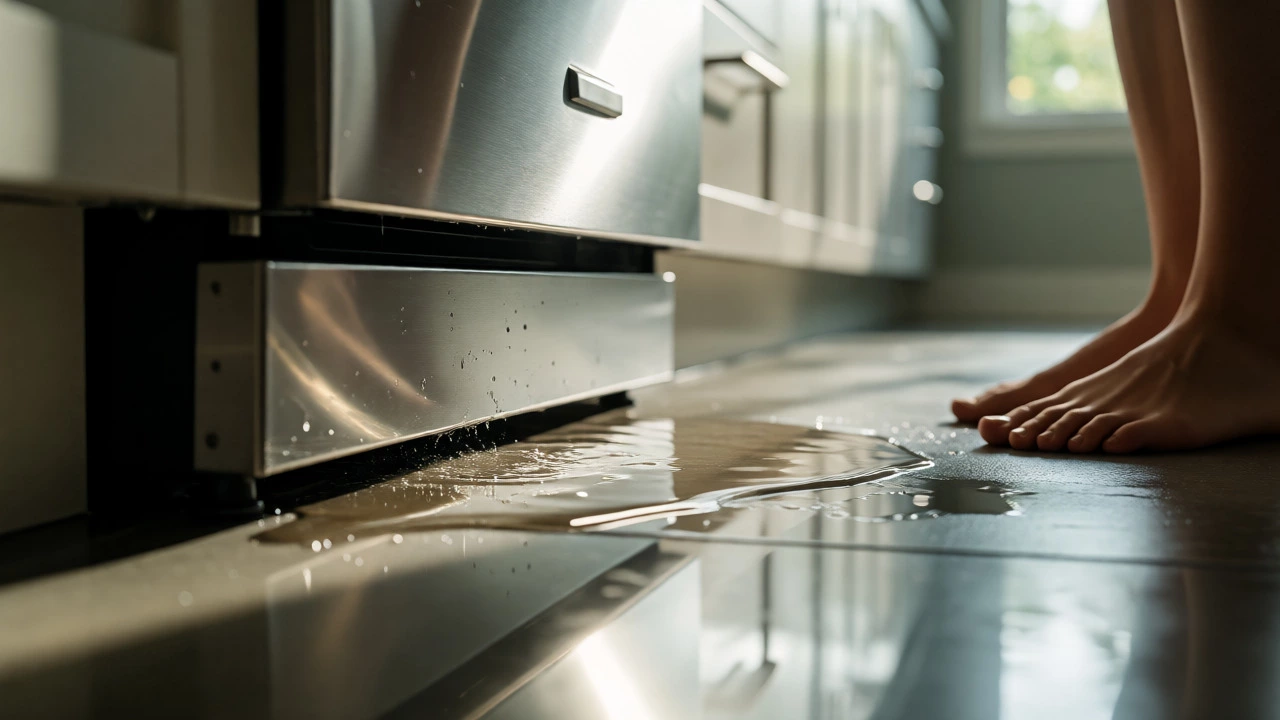
You’re standing in your kitchen, staring at a puddle of water or a rack that won’t spin. Your dishwasher is four years old. That’s the awkward middle age of home appliances-too young to throw away without guilt, but old enough that you’re wondering if it’s already on its deathbed. The big question isn’t just "what’s broken," but whether fixing it makes financial sense compared to buying a new one.
Here’s the hard truth: there is no single right answer for everyone. It depends on what part failed, how much your specific model costs to fix, and what kind of person you are when it comes to risk. But we can break down the math and the logic so you can make this call with confidence, not regret.
The Five-Year Rule and Why Age Matters
Most major kitchen appliances have a predictable lifespan. According to data from the National Association of Home Builders and various consumer reports, the average dishwasher lasts about 9 to 10 years. At four years, your machine is roughly halfway through its expected life. This is crucial context because it changes the value proposition of a repair.
If a dishwasher fails in year one, it’s a warranty issue. If it fails in year nine, it’s end-of-life. Year four is the gray zone. You’ve gotten good use out of it, but you haven’t hit the point where every component is wearing thin simultaneously. However, the "50% rule" often cited by technicians suggests that if the cost of repair exceeds 50% of the price of a new unit, you should consider replacing it. For a mid-range dishwasher costing $800 new, a $400 repair is borderline. A $600 repair? Replace it.
But don’t let the percentage alone dictate your decision. A $400 repair might be worth it if it fixes a simple latch, whereas a $300 repair on a complex electronic control board might be throwing money into a sinking ship if other parts are likely to fail soon.
What Actually Broke? (The Parts Hierarchy)
Not all repairs are created equal. Some failures are isolated incidents; others are symptoms of systemic decay. To decide if it’s worth repairing a 4-year-old dishwasher, you need to identify which component failed. Here’s how they stack up:
| Component | Average Repair Cost (NZD) | Likelihood of Future Failure | Verdict for 4-Year-Old Unit |
|---|---|---|---|
| Door Latch/Switch | $150 - $250 | Low | Repair |
| Drain Pump | $200 - $350 | Medium | Repair |
| Water Inlet Valve | $180 - $300 | Low | Repair |
| Heating Element | $250 - $400 | Medium | Case-by-Case |
| Main Control Board | $350 - $550 | High | Replace |
| Motor/Pump Assembly | $400 - $600+ | High | Replace |
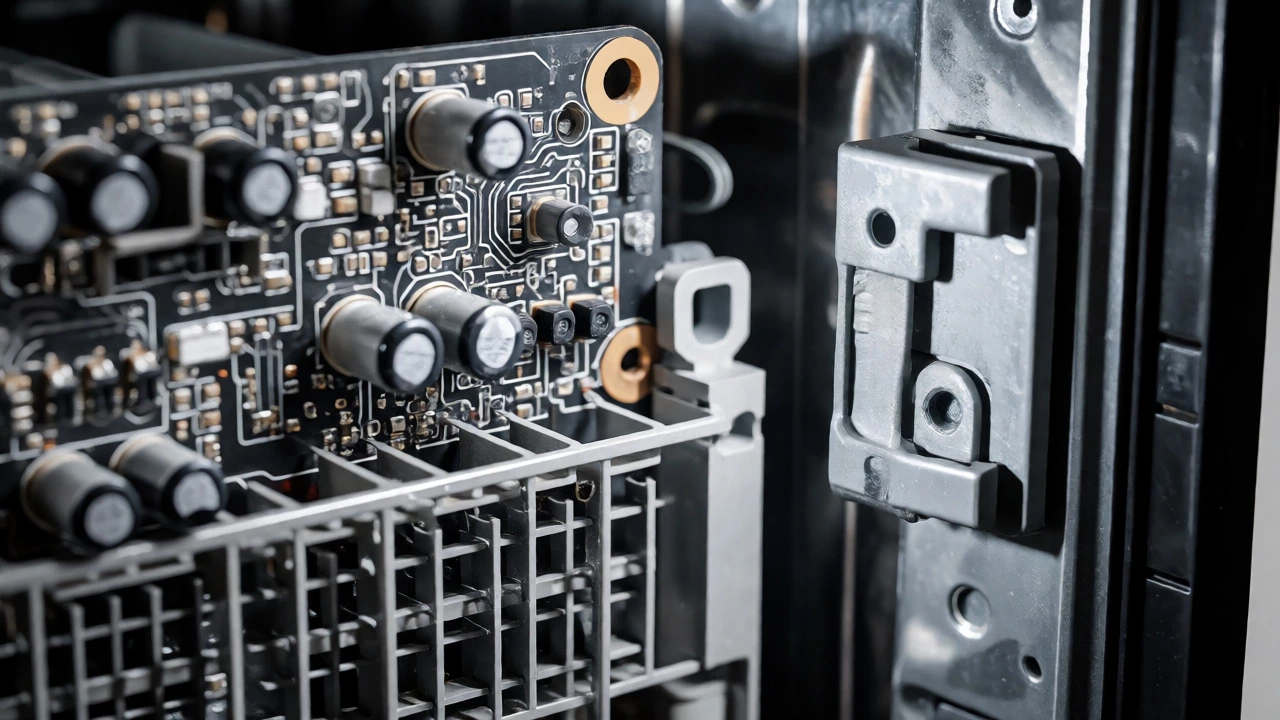
Notice the pattern? Mechanical parts like latches and valves are cheap and usually isolated. If your door won’t lock, fix it. You’ll get another five years easily. But electronic components, specifically the main control board, are expensive and fragile. If the brain of your dishwasher dies at four years, it’s often a sign that the manufacturing quality wasn’t stellar, or that voltage spikes have damaged internal circuits. Replacing a $500 board in an $800 machine leaves you with very little margin for error.
Hidden Costs: Labor and Diagnostic Fees
When you call a technician, you aren’t just paying for the part. You’re paying for their time, travel, and expertise. In New Zealand, typical service call-out fees range from $120 to $180 before any work begins. If the repair takes two hours, add another $150-$200 in labor.
This means a "$50 part" actually costs $350+ to fix. Always ask for a quote that includes parts, labor, and GST before authorizing work. Many companies charge a diagnostic fee that is waived if you proceed with the repair. Make sure you know this upfront. If the tech arrives, charges $150 just to look at it, and then quotes $600 for a motor replacement, you’ve burned cash just to find out you should have bought a new unit.
Also, consider the availability of spare parts. Four years ago was 2022. While most mainstream brands like Bosch, Fisher & Paykel, and Miele keep parts for 7-10 years, budget brands or discontinued models might face supply chain delays. Waiting three weeks for a pump while doing dishes by hand adds a hidden "inconvenience tax" to the repair cost.
The Energy Efficiency Argument
This is where many homeowners hesitate. "My old dishwasher uses too much electricity," they think. Let’s look at the numbers. A dishwasher from four years ago is likely rated around 3-4 stars on the NZ energy rating label. A brand-new, high-efficiency model might save you $20-$40 per year on electricity and water combined.
To recoup the difference between a $400 repair and an $800 new dishwasher ($400 difference) through energy savings alone, you’d need to run the machine for 10-15 years. That doesn’t make sense. The energy efficiency gap between a well-maintained 4-year-old unit and a new one is negligible for short-term ownership. Don’t let the promise of lower utility bills drive you to replace a working machine prematurely. Only upgrade if the current unit is genuinely inefficient (e.g., leaking water constantly, which wastes both water and detergent).
Brand Reputation and Model Reliability
Not all dishwashers are built the same. If you own a premium brand like Miele, which has a reputation for lasting 15-20 years, repairing a 4-year-old unit is almost always the right move. You’ve only scratched the surface of its potential life. Conversely, if you bought a budget-line model from a big-box retailer known for planned obsolescence, a major failure at four years is a red flag. These machines are often designed to last 5-7 years. Spending half the cost of a new unit to extend the life of a disposable appliance rarely pays off.
Check online forums or reviews for your specific model number. Are other users reporting similar failures at the 3-5 year mark? If yes, it’s a design flaw. If no, it’s an anomaly, and repair is safer.
Decision Checklist: When to Repair vs. Replace
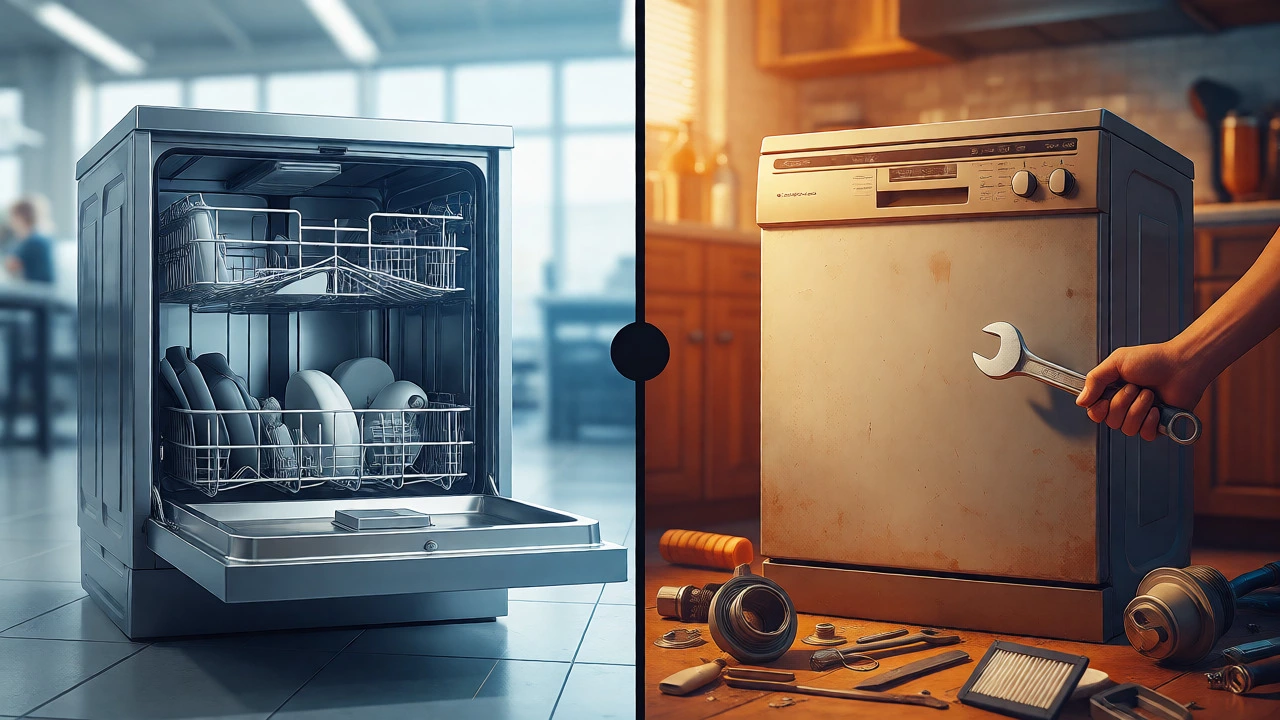
Still stuck? Run through this quick mental checklist. Be honest with yourself about your tolerance for hassle.
- Repair if:
- The repair cost is under 30% of the price of a comparable new model.
- The broken part is mechanical (latch, spray arm, filter, valve).
- The rest of the machine looks clean, smells fresh, and has no rust inside the tub.
- You own a premium brand with a long track record.
- You are happy with the size and fit of the current unit (replacing might require cabinet modifications).
- Replace if:
- The repair cost is over 50% of the price of a new model.
- The main control board or motor/pump assembly has failed.
- The interior stainless steel tub shows signs of pitting or heavy corrosion.
- You have had multiple repairs in the last 12 months.
- You want smart features (Wi-Fi connectivity, auto-dosing) that your current model lacks.
- The noise level is unacceptable (new motors are significantly quieter).
The Environmental Angle
Let’s touch on sustainability briefly. Manufacturing a new dishwasher consumes significant resources and energy. Throwing away a machine that is 50% through its life creates e-waste. From an environmental standpoint, repairing is almost always better than replacing, provided the repaired unit will last at least another 2-3 years. If you’re eco-conscious, lean toward repair unless the alternative is a catastrophic failure that makes the kitchen unusable.
Final Verdict
For a 4-year-old dishwasher, the default bias should be toward repair. Most failures at this age are minor mechanical issues or clogs that can be fixed for under $300. You have years of reliable service left in the tank. However, if the diagnosis involves the electronic brain or the main wash motor, pause. Get a second opinion. If the quote approaches half the retail price of a new unit, cut your losses. Buy new, enjoy the warranty, and sleep easy knowing you won’t be dealing with the same problem next month.
How long should a dishwasher last?
The average lifespan of a modern dishwasher is between 9 and 10 years. Premium brands like Miele may last 15-20 years, while budget models may only last 5-7 years. Factors like usage frequency, water hardness, and maintenance play significant roles in longevity.
What is the most common cause of dishwasher failure?
Clogged filters and drain pumps are among the most common issues, often caused by food debris or grease buildup. Other frequent problems include faulty door latches, worn-out seals, and electronic control board failures due to power surges or moisture ingress.
Is it cheaper to repair or replace a dishwasher?
It depends on the age and the specific fault. Generally, if the repair cost is less than 50% of the cost of a new unit, repair is cheaper. For a 4-year-old machine, minor repairs are almost always more cost-effective than replacement. Major component failures (motor/board) may tip the scale toward replacement.
Can I fix a dishwasher leak myself?
Yes, if the leak is from a worn door gasket or a loose hose connection. These are inexpensive parts and simple to replace. However, if the leak is coming from the tub itself or the pump seal, it requires professional tools and expertise to avoid damaging the appliance further.
Do dishwashers have fuses?
Many modern dishwashers do not have traditional user-replaceable fuses. Instead, they rely on thermal fuses or circuit breakers integrated into the heating element or control board. If these blow, it usually indicates a larger electrical issue requiring professional diagnosis.