Range Repair Calculator
Repair Cost Calculator
Enter your repair details to see if it's financially sensible to fix your 10-year-old electric range.
Recommendation
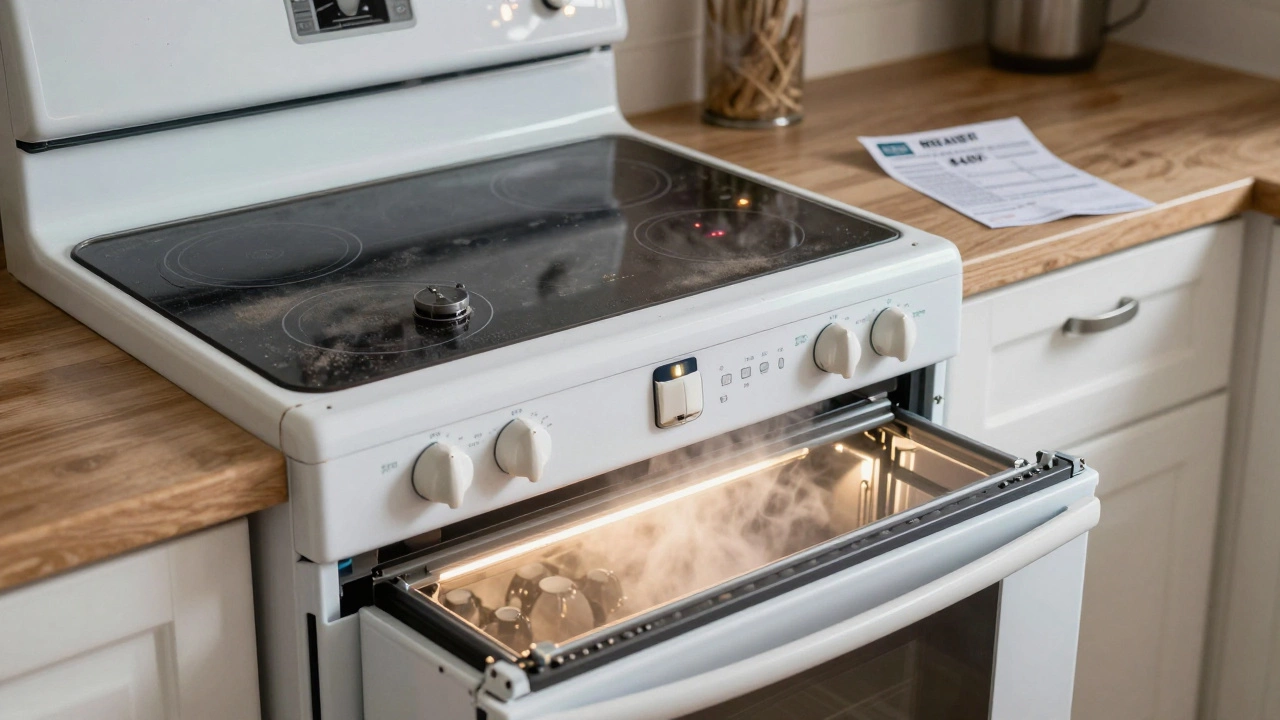
You’ve been cooking with the same range for over a decade. The burners still heat up, the oven bakes evenly, and the clock still ticks - but now the control panel flickers, the door doesn’t seal right, and the repair quote just hit $400. Is it worth fixing a 10-year-old range, or should you just bite the bullet and buy new?
How long do electric ranges actually last?
Most electric ranges are built to last between 10 and 15 years. That’s not a guess - it’s based on industry standards from manufacturers like Whirlpool, GE, and Bosch, plus real-world data from appliance repair technicians across New Zealand. A 10-year-old range isn’t broken by default. It’s right at the midpoint of its expected life. Many units keep running well past 12 years, especially if they’ve been cleaned regularly and not abused.But lifespan isn’t just about age. It’s about usage. A family that bakes every Sunday, uses the broiler weekly, and leaves spills to bake into the oven lining wears out components faster than someone who mostly boils water or uses a microwave. If your range has seen heavy daily use, 10 years might be pushing it. If it’s been mostly idle? It could still have five more years left.
What’s broken - and how much does it cost to fix?
Not all repairs are created equal. Some fixes are cheap. Others are barely worth the effort.Here’s what’s commonly wrong with 10-year-old electric ranges and what it costs to fix them in New Zealand:
- Thermostat or temperature sensor failure - $120-$180. This is one of the most common issues. The oven heats unevenly or doesn’t reach the right temp. Replacing the sensor is simple and often fixes the problem for good.
- Igniter or heating element failure - $150-$250. If the oven won’t heat at all, the bake or broil element might be dead. These are easy to replace, and parts usually cost under $60. Labor adds the rest.
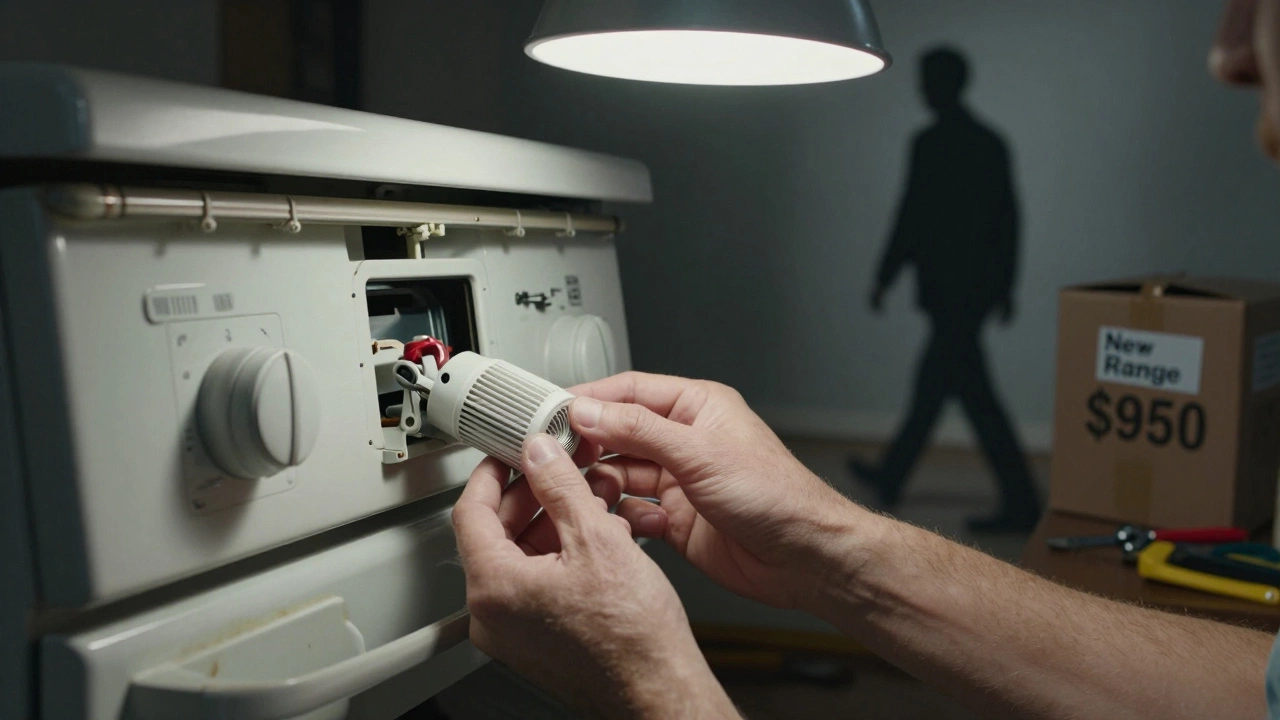
- Control panel or keypad malfunction - $250-$450. This is where it gets tricky. If buttons don’t respond or the display is glitchy, the control board might need replacing. That part alone can cost $200+, and labor is high because it’s finicky to install. In many cases, the board is no longer manufactured after 8-10 years.
- Door seal or hinge damage - $80-$150. A broken seal means heat escapes, wasting energy and making the oven less efficient. Replacing the gasket is cheap and easy.
- Broken timer or clock module - $100-$200. If the clock is dead but everything else works, you can often bypass it. Some technicians can rewire the system to ignore the clock entirely.
Compare those prices to a new electric range. A basic model starts around $800-$1,000. Mid-range units with convection, self-cleaning, and smart features run $1,500-$2,500. If your repair bill is over 50% of the cost of a new unit, it’s usually not worth it - unless the range has sentimental value or fits perfectly in your kitchen.
Energy efficiency: The hidden cost of keeping an old range
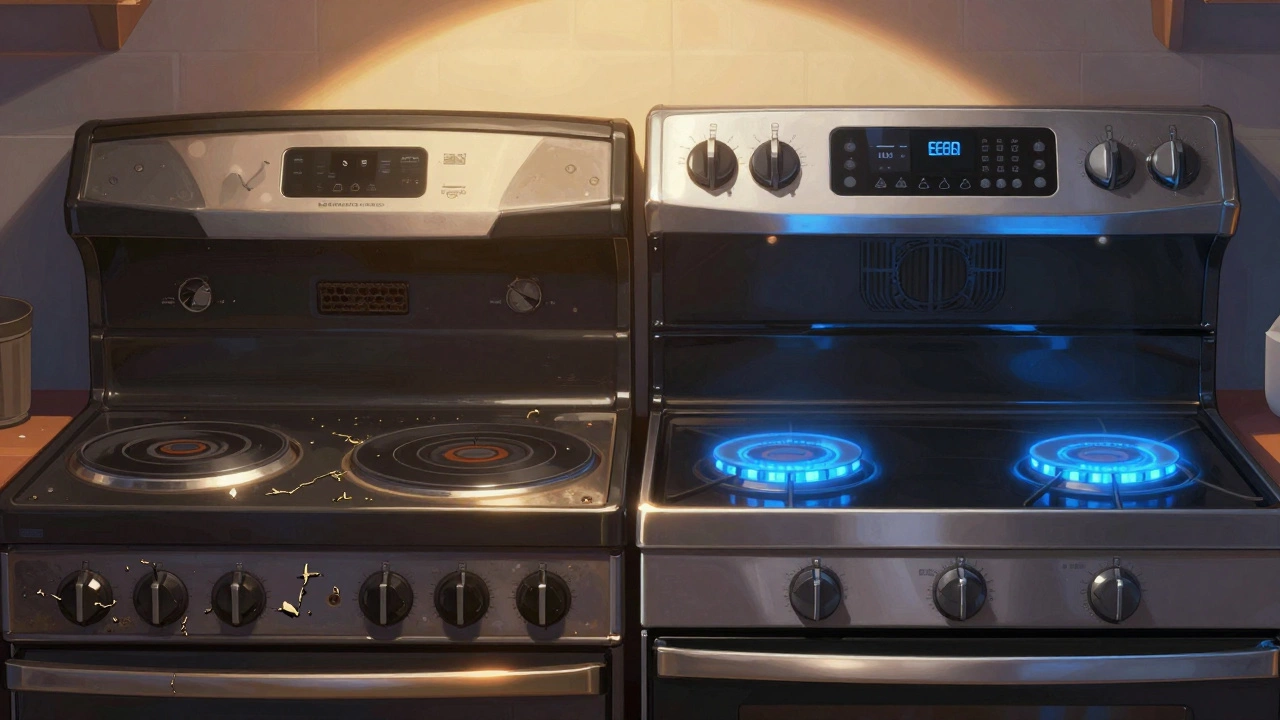
A 10-year-old electric range uses about 20-30% more energy than a new ENERGY STAR-rated model. That might not sound like much, but over five years, it adds up. If you use your oven for an hour a day, five days a week, you’re spending an extra $80-$120 a year on electricity. That’s $400-$600 over five years - more than the cost of a basic repair.Newer models use better insulation, smarter sensors, and variable heating elements. They don’t just save energy - they heat faster and more evenly. That means less wasted time, less wasted food, and less frustration.
There’s also the issue of safety. Older ranges often lack modern safety features like automatic shut-off, child locks, or overheat protection. If you’ve got kids, pets, or just worry about leaving the oven on, upgrading isn’t just smart - it’s a quiet form of insurance.
Parts availability: Can you even get what you need?
This is the silent killer of old appliance repairs. After 8-10 years, manufacturers stop making parts. Even if a technician says they can fix it, they might have to scavenge a used control board from a junked unit. That’s risky. A used part might fail again in six months.Check the model number. If it’s from a brand like Samsung, LG, or Bosch, parts for models older than 2016 are getting scarce. Even if you find a replacement, it might not be compatible with your exact version. Some repair shops in Dunedin have started keeping a small stock of common parts from discontinued models - but it’s not guaranteed.
What to do if you’re on the fence
Here’s a simple decision tree:- Is the repair cost under $200? Go for it. Especially if it’s a thermostat, element, or door seal. You’re buying more years.
- Is it over $300? Ask: Is the range still cooking well? Does it have features you love? Are you planning to move in the next 2-3 years? If yes to all three, repair. If not, start looking at replacements.
- Is the control panel dead? This is usually the tipping point. Replacing the board is expensive and rarely lasts more than a year or two. Unless it’s a high-end model with unique features, replacement is smarter.
Also, check if your range is still under warranty. Some manufacturers offer 10-year limited warranties on parts - even if you didn’t buy an extended plan. Call the manufacturer’s customer service with your model number. You might be surprised.
When to walk away
You should walk away if:- You’ve already repaired it once in the last 2 years.
- The oven takes longer than 20 minutes to preheat.
- The door doesn’t close tightly - heat escapes visibly.
- The unit makes loud buzzing, grinding, or clicking noises.
- You’re using the microwave more than the oven.
These aren’t just signs of wear - they’re signs that the appliance is no longer serving its purpose. A range is meant to make cooking easier. If it’s becoming a chore, it’s time to let it go.
What to look for in a new range
If you decide to replace it, don’t just buy the cheapest one. Look for:- Self-cleaning feature - saves hours of scrubbing.
- Convection setting - cooks food faster and more evenly.
- Induction cooktop - if you’re upgrading from electric coils, this is a game-changer. It heats faster and is safer.
- Energy Star rating - look for the label. It means 10-15% less energy use.
- Warranty - aim for at least a 1-year full coverage warranty. Some brands offer 5-year parts warranties.
Brands like Fisher & Paykel, Smeg, and Bosch are popular in New Zealand for their reliability. But even budget brands like Haier and LG have improved dramatically in the last five years. Read reviews from local users - not just international ones.
What about second-hand?
Buying a used range from a friend or a second-hand store can be tempting. But unless it’s under 5 years old and you can test it thoroughly, it’s risky. A 7-year-old range might look fine, but if the control board is already on its last legs, you could be replacing it in six months.Some appliance recyclers in Dunedin offer refurbished units with 90-day warranties. These are often factory-repaired, tested, and cleaned. They’re cheaper than new - around $500-$700 - and come with a guarantee. Worth considering if you’re on a tight budget.
Final call: Is it worth repairing?
If your 10-year-old range is still cooking well, and the repair is under $250, go ahead. Fix it. You’re extending its life, saving money, and keeping it out of landfill.If the repair is over $300, the control panel is glitching, or you’re tired of fighting with it - replace it. You’ll save money on energy, avoid future breakdowns, and get a kitchen that works better than it did a decade ago.
There’s no magic number. But here’s the rule I’ve seen work for hundreds of homeowners: If the repair costs more than half the price of a new unit, and the unit is older than 10 years, replacement is almost always the smarter choice.
Can I still get parts for a 10-year-old electric range?
Yes, but it depends on the brand and model. Common parts like heating elements, thermostats, and door seals are often still available. But control boards and digital displays for models older than 2016 are harder to find. Many technicians now rely on used or refurbished parts, which carry more risk. Always ask your repairer if the part is new or recycled.
Is it cheaper to repair or replace a 10-year-old range?
It depends. If the repair costs less than $250 and the range works well otherwise, repair is cheaper. But if the repair is $300 or more, you’re likely spending close to half the price of a new unit. In that case, replacement saves money long-term - especially when you factor in energy savings and fewer future repairs.
How do I know if my range is energy inefficient?
Signs include: long preheat times, uneven cooking, excessive heat around the door or sides, or higher electricity bills compared to last year. Newer ENERGY STAR models use 10-30% less power. If your range is over 10 years old, it’s almost certainly less efficient than today’s standards.
Should I repair it if I’m planning to move soon?
Only if the repair is under $200 and the range works perfectly. Otherwise, it’s better to leave it as-is or replace it before you move. Buyers prefer homes with modern appliances. A broken or aging range can lower perceived value - even if it still works.
Are refurbished ranges a good option?
Yes - if they come with a warranty. Refurbished ranges from trusted sellers are tested, cleaned, and have worn parts replaced. They cost $500-$700, which is 40-60% less than new. Look for sellers who offer at least a 90-day guarantee. Avoid second-hand units from private sellers unless you can test them fully.