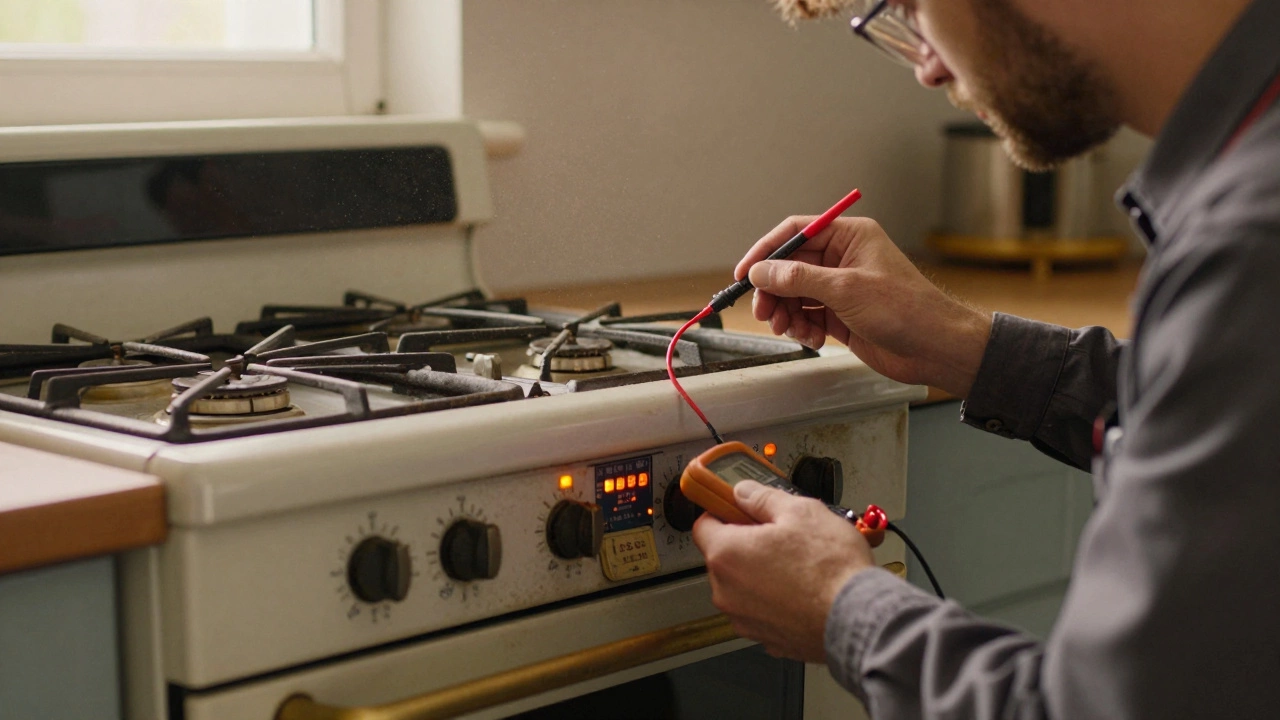
Gas Oven Repair Cost Calculator
Oven Assessment
When your gas oven stops working, you don’t just lose the ability to bake cookies. You lose routine. You lose comfort. And suddenly, you’re staring at a big decision: fix it or replace it. It sounds simple, but the answer isn’t. Gas ovens are built to last, but they’re also full of parts that can fail-some cheap, some expensive, some dangerous. So is it worth fixing a gas oven? Let’s cut through the noise and give you a real, no-fluff breakdown based on what actually happens in homes today.
How old is your gas oven?
Age matters more than you think. Most gas ovens last between 15 and 20 years. If yours is 10 years old or younger, fixing it makes sense. If it’s 18 years old and the igniter just died? You’re on borrowed time. Replacing a single part might get you another year or two, but you’re just delaying the next breakdown. Think of it like a car with 200,000 miles. You can replace the transmission, but the brakes, suspension, and electrical system won’t stay healthy for long.
According to data from the National Association of Home Builders, 68% of gas ovens that are over 15 years old develop multiple failures within three years of the first repair. That’s not a coincidence-it’s physics. Materials wear out. Seals dry up. Wiring degrades. The older the oven, the more likely it’s a ticking time bomb of inefficiency and risk.
What’s broken?
Not all repairs are equal. Some fixes are cheap and quick. Others are expensive and risky.
- Igniter failure: This is the most common issue. A weak or broken igniter won’t light the gas. Replacement parts cost $30-$70, and labor is usually under $150. Total? Around $200. Easy win.
- Gas valve leak: If the valve that controls gas flow is faulty, this isn’t a DIY job. It’s dangerous. Repairing or replacing the valve runs $300-$600. But here’s the catch: if the valve is failing, other parts in the gas system are likely close behind. This repair often leads to more.
- Thermocouple or thermostat failure: These regulate temperature. Replacing them costs $50-$120. Simple fix. Worth doing.
- Broken heating element or burner: Gas ovens don’t have electric elements like electric ovens, but the burner tubes can crack or get clogged. Cleaning or replacing a burner costs $100-$250. Often worth it.
- Control board failure: Modern gas ovens have digital panels. If the board dies, replacement costs $400-$800. At that point, you’re spending nearly half the price of a new oven. Rarely worth it unless it’s a high-end model.
Here’s the rule of thumb: if the repair cost is under 50% of what a new oven costs and the oven is under 15 years old, fix it. If it’s over 50%, walk away.
How much does a new gas oven cost?
A basic, reliable gas oven runs $700-$1,200 installed. Mid-range models with convection, self-cleaning, and smart features cost $1,500-$2,500. High-end models with dual ovens or professional-grade burners can hit $4,000+. Installation usually adds $150-$300, depending on venting and gas line work.
Compare that to repair costs:
| Issue | Average Repair Cost | New Oven Cost (Basic) | Repair Worth It? |
|---|---|---|---|
| Igniter replacement | $180 | $900 | Yes |
| Gas valve repair | $500 | $900 | Maybe |
| Thermostat replacement | $100 | $900 | Yes |
| Control board replacement | $650 | $900 | No |
| Burner tube replacement | $200 | $900 | Yes |
Notice something? The only repair that’s clearly not worth it is the control board. Everything else-even the gas valve-is often worth fixing if your oven is under 15 years old.
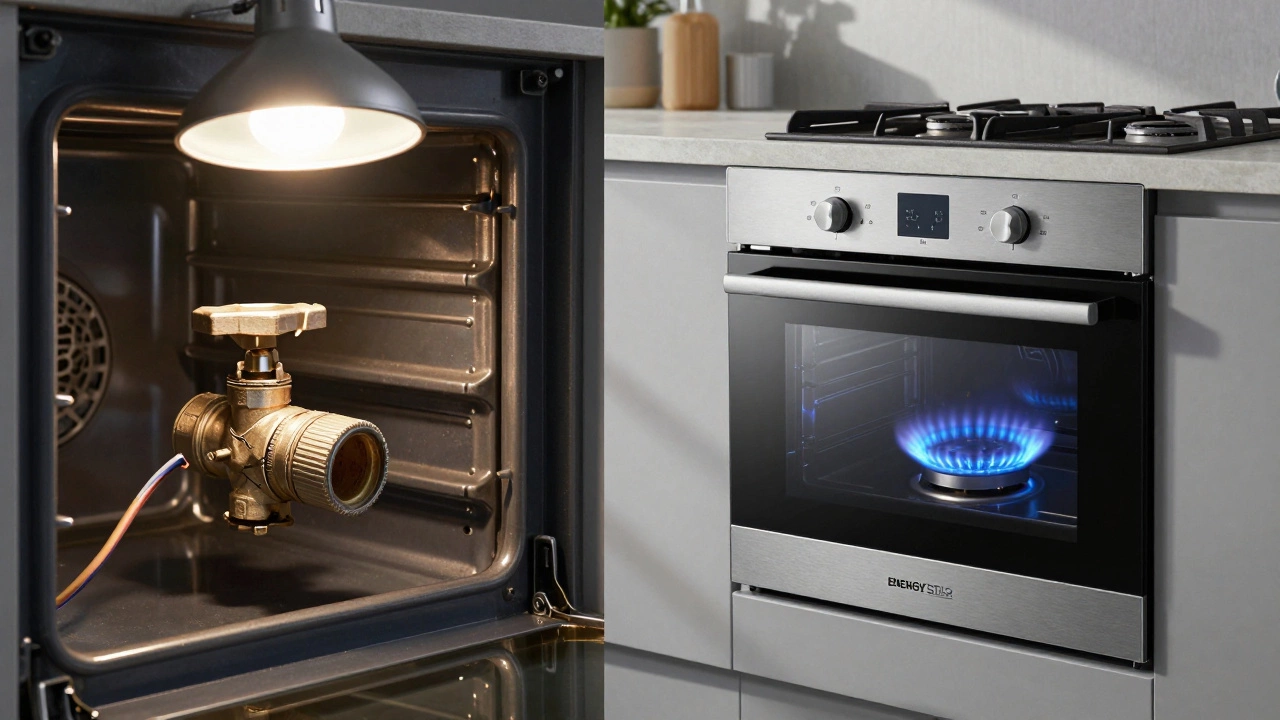
Energy efficiency matters
Older gas ovens aren’t just unreliable-they’re wasteful. A 20-year-old oven can use 20-30% more gas than a new one. Why? Poor insulation, outdated burners, and worn seals let heat escape. That means higher bills every month.
Let’s say your gas bill is $120/month. A 25% reduction means $30 saved per month. That’s $360 a year. If a new oven costs $1,000, you’ll break even in under three years. After that? Pure savings. And that doesn’t even include the fact that newer models heat faster and more evenly, so you’re not wasting time or gas preheating.
Safety is non-negotiable
Gas leaks aren’t a myth. They happen. And they’re deadly. If your oven smells like gas-even faintly-turn it off. Shut off the gas valve. Call a professional. Don’t wait. Don’t try to patch it yourself.
Even if the repair looks simple, a cracked gas line, corroded fitting, or faulty seal can turn a fix into a hazard. A licensed technician can pressure-test your gas line during the repair. Most won’t do this unless you ask. Always request it. If they refuse, walk away. That’s not a repair shop-that’s a risk.
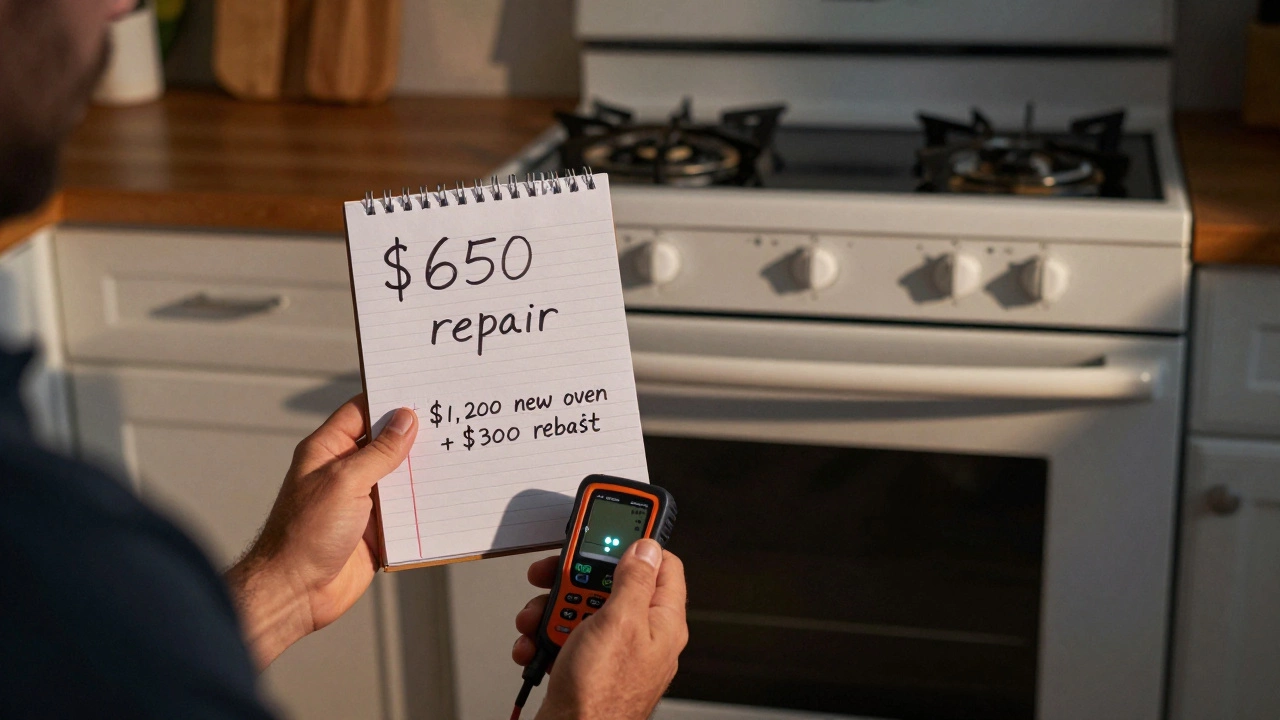
What about warranties and rebates?
New ovens often come with 1-5 year warranties. Some utility companies offer rebates for replacing old gas appliances with energy-efficient models. In 2025, over 120 utility providers across the U.S. offered $100-$500 rebates for gas oven replacements. Check with your provider. You might get $300 just for switching.
Also, if you’re buying a new oven, look for ENERGY STAR® certified models. They’re not just efficient-they’re built to last longer with better parts.
When to walk away
Here’s the hard truth: if any of these apply, replace the oven:
- Your oven is over 15 years old.
- The repair cost is over $500.
- You’ve had two or more repairs in the last year.
- You smell gas, even after repairs.
- The oven doesn’t heat evenly or takes too long to preheat.
- You’re planning to sell your home in the next 2-3 years. Buyers notice outdated, broken appliances.
Fixing a gas oven isn’t always the right move. But neither is replacing it blindly. The key is matching the cost of repair to the age, efficiency, and safety of the unit. A $180 fix on a 12-year-old oven? Go for it. A $600 fix on a 19-year-old oven? Save that money for a new one.
Final advice: Get two quotes
Don’t trust the first technician who walks in. Get a second opinion. Ask them:
- How old is the oven? (They should be able to tell from the model number.)
- What’s the expected lifespan of the part they’re replacing?
- Will you test the gas line for leaks after the repair?
- Do you offer a warranty on parts and labor?
If they can’t answer clearly, find someone else. A good technician won’t push a repair unless it makes sense. They’ll tell you when it’s time to replace.
Fixing a gas oven isn’t about saving money. It’s about saving time, safety, and peace of mind. Make the decision based on facts-not fear or convenience.
Is it safe to use a gas oven that’s been repaired?
Yes-if the repair was done by a licensed technician who tested the gas lines and verified proper ventilation. Always ask for a pressure test after any gas-related repair. If the technician refuses, don’t use the oven. Gas leaks can be silent and deadly.
How long does a gas oven repair usually take?
Most repairs take 1-3 hours. Simple fixes like igniter or thermostat replacement can be done in under an hour. Complex issues like gas valve replacement or control board swaps may take longer, especially if parts need to be ordered. Most technicians will give you a time estimate before starting.
Can I fix my gas oven myself?
Only if it’s a simple issue like cleaning a burner or replacing the igniter. Never attempt to repair gas lines, valves, or control boards yourself. Gas is explosive. A single mistake can destroy your home. Always hire a licensed gas technician for anything involving the gas supply.
Do I need a permit to replace a gas oven?
In most U.S. cities, yes. Gas appliance installations require a permit and inspection to ensure the gas line and ventilation meet code. Skipping this can void your homeowner’s insurance and create a serious safety hazard. Always let the installer handle permits-they’re required to do it.
What’s the most common reason gas ovens stop working?
The igniter. It’s the part that sparks to light the gas. Over time, it weakens and eventually stops glowing hot enough to ignite. It’s cheap to replace and happens in nearly every gas oven after 10-15 years of use. If your oven clicks but doesn’t light, the igniter is almost certainly the culprit.