If your electric oven isn’t heating up, takes forever to preheat, or cooks food unevenly, you’re not alone. These aren’t just annoyances-they’re signs something inside is failing. Most people assume they need a new oven, but often it’s just one part that’s worn out. Fixing it yourself can save hundreds, if you know what to look for.
Is the oven completely dead?
First, check if the oven shows any life at all. No display? No lights? No beeping? That’s different from an oven that turns on but doesn’t heat. If nothing happens when you press buttons, the issue might be power. Check the circuit breaker. Electric ovens usually run on a 240-volt circuit, and a tripped breaker is one of the most common fixes. Reset it and try again. If it trips right back, don’t keep resetting it-that’s a sign of a serious wiring fault or a shorted component.
Also, verify the outlet. Plug in a toaster or kettle to see if power is flowing. Some ovens are hardwired, but if yours plugs in, make sure the plug is fully seated and the socket isn’t loose or burnt. A loose connection can cause intermittent power, which feels like the oven is acting up randomly.
The oven turns on but won’t heat
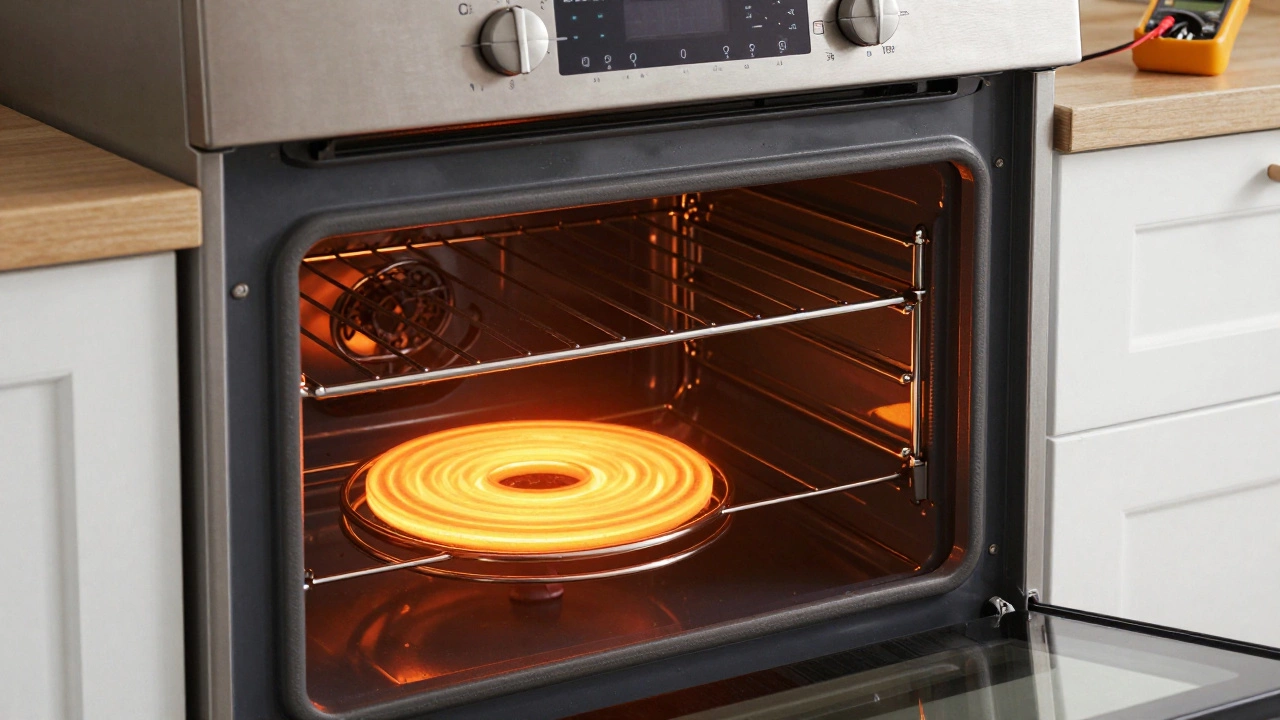
This is the most frequent problem. If the light comes on and the fan runs, but the oven stays cold, the heating elements are the first suspects. There are usually two: the top broil element and the bottom bake element. The bake element does most of the work during regular cooking.
Turn off the power, open the oven door, and look at the bottom element. When it’s working, it glows bright orange. If it’s blackened, blistered, or has gaps in the coil, it’s burned out. A broken element might look fine from the outside, so gently wiggle it. If it moves or rattles, it’s loose or broken inside. You can also use a multimeter to test for continuity-no reading means it’s dead.
The broil element on the top can fail too. If you’re broiling and nothing happens, that’s a clue. Both elements can be replaced easily and cost under $50 each. Don’t assume both are fine just because one looks okay-test both.
Uneven cooking or hot spots
If your cookies burn on one side or your roast is raw in the middle, the problem might be the oven’s thermostat or temperature sensor. The thermostat controls how long the elements stay on. If it’s off by even 20 degrees, your food won’t cook right.
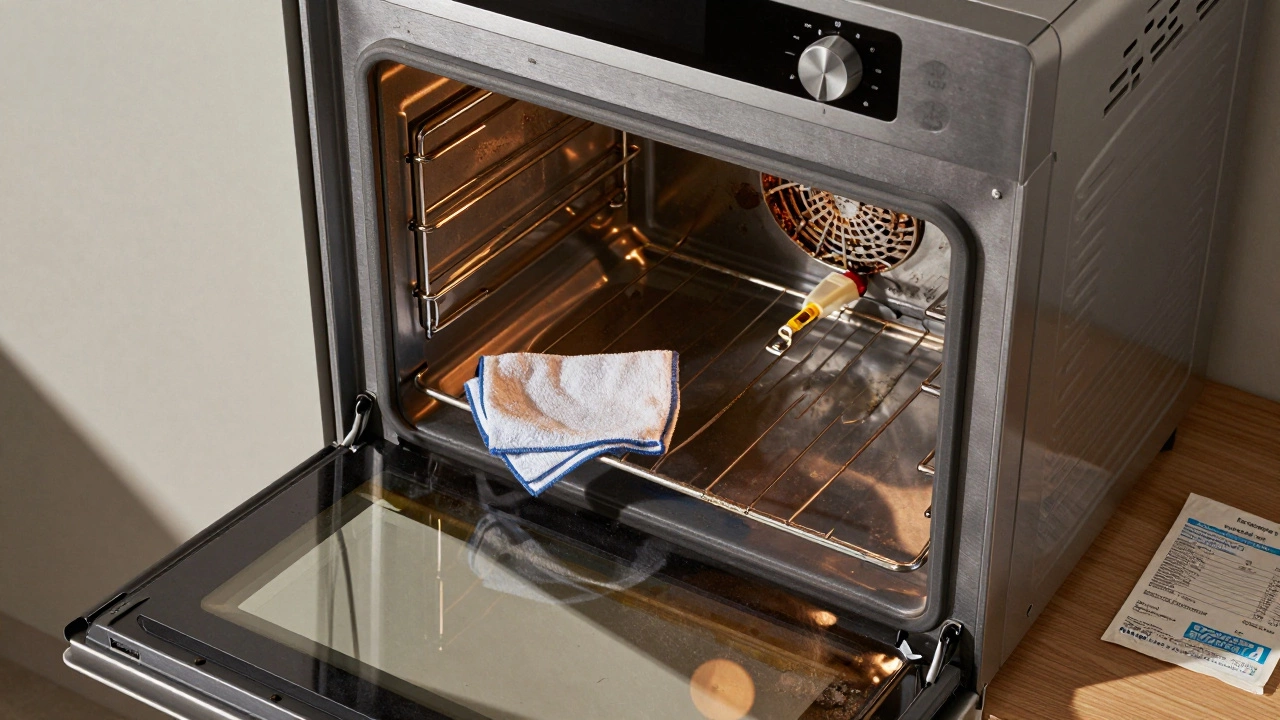
Most modern electric ovens use a temperature sensor-a thin metal probe sticking into the oven wall, usually near the back. If it’s bent, covered in grease, or damaged, it sends wrong signals to the control board. Clean it gently with a soft cloth and mild cleaner. If that doesn’t help, test it with a multimeter. At room temperature, it should read around 1000-1100 ohms. If the reading is way off or shows no resistance, the sensor needs replacing.
Another cause of uneven heat is a faulty fan in convection ovens. If the fan isn’t spinning properly, air doesn’t circulate, and heat builds up in one spot. Listen for unusual noises or check if the fan blades are clogged with grease. A seized fan motor is easy to swap out.
The oven overheats or doesn’t shut off
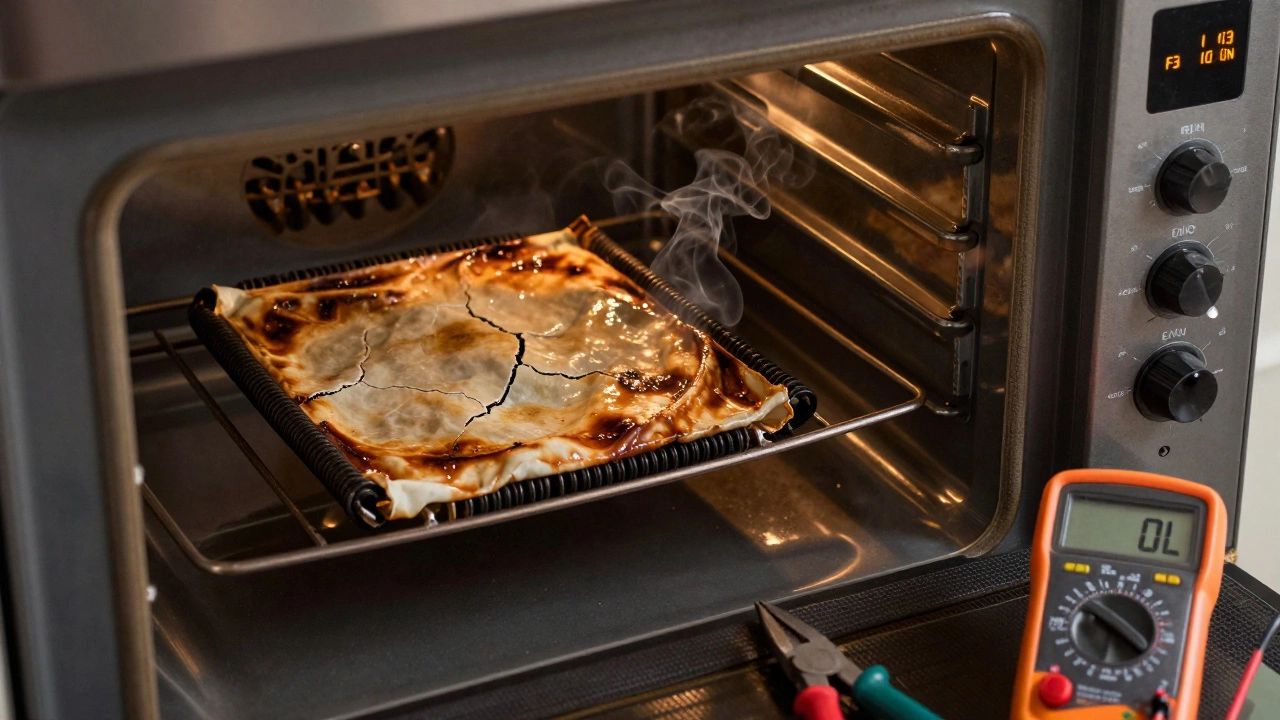
This is dangerous. If your oven gets way too hot-even on low settings-or keeps heating after you turn it off, the thermostat or control board is likely malfunctioning. A stuck relay on the control board can keep sending power to the elements nonstop. This isn’t just a cooking issue-it’s a fire risk.
Check if the oven has a self-clean cycle. If it overheats only during self-clean, the problem is probably the high-limit thermostat, a safety device that’s supposed to cut power if things get too hot. If that fails, the main thermostat might be at fault. Either way, don’t use the oven until it’s fixed. Unplug it or turn off the breaker.
Strange smells or smoke
A little odor when you first turn on a new oven is normal. But if you smell burning plastic, metal, or electrical smoke, something’s wrong. New elements sometimes give off a faint odor the first few uses, but that fades. Persistent burning smells mean something is overheating.
Check for food debris or grease buildup under the bottom element. Burnt-on spills can smoke when heated. Clean the oven thoroughly. If the smell returns after cleaning, the wiring insulation might be melting. That’s a red flag. Look for discolored wires or melted plastic near the element terminals. If you see any, stop using the oven immediately.
Display errors or blinking codes
Many modern ovens show error codes when something goes wrong. Common ones include F1, F3, E0, or E1. These aren’t random-they’re diagnostic codes. Check your manual for what each code means. For example, F3 often means a temperature sensor failure. E1 might point to a door lock issue in convection models.
If your oven doesn’t show codes but the display flickers or goes blank, the control board could be failing. Control boards are sensitive to power surges. If you’ve had recent lightning storms or power fluctuations, that’s a likely cause. Replacing the board is more expensive than replacing elements or sensors, but it’s still cheaper than buying a whole new oven.
What to do when you’re not sure
Don’t guess. Start with the simplest fixes: check power, clean the sensor, test the elements. You don’t need to be an electrician to do this. A $20 multimeter from any hardware store lets you test continuity and resistance. Most parts are easy to replace with basic tools-screwdrivers and pliers are usually enough.
Keep a notebook. Write down what you checked, what you found, and what you replaced. That helps if you need to call a technician later. It also stops you from repeating the same steps.
If you’ve checked all the common parts and still can’t find the issue, it’s time to call a pro. But don’t assume the oven is dead. Many repair techs charge just to come out. Ask for a diagnostic fee upfront. If they say it’s the control board, ask if they can test it first. Sometimes, the problem is a loose wire or a bad connection-not a full board replacement.
When to replace instead of repair
Repairing an oven makes sense if it’s less than 10 years old and the cost is under half the price of a new one. If your oven is older, and you’re replacing two or more major parts, it’s time to think about upgrading. Newer models are more energy-efficient, have better temperature control, and come with safety features like auto-shutoff and child locks.
Also, if the oven’s door doesn’t seal properly-leaving gaps around the edges-it’s losing heat. That’s expensive to fix. Replacing the door gasket is cheap, but if the frame is warped or the hinges are broken, it’s often not worth it.
Look at your energy bills. If your oven is taking longer to cook and your electricity costs have gone up, that’s a hidden cost. A new oven might pay for itself in a few years through lower usage.