
Refrigerator Problem Diagnosis Tool
What's happening with your refrigerator?
Step 1: Basic Checks
Step 2: Condenser Coils
Step 3: Door Seals
Step 4: Final Checks
If your refrigerator isn’t cooling, makes strange noises, or starts leaking water, you don’t need to call a technician right away. Many common fridge problems can be diagnosed and fixed with basic checks you can do in under 30 minutes. You’ll save time and money by learning how to spot the real issue before spending hundreds on a service call.
Check the temperature settings first
It sounds simple, but more than 30% of fridge issues are just wrong settings. People accidentally bump the dial or change the digital display while cleaning. The ideal fridge temperature is between 35°F and 38°F (1.7°C to 3.3°C). The freezer should be at 0°F (-18°C). If your fridge is set above 40°F, food spoils faster. If it’s set too low, everything freezes-even milk and lettuce.Use a standalone thermometer placed in a glass of water inside the fridge. Leave it there for 24 hours. If the reading is off by more than 5°F, your thermostat might be faulty. But before replacing it, check if the control panel is locked or in demo mode. Some models have a child lock or energy-saving mode that raises the temperature.
Inspect the condenser coils
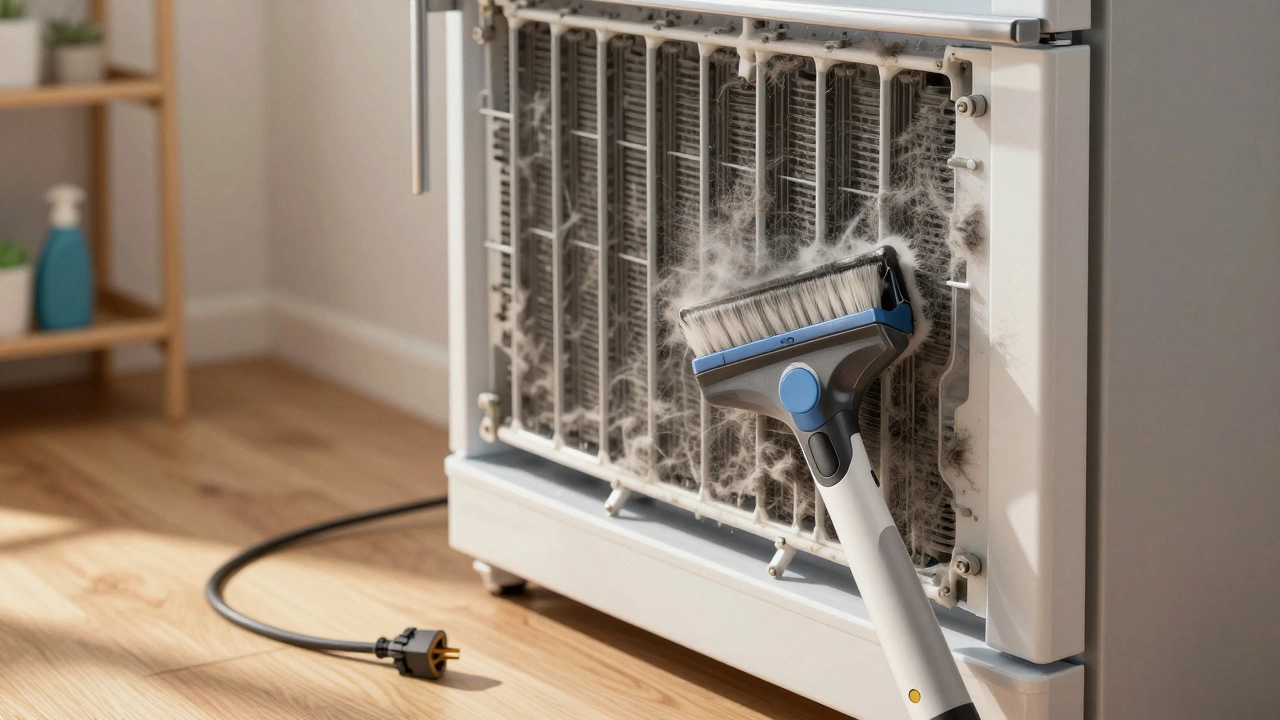
Dusty or blocked condenser coils are the #1 cause of cooling failure in older fridges. These coils, usually at the back or bottom of the unit, release heat from inside the fridge. When they’re covered in dust, lint, or pet hair, the system can’t cool properly. The compressor works harder, overheats, and eventually shuts down.Unplug the fridge. Pull it away from the wall. Look for a grid of metal tubes-those are the coils. If they’re coated in gray fuzz, vacuum them with a brush attachment. Use a coil brush (under $10 at hardware stores) to scrub off stubborn grime. Do this every 6 months. A clean coil can restore cooling in minutes.
Test the door seals
A loose or cracked door gasket lets cold air escape. That’s why your fridge runs constantly and your energy bill spikes. To test the seal, close the door on a dollar bill. Try to pull it out. If it slides out easily, the seal is weak. Do this on all four sides.Replace the gasket if it’s cracked, stiff, or doesn’t snap back when pressed. You can buy OEM gaskets online for under $50. Install it by peeling off the old one and snapping the new one into the groove. No tools needed. A good seal keeps the fridge running efficiently and prevents frost buildup inside.
Listen for unusual noises
Fridges make noise. But not all noise is normal. A loud humming or buzzing could mean the compressor is struggling. A clicking sound every few minutes? That’s the thermostat turning the compressor on and off-normal. But if it clicks nonstop, the thermostat might be stuck.A rattling or grinding noise often comes from the evaporator fan in the freezer. Ice can build up around the fan blades, causing them to hit the housing. Unplug the fridge, empty the freezer, and remove the back panel. Check for ice chunks. Use a hairdryer on low heat to melt them-don’t use metal tools. Clean the fan blades with a soft brush. Reassemble and test.
Check for water leaks or pooling
Water on the floor under your fridge usually means one of three things: a clogged defrost drain, a cracked water line, or a faulty ice maker. The most common culprit is the defrost drain. Every fridge melts frost automatically. That water drains into a pan under the unit. If the drain tube gets blocked by food debris or ice, water backs up and leaks out.Find the drain hole inside the freezer, usually at the back bottom. Pour a cup of warm water down it. If it doesn’t flow out, use a pipe cleaner or flexible wire to clear the blockage. Flush with vinegar to prevent future buildup. If water keeps leaking after clearing the drain, check the water inlet valve behind the fridge or the ice maker tubing.
Look for frost buildup in the freezer
A little frost is normal. A thick layer of ice-more than ¼ inch-is a red flag. It means the defrost system isn’t working. The heater, thermostat, or timer could be broken. If your freezer looks like a glacier, your fridge is probably not cooling well either.Manually defrost the freezer by unplugging the fridge and leaving the door open for 24 hours. Wipe out all water. Plug it back in. If frost returns within a week, the defrost heater or thermostat is faulty. These parts cost under $40 to replace. You can find replacement guides for your model online using the serial number.
Verify the evaporator fan is running
The evaporator fan circulates cold air from the freezer into the fridge compartment. If it’s not spinning, your fridge stays warm-even if the freezer is cold. Open the freezer door and listen. You should hear a soft hum. If it’s silent, the fan motor might be dead.Remove the back panel in the freezer. Check if the fan blades are frozen or blocked. If they spin freely but still don’t run, test for power with a multimeter. If there’s voltage but no spin, replace the fan motor. Most models use a 12V DC motor that’s easy to swap. A working fan is critical-without it, cold air doesn’t reach the fridge side.

Test the compressor
The compressor is the heart of the fridge. If it’s dead, the whole system fails. But it’s rarely the first thing to break. Before replacing it, rule out everything else. Listen for a clicking sound when the fridge tries to start. If you hear clicking but no hum, the start relay might be bad.The start relay is a small box attached to the compressor. Unplug the fridge, remove the relay, and shake it. If you hear rattle, it’s broken. Replace it for under $25. If the compressor doesn’t turn on at all, even after replacing the relay, it may be faulty. But compressor failure is rare in fridges under 10 years old. If yours is older and the compressor is dead, consider replacing the whole unit. Repairing it costs more than a new fridge.
Smells and mold inside
A sour or musty smell usually means spoiled food. But if the odor lingers after cleaning, the drain pan under the fridge might be moldy. That pan collects water from the defrost cycle. If it’s not cleaned regularly, it becomes a breeding ground for bacteria and mildew.Slide out the pan (usually at the bottom front). Wash it with hot water and bleach. Dry it completely before sliding it back. Wipe down the interior with a mix of baking soda and water. Keep a box of baking soda in the fridge to absorb odors. Replace it every 3 months.
When to call a professional
You can fix most fridge issues yourself. But call a technician if:- The fridge doesn’t turn on at all (no lights, no sounds)
- You smell burning plastic or see smoke
- There’s a refrigerant leak (oily residue on coils or hissing sound)
- The compressor runs constantly but won’t cool
- You’re uncomfortable working with electrical parts or refrigerants
Refrigerant leaks are dangerous and illegal to handle without certification. Don’t try to recharge the system yourself. Also, if your fridge is over 12 years old and needs multiple repairs, it’s more cost-effective to replace it. New models use 40% less energy and come with better warranties.
Prevent future problems
Keep your fridge running smoothly with these habits:- Clean condenser coils every 6 months
- Replace door gaskets every 5-7 years
- Don’t overload the fridge-air needs to circulate
- Keep the temperature at 37°F
- Check the drain tube annually with vinegar
- Don’t leave the door open longer than 2 minutes
Following these steps cuts repair calls by 60%. Most fridges last 15+ years with basic care. You’re not just fixing a machine-you’re protecting your food, your wallet, and your time.
Why is my fridge running constantly but not cooling?
This usually means the condenser coils are dirty, the door seal is broken, or the evaporator fan isn’t working. Dust on the coils prevents heat from escaping, forcing the compressor to run nonstop. A bad seal lets cold air out. A dead fan stops cold air from circulating. Clean the coils, test the door seal with a dollar bill, and check if the freezer fan spins. Fixing any of these often solves the issue.
Can a fridge be too full to cool properly?
Yes. While a full fridge holds cold better than an empty one, overcrowding blocks airflow. Cold air needs to move freely between shelves and around food. If you pack it tight, the air can’t circulate, and the compressor works harder. Leave space between items. Don’t pile boxes against the back wall. A well-organized fridge cools faster and uses less energy.
Why does my fridge make a loud buzzing noise?
A loud buzz usually comes from the compressor or condenser fan. If it’s new and loud, the compressor might be failing. If it’s older, dust on the coils or a loose component can cause vibration. Unplug the fridge, clean the coils, and check if any panels or screws are rattling. Tighten loose parts. If the noise continues, the compressor may need replacement-but only after checking simpler fixes like the start relay.
How do I know if my fridge needs more refrigerant?
Fridges don’t use up refrigerant-it’s a sealed system. If your fridge isn’t cooling and the coils are clean, the door seal is good, and the fan works, a refrigerant leak is likely. Look for oily spots on the copper tubing or a hissing sound. Never add refrigerant yourself. Only certified technicians can legally handle it. If there’s a leak, repair the line or replace the fridge. Adding more gas without fixing the leak is a waste of money.
Is it worth repairing a 10-year-old refrigerator?
It depends on the cost. If the repair is under $200 and the fridge is still energy-efficient, yes. But if you’re replacing the compressor, control board, or multiple parts, it’s usually cheaper to buy new. New fridges use 40-50% less electricity. A $1,000 repair on a 10-year-old fridge isn’t smart-especially if you can get a reliable new model for $700 with a 1-year warranty.