Extractor Fan Energy Savings Calculator
Estimate Your Savings
Clean extractors use 20-30% less electricity. Calculate how much you can save by cleaning regularly.
If your extractor fan sounds like a jet engine instead of quietly pulling steam from your kitchen, it’s not broken-it’s just dirty. Most people think a noisy fan needs replacing, but 8 out of 10 times, all it needs is a good clean. Dust, grease, and grime build up over time on the motor and blades, forcing it to work harder, use more electricity, and wear out faster. Cleaning the motor isn’t hard, but doing it wrong can damage the fan or leave you with a mess that’s worse than before. Here’s how to do it safely, effectively, and without calling a technician.
What You’ll Need Before You Start
You don’t need special tools. Most of what you need is already in your kitchen or garage:
- Phillips screwdriver (sometimes a flathead)
- Soft-bristle brush or old toothbrush
- Microfiber cloths (at least 3)
- Warm water
- White vinegar or degreaser (like Simple Green or a kitchen-specific cleaner)
- Plastic bags or newspaper (to catch drips)
- Gloves (optional, but recommended if using strong cleaner)
- Compressed air (optional, for hard-to-reach spots)
Don’t use bleach, abrasive scrubbers, or power washers. These can corrode metal parts or damage plastic housings. Vinegar works better than most commercial cleaners because it cuts grease without leaving residue.
Turn Off the Power-No Exceptions
Before you touch anything, shut off the power. Not just the switch on the wall-flip the circuit breaker for that room. Extractor fans are wired directly into your home’s electrical system. Even if the fan isn’t running, there could still be live wires behind the unit. A single mistake here can lead to serious injury.
Test the power with a non-contact voltage tester if you have one. If you don’t, assume it’s live until you’ve confirmed otherwise. Safety isn’t optional-it’s the first step.
Remove the Fan Cover and Blades
Most extractor fans have a removable cover held by screws or clips. Look for small screws around the edge or behind the grille. Some models use spring-loaded clips-you’ll hear a soft click when they release.
Once the cover is off, you’ll see the fan blades. These are usually attached to a central hub with a single screw or a retaining nut. Use your screwdriver to loosen it. Take note of how the blades are positioned-they often have a specific orientation. Take a photo with your phone before removing them so you can reinstall them correctly.
Place the cover and blades on a towel or newspaper. Don’t lay them directly on the countertop-grease will stain it.
Soak and Scrub the Grease Buildup
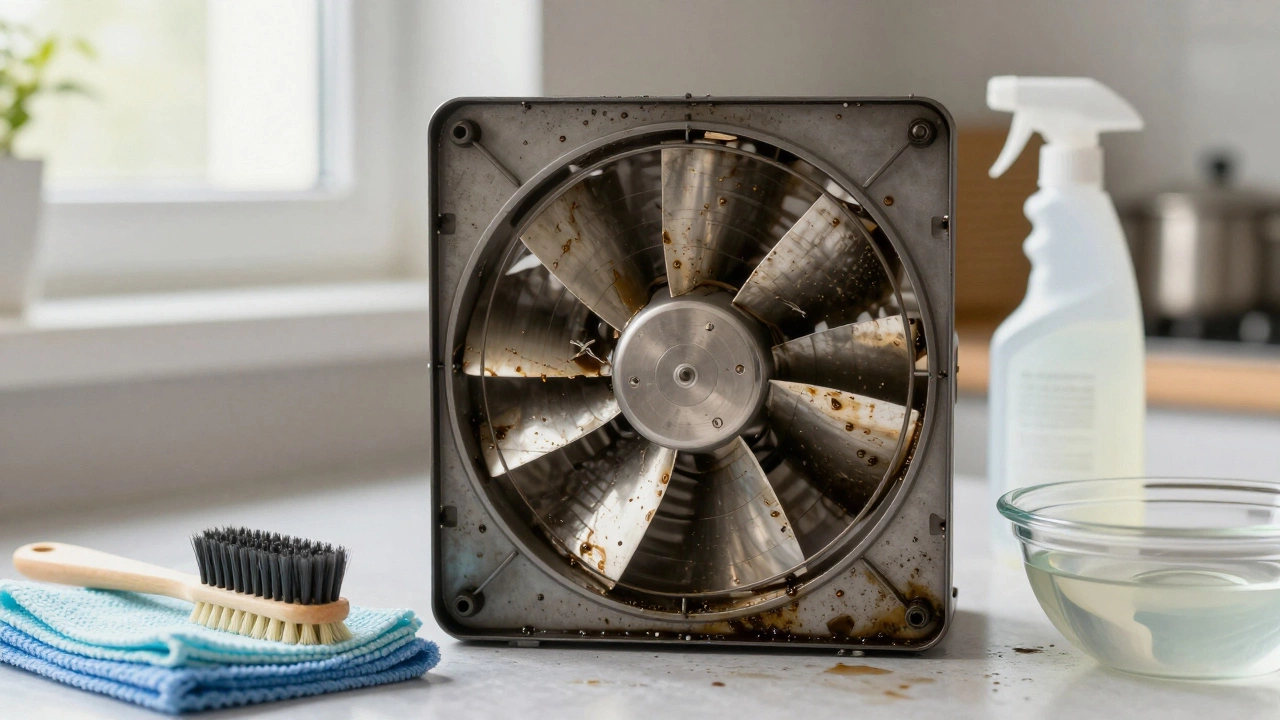
Grease is the main culprit. It sticks to blades like tar and hardens over months or years. Fill your sink with warm water and add half a cup of white vinegar. Submerge the blades and cover for 20-30 minutes. If the grease is really thick, add a tablespoon of dish soap.
After soaking, use your soft brush to scrub each blade gently. Don’t force it. If grease doesn’t come off easily, soak longer. For stubborn spots, dip the brush in vinegar and scrub slowly. Wipe each piece with a clean microfiber cloth as you go.
Don’t skip the housing inside the fan unit. That’s where grease builds up unseen. Use a damp cloth to wipe the interior walls. For tight corners, wrap a cloth around a butter knife or plastic spatula. Compressed air helps blow out dust from vents and motor vents.
Inspect the Motor-Don’t Wash It
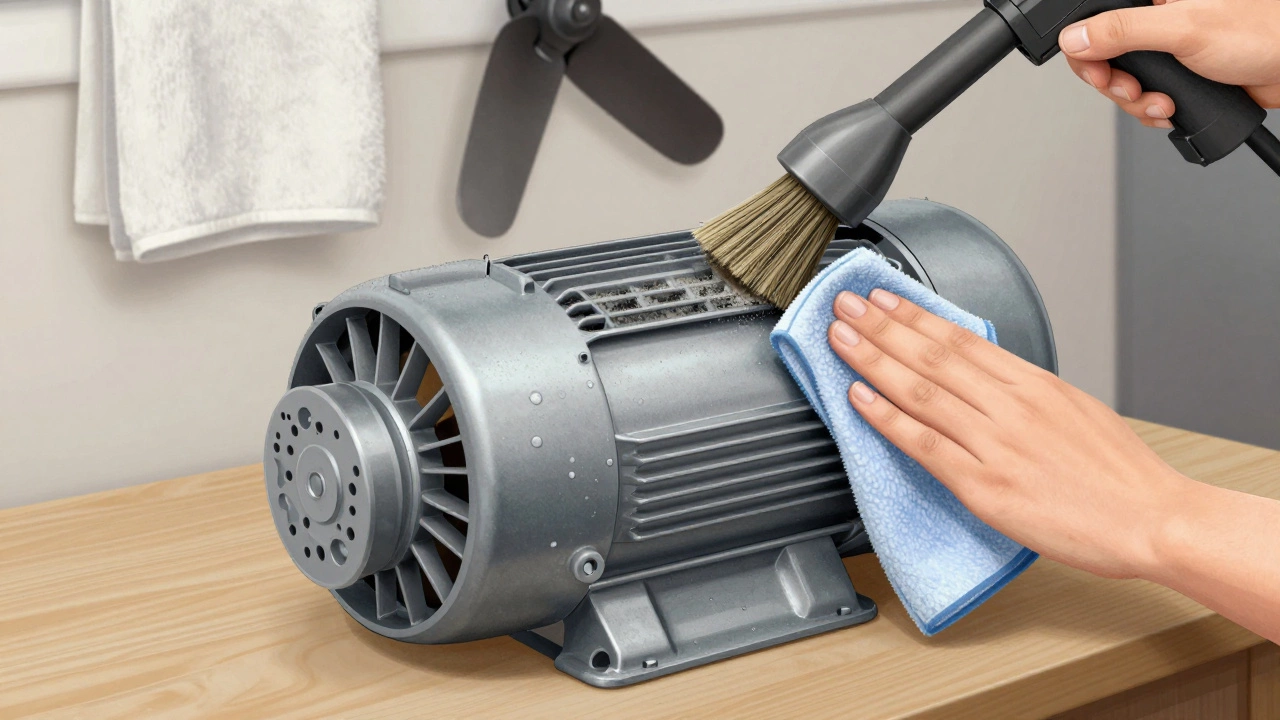
This is where most people mess up. The motor itself should never be submerged or sprayed with water. It’s sealed for a reason. Look at the motor housing-there might be a thin layer of grease or dust on the outside. Use a dry brush to gently sweep it off. Then, wipe it with a barely damp cloth. Let it air-dry completely before reassembling.
Check the motor shaft. If it spins freely by hand, that’s good. If it’s stiff or makes a grinding noise, the bearings might be worn out. That’s a sign the motor is nearing the end of its life. But if it spins smoothly and looks clean, you’re in good shape.
Reassemble and Test
Once everything is dry-absolutely dry-put it back together. Reverse the steps: attach the blades, secure the screw, snap the cover back in place. Double-check that all screws are tight but not over-tightened. Plastic threads can strip easily.
Turn the power back on at the breaker. Flip the fan switch. Listen. It should run quietly now. If it still hums loudly, you might have missed a spot of grease, or the motor bearings are failing. If it’s silent and pulling air well, you did it right.
How Often Should You Clean It?
Every 3 to 6 months is ideal if you cook daily-especially if you fry, grill, or use a wok. If you only use the fan occasionally, once a year is enough. Keep a note on your fridge or phone calendar. Set a reminder for spring and fall. That way, you won’t forget.
Pro tip: Clean the grease filter at the same time. Most extractor fans have a metal mesh filter that slides out. Wash it in hot, soapy water every 2 weeks. A clogged filter forces the motor to work harder, even if the blades are clean.

Signs You Need a New Motor
After cleaning, if the fan still:
- Smells like burning plastic or oil
- Sparks or trips the circuit breaker
- Wobbles or vibrates badly
- Makes a high-pitched screech
Then the motor is likely dead. These aren’t fixes you can do yourself. Replacement motors cost between $50 and $120, depending on the model. If your fan is older than 10 years, it might be cheaper to replace the whole unit.
Check the model number on the back of the fan or in the manual. Search online for that exact model + "replacement motor". Many manufacturers sell parts directly. Avoid generic motors-they rarely fit right or last long.
Why This Matters Beyond Noise
A dirty extractor fan doesn’t just annoy you-it’s a health risk. Grease buildup can ignite. The Fire and Emergency New Zealand service reports over 200 kitchen fires a year linked to poorly maintained extractors. Mold and bacteria grow in damp, greasy vents. That’s not just unpleasant-it can trigger allergies and asthma.
Also, a clean fan uses 20-30% less electricity. Over a year, that adds up. If your fan runs 20 minutes a day, cleaning it could save you $15-$25 on your power bill.
Common Mistakes to Avoid
- Skipping the power shutdown-always turn off the breaker
- Using water on the motor-only wipe the outside
- Forcing stuck parts-soak longer instead
- Using metal brushes-scratches metal and leaves debris
- Reassembling while parts are still damp-this causes rust and electrical issues
Take your time. Rushing leads to mistakes. A 45-minute job done right lasts years. A 15-minute job done fast might need redoing in a month.
Can I clean my extractor fan motor without taking it apart?
No. You can wipe the outside of the housing, but grease builds up inside on the blades and motor shaft. Without removing the cover and blades, you’re only cleaning the surface. The real problem is hidden. Full cleaning requires disassembly.
Is vinegar safe for all types of fan blades?
Yes. Vinegar is safe for metal, plastic, and coated blades. Avoid it only if the manufacturer’s manual says not to use acidic cleaners-which is rare. If you’re unsure, test a small area first. Most modern extractor fans are designed to handle mild vinegar solutions.
Why does my fan still make noise after cleaning?
If the noise is a low hum, it might be loose mounting screws. Tighten the fan’s frame to the ceiling or wall. If it’s a grinding or screeching sound, the motor bearings are worn. Cleaning won’t fix that. You’ll need a new motor or a full unit replacement.
Can I use a vacuum to clean the motor?
Only for surface dust. A vacuum won’t remove grease. Use it to suck up loose debris before wiping, but never rely on it alone. Grease sticks and needs solvent-vinegar or degreaser-to break it down.
What if I don’t know my fan’s model number?
Look for a sticker inside the housing or on the motor itself. It’s often small and covered in grease. Use a flashlight and a damp cloth to clean the area. If you can’t find it, take a clear photo of the fan and search online with keywords like "kitchen extractor fan model lookup". Many forums have photo guides.