Electric Stove Replacement Calculator
Determine if You Should Repair or Replace
Use this calculator based on the 50% rule from the article. If repair costs exceed 50% of a new stove's price, replace it.
Most people assume their electric stove will last forever-until one day, the burner won’t heat, the oven won’t reach temperature, or the control panel starts flashing errors. If you’ve been wondering how long an electric stove should last, the answer isn’t a single number. It’s a range, shaped by how you use it, how well you clean it, and what brand you bought.
Typical Lifespan of an Electric Stove
On average, a well-maintained electric stove lasts between 13 and 15 years. That’s the number most appliance manufacturers and repair technicians agree on. But this isn’t a warranty-it’s a real-world estimate based on daily use in households across New Zealand and beyond.
Some stoves die early. A cheap model used heavily in a busy kitchen might start failing after just 8 years. On the flip side, a mid-range or premium stove, used gently and cleaned regularly, can easily hit 18 to 20 years. I’ve seen a 1998 Hotpoint stove still working in a Dunedin home, though it’s got more duct tape than original wiring.
The key isn’t just age-it’s condition. A 12-year-old stove with cracked ceramic burners, corroded terminals, and a failing thermostat is more of a liability than a kitchen asset. You’re not saving money by keeping it. You’re risking safety and wasting energy.
What Breaks First? Common Failure Points
Electric stoves don’t just wear out all at once. Things fail in a predictable order. Knowing what breaks first helps you spot trouble before it turns into a full breakdown.
- Element burners-the most common failure. Coils crack, ceramic bases crumble, and the heating wire inside snaps. Replacing a single burner costs $30-$80, but if two or more go within a year, it’s a sign the whole unit is aging.
- Thermostat or control board-if your oven runs too hot, too cold, or won’t turn off, it’s often the thermostat. Digital control panels can glitch from moisture or power surges. Repairs here can cost $150-$300, sometimes more than half the price of a new stove.
- Door seals and hinges-a broken seal lets heat escape, making the oven work harder. That increases electricity bills and strains the heating elements. A worn hinge makes the door sag, which can cause uneven cooking and even safety hazards.
- Wiring and connections-corrosion from steam, grease buildup, or moisture (common in coastal areas like Dunedin) eats away at terminals. Loose wires cause arcing, which can lead to sparks or even fire.
One technician in Christchurch told me he sees 3-4 stoves a week with burnt-out wiring behind the control panel. Most of them were over 12 years old. No one cleaned around the vents. No one checked for moisture. And then-boom-the stove just stopped working.
How to Make Your Electric Stove Last Longer
You don’t need to be a technician to extend your stove’s life. Simple habits make a huge difference.
- Keep it clean-but not with harsh chemicals. Baking soda and vinegar work better than oven sprays. Avoid getting liquid near control panels or burner bases. Spills that bake onto the surface? Let them cool, then scrape gently with a plastic scraper.
- Don’t overload the burners. Heavy pots on small coils warp the element and strain the wiring. Use pots that match the burner size.
- Check the ventilation. If your stove has a built-in fan or vent, clean the filter every 3 months. Grease buildup traps heat, which cooks the electronics from the inside.
- Unplug during storms. Power surges from lightning or grid fluctuations fry control boards. A simple surge protector for your kitchen appliances is a $25 fix that can save you $800.
- Listen and smell. If you hear popping, buzzing, or smell burning plastic, turn it off. Don’t wait. That’s not normal wear-it’s a warning.
One customer in Dunedin replaced her stove after 17 years-not because it broke, but because she noticed her electricity bill had jumped 22% over two years. She cleaned the vents, checked the seals, and replaced one burner. The bill dropped back down. That’s how you know your stove is still working hard… too hard.
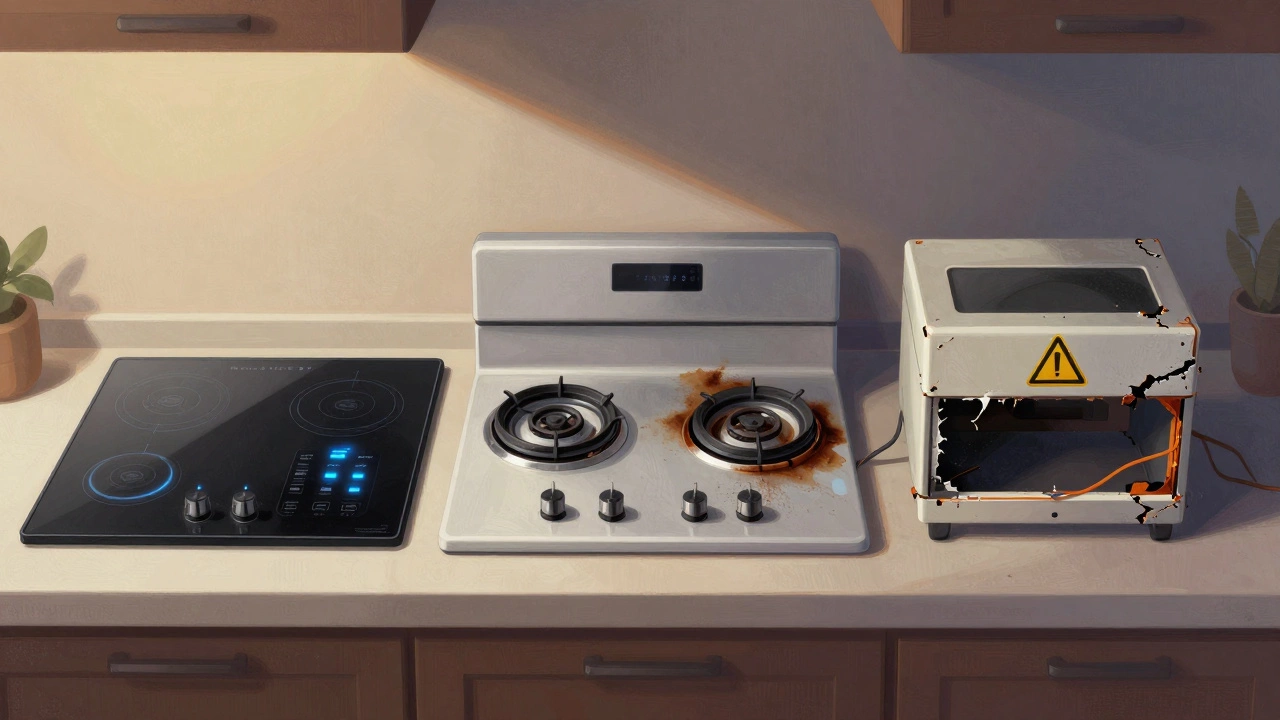
When Should You Replace It? The 50% Rule
Here’s a simple rule of thumb used by appliance repair pros: If a repair costs more than half the price of a new stove, walk away.
Let’s say a new mid-range electric stove costs $900. If you’re being quoted $450 or more to fix the control board, thermostat, and two burners? Just buy new. You’ll get better efficiency, modern safety features, and a warranty.
Also consider:
- Energy efficiency-a 15-year-old stove uses 20-30% more electricity than a new ENERGY STAR model. That adds up to $100-$180 extra per year on your bill.
- Safety-old wiring, cracked insulation, and worn-out components increase fire risk. Insurance companies in New Zealand have started asking about appliance age during claims.
- Convenience-new stoves have timers, auto-shutoff, precise temperature control, and easier cleaning. You won’t miss the old one.
There’s no emotional attachment that justifies risking your home for a 20-year-old appliance. If your stove is over 12 years old and needs more than one repair, it’s time to start looking.
What to Look for in a New Electric Stove
Not all electric stoves are created equal. Here’s what actually matters:
| Feature | Why It Matters | What to Look For |
|---|---|---|
| Heating Elements | Directly affects cooking performance and longevity | Smooth-top ceramic glass with sealed coils (not exposed wires) |
| Thermostat Accuracy | Prevents under/overcooking and energy waste | Look for models with digital temperature sensors, not dial controls |
| Warranty | Longer coverage = better build quality | Minimum 2-year parts and labor warranty. Some brands offer 5 years on elements |
| Energy Rating | Reduces long-term cost | Look for 4-star or higher on New Zealand’s Energy Rating Label |
| Self-Cleaning Function | Reduces maintenance burden | Pyrolytic cleaning (high-heat) is better than steam cleaning |
Brands like Bosch, Electrolux, and LG have proven reliability in NZ conditions. Avoid no-name brands sold at discount stores-they often use thinner wiring and cheaper sensors that fail faster.
What About Used or Refurbished Stoves?
Buying a used stove can save money, but it’s risky. Unless you’re buying from a reputable appliance recycler who tests and replaces critical parts (like elements, thermostats, and wiring), you’re playing Russian roulette.
Refurbished units from certified dealers are a better option. They come with a 6-12 month warranty and have had all worn parts replaced. But even then, if the unit is over 10 years old, you’re buying time, not value.
One customer in Dunedin bought a refurbished Stoves model for $400. It broke again after 8 months. The repair cost $320. He ended up paying $720 for a stove that lasted 14 months. He bought a new one for $850 and has had zero issues for 2 years.
Final Thoughts: It’s Not About Saving Money-It’s About Smart Spending
People cling to old stoves because they think they’re saving cash. But the real cost isn’t the price tag. It’s the extra power bills. The ruined meals. The stress when it dies in the middle of Christmas dinner. The insurance headache if it causes a fire.
An electric stove isn’t a luxury. It’s a critical appliance. Treat it like one. Clean it. Monitor it. Replace it when the math says so.
If your stove is over 12 years old, and you’re starting to notice problems-don’t wait for it to die. Start researching replacements now. The best time to buy a new stove is before the old one fails.
How long does an electric stove typically last?
Most electric stoves last between 13 and 15 years with normal use and proper maintenance. Some can last up to 20 years if cared for well, while cheaper or heavily used models may fail in as little as 8 years.
What are the most common reasons electric stoves stop working?
The most common failures are worn-out heating elements, faulty thermostats, damaged control boards, corroded wiring, and broken door seals. Moisture, grease buildup, and power surges accelerate these issues.
Is it worth repairing an old electric stove?
Only if the repair costs less than half the price of a new unit. For stoves over 12 years old, repairs often cost too much to justify-especially when you consider rising energy bills and safety risks.
Can I extend the life of my electric stove?
Yes. Clean spills immediately, avoid harsh cleaners, match pot sizes to burners, clean vents regularly, unplug during storms, and check for loose wiring or strange smells. These simple habits can add years to your stove’s life.
Should I buy a new or used electric stove?
New is almost always better. Used stoves may seem cheaper, but they often come with hidden wear. Certified refurbished units with warranties are acceptable, but avoid secondhand stoves from private sellers unless they’ve been professionally serviced.