Boiler Replacement Timeline Calculator
How Long Will Your Boiler Replacement Take?
This calculator estimates the time needed for boiler replacement based on your specific situation. Enter your details to get a personalized timeline.
Estimated Timeline
Key factors affecting your timeline:
Replacing a boiler in your house isn’t something you do every year - but when it breaks down in the middle of winter, every hour counts. In Dunedin, where winter temperatures regularly dip below freezing, a faulty boiler isn’t just inconvenient - it’s a safety issue. So how long does it actually take to get a new one installed? The short answer: between one and three days. But that’s not the whole story.
What affects how long a boiler replacement takes?
Not all boiler swaps are the same. The time it takes depends on a handful of real-world factors that most online guides skip over. First, the type of boiler you’re replacing matters. If you’re swapping an old combi boiler for a new combi boiler of the same type, and the flue and pipework are in good shape, you’re looking at a one-day job. That’s the easiest scenario.
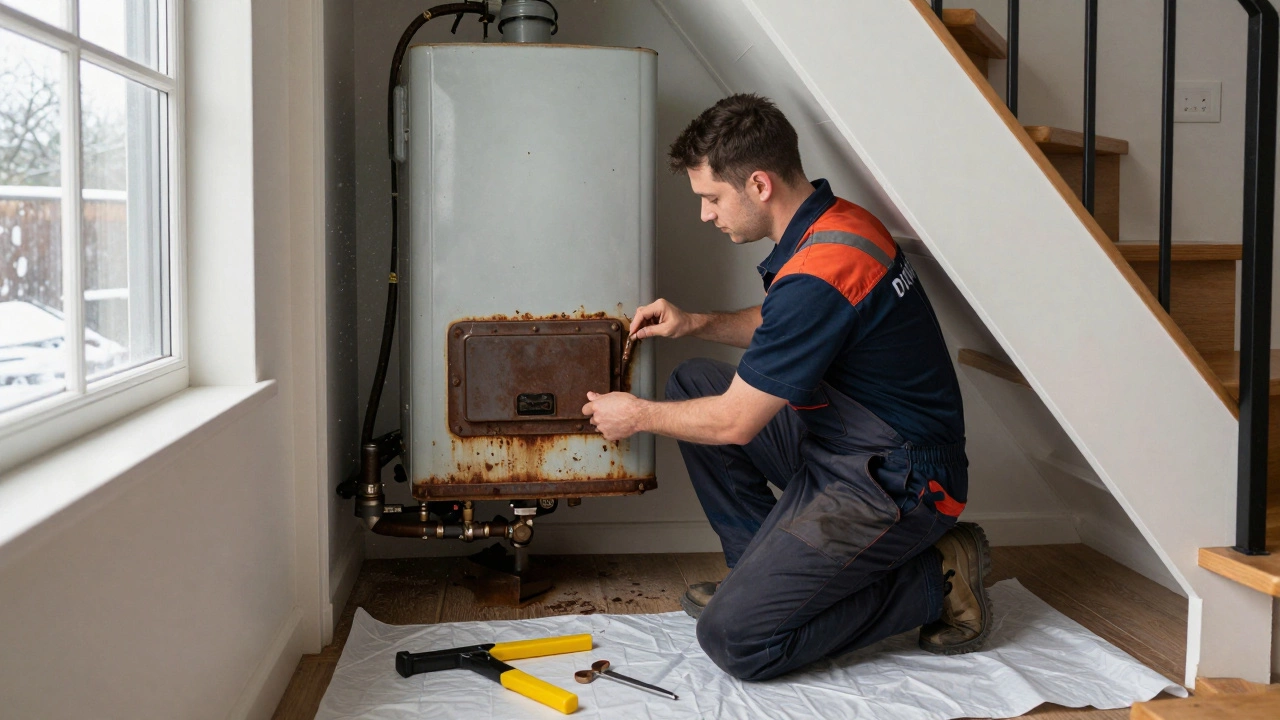
But if you’re switching from a regular boiler with a hot water tank to a combi boiler, things get more complicated. You’ll need to remove the tank, cap off old pipes, reroute water lines, and possibly relocate the boiler to a new wall. That adds a full day. Some homeowners don’t realize that removing an old tank can take hours just because of rusted connections and cramped spaces under the stairs.
Then there’s the gas supply. In older homes - especially those built before 1990 - the gas line might be too small for a modern high-efficiency boiler. If your gas meter or pipe needs upgrading, that’s not something the boiler installer can do alone. You’ll need a licensed gas fitter, and that means waiting for a separate appointment. Delays here can push the job from one day to three.
What happens on each day of the replacement?
Most boiler replacements follow a clear pattern, even if the timeline varies.
Day 1: Removal and prep
Your installer will arrive early, lay down protective sheets, and shut off the gas and water. They’ll drain the system, disconnect the old boiler, and carefully remove it. If there’s a tank, they’ll cut and cap the pipes, then haul it out. They’ll check the flue, gas line, and condensate pipe for damage or blockages. If everything’s in good shape, they’ll mark where the new boiler goes. This day is messy, noisy, and usually takes 6-8 hours.
Day 2: Installation
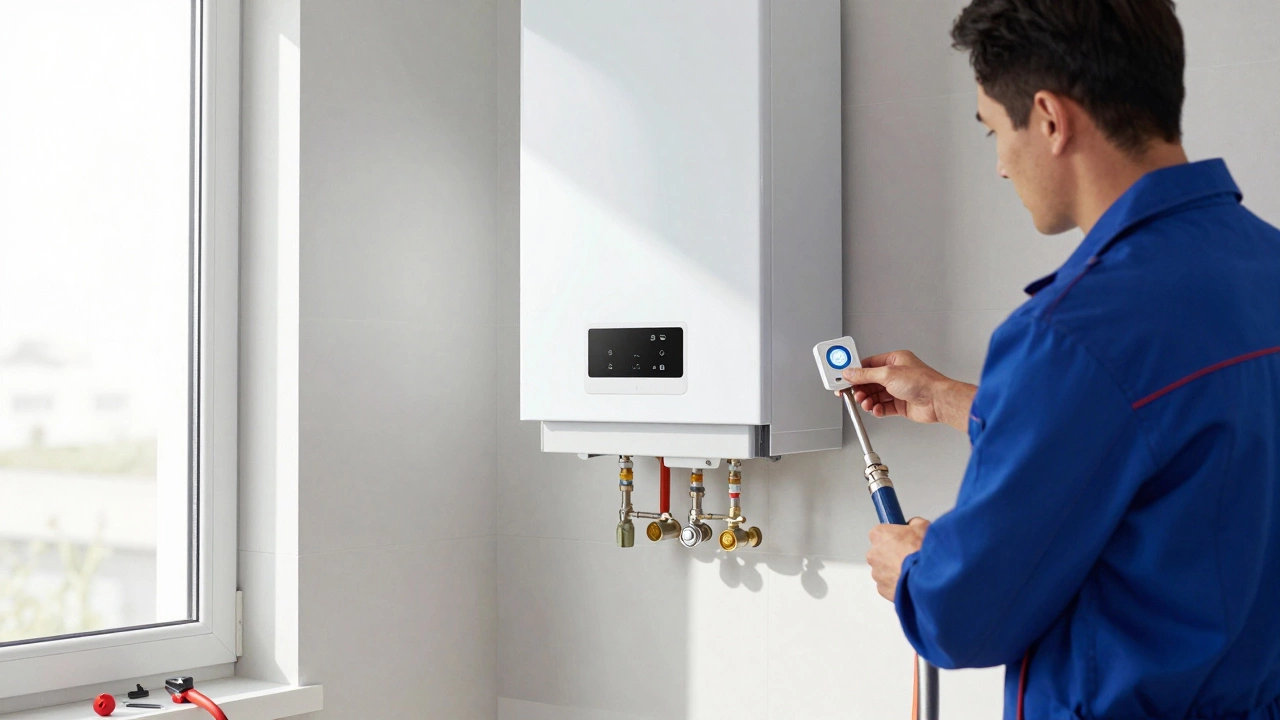
This is the day the new boiler arrives. Installers bring the unit, mount it on the wall, connect the gas, water, and electrical lines, and fit the flue. They’ll install a new thermostat if needed and flush the system to remove sludge. If you’re upgrading to a smart thermostat, that’s added time. They’ll test for leaks, check pressure, and run a full diagnostic. Most of this happens in a single day - unless they hit a surprise like corroded pipes or a blocked flue.
Day 3: Final checks and handover
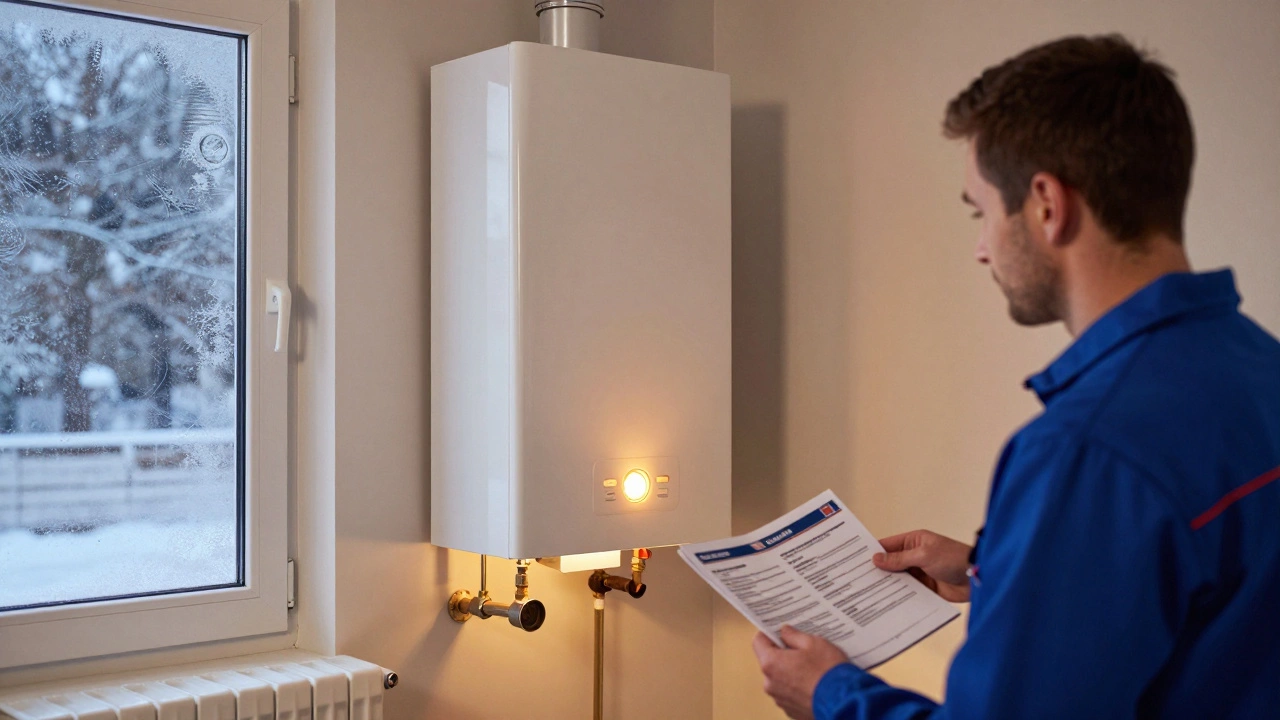
If everything went smoothly, you might not need a third day. But if the installer had to wait on a gas company to upgrade the meter, or if the system needed extra flushing because of old sludge, they’ll come back to finish up. On this day, they’ll show you how to use the controls, explain the warranty, and leave you with manuals and contact info. They’ll also give you a Gas Safe certificate - which you’ll need for insurance and future home sales.
What can go wrong and delay the job?
Even experienced installers run into surprises. Here are the most common delays:
- Old pipework: Cast iron or lead pipes from the 1950s don’t play nice with modern boilers. Replacing them adds cost and time.
- Flue restrictions: If your boiler’s flue can’t be vented properly - say, because of a narrow alley or a nearby window - you might need a different model or a powered flue, which costs more and takes longer to install.
- Condensate pipe freezing: In Dunedin winters, if the condensate pipe runs outside and isn’t insulated, it can freeze. Installers might need to reroute it indoors, which means cutting into walls.
- Waiting for permits or inspections: Some councils require a building consent if you’re changing the boiler’s location or upgrading the gas line. That’s usually quick, but if the council is backed up, you could lose a day or two.
- Delivery delays: If your chosen boiler is out of stock, or if it’s imported from Europe, delivery can take 5-7 days. That’s not the installer’s fault, but it still stalls your heating.
One client I worked with in South Dunedin had to wait 11 days because their boiler model was backordered. They spent two weeks with electric heaters. Not ideal.
How to speed up the process
You can’t control everything, but you can control a few things to keep things moving:
- Clear the space. Move furniture, rugs, and boxes away from where the boiler is. Installers need at least 1 meter of clear space around the unit.
- Have your old boiler’s model number ready. That helps them know what kind of system you had and what to expect.
- Ask about gas line upgrades upfront. If your home is older, assume the gas line might need work. Get a quote for that before signing the boiler contract.
- Book early. Winter is peak season. If you wait until your boiler dies in July, you’ll be on a waiting list for weeks. Book replacements in spring or early autumn.
- Don’t DIY the removal. Even if you think you can take it out yourself, you can’t legally disconnect the gas. And if you mess up the pipes, the installer will charge extra to fix your mistakes.
How much does it cost to replace a boiler?
Time isn’t the only thing you’re paying for. In New Zealand, a standard combi boiler replacement costs between $4,500 and $7,500. That includes the unit, installation, flue, and a full system flush. If you need a new gas line or a tank removal, add $1,000-$2,500. High-efficiency models with smart controls can push the price to $9,000.
Some companies offer interest-free finance over 12-24 months. That’s worth considering if you’re on a tight budget. But don’t fall for $1,999 “boiler specials” - those usually mean a low-end unit, no warranty, and hidden fees.
What to look for in a boiler installer
Not all installers are created equal. Look for these three things:
- Gas Safe registration (or its New Zealand equivalent: a licensed gas fitter with a current certificate)
- At least 5 years of experience - especially with boilers in older homes
- Written warranty on both parts and labor - 2 years is standard, 10 years is better
Ask for references. Call past customers and ask: “Did they show up on time? Did they clean up? Did the boiler work right after?”
What happens after the boiler is installed?
Don’t just walk away after the installer leaves. Here’s what you should do in the first week:
- Check the boiler pressure daily. It should stay between 1.0 and 1.5 bar. If it drops, there’s a leak.
- Test the hot water and heating on different settings. Make sure the thermostat responds.
- Listen for unusual noises - gurgling, banging, or whistling can mean air in the system.
- Keep the manual and warranty card in a safe place. You’ll need them if something goes wrong.
Most boiler issues in the first month are caused by air trapped in the system. A simple bleed of the radiators usually fixes it. Your installer should show you how - if they don’t, ask them to come back.
When should you replace your boiler?
You don’t need to wait until it dies. If your boiler is over 15 years old, even if it still works, it’s likely running at 70% efficiency. A new A-rated boiler can cut your gas bill by 30%. That’s $400-$600 a year in savings. Plus, older boilers are more likely to break down in winter - when you need them most.
If you’re seeing frequent repairs, rising bills, or cold spots in your home, it’s time to start looking. Don’t wait for a total failure. Plan ahead.
Can I replace my boiler myself?
No. In New Zealand, only licensed gas fitters can legally disconnect or connect gas lines. Even if you’re handy, you can’t get insurance coverage or a warranty if you install the boiler yourself. Plus, incorrect installation can lead to gas leaks, carbon monoxide poisoning, or fire. It’s not worth the risk.
Do I need a new thermostat when replacing my boiler?
Not always, but it’s highly recommended. Old thermostats are mechanical and inaccurate. Modern smart thermostats learn your schedule, adjust automatically, and can save you up to 20% on heating bills. Most installers will include one in a full replacement package - ask if it’s included.
How do I know if my boiler is too old to repair?
If your boiler is over 15 years old and you’ve had more than two major repairs in the last year, replacement is usually cheaper than continued fixes. Also, if your boiler is making loud banging noises, leaking water, or cycling on and off too often, it’s a sign the internal parts are worn out. Repairs on old boilers often only buy you a few months.
Will a new boiler make my house quieter?
Yes. Modern boilers are designed to be much quieter than older models. If your current boiler rattles or clunks every time it turns on, a new one will be noticeably calmer. Look for models with low decibel ratings - most new boilers run at 40-45 dB, which is about the level of a quiet library.
Can I switch from oil to gas if I have an oil boiler?
In most urban areas of New Zealand, including Dunedin, natural gas lines are widely available. If your home is connected to the gas network, switching from oil to gas is possible. But you’ll need to remove the oil tank, cap the lines, and install a new gas line to the boiler. This adds $2,000-$4,000 to the cost. It’s worth it if you’re tired of oil deliveries and price spikes.
Final thoughts
Replacing a boiler isn’t just about getting heat back. It’s about safety, efficiency, and peace of mind. While the average job takes one to three days, the real value comes from planning ahead. Don’t wait for a breakdown. Start researching now - even if your boiler still works. Choose a reputable installer, get multiple quotes, and make sure you understand what’s included. A good boiler replacement can last 15 years. Make sure you get it right the first time.