Extractor Fan Replacement Assessment Tool
Is your extractor fan plugged in or wired?
New Zealand law requires licensed electricians for wiring work. This tool will help you determine if you need professional assistance.
Replacing an extractor fan sounds simple-pull out the old one, plug in the new one, and done. But if you’ve ever stared at a tangled mess of wires behind a bathroom fan, you know it’s not always that easy. So, do you really need an electrician? The short answer: yes, unless you’re certain about what you’re doing and your local rules let you do it yourself.
Why an electrician is usually the right choice
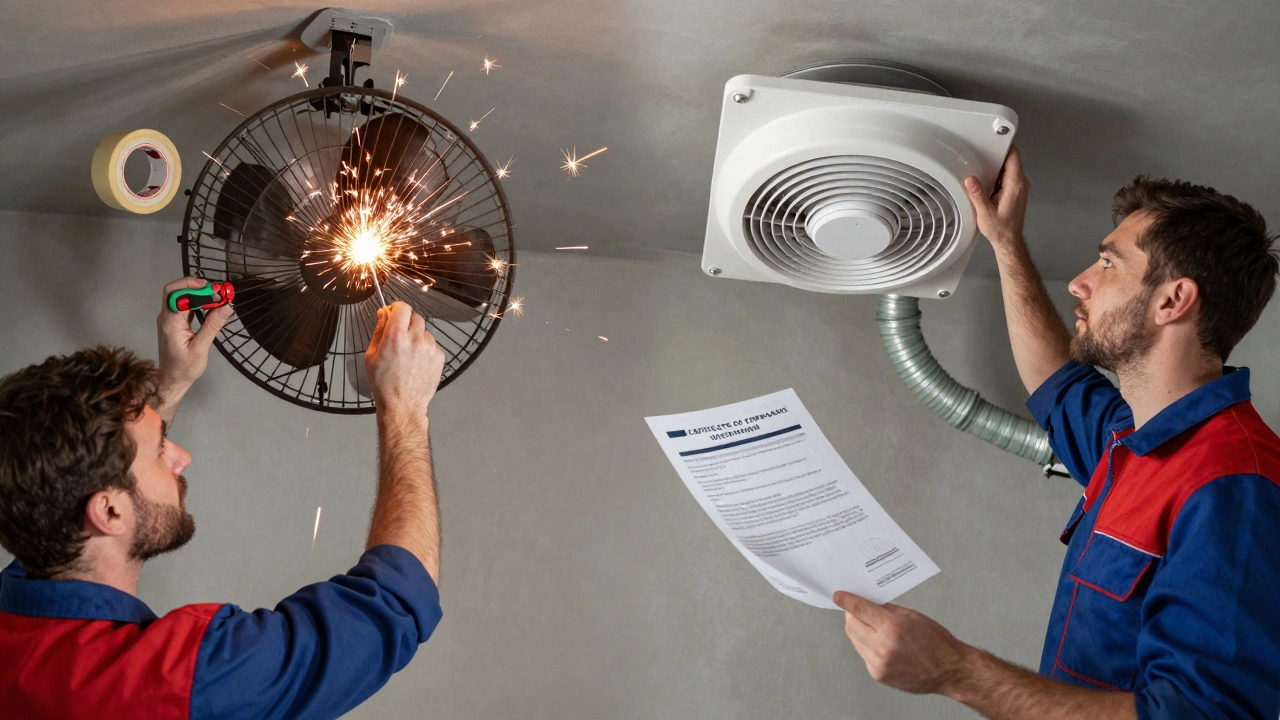
In New Zealand, any electrical work that involves wiring into your home’s main circuit-like replacing an extractor fan-is legally considered restricted work. That means it must be done by a licensed electrician. This isn’t just bureaucracy; it’s about safety. Extractor fans are connected to live circuits, often sharing a switch with lights or heaters. One wrong connection can trip breakers, overload circuits, or worse-start a fire. Most extractor fans run on 240V, the same as your oven or kettle. Even if the fan looks small, the current it draws can be enough to cause serious harm if mishandled. I’ve seen homes where someone tried to swap a fan using a screwdriver and tape, then ended up with a blown fuse box and a damp ceiling because the fan stopped working. That’s not a fix-it’s a waiting room for more expensive damage.When you might get away with DIY
There’s one exception: if your extractor fan is plugged into a standard wall socket, like a portable bathroom fan or a model designed for plug-in use. Those are rare, but they exist. If the fan has a plug and you can unplug it without touching any wires behind the wall, you’re probably fine. Just make sure the new fan is the same voltage and wattage as the old one. But if the fan is wired directly into the ceiling or wall-no plug, just screws holding wires together-you’re in restricted work territory. Even if you’ve rewired a lamp before, that doesn’t count. Household wiring operates at higher currents, and mistakes here can affect your whole house’s electrical system.What an electrician actually does
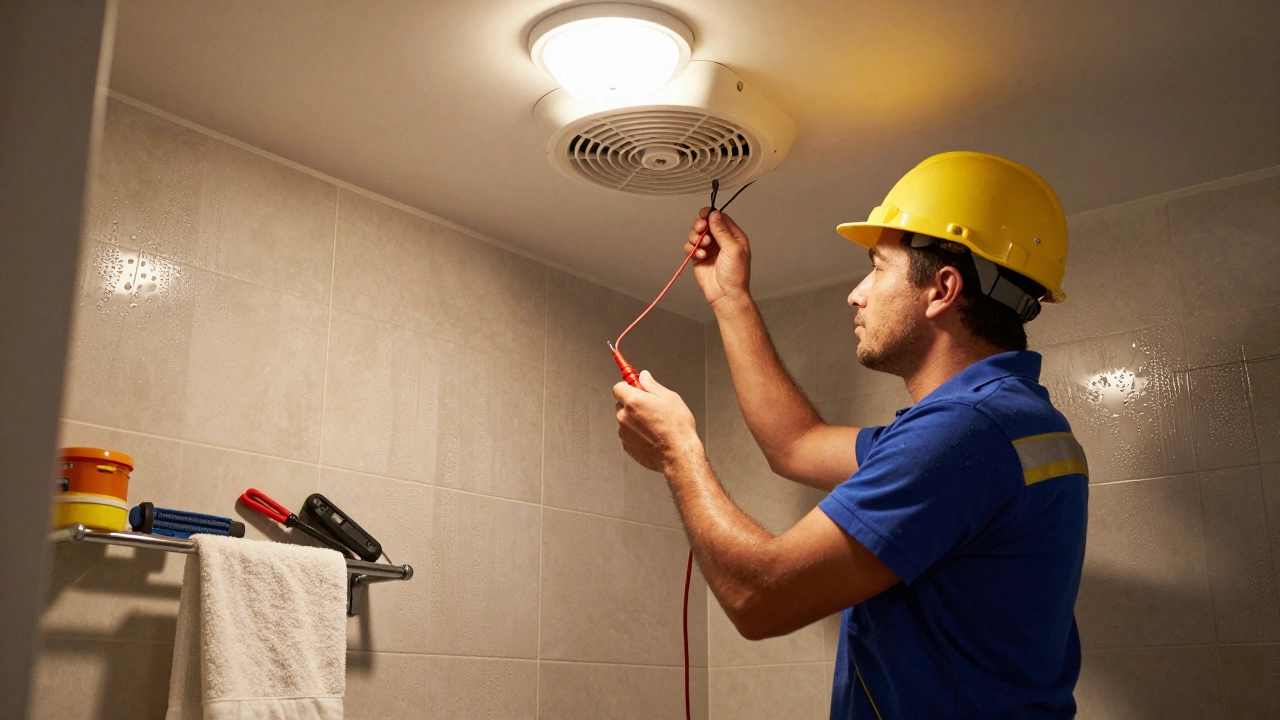
A licensed electrician doesn’t just swap the fan. They check the whole setup:- They test the circuit to make sure it’s not overloaded
- They verify the wiring matches current NZ electrical standards (AS/NZS 3000)
- They ensure the fan is properly earthed
- They confirm the ducting is sealed and vents to the outside-not into the roof cavity
- They install a suitable switch, often with a timer or humidity sensor
Cost vs. risk
A professional extractor fan replacement in New Zealand typically costs between $250 and $450, depending on complexity. That includes the fan, materials, and labour. It might seem steep, but compare it to the cost of:- Water damage from a fan that doesn’t work ($1,000+ in repairs)
- Electrical fire insurance claim (higher premiums, or denied coverage)
- Getting caught by an inspector during a home sale (you’ll have to fix it anyway)
What happens if you skip the electrician?
You might get away with it for years. But here’s what can go wrong:- The fan doesn’t turn on because the neutral wire is swapped
- The circuit breaker trips every time you turn on the bathroom light
- Moisture builds up in the ceiling because the fan isn’t venting properly
- You fail a building inspection when selling your home
- You’re fined by the Electrical Workers Registration Board (EWRB)
How to choose the right electrician
Not all electricians are the same. Look for:- Current EWRB registration (ask for their licence number)
- Experience with extractor fans and bathroom ventilation
- Warranty on labour and parts
- Clear quote before starting work
What to do if you’re unsure
If you’re not sure whether your fan is wired or plugged in, take a photo of the back of the unit. Look for:- Wires connected with wire nuts or terminal blocks → needs an electrician
- A plug on the back, with no screws holding wires → might be DIY
What to look for in a new extractor fan
When replacing, don’t just grab the cheapest one. Match these specs:- CFM (Cubic Feet per Minute): Aim for 15-20 CFM per square metre of bathroom space
- Noise level: Under 40 dB is quiet enough for comfort
- IP rating: At least IPX4 for splash resistance in bathrooms
- Timer or humidity sensor: These automatically run the fan after you leave the room
Final thought
Replacing an extractor fan isn’t like changing a lightbulb. It’s a small job with big consequences if done wrong. In New Zealand, the law is clear: if it’s wired in, it needs a licensed electrician. The cost of hiring one is small compared to the cost of mistakes. Don’t risk your safety, your home, or your wallet. Get it done right the first time.Can I replace an extractor fan myself if I have electrical experience?
Even if you have experience, New Zealand law requires that any fixed extractor fan wired into the home’s electrical system be installed by a licensed electrician. Your experience doesn’t override legal requirements. The Electrical Workers Registration Board (EWRB) enforces this strictly, and unlicensed work can lead to fines, insurance issues, or problems when selling your home.
What’s the difference between a plug-in and a wired extractor fan?
A plug-in extractor fan has a standard 240V plug and can be unplugged without touching any wiring. These are rare in bathrooms but sometimes used in kitchens. A wired fan has no plug-it’s connected directly to the house wiring with terminal blocks or wire nuts. Only plug-in models can legally be replaced by homeowners. If you’re unsure, check behind the fan: if there are screws holding wires, it’s wired.
Do I need a Certificate of Compliance after replacing the fan?
Yes. A Certificate of Compliance (CoC) is legally required for any restricted electrical work in New Zealand, including extractor fan installation. It proves the job meets safety standards and is needed if you sell your home. Always ask your electrician for one before they leave.
Can I use any extractor fan, or does it have to be a specific model?
You must choose a fan that meets New Zealand standards (AS/NZS 3000). It should have an IP rating of at least IPX4 for bathroom use, and be rated for continuous operation. Avoid cheap imported fans without certification-many don’t meet local safety or ventilation requirements. Stick to brands like Vent-Axia, Zephyr, or Breezart that are commonly used and approved in NZ.
How long does it take an electrician to replace an extractor fan?
Most replacements take 1 to 2 hours. If the old fan was poorly installed, or if ducting needs cleaning or rerouting, it could take longer. A good electrician will give you a time estimate before starting. Don’t be surprised if they take extra time to ensure the ducting seals properly-poor sealing is a common cause of moisture damage.