Extractor Fan Repair vs. Replace Calculator
Answer the questions below to get a personalized recommendation.
There is a specific sound every homeowner dreads: the high-pitched whine or the rhythmic clacking of a struggling extractor fan that has suddenly decided it’s had enough. It’s not just annoying; it’s a functional failure. In damp climates like Dunedin, where humidity levels can push moisture into your walls and ceilings, a silent or noisy fan isn’t just an inconvenience-it’s a recipe for mold. But before you rip the unit out of the ceiling and head to the hardware store, you need to answer one critical question: can extractor fans be repaired?
The short answer is yes, often. The long answer depends entirely on what part of the system has failed. Most people assume a broken fan means a dead motor, requiring a full replacement. In reality, about 60% of "broken" fans are suffering from simple issues like clogged filters, loose blades, or blocked ducts-problems you can fix in under an hour with basic tools. This guide breaks down exactly when you should grab a screwdriver and when you should admit defeat.
Diagnosing the Problem Before You Touch Anything
You cannot fix what you haven’t identified. Throwing parts at a problem is expensive and frustrating. Start by observing the behavior. Is the fan making noise but moving little air? Is it completely silent? Does it hum but not spin? These symptoms point to different culprits.
If the fan makes a loud grinding or rattling noise, the issue is usually mechanical friction. This could be dust buildup on the blades causing imbalance, or worn-out bearings in the motor. If the fan is completely dead (no sound, no movement), check the power supply first. Many older units have a separate switch or are wired through a light switch. Ensure the circuit breaker hasn’t tripped. If power is confirmed, the motor capacitor or the motor itself is likely the suspect.
A common misconception is that all extractor fans use motors that burn out quickly. While cheap, unbranded fans do fail often, quality units from brands like Broan, Panasonic, or Envirovent are designed to last 10-15 years. If your unit is newer than five years, it’s almost certainly worth repairing rather than replacing.
The Easy Fixes: Cleaning and Maintenance
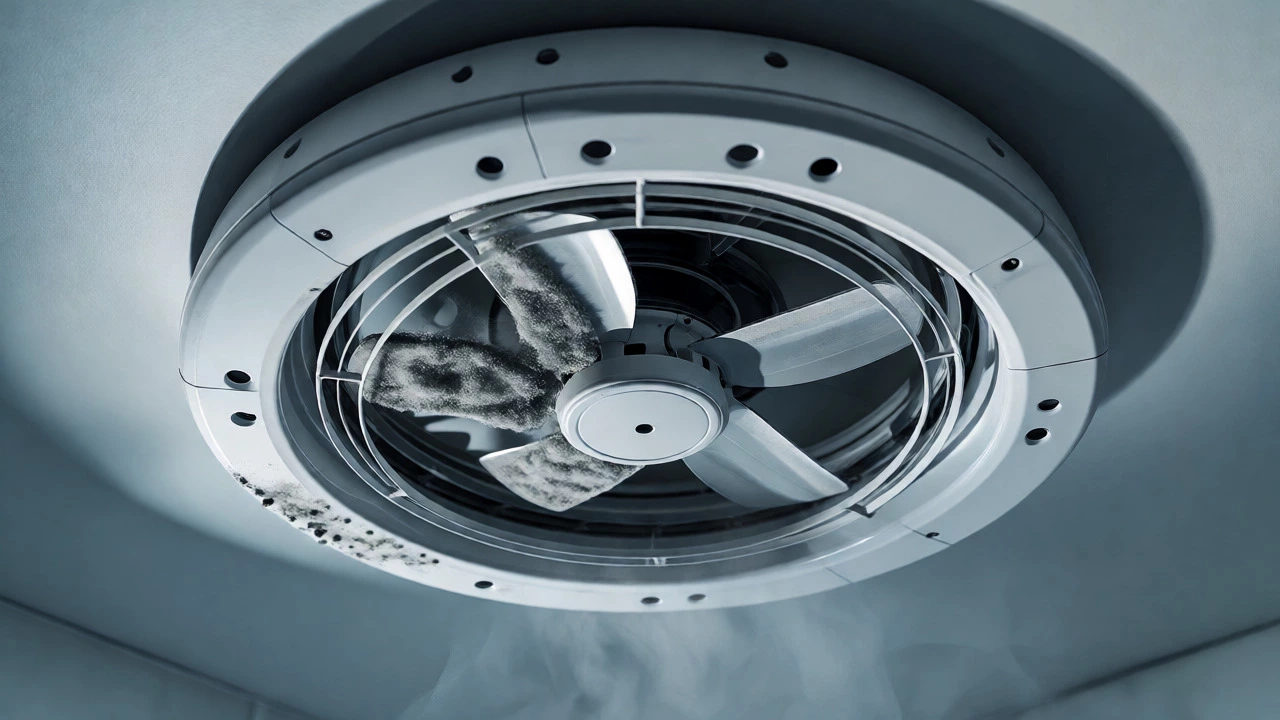
Before you open up the housing, try the simplest solution: cleaning. Over time, grease, dust, and lint accumulate on the fan blades and inside the housing. This buildup weighs down the blades, forcing the motor to work harder. Eventually, the motor overheats and cuts out, or the fan simply stops spinning because the drag is too great.
- Clean the Filter: Most kitchen extractor fans have a metal mesh filter behind the cover. Remove it and soak it in hot soapy water or run it through the dishwasher if it’s stainless steel. For bathroom fans, there may not be a removable filter, so you’ll need to vacuum the visible grille.
- Wipe the Blades: Once the cover is off, use a microfiber cloth and mild detergent to wipe down the fan blades. Do not use harsh chemicals that might warp plastic components.
- Check for Obstructions: Sometimes, a bird’s nest or debris blocks the external vent hood outside your house. If air can’t escape, back pressure builds up, straining the motor.
In my experience working with homes in Otago, I’ve seen numerous cases where a thorough clean restored airflow by 40%. If the fan spins freely after cleaning but still doesn’t move much air, the blockage might be deeper in the ductwork.
Ductwork Issues: The Hidden Culprit
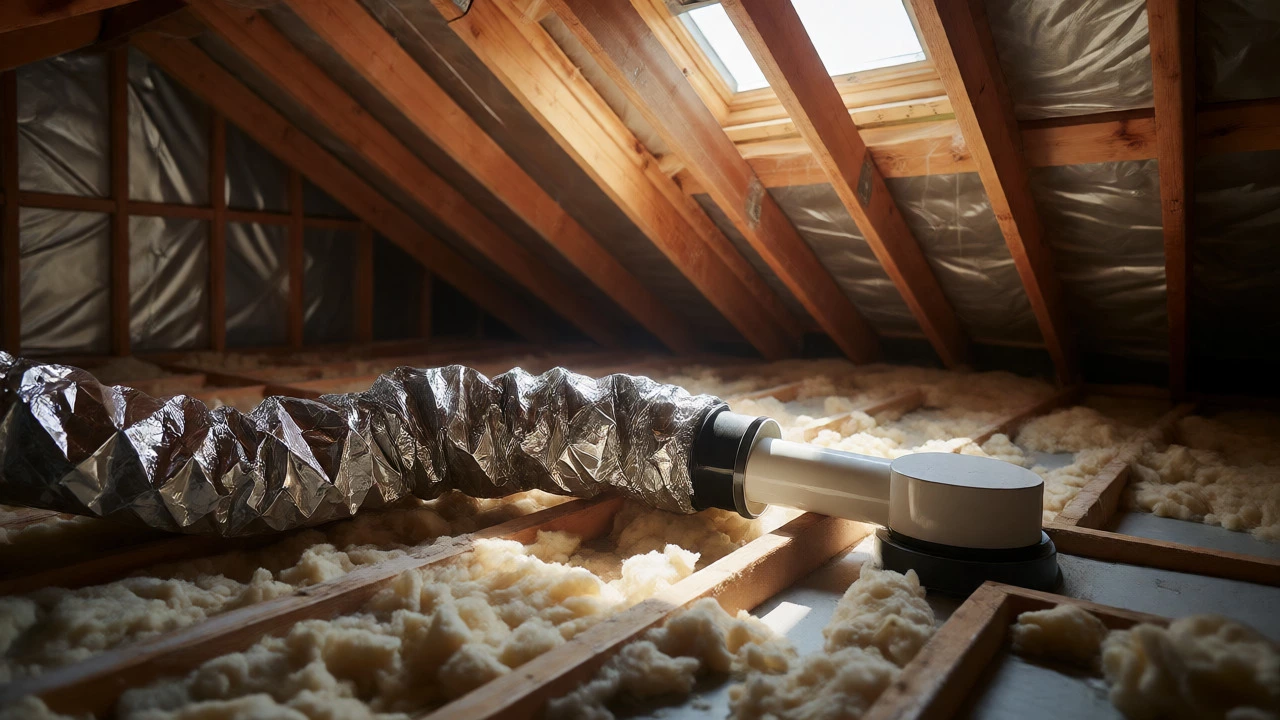
Here is a truth most homeowners ignore: your extractor fan might be fine, but your ducting is killing its performance. Flexible foil ducts, which are popular because they’re easy to install, are prone to kinks, tears, and internal sagging. Every kink creates resistance. If the duct is crushed or disconnected from the wall plate, the fan pushes air into the attic space instead of outside.
To test this, remove the exterior vent cover and turn the fan on. Hold a piece of toilet paper near the opening. If it sticks firmly, the suction is good. If it barely moves, trace the duct back to the source. Look for gaps in the tape seals. Aluminum foil tape-not silver duct tape-is the only thing that holds up against heat and humidity over time. Silver tape loses its adhesive properties within months, leading to leaks.
| Problem | Symptom | Solution |
|---|---|---|
| Kinked Flexible Duct | Loud drone, low airflow | Re-route duct or replace with rigid PVC/metal pipe |
| Disconnected Joint | Dusty air blowing back into room | Re-seal with aluminum foil tape |
| External Blockage | Fan runs but no exhaust outside | Clear bird nests/debris from vent cap |
| Undersized Duct | Fan strains, overheats | Upgrade to correct diameter (usually 100mm-150mm) |
Motor and Capacitor Replacement
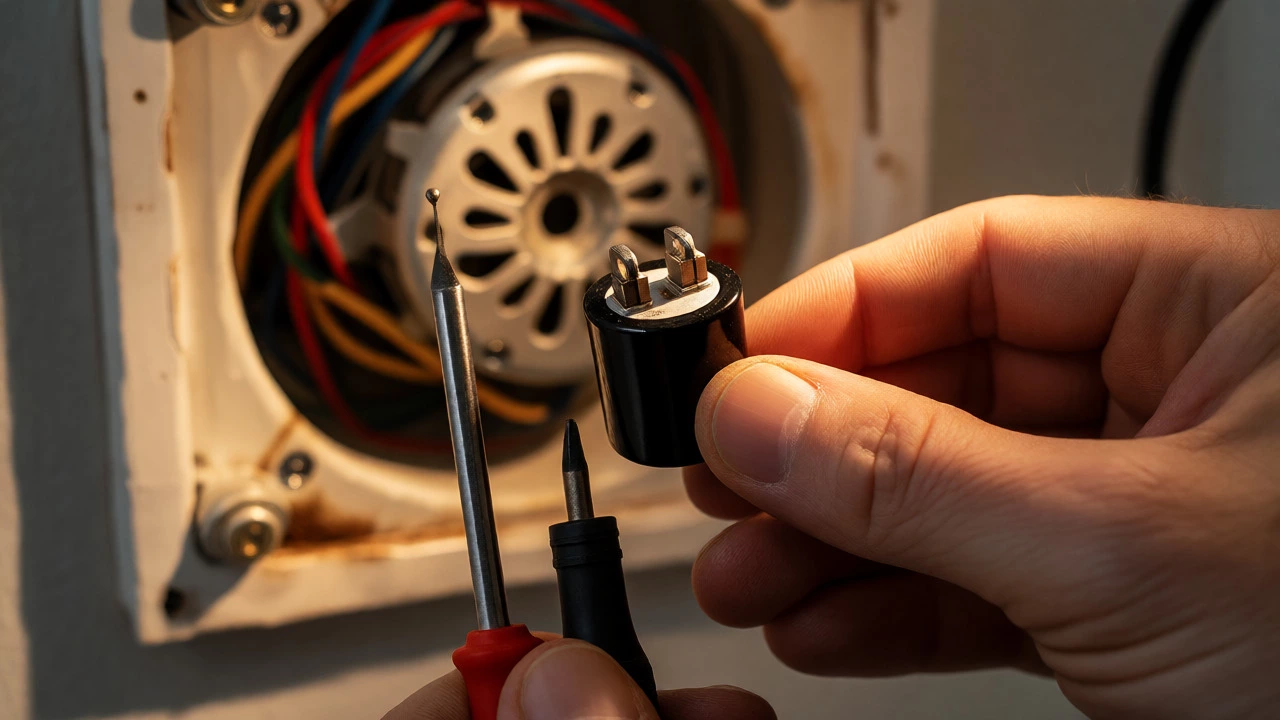
If cleaning and duct checks don’t solve the problem, you’re looking at internal component failure. The two main suspects are the motor and the start capacitor. The capacitor is a small cylindrical device that gives the motor the initial jolt to start spinning. When capacitors fail, the fan often hums loudly but doesn’t rotate. If you give the blades a gentle nudge with a non-conductive stick and it starts spinning, the capacitor is definitely dead.
Replacing a capacitor is cheap-often under $20 NZD-and takes minutes. However, finding the exact match requires care. Check the microfarad (µF) rating printed on the old capacitor. Using a higher or lower value can damage the motor. Always disconnect power before touching any wiring.
What about the motor itself? Can you replace just the motor in an extractor fan? Technically, yes, but practically, it’s rarely cost-effective. Motors are proprietary to specific models. Unless you have a high-end commercial-grade unit, sourcing a replacement motor often costs as much as a new fan. Furthermore, labor costs for disassembly and reassembly add up. If the motor windings are burnt (smell of ozone/burnt plastic), replacement is usually the smarter financial decision.
When to Repair vs. Replace: The Decision Matrix
How do you decide whether to spend time fixing or money buying? Use this heuristic based on age and cost.
Repair if:
- The unit is less than 7 years old.
- The problem is external (ducts, vents) or minor (capacitor, belt).
- The fan is a high-quality brand with available spare parts.
- You enjoy DIY projects and have basic electrical safety knowledge.
Replace if:
- The unit is over 10-12 years old.
- The motor is burnt out.
- The housing is cracked or severely corroded.
- Replacement parts are discontinued or hard to find.
- You want upgraded features like humidity sensors or quiet operation (Sone ratings).
Consider the energy efficiency angle too. Older fans often lack proper insulation and seal poorly, letting heated air escape in winter. Newer models are better insulated and quieter. If your electricity bills are creeping up, a new, efficient model might pay for itself in reduced heating loss over a few years.
Safety First: Electrical Risks
Working with mains voltage is not something to take lightly. Even if you think the power is off, verify it. Use a non-contact voltage tester on the wires before touching them. In bathrooms, zones matter. Fans installed inside the shower area must meet specific IP (Ingress Protection) ratings. If you are unsure about the wiring standards in your home, especially in older houses with outdated earthing, call a licensed electrician. The cost of a service call is far less than the risk of electrocution or fire.
FAQ
Why is my extractor fan making a loud noise?
Loud noises usually indicate mechanical issues. Grinding sounds suggest worn bearings or a failing motor. Rattling often means loose screws, unbalanced blades due to dust buildup, or a disconnected duct vibrating against a joist. Cleaning the blades and tightening mounting screws resolves many noise complaints.
How long do extractor fans typically last?
Most residential extractor fans have a lifespan of 8 to 15 years. High-quality units with sealed bearings can last longer, while cheaper models with open bearings may fail sooner due to dust accumulation. Regular cleaning significantly extends their life.
Can I replace just the motor in my bathroom fan?
While technically possible, it is rarely recommended for standard residential fans. Replacement motors are often specific to the model and may cost nearly as much as a new unit. Additionally, labor costs for accessing and installing the motor often outweigh the savings. Full unit replacement is usually more economical.
What causes an extractor fan to stop working completely?
A complete stop is often due to a tripped circuit breaker, a faulty wall switch, or a blown fuse. If power is reaching the unit, the cause is likely a failed start capacitor or a burnt-out motor winding. Check the breaker panel first before assuming internal failure.
Is it safe to run an extractor fan continuously?
Yes, modern fans are designed for continuous operation, especially those with humidity sensors. However, running a cheap fan 24/7 without regular cleaning can lead to premature motor wear. Ensure the unit is rated for continuous duty if you plan to leave it on constantly.