Microwave Repair Decision Tool
Describe the Issue
Safety First
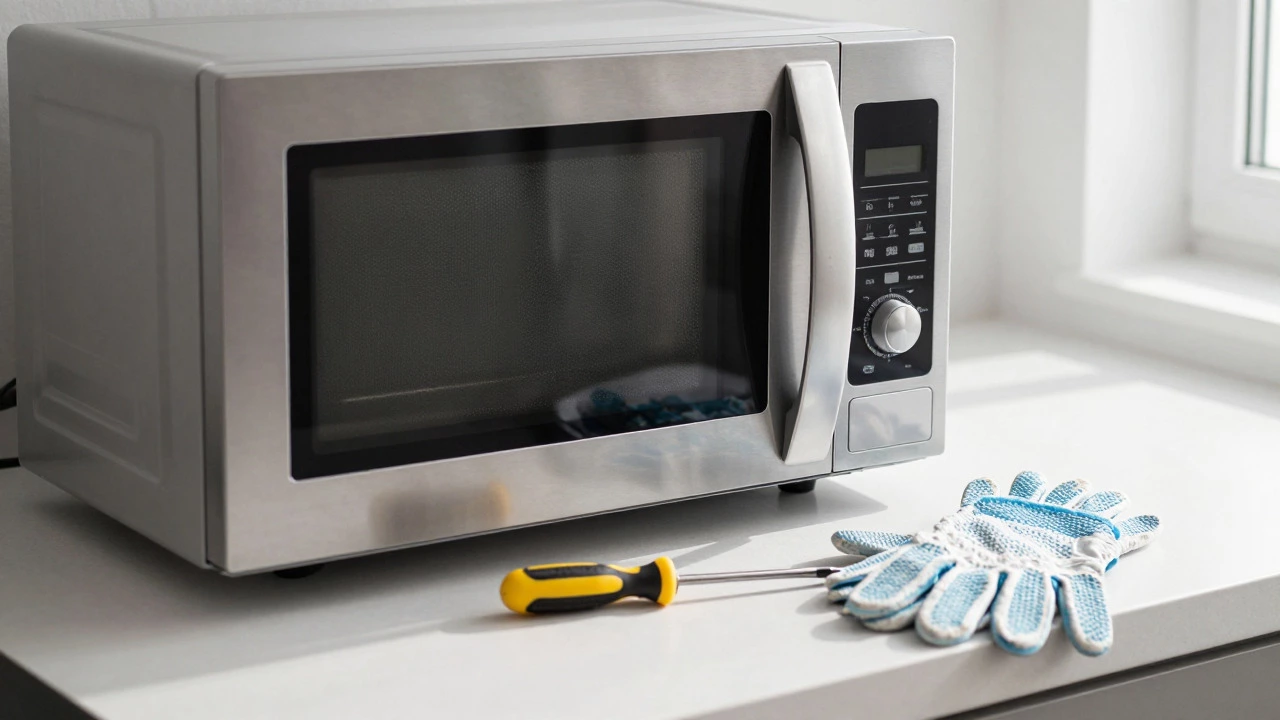
Always unplug the microwave before inspection.
- ⚠ High-voltage capacitors can hold lethal charges even when unplugged.
- ⚠ If you are unsure, call a professional.
There is nothing quite as frustrating as putting in a fresh meal, hitting start, and watching the clock spin while the food stays ice-cold. Or worse, hearing that terrifying *pop* or seeing sparks fly inside the cavity. Your immediate thought is probably: "Can I fix this myself, or do I need to call a professional?" The short answer is complicated. For some issues, like a broken door switch or a faulty turntable motor, the repair is straightforward and cheap. For others, involving the high-voltage components, it can be dangerous and often not worth the cost compared to buying a new unit.
Microwave ovens are unique among kitchen appliances because they combine simple mechanical parts with high-voltage electronics that operate at thousands of volts. This duality makes them partially accessible to DIYers but potentially lethal if you ignore basic safety protocols. Before you grab a screwdriver, you need to understand exactly what is going on inside that metal box and whether your specific problem falls into the "easy fix" category or the "call a pro" zone.
The High-Voltage Reality Check
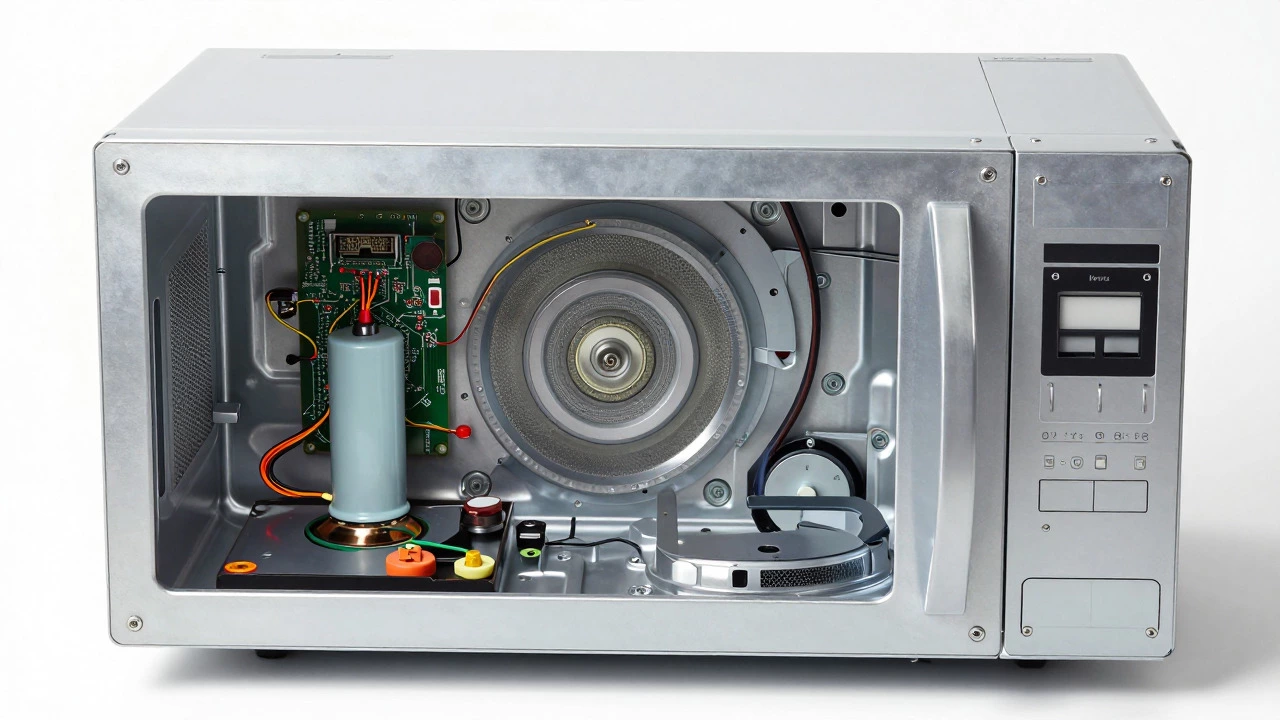
Before discussing specific repairs, we have to talk about the elephant in the room: electricity. Unlike a toaster or a blender, a magnetron is the component in a microwave oven that generates the microwaves used to heat food by converting electrical energy into electromagnetic radiation. It requires extremely high voltage to operate. Even when the microwave is unplugged, the high-voltage capacitor stores a significant electrical charge that can remain lethal for hours or even days after power is disconnected.
This capacitor can hold a charge of over 2,000 volts. If you touch the terminals with a metal tool-or your fingers-while it is charged, you could receive a severe shock or worse. Professional technicians use a discharge tool to safely drain this energy before touching any internal components. If you are not comfortable working with high-voltage circuits, your scope of repair should be limited to external mechanical parts or control panel issues that do not require opening the main chassis.
| Component | Function | Risk Level | DIY Friendly? |
|---|---|---|---|
| Turntable Motor | Rotates the glass plate | Low (120V/240V AC) | Yes |
| Door Switches | Safety interlocks | Low (Low Voltage) | Yes |
| High-Voltage Capacitor | Stores energy for magnetron | Critical (Lethal) | No (Without Training) |
| Magnetron | Generates microwaves | High (Heat/Voltage) | No (Cost Prohibitive) |
| Control Board | User interface logic | Medium (Electronics) | Maybe (Replacement Only) |
Common Issues That Are Easy to Fix
Not every microwave problem requires an electrician's license. Several common failures are mechanical or low-voltage electrical issues that most homeowners can handle with basic tools. These repairs usually involve replacing a part rather than diagnosing complex circuitry.
The Turntable Won't Spin
If your food is cooking unevenly, the issue is likely the turntable motor or the coupling mechanism. In many countertop models, the motor is located under the glass plate. To access it, you simply lift out the glass tray and the roller ring. You will see a plastic hub. Sometimes, the rubber coupler that connects the motor shaft to the hub wears out or slips off. Realigning it takes seconds. If the motor itself is dead, replacement motors are widely available online for $15 to $30. You just need to remove a few screws from the bottom or top cover, unplug the old motor, and plug in the new one.
The Microwave Won't Start
If the display lights up but the microwave won't run when you press start, the culprit is often the door interlock switches are safety mechanisms that prevent the microwave from operating unless the door is fully closed and latched. Microwaves have two or three of these switches. If one fails, the safety system kills the power to the magnetron. Testing these switches requires a multimeter set to continuity mode. You disconnect the wires, probe the terminals, and check if the switch closes when the plunger is pressed. If it doesn't, replace the switch. They are inexpensive, usually costing less than $10 each, and the installation involves removing the outer casing and swapping the connectors.
Broken Control Panel Buttons
Membrane keypads wear out over time. If certain buttons stop responding, you might be able to clean the contacts underneath, but often the entire keypad assembly needs replacement. This is a moderate-level DIY job. You need to remove the front bezel, which is often held in by hidden clips or screws behind the control panel. Once exposed, you unplug the ribbon cable connecting the keypad to the main board and install the new one. Ensure you buy the exact model number match, as layouts vary significantly between manufacturers.
Repairs That Should Be Left to Professionals
While saving money is appealing, some repairs carry risks that outweigh the savings. Attempting to fix high-voltage components without proper training is a gamble with your health.
The Magnetron Has Failed
If the microwave runs (you hear the hum and the fan) but the food doesn't get hot, the magnetron has likely failed. The magnetron is the heart of the microwave. Replacing it is physically possible but economically questionable. A magnetron costs between $50 and $100, plus labor. Most modern microwaves sell for $80 to $150. Unless you have a high-end built-in model, buying a new unit is almost always the smarter financial decision. Furthermore, installing a magnetron requires handling heavy components and ensuring precise alignment within the waveguide.
Sparking Inside the Cavity
Sparks can indicate arcing caused by damaged waveguide covers, carbon buildup, or a failing magnetron. First, inspect the waveguide cover is a small mica or ceramic sheet that protects the interior of the magnetron from food splatter. If it is burnt or missing, replace it. These are cheap and easy to swap. However, if the sparking persists after cleaning and replacing the cover, the issue may be internal arcing within the magnetron or high-voltage diode. This requires opening the chassis and discharging the capacitor-a job best left to certified technicians.
Strange Noises or Burning Smells
A grinding noise often points to a worn turntable motor bearing, which is fixable. But a high-pitched whine or buzzing accompanied by a burning smell suggests the high-voltage transformer is a large component that steps up household voltage to the thousands of volts needed by the magnetron. Transformers are heavy, difficult to remove, and prone to overheating. If yours is failing, the internal windings are likely shorted. Replacement is expensive and labor-intensive. In most cases, this signals the end of the appliance's life.
How to Diagnose Your Microwave Safely
Before ordering parts, follow this diagnostic flow to narrow down the issue. Always unplug the microwave before performing any physical inspection.
- Check the Power Source: Ensure the outlet is working by plugging in another device. Check if the circuit breaker has tripped.
- Inspect the Door Latch: Look for broken plastic tabs on the door latch. If the latch is broken, the door switches won't engage. Replace the latch assembly if damaged.
- Test the Light and Fan: If the light works but the microwave doesn't heat, the issue is likely the magnetron, diode, or capacitor. If neither works, check the thermal fuse or main power supply.
- Listen for Sounds: A humming sound without heating indicates the magnetron isn't firing. A clicking sound usually means a faulty relay on the control board or a bad capacitor.
- Visual Inspection: Look for burnt marks, melted wires, or bulging capacitors. Any sign of physical damage to high-voltage components warrants professional help.
When to Replace Instead of Repair
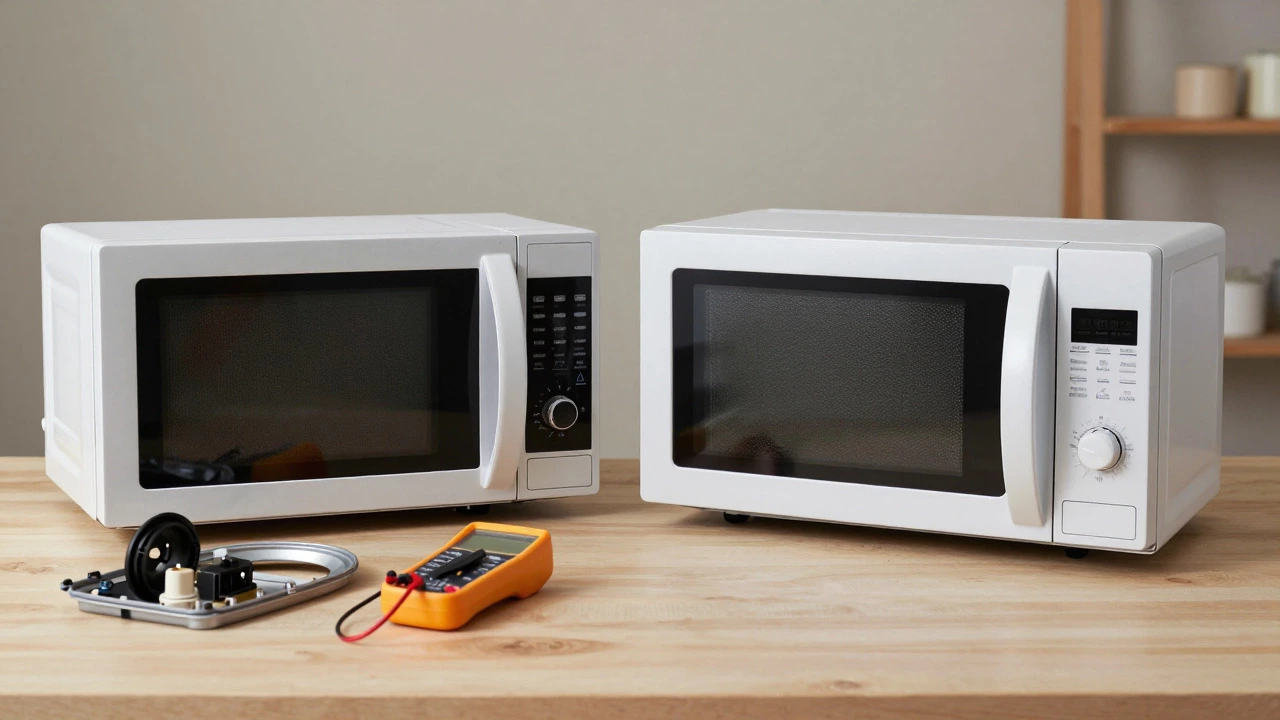
Deciding between repair and replacement comes down to cost, age, and safety. As a general rule, if the repair cost exceeds 50% of the price of a new comparable model, replace it. Most standard countertop microwaves last 7 to 10 years. If your unit is older than that, parts may be harder to find, and efficiency may have degraded.
Built-in or over-the-range microwaves are different. Because they are integrated into your cabinetry, the installation cost of a new unit is high ($100-$300 for professional installation). In these cases, repairing a $500+ unit is often justified, even if the part cost is higher. However, always prioritize safety. If the case is warped, the door seal is compromised, or there is evidence of past electrical fires, retire the appliance immediately.
Troubleshooting Checklist for Common Symptoms
- Won't turn on: Check outlet, thermal fuse, and door switches.
- Heats but no light/fan: Likely a faulty timer or control board relay.
- No heat but light/fan work: Bad magnetron, high-voltage diode, or capacitor.
- Sparks inside: Clean interior, replace waveguide cover, check for metal objects.
- Loud noise: Inspect turntable motor and fan motor bearings.
- Door won't stay closed: Broken latch or misaligned hinges.
Is it safe to open a microwave oven yourself?
It is safe if you strictly follow safety protocols: unplug the unit, wait at least an hour for the capacitor to discharge (or manually discharge it with a insulated screwdriver), and avoid touching high-voltage components. However, for most people, the risk of electric shock makes professional service the safer option for internal repairs.
How much does it cost to repair a microwave?
DIY parts typically cost between $10 and $100 depending on the component. Professional service calls range from $80 to $150 for diagnosis, plus parts and labor. Total professional repairs often exceed $200, which frequently makes replacement more economical for standard models.
Can I replace the magnetron myself?
Technically yes, but it is not recommended for beginners. The magnetron is heavy, connected to high-voltage circuits, and sensitive to installation pressure. Incorrect installation can lead to poor performance or further electrical hazards. Given the cost, replacing the whole unit is usually better.
Why is my microwave sparking?
Sparking is usually caused by food debris on the waveguide cover, a damaged mica sheet, or metal objects inside the cavity. Clean the interior thoroughly and inspect the waveguide cover. If sparking continues, the magnetron or high-voltage diode may be failing, requiring professional attention.
What is the average lifespan of a microwave oven?
The average lifespan is 7 to 10 years with regular use. Heavy daily use can shorten this period. Signs of aging include slower heating times, unusual noises, and frequent minor malfunctions. If your microwave is beyond 10 years, consider replacement for safety and efficiency reasons.