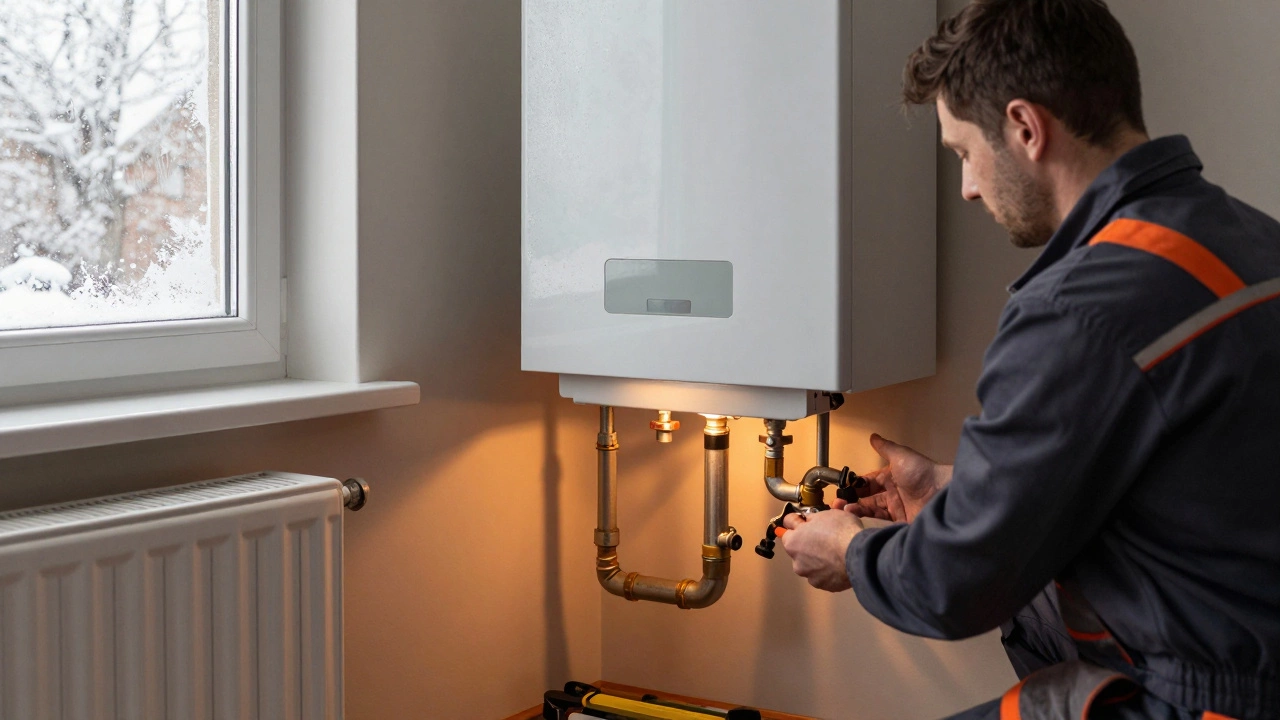
Boiler Replacement Cost Calculator
Boiler Details
Additional Work Needed
Rebates & Savings
Calculate Cost
Estimated Cost
Enter your details above to see your estimated boiler replacement cost.
Estimated Base Cost: $0
Total Estimated Cost: $0
Replacing a boiler isn’t like swapping out a lightbulb. It’s one of the biggest home repairs you’ll ever face - and the cost can make your stomach drop. If your boiler’s on its last legs, you’re probably wondering: are boilers expensive to replace? The short answer? Yes, but not as bad as you think - if you know what to look for.
What You’re Really Paying For
When you hear a quote of $5,000 to replace a boiler, it’s easy to think you’re just buying a new machine. But that price covers more than the unit itself. You’re paying for:
- The boiler unit (brand, efficiency rating, size)
- Removal and disposal of the old one
- Pipe and flue modifications
- Gas line work (if needed)
- Electrical connections
- System flushing and pressure testing
- Warranty and certification
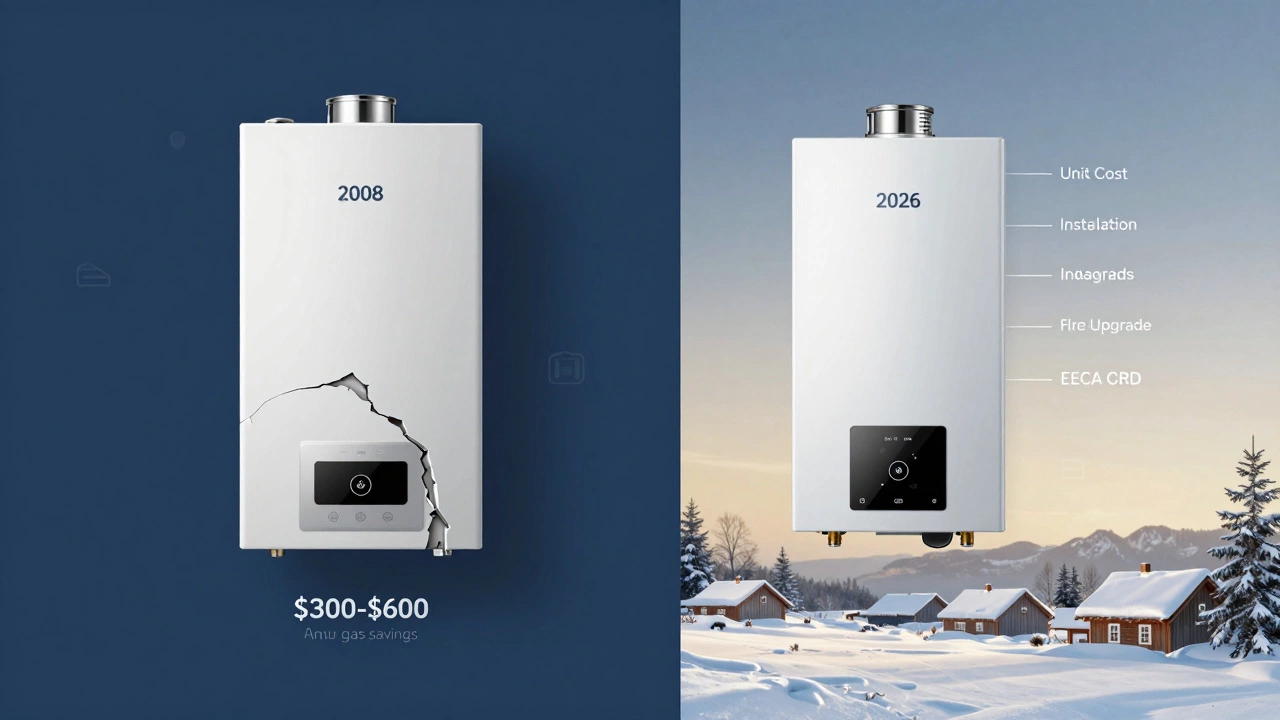
In Dunedin, where winter hits hard and older homes dominate, most boilers are 15-25 years old. That means they’re not just worn out - they’re outdated. A 2008 boiler might be 78% efficient. A new one? 94% or higher. That difference alone can cut your gas bill by $300-$600 a year.
Boiler Types and Their Price Ranges (2026)
Not all boilers are the same. The type you choose makes the biggest difference in cost.
| Boiler Type | Typical Output | Unit Cost (NZD) | Installation Cost (NZD) | Total Estimate (NZD) |
|---|---|---|---|---|
| Combi Boiler | 24-35 kW | $1,800-$3,200 | $1,500-$2,500 | $3,300-$5,700 |
| System Boiler | 24-30 kW | $2,000-$3,500 | $2,000-$3,000 | $4,000-$6,500 |
| Regular (Heat Only) | 24-35 kW | $1,600-$2,800 | $2,500-$4,000 | $4,100-$6,800 |
| Condensing Boiler | All sizes | $2,200-$4,000 | $2,000-$3,500 | $4,200-$7,500 |
Most homes in Dunedin and surrounding areas - especially those with 2-4 bedrooms - do fine with a 24-30 kW combi boiler. It’s compact, efficient, and doesn’t need a hot water tank. That’s why it’s the most common replacement.
System boilers are better if you have multiple bathrooms and want steady hot water pressure. Regular boilers are rare now, but you’ll still see them in older homes with separate tanks. They cost more to install because they need extra space and plumbing.
What Drives the Price Up
Not every boiler replacement is the same. Here’s what can push your quote into the higher range:
- Old pipework: If your pipes are 30+ years old and made of lead or steel, they might need replacing. That’s an extra $800-$2,000.
- Flue relocation: Your new boiler might need a different venting path. If it means cutting through brick or concrete, add $500-$1,500.
- Gas line upgrades: Older homes sometimes have undersized gas lines. Upgrading to 22mm or 28mm can cost $600-$1,200.
- System flush: If your old boiler failed due to sludge, you need a power flush. It’s not optional - it’s $500-$800, and it protects your new boiler.
- High-end brands: Vaillant, Worcester Bosch, and Ideal are reliable. But if you want a premium model with smart controls, you’re looking at $4,500+ for the unit alone.
One homeowner in Port Chalmers had a quote of $7,200 because the installer found their flue was blocked by bird nests and the gas meter was outdated. Fixing both added $1,900. That’s not a rip-off - it’s safety.
When Repair Makes More Sense
Not every broken boiler needs replacing. If your unit is under 10 years old and the problem is simple - a faulty pump, a blown ignition, or a leaky valve - repair is usually the smarter move.
Here’s a quick rule: if the repair cost is less than 40% of a new boiler’s total price, fix it. If it’s more, replace it.
For example:
- Repairing a control board: $450
- Replacing a pump: $380
- Fixing a pressure valve: $220
All of these are under 40% of a $5,000 replacement. But if your boiler keeps breaking down - say, you’ve had three repairs in the last year - you’re throwing money away. Each repair is a band-aid. The next one might be the last.
How to Save Money on a New Boiler
You don’t have to pay full price. Here’s how real people in Otago cut costs:
- Get 3 quotes: One installer might charge $5,800. Another, with the same boiler model, might charge $4,900. Don’t pick the cheapest - pick the one with the clearest breakdown.
- Ask about off-season discounts: April to August is slow for boiler installers. Many drop prices by 10-15% to keep busy.
- Bundle with insulation: If you’re replacing your boiler, you’re probably thinking about heat loss. Ask if the installer offers a package deal with loft or wall insulation. Some companies give $500 off if you do both.
- Check for government support: The Energy Efficiency and Conservation Authority (EECA) sometimes runs rebates for high-efficiency boilers. You can get up to $1,000 back if you install a 94%+ efficient model.
- Don’t rush the warranty: A 10-year warranty on parts and labour is standard now. Skip the 2-year offer. You’ll pay more upfront, but you’ll save hundreds if something fails later.
What Happens If You Delay
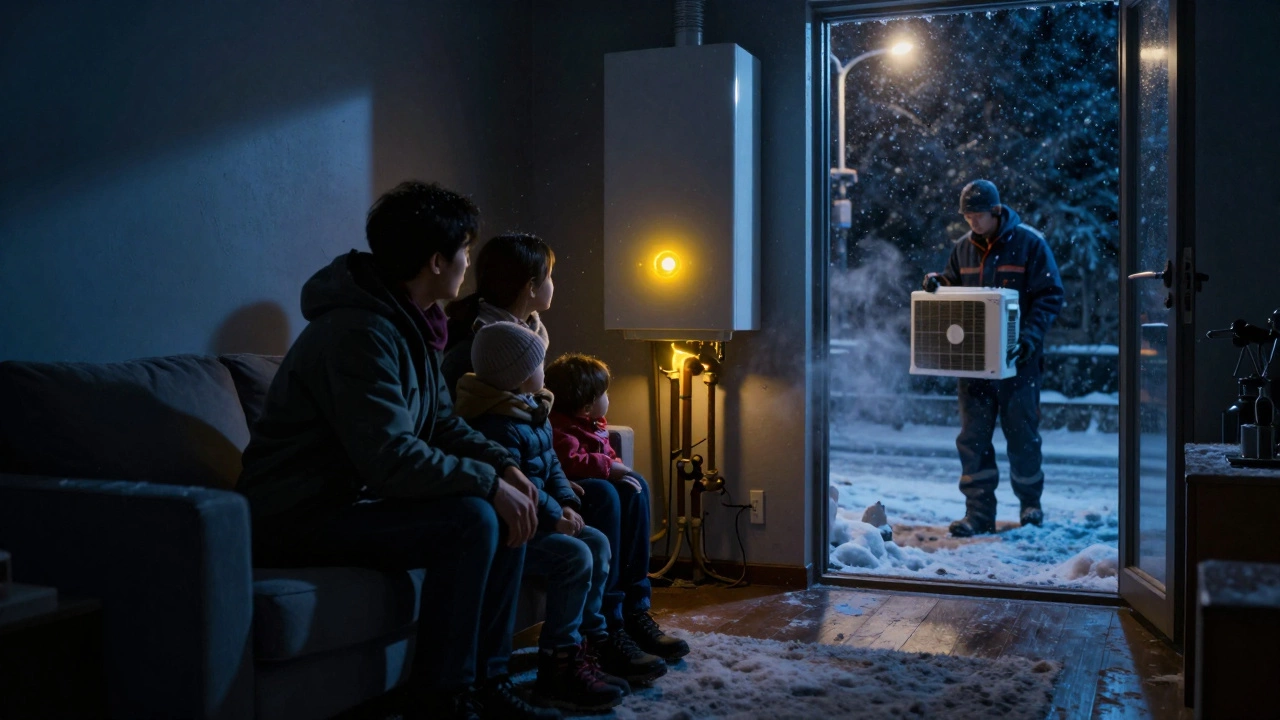
Waiting to replace a failing boiler is risky. In Dunedin’s cold winters, a boiler dying in July isn’t just inconvenient - it’s dangerous. Frozen pipes can burst. No heat means no hot water. And if your boiler is leaking carbon monoxide - which older units sometimes do - you’re risking your family’s health.
One family in Mosgiel waited until their boiler stopped working in a snowstorm. They spent $1,200 on emergency call-out fees, $600 on temporary electric heaters, and $700 on pipe repairs from freezing. Their new boiler cost $5,100. They ended up paying $7,500 instead of $5,100 - just because they delayed.
Replacing your boiler isn’t a luxury. It’s a safety upgrade.
How Long Does a New Boiler Last?
Modern boilers, if properly maintained, last 15-20 years. That’s 5-10 years longer than older models. Annual servicing isn’t optional - it’s required to keep your warranty valid. Most manufacturers will void your warranty if you don’t get your boiler checked every year by a registered gas fitter.
That service costs about $120-$180. It’s a small price to pay to avoid a $5,000 emergency.
Final Thoughts
Are boilers expensive to replace? Yes. But they’re also one of the best investments you can make in your home. A new boiler cuts energy bills, improves comfort, and keeps your family safe. The average replacement in New Zealand costs between $4,000 and $6,500. That’s not cheap - but it’s predictable. What’s not predictable is the cost of waiting.
If your boiler is over 12 years old and showing signs of trouble - strange noises, inconsistent heat, rising bills - don’t wait for it to die in the middle of winter. Get quotes. Compare options. Make the move before it becomes an emergency.
Is it cheaper to repair or replace my boiler?
If the repair costs less than 40% of a new boiler’s total price, repair it. If it’s more, or if you’ve had multiple repairs in the past year, replacement is smarter. A boiler over 12 years old is rarely worth fixing - even if the repair seems cheap.
How long does boiler replacement take?
Most replacements take one full day - 6 to 8 hours. If your home has old plumbing, flue issues, or needs gas line upgrades, it could take two days. Installers usually remove the old unit in the morning and fit the new one by afternoon.
Do I need a gas fitter to replace my boiler?
Yes. By law in New Zealand, only a registered gas fitter can install or replace a gas boiler. Unlicensed work is illegal and dangerous. It also voids your home insurance and the boiler’s warranty. Always ask for their registration number and verify it on the Gas Safe Register website.
Can I get a government rebate for a new boiler?
Yes - through EECA’s Home Energy Efficiency Programme. If you install a 94%+ efficient condensing boiler and meet income or property criteria, you can get up to $1,000 back. Check their website for current offers. Some local councils also offer small grants for low-income households.
What’s the most reliable boiler brand in New Zealand?
Vaillant, Worcester Bosch, and Ideal are the most popular and reliable brands here. They’re designed for colder climates, have strong local support, and are commonly used by NZ installers. Avoid unknown brands - even if they’re cheaper. Spare parts and service support matter more than upfront savings.
Will a new boiler increase my home’s value?
Yes. A modern, efficient boiler is a selling point. Buyers in Dunedin and Otago look for homes with up-to-date heating systems. A new boiler can add $3,000-$7,000 in perceived value, especially if you have the paperwork and warranty.
Next Steps
Start by checking your boiler’s age. Look for a label on the front - it usually shows the manufacture date. If it’s older than 12 years, start getting quotes. Don’t wait for a breakdown.
Call two or three local installers. Ask for a written quote that breaks down the unit cost, labour, and any extras. Compare them side by side. Don’t pick the lowest bid - pick the one that explains everything clearly.
If you’re unsure, ask if they offer a free home assessment. Many do. It’s no obligation - just a chance to see what your system really needs.
Replacing your boiler isn’t about spending money. It’s about stopping the leaks - in your wallet, your comfort, and your safety.