Appliance Repair Cost Calculator
Based on industry standards and the article's guidance, we'll help you determine if repair or replacement is financially wise. Remember: if repair costs exceed 50% of a new appliance's price, replacement is usually recommended.
New appliance cost: $
Estimated repair cost: $
50% threshold: $
- DIY repairs often cause secondary damage (68% of repairs cost more long-term)
- Warranties may be voided by non-certified repairs
- Smart appliances require manufacturer-certified technicians
Ever wonder who shows up when your fridge stops cooling or your oven won’t heat? That’s the appliance technician - the person who keeps your home running when things break down. They’re not just handymen with a toolkit. They’re trained professionals who diagnose, fix, and sometimes replace complex household systems that most people don’t understand. Their job isn’t glamorous, but it’s essential.
What Does an Appliance Technician Actually Do?
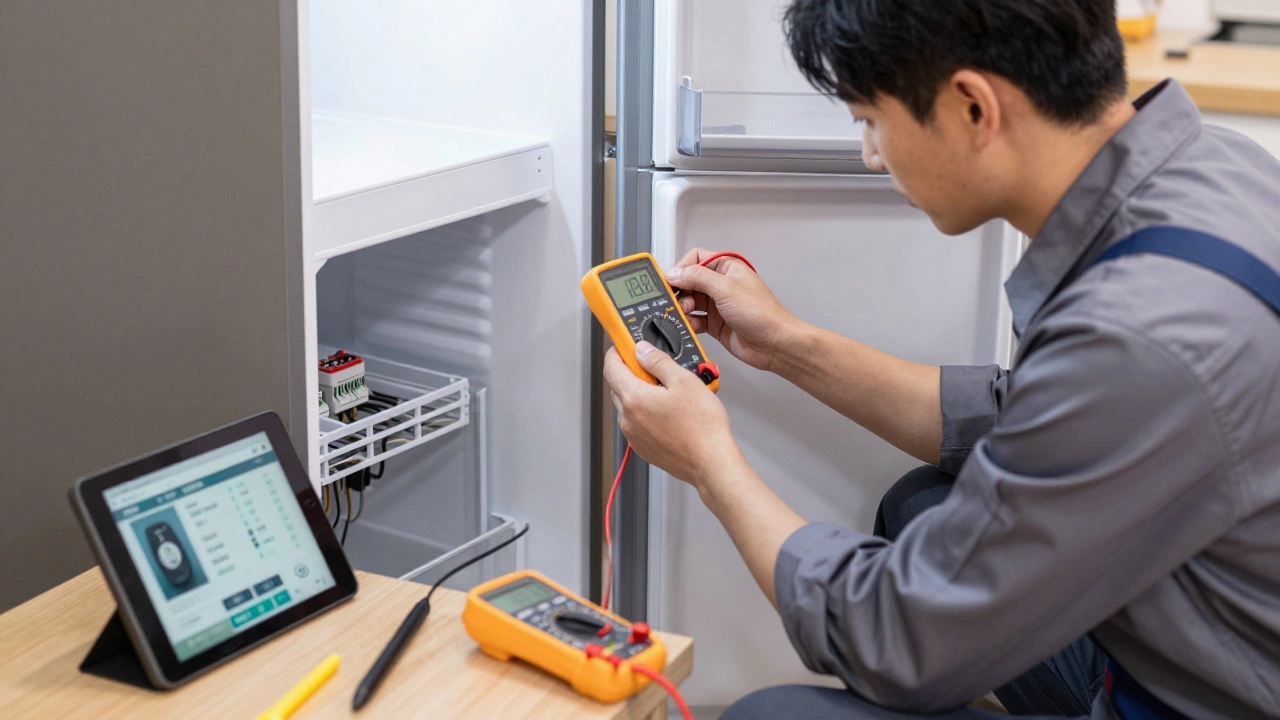
An appliance technician doesn’t just swap out parts. They start by listening. A customer says, "My washer won’t spin," but the real issue might be a broken motor coupling, a clogged drain pump, or a faulty control board. The technician uses diagnostic tools, manuals, and years of experience to narrow it down. They check voltage levels, test continuity with a multimeter, inspect belts and seals, and sometimes even run software diagnostics on modern appliances.
They work on everything from refrigerators and dishwashers to dryers, ovens, and washing machines. Each one has its own set of failure points. A refrigerator might leak because of a worn door gasket, but it could also be a failed evaporator fan or a clogged defrost drain. A dishwasher that won’t drain could be a kinked hose, a faulty pump, or a blocked filter. The technician has to know all of them.
How Are They Trained?
Most appliance technicians don’t go to college for four years. Instead, they complete a vocational program, apprenticeship, or manufacturer-certified training. Brands like Whirlpool, LG, and Samsung offer formal training programs that teach technicians how to service their specific models. These programs cover electrical systems, gas lines, refrigerant handling, and safety codes.
Many technicians also earn certifications from organizations like the Appliance Service Association a national organization that provides training, certification, and industry standards for appliance repair professionals. These certifications prove they can handle high-voltage systems, refrigerants, and gas appliances safely - which is required by law in many states.
Tools of the Trade
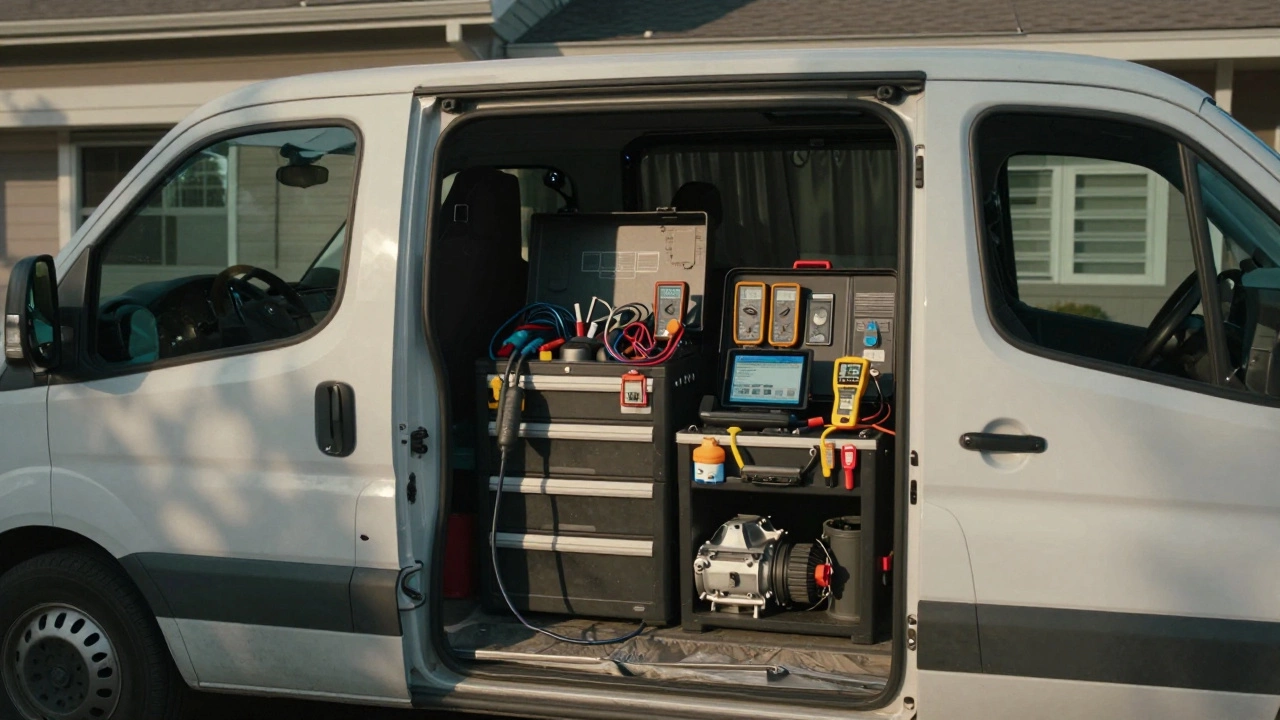
You won’t find them carrying just a screwdriver. A typical appliance technician’s truck is packed with specialized gear:
- Multi-meter for testing electrical circuits
- Thermocouple tester for gas appliances
- Vacuum pump for refrigerant systems
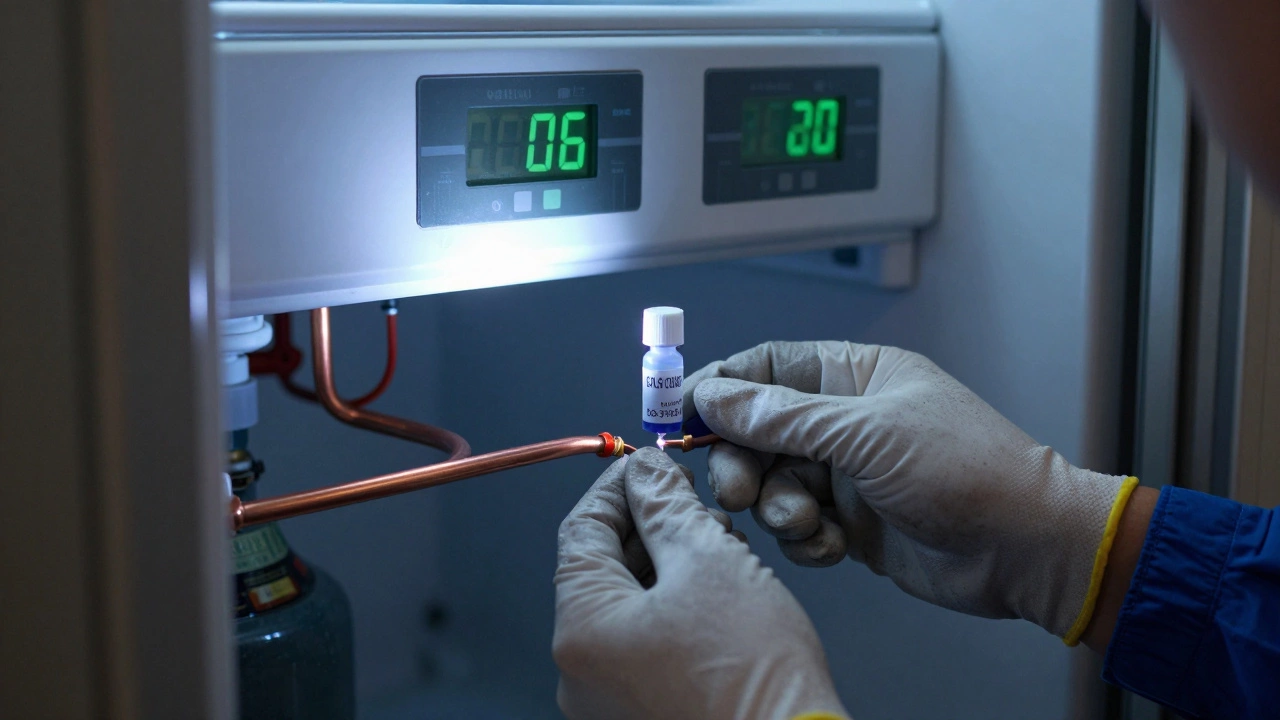
- Leak detection dye and UV light
- Specialized wrenches for gas lines and water connections
- Diagnostic software tablets linked to appliance manufacturers
- Replacement parts inventory - motors, thermostats, door switches, heating elements
They don’t guess. They measure. A faulty thermostat might read 200°F when it should be at 170°F. A motor drawing too much current? That’s a sign of internal wear. They rely on data, not instincts.
Why You Need a Certified Technician
Some people try to fix appliances themselves. YouTube tutorials make it look easy. But here’s the truth: 68% of DIY appliance repairs end up costing more in the long run because they cause secondary damage, according to a 2025 survey by the National Association of Home Builders. A broken water valve might seem like a simple fix, but if it’s not sealed right, it can flood your kitchen and ruin your floor.
Also, many modern appliances have warranties that are voided if opened by non-certified technicians. If you mess up a refrigerator’s sealed refrigerant system, you’re looking at a $1,200 replacement instead of a $150 repair.
Certified technicians also know local codes. Gas lines need to be pressure-tested. Electrical connections must meet NEC standards. They know what permits are required and how to document repairs properly. They’re not just fixing your appliance - they’re keeping your home safe.
What’s Changing in the Field?
Appliance repair is no longer just about replacing belts and fuses. Today’s appliances are smart. Many now connect to Wi-Fi, have touchscreens, and send error codes to manufacturers. Technicians now need to understand software updates, network connectivity, and app-based diagnostics.
Manufacturers are also making repairs harder. Some companies limit access to parts, diagnostic tools, and firmware updates. This is called "right to repair" conflict. But certified technicians still have access through manufacturer programs. Independent repair shops are fighting for fair access - and many customers are starting to demand it.
There’s also a growing need for eco-friendly repairs. Technicians now recover refrigerants instead of releasing them into the atmosphere. They recycle old motors, plastics, and metals. Many companies track their repair success rates and carbon savings - because customers care about sustainability.
When Should You Call One?
You don’t need to wait until everything stops working. Here are signs it’s time to call a technician:
- Your appliance makes strange noises - grinding, buzzing, or knocking
- It’s using more energy than usual (check your utility bill)
- It’s over 8 years old and starting to act up
- Water is pooling around it
- It smells like burning plastic or gas
- The error code on the display doesn’t match any online guide
Don’t wait for a complete breakdown. A small issue today can become a big, expensive problem tomorrow.
How Much Does It Cost?
Service calls usually range from $75 to $150, depending on your location and time of day. Parts are extra. But here’s the thing: a $120 service call that fixes your fridge might save you $800 on a new one. Most reputable technicians offer flat-rate pricing and won’t charge for diagnostics if you hire them to do the repair.
Some companies even offer maintenance plans - like annual checkups for your washer or oven. These can prevent breakdowns and extend the life of your appliances by 3 to 5 years.
What Makes a Great Appliance Technician?
It’s not just about technical skill. The best ones are:
- Clear communicators - they explain what’s wrong in plain language
- Detail-oriented - they don’t miss a loose wire or a tiny leak
- Reliable - they show up on time and finish the job
- Honest - they won’t upsell a $600 part if a $25 fuse will do
- Curious - they keep learning as appliances get smarter
They’re problem solvers who turn frustration into function. And in a world where things are designed to be replaced, not fixed, they’re the ones keeping things running.
Is being an appliance technician a good career?
Yes. The demand for appliance technicians is growing. With older appliances still in use and new smart devices entering homes, repair jobs are increasing. The U.S. Bureau of Labor Statistics projects a 12% job growth for home appliance repair technicians between 2023 and 2033 - faster than average. Entry-level technicians earn around $40,000 a year, and experienced ones with certifications can make $65,000 or more. Many work for themselves or start their own repair businesses.
Can appliance technicians fix all brands?
Most certified technicians are trained on multiple brands - Whirlpool, GE, Samsung, LG, Bosch, and more. But some specialize. For example, a technician might focus on high-end kitchen appliances or gas ranges. If you have a rare or luxury brand, ask if they’ve serviced it before. Many technicians carry manufacturer-specific diagnostic tools and parts catalogs.
Do appliance technicians repair commercial appliances?
Sometimes. Many technicians work only on residential units. But others specialize in commercial repair - like restaurant-grade ovens, walk-in coolers, or industrial washers. These require different training and certifications because they run on higher voltages, larger gas lines, and more complex systems. If you run a business, look for a technician with commercial experience.
How long does a typical repair take?
Most repairs take 1 to 2 hours. Simple fixes - like replacing a door switch or cleaning a drain - can be done in 30 minutes. Complex issues - such as a refrigerant leak in a fridge or a faulty control board in a washer - might take 2 to 4 hours. If parts aren’t on hand, they’ll order them and return for installation. That’s why having a technician with a good inventory matters.
Should I repair or replace my appliance?
There’s no one-size-fits-all answer. A good rule of thumb: if the repair costs more than half the price of a new appliance, it’s time to replace it. But if your appliance is energy-efficient, still under warranty, or you love its features, repairing it makes sense. A technician can help you weigh the cost, lifespan, and energy savings. Some even offer a free evaluation before quoting a repair.