Microwave Repair vs Replacement Calculator
Make Your Decision
Answer these questions to see if repairing your microwave is worth it.
Your Recommendation
Important Safety Note
Replacing a magnetron involves high-voltage components that can hold dangerous electrical charges even when unplugged. Only attempt this repair if you have professional electrical training and proper tools. Your life is worth more than $150.
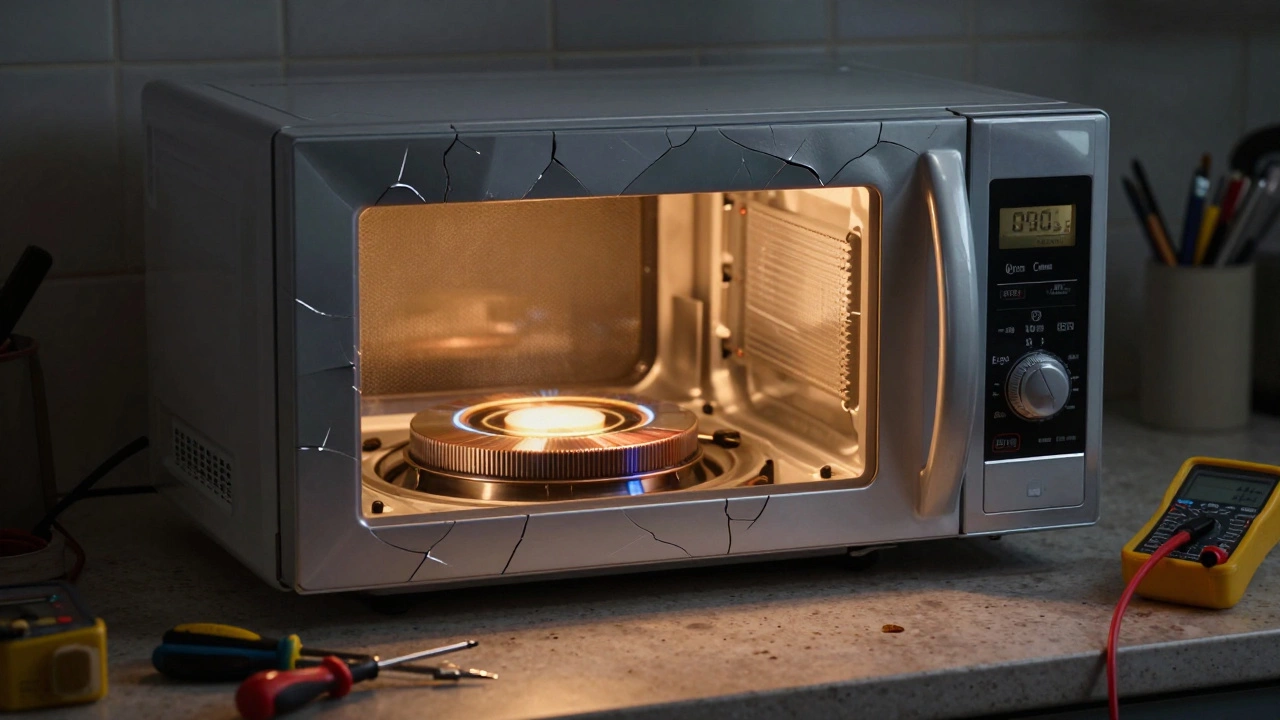
If your microwave heats food slowly or not at all, the magnetron is probably to blame. It’s the part that generates the microwaves - without it, your appliance is just a fancy box with a light and a turntable. But before you toss it out or call a technician, ask yourself: is replacing the magnetron even worth it?
What Does a Magnetron Actually Do?
The magnetron is the heart of your microwave. It takes electricity and turns it into microwave radiation, which vibrates water molecules in your food to create heat. It’s not a delicate part - it’s built to last. Most magnetrons last 5 to 10 years, depending on how often you use the microwave. But when it fails, the symptoms are clear: the microwave turns on, the light works, the turntable spins, but nothing gets hot. That’s not a power issue. That’s a magnetron problem.
How Much Does a Magnetron Cost?
A replacement magnetron for a standard countertop microwave usually runs between $50 and $120. That’s not cheap, but it’s not outrageous either. The real cost comes from labor. If you hire someone to do the job, expect to pay $100 to $180 for the service. That brings the total to $150-$300. And here’s the catch: a new mid-range microwave costs about $150-$250. You’re spending nearly the same amount to fix the old one.
Why Most People Don’t Replace It
Here’s the truth most repair shops won’t tell you: microwave magnetrons are rarely worth replacing. Why? Because they’re not the only thing that wears out. By the time the magnetron dies, other parts are usually close behind. The high-voltage diode, capacitor, or control board may fail next. These parts are just as hard to replace and just as expensive. I’ve seen microwaves that had the magnetron replaced - only to die again six months later because the capacitor was weak.
Plus, modern microwaves are cheaper to replace than they are to fix. A basic model with 1,000 watts, a turntable, and preset buttons costs less than $120 at most big-box stores. Even a slightly better one with inverter tech or sensor cooking is under $200. You get a full warranty, better energy efficiency, and a cleaner interior. Old microwaves? They’re often stained, scratched, and full of food gunk that’s impossible to fully clean.
When Replacing the Magnetron Makes Sense
There are exceptions. If your microwave is a high-end model - say, a built-in over-the-range unit with a hood fan, custom panel, or smart features - then replacing the magnetron might be worth it. Those units can cost $800 or more. Replacing a $70 part to save $700? That’s a no-brainer.
Another case: if your microwave is less than three years old. If it’s still under warranty (even if you didn’t register it), the manufacturer might cover the part. And if you’re handy, you can DIY the repair. YouTube has dozens of step-by-step videos for common models. You’ll need a screwdriver set, a multimeter, and some patience. But if you’ve ever replaced a light switch or a faucet, you can handle this.
One real-world example: a customer in Dunedin brought in a 2019 Panasonic model. The magnetron failed after 5 years. She didn’t want to replace the whole unit because it was built into her kitchen cabinetry. The replacement magnetron cost $65. Labor was $110. Total: $175. A new built-in unit would’ve cost $1,200. She saved $1,000. That’s a win.
What You Should Check First
Before you buy a magnetron, rule out cheaper fixes. A blown thermal fuse, a bad door switch, or a faulty control board can mimic magnetron failure. Most of these cost less than $20 to replace. And they’re easier to test. Here’s a quick checklist:
- Does the microwave turn on at all? If not, check the fuse.
- Does it hum loudly but not heat? That’s usually the magnetron.
- Does the light and turntable work, but food stays cold? Magnetron.
- Does it shut off after 5 seconds? Could be overheating from a blocked vent or failing cooling fan.
Use a multimeter to test the door switches and thermal fuse. You can find the part number on the magnetron’s label (usually on the back or side of the unit). Google it - most manufacturers sell replacement parts directly.
The Hidden Risk: Safety
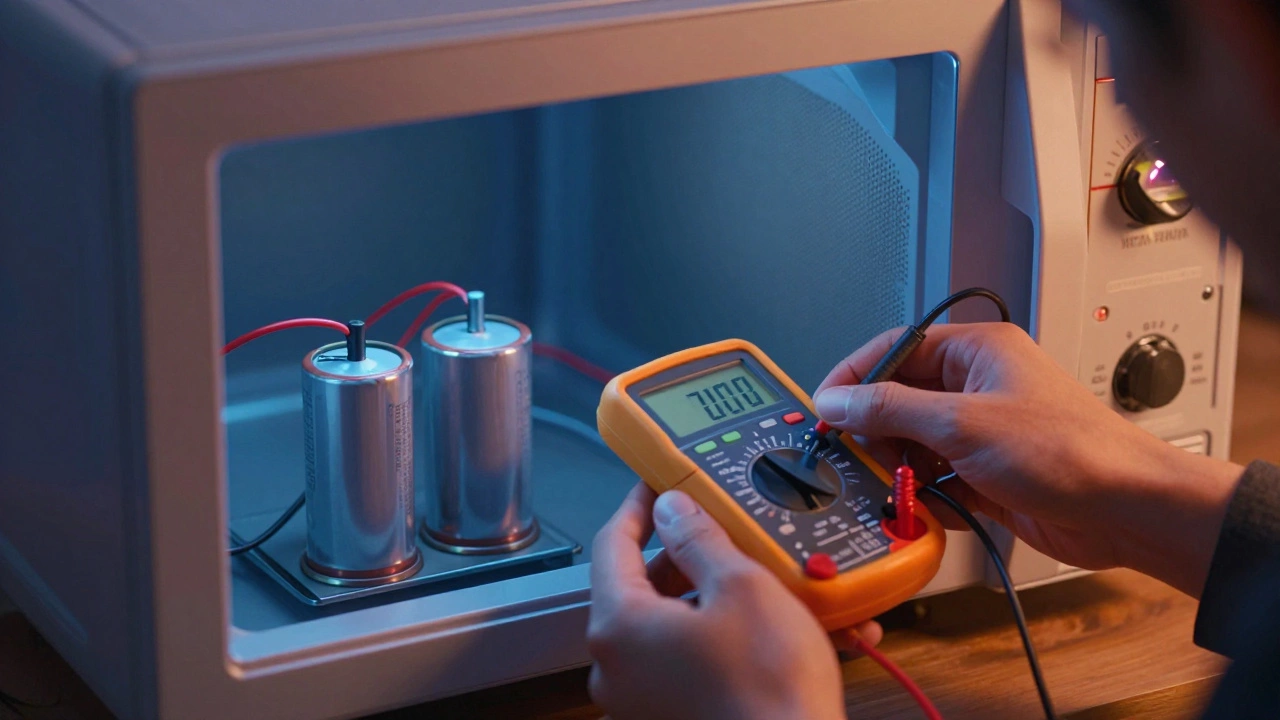
Replacing a magnetron isn’t dangerous if you know what you’re doing - but it’s risky if you don’t. The capacitor stores a lethal charge even after the microwave is unplugged. If you touch the wrong terminal, you could get a shock strong enough to stop your heart. That’s why most professionals avoid these repairs. They’d rather replace the whole unit.
If you’re not comfortable working with high-voltage components, don’t do it. There’s no shame in buying a new microwave. Your life is worth more than $150.
What to Do Instead
Most of the time, the smartest move is to replace the microwave. Here’s why:
- New models use 20-30% less energy than ones from 10 years ago.
- Modern microwaves heat more evenly thanks to inverter technology.
- You get better features: sensor cooking, auto-defrost, child locks.
- No more guessing if the part you bought will fit.
- No risk of electrocution.
And if you’re worried about waste? Many retailers like Noel Leeming and Harvey Norman take old appliances for recycling. Some even give you a $20-$50 discount on a new one when you trade in your old one.
Final Verdict
Is it worth replacing a magnetron? For most people, no. If your microwave is over five years old, it’s probably not worth the risk or cost. But if it’s a high-end built-in, under warranty, or you’re confident with DIY repairs - then go for it. The math is simple: if the repair costs more than half the price of a new unit, walk away. And if you’re unsure, just buy a new one. It’s faster, safer, and often cheaper in the long run.
How long does a microwave magnetron usually last?
A magnetron typically lasts between 5 and 10 years, depending on usage. Heavy daily use - like in a busy household or small business - can wear it out faster. Light use, like reheating coffee once a day, can extend its life beyond 10 years.
Can I replace the magnetron myself?
Yes, if you have basic tools and understand electrical safety. You’ll need a screwdriver set, a multimeter, and the right replacement part. But the capacitor inside the microwave holds a dangerous charge even when unplugged. If you’re not confident, don’t attempt it. A professional repair is safer.
Why does my microwave turn on but not heat?
This is the classic sign of a failed magnetron. Other possible causes include a blown thermal fuse, a faulty door switch, or a bad high-voltage diode. But if the light and turntable work, and the microwave hums, the magnetron is the most likely culprit.
Is it cheaper to repair or replace a microwave?
For most countertop microwaves, replacement is cheaper. A magnetron repair costs $150-$300, while a new microwave costs $120-$250. Built-in or high-end models are the exception - repairing them often saves hundreds.
What should I look for in a new microwave?
Look for at least 1,000 watts of power, inverter technology for even heating, sensor cooking, and a turntable. Also check if it has a child lock and easy-clean interior. Brands like Panasonic, Sharp, and LG offer reliable models under $200. Avoid the cheapest models under $80 - they often lack durability.