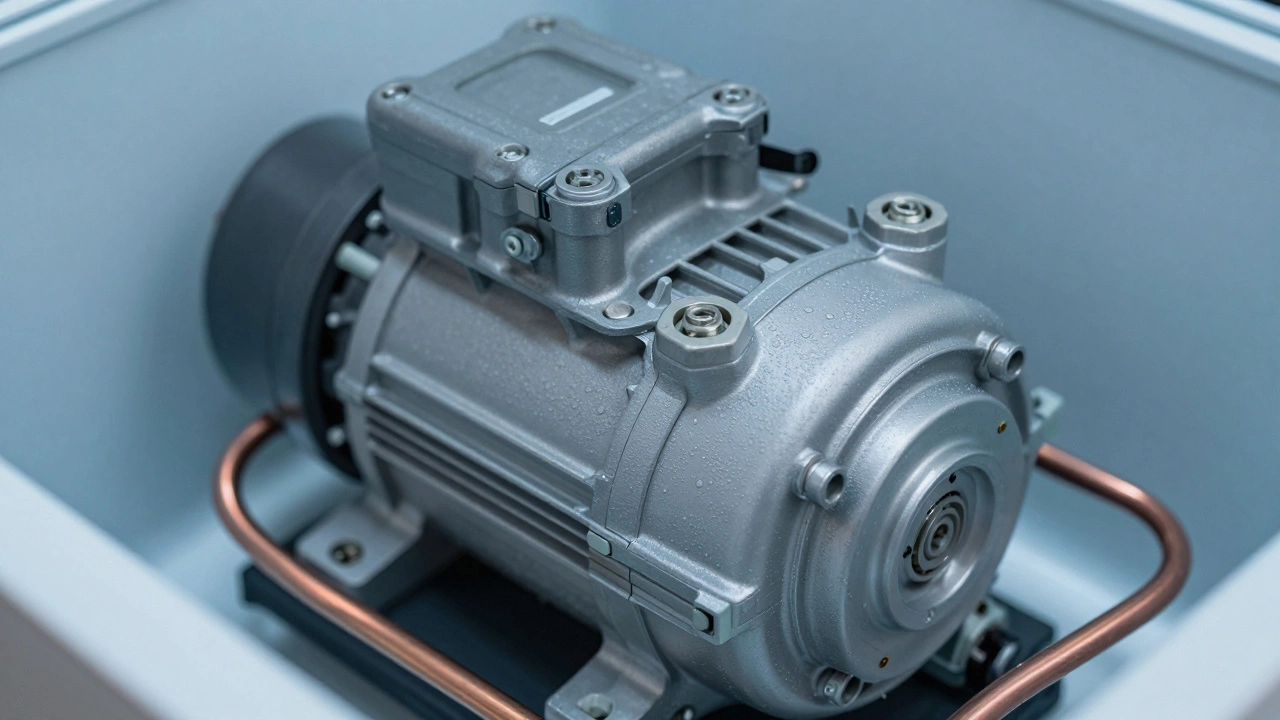
Freezers are built to last. But when they start acting up-making strange noises, not cooling properly, or running nonstop-you start wondering: is the compressor the problem? And more importantly, is it worth replacing a compressor on a freezer?
What does a freezer compressor actually do?
The compressor is the heart of your freezer. It’s a small motor-driven pump that circulates refrigerant through the coils. Without it, the refrigerant can’t absorb heat from inside the unit and dump it outside. Think of it like your heart pumping blood-it keeps everything running. If the compressor fails, your freezer becomes just a cold box with no cooling power.
Most freezer compressors last between 8 and 15 years. If your unit is newer than that, it’s likely still in good shape. But if it’s older, and you’re seeing symptoms like loud clicking, buzzing, or the freezer warming up even when the thermostat is set correctly, the compressor might be on its way out.
Signs your freezer compressor is failing
- Strange noises: Loud humming, knocking, or clicking that doesn’t stop even when the freezer is off
- Warm interior: Food thawing or frost-free zones despite the temperature setting
- Constant running: The compressor never shuts off, even when the freezer is cold
- High electricity bills: A struggling compressor draws more power, often doubling or tripling normal usage
- No cooling at all: The unit feels like a regular closet-no cold air, no frost buildup
These symptoms don’t always mean the compressor is dead. Sometimes it’s a faulty thermostat, a clogged condenser coil, or a refrigerant leak. But if you’ve ruled out those simpler fixes, the compressor is the next likely culprit.
How much does replacing a compressor cost?
Replacing a compressor isn’t cheap. In New Zealand, labor and parts for a freezer compressor replacement typically cost between $450 and $800. That’s assuming the unit is a standard upright or chest freezer with a common model. High-end or older units might cost more because parts are harder to find.
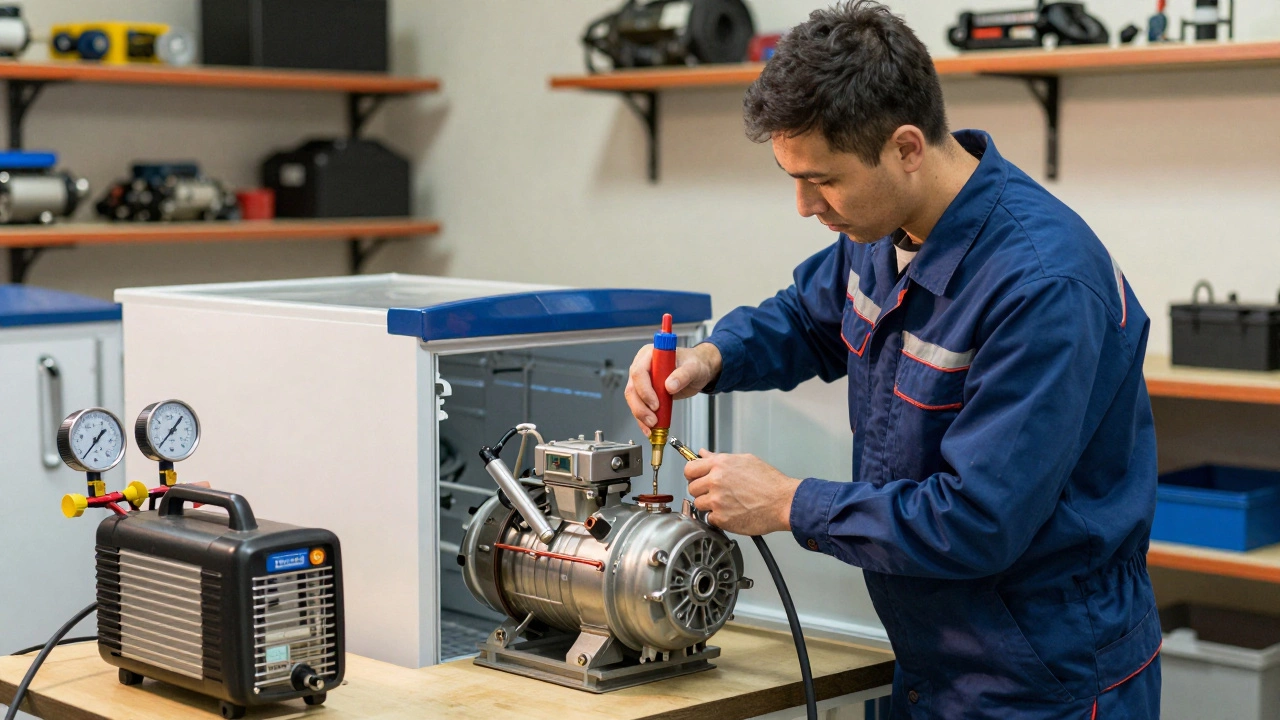
Here’s the catch: the compressor itself only makes up about 30% of that cost. The rest is labor-disassembling the unit, evacuating refrigerant, installing the new compressor, recharging the system, and testing it. Not every technician can do this. You need someone certified to handle refrigerants, which adds to the price.
Compare that to buying a new freezer. A decent 500L upright freezer runs $600-$900. A chest freezer, which is often more energy-efficient, starts at $550. You’re looking at spending nearly the same amount to fix an old unit as you would to buy a new one.
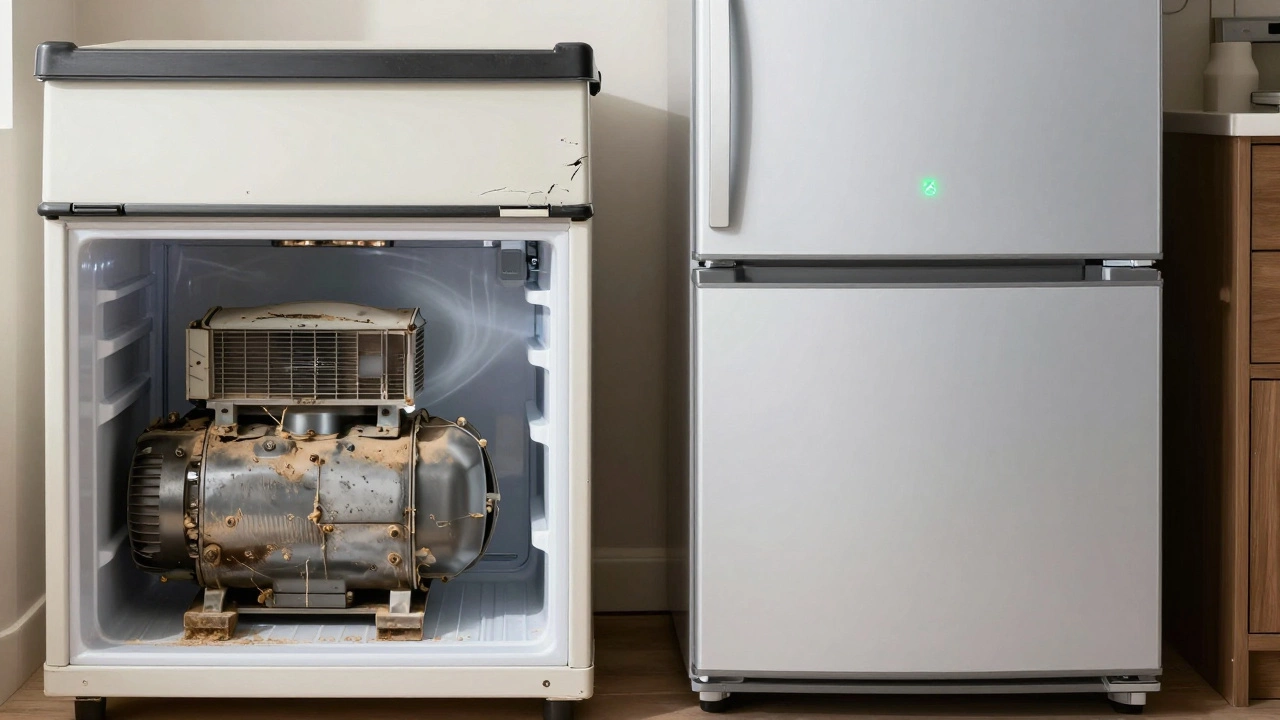
Age matters more than you think
If your freezer is 10 years old or older, replacing the compressor is rarely a smart move. Here’s why:
- Older compressors are less efficient. New models use 30-40% less electricity.
- Parts for older models are scarce. You might get a compressor that’s a refurbished unit, not a brand-new one.
- Other components are wearing out too. The door seal, evaporator fan, or control board could fail next year.
- Refrigerant types have changed. Older freezers used R12 or R134a. Newer ones use R600a, which is more efficient and eco-friendly. Retrofitting isn’t practical.
There’s a real cost to keeping an old freezer running. A 12-year-old freezer might use 800 kWh per year. A new Energy Star-rated model uses around 450 kWh. At $0.30 per kWh in Dunedin, that’s $240 saved per year. In just two years, you’ve paid off a new freezer-without lifting a tool.
When replacement might make sense
There are a few exceptions. Replacing a compressor might be worth it if:
- Your freezer is a high-end model (like a Sub-Zero or Liebherr) that cost over $2,000 new
- You have custom cabinetry or a built-in unit where replacing the entire appliance is a major renovation
- You’re emotionally attached to the unit-for example, it’s been in your family for decades and holds your grandmother’s preserves
Even then, get a second opinion. Ask the technician to show you the old compressor and explain why it failed. If they say “it just wore out,” that’s normal. If they say “it’s a design flaw” or “this model has a known issue,” walk away. That’s a sign the unit has systemic problems.
What to do instead
Instead of replacing the compressor, consider these steps:
- Check the door seal. A cracked or loose seal is the #1 reason freezers run inefficiently. Press a dollar bill in the door- if it slips out easily, replace the gasket. It costs $30 and takes 20 minutes.
- Clean the condenser coils. Dust buildup makes the compressor work harder. Unplug the unit, pull it out, and vacuum the coils at the back or bottom. Do this twice a year.
- Test the thermostat. A faulty thermostat can trick the compressor into running nonstop. A replacement costs $40 and is easy to swap.
- Check for refrigerant leaks. If the system is low on refrigerant, a leak is the real issue-not the compressor. Fixing the leak and recharging costs $150-$250, which is far cheaper than a compressor swap.
If none of those fix the problem, and your freezer is under 8 years old, then replacing the compressor might be worth it. If it’s older? Buy new.
The bottom line
Replacing a compressor on a freezer is technically possible. But in 9 out of 10 cases, it’s not worth it. You’re spending hundreds of dollars to extend the life of a device that’s already used up most of its energy-saving potential. New freezers are quieter, colder, and cheaper to run. They come with warranties. They don’t need you to babysit them.
Don’t fall for the myth that “repairing is greener.” If your freezer is over 10 years old, the environmental cost of running it outweighs the impact of buying a new one. A modern freezer saves more energy over its lifetime than the carbon footprint of manufacturing it.
So if your freezer is struggling, don’t just ask: is it worth replacing a compressor on a freezer? Ask: is it worth keeping an old, inefficient, unreliable machine around? Chances are, the answer is no.
How long does a freezer compressor typically last?
A freezer compressor usually lasts between 8 and 15 years, depending on usage, maintenance, and brand quality. Units that run constantly due to poor insulation or frequent door openings wear out faster. Regular cleaning of condenser coils and checking door seals can extend compressor life by 2-3 years.
Can I replace a freezer compressor myself?
No, not legally or safely. Replacing a compressor requires handling refrigerant, which is regulated under the Ozone Protection and Synthetic Greenhouse Gas Management Regulations. Only certified technicians can legally recover, recycle, or recharge refrigerant. Attempting this yourself risks environmental harm, system damage, or personal injury from high-pressure gas or electrical components.
Why is replacing a compressor so expensive?
The cost comes from labor, not just the part. The technician must unplug and move the freezer, disconnect refrigerant lines, evacuate the system using a vacuum pump, install the new compressor, recharge it with precise refrigerant amounts, and test for leaks and performance. This takes 3-5 hours of skilled work. Parts alone cost $150-$300, but labor pushes the total to $450-$800.
Is it better to repair or replace a 12-year-old freezer?
Replace it. A 12-year-old freezer uses 30-50% more energy than a new model. Even if the compressor replacement works, other parts-like the evaporator fan or control board-are likely near failure. A new freezer pays for itself in energy savings within 1-2 years and comes with a 1-2 year warranty. You’ll also get better temperature stability and quieter operation.
Do all freezers use the same type of compressor?
No. Freezers use different compressor types depending on size, design, and age. Upright freezers often use hermetic compressors, while chest freezers may use semi-hermetic or inverter-driven models. Older units (pre-2010) used R134a refrigerant, while newer ones use R600a. You can’t swap compressors between models-even if they look similar. The refrigerant type, electrical connections, and mounting points must match exactly.