Water Heater: Repair or Replace Calculator
Quick Summary: The Bottom Line
- Standard Lifespan: Most tanks last 8-12 years; 20 years is an outlier.
- The Rule of Thumb: If the repair cost exceeds 50% of a new unit, replace it.
- Risk Factor: Old tanks have thinning walls, making a catastrophic burst more likely.
- Efficiency: New models can save you 10-20% on monthly energy bills.
The Reality of Water Heater Lifespans
First, let's be real: if your unit is still running after 20 years, you've basically won the lottery. Water Heaters are appliances designed to heat and store water using either electricity or gas, typically featuring an inner steel tank coated with glass lining. Most industry standards and manufacturers suggest a lifespan of 8 to 12 years for conventional tanks. When you hit the 20-year mark, the structural integrity of the steel is usually compromised.
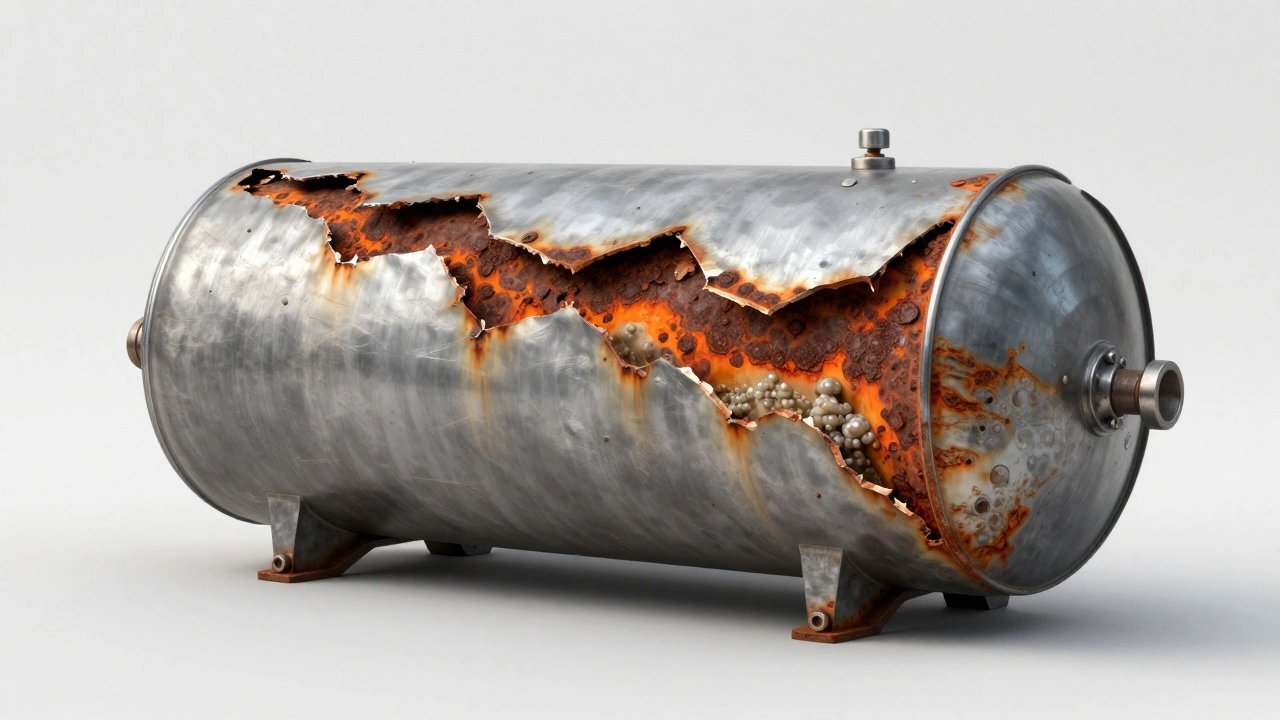
The main enemy here is Galvanic Corrosion, which is an electrochemical process where the metal tank reacts with minerals in the water, causing the steel to eat away from the inside out. Even if you've been diligent with maintenance, the metal has a finite amount of strength. After two decades, the walls of the tank are often thin as a soda can in some spots.
When Fixing Is Actually a Bad Idea
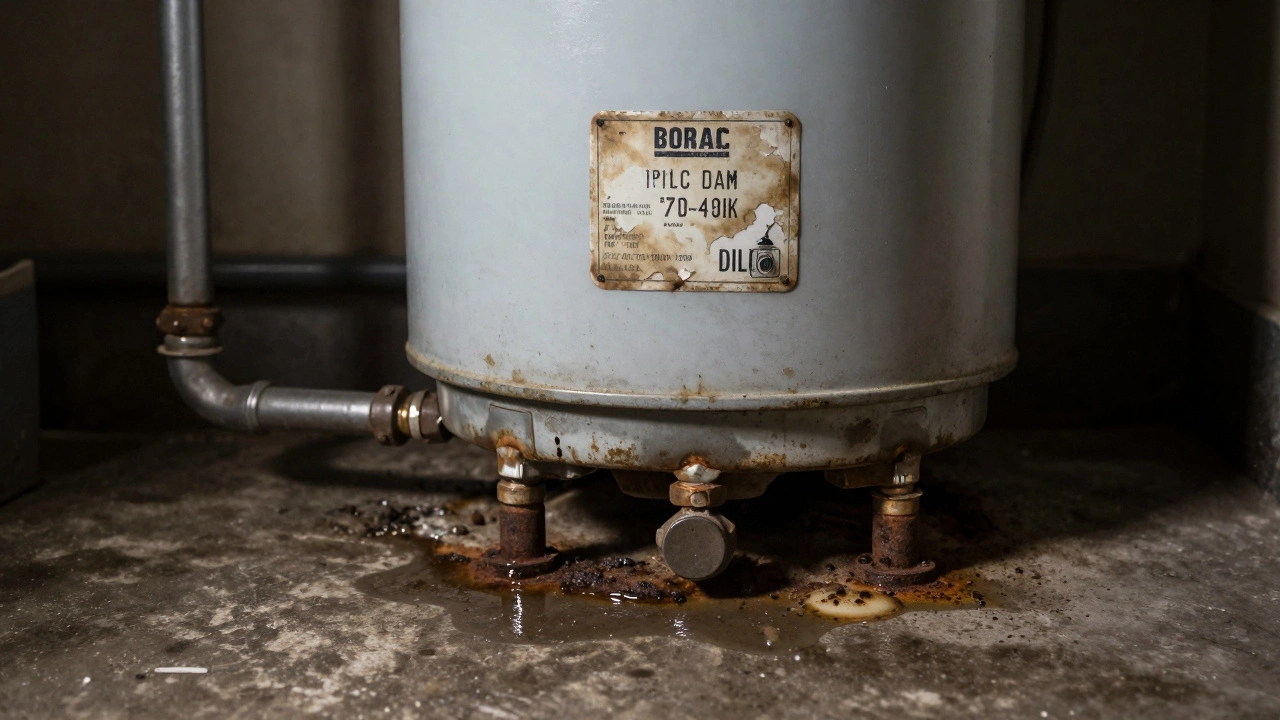
If you're seeing water pooling around the base of the tank, stop right there. A leak from the bottom of the cylinder is a death sentence. You can't "patch" a tank wall. Some people try to use epoxy or sealant, but the pressure inside the tank will eventually push right through those patches. Replacing a Anode Rod (the sacrificial rod that prevents rust) is great at year 5, but at year 20, it's like putting a band-aid on a crumbling dam.
Consider the cost of water heater repair compared to the risk of a flood. A burst tank can dump 40 to 80 gallons of water into your home in minutes. If you're paying $300 for a part and the tank bursts three weeks later, you haven't saved money-you've just paid for the privilege of having your basement flooded.
The "Maybe" Pile: Small Repairs That Might Work
Is every single problem a reason to buy a new one? Not necessarily. If the tank itself is bone-dry and the shell is solid, some external components are worth replacing. For example, if you have an electric heater and a Heating Element (the resistive coil that heats the water) has burnt out, replacing it is relatively cheap and fast. If the Thermostat is malfunctioning, causing your water to be lukewarm, that's a simple swap.
| Problem | Fix Cost (Est.) | Risk Level | Verdict |
|---|---|---|---|
| Tank Leaking from Bottom | N/A | High | Replace Immediately |
| Burned Out Element | $150 - $300 | Low | Worth it (if tank is dry) |
| Faulty Thermostat | $100 - $200 | Low | Worth it |
| Gas Pilot Won't Stay Lit | $150 - $400 | Medium | Case-by-case |
| Heavy Sediment Build-up | $150 (Flush) | Low | Try flushing first |
Efficiency: The Hidden Cost of Keeping the Old Tank
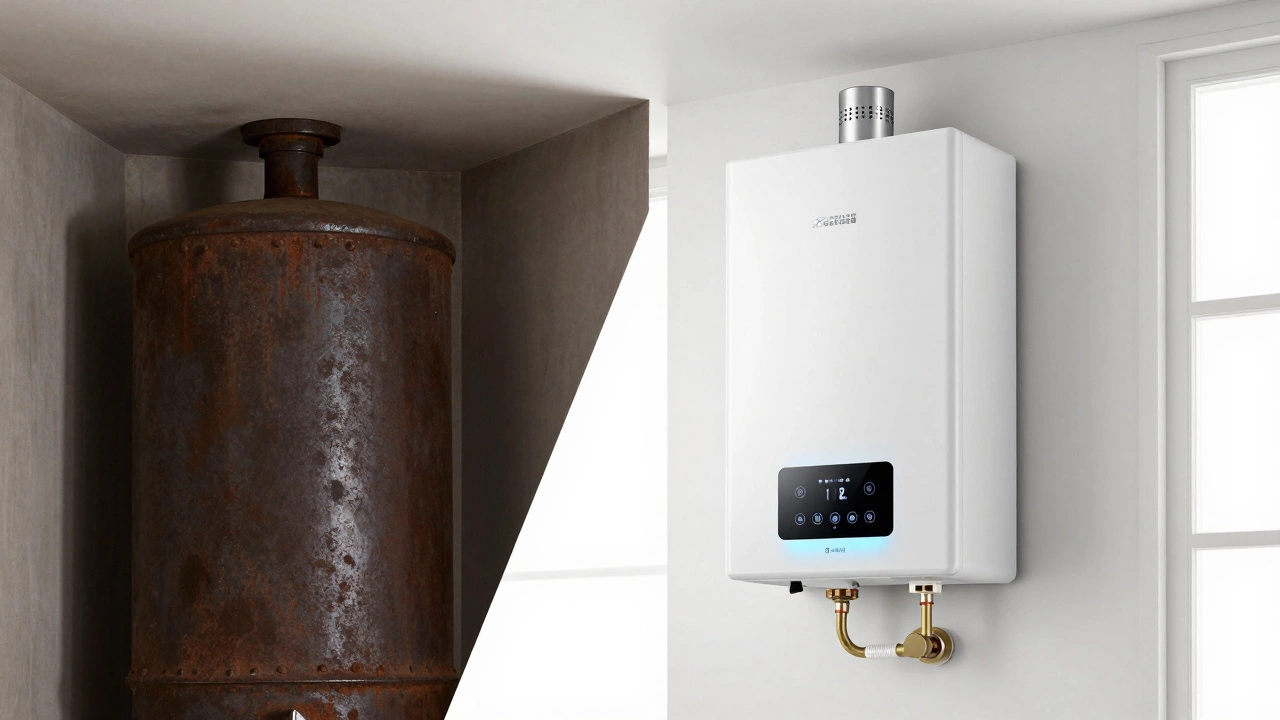
Beyond the risk of leaks, there's the money you're losing every month. Technology has moved on. A unit from 2006 doesn't have the same insulation quality as a 2026 model. Modern tanks use high-density polyurethane foam that keeps water hotter for longer, meaning your heater kicks on less often.
If you're tired of high utility bills, switching to a Tankless Water Heater is a game-changer. These are on-demand systems that heat water as it flows through a heat exchanger, eliminating the need for a storage tank. While the upfront cost is higher, you save significantly on "standby heat loss"-the energy wasted keeping 50 gallons of water hot all night while you sleep.
Signs Your Old Unit Is About to Give Up
If you're still on the fence, look for these red flags. If you see more than two of these, stop spending money on repairs and start shopping for a new unit:
- Rusty Water: If the water coming out of your taps looks like tea, the inside of your tank is corroding. The lining has failed.
- Strange Noises: Popping or rumbling sounds often mean there's a thick layer of sediment (calcium and minerals) at the bottom. This forces the heater to overheat the metal to get through the sludge, which weakens the tank.
- Slow Recovery: Does it take forever to get hot water back after someone takes a shower? This is usually a sign of sediment build-up or a failing element.
- Temperature Fluctuations: If your shower goes from boiling to freezing, the thermostat or the dip tube is likely shot.
The Financial Calculation: The 50% Rule
Professionals often use the "50% Rule." If the cost of the repair is more than half the price of a new, comparable unit, you throw it away. For a standard 50-gallon tank, a professional installation might cost between $1,200 and $2,000 depending on your area. If a technician tells you it'll cost $700 to fix a gas valve and a thermocouple on a 20-year-old machine, you're spending nearly 40-50% of the cost of a brand-new, warranted system. That's a bad bet.
Think about the warranty. A new unit usually comes with a 6-to-12 year warranty on the tank. A repair on an old unit comes with... nothing. You're gambling that the rest of the old machine will hold up.
Can I just flush the tank to make it last longer?
Flushing the sediment out of the bottom of the tank is a great maintenance habit. However, if the tank is 20 years old, be careful. Sometimes, the sediment is actually acting as a plug for tiny pinhole leaks. If you flush it and suddenly find a leak, the sediment was the only thing keeping your floor dry.
Is a tankless heater actually worth the upgrade?
Yes, especially for large families. You get an endless supply of hot water and save floor space. The initial cost is higher (often $2,000 - $4,000 installed), but the energy savings and the fact that they can last 20+ years make them a better long-term investment than a cheap tank.
What happens if I ignore a small leak?
Small leaks in old tanks rarely stay small. As the internal pressure fluctuates, the weak point will eventually give way. A "trickle" can turn into a full-blown rupture in a matter of hours, leading to thousands of dollars in water damage to your drywall and flooring.
Are electric heaters cheaper to fix than gas heaters?
Generally, yes. Replacing a heating element on an electric unit is a straightforward job. Gas units involve valves, thermocouples, and venting, which often require more specialized labor and carry higher safety risks if not done perfectly.
How do I know if my tank is actually 20 years old?
Check the manufacturer's sticker on the side of the tank. Look for the "Date of Manufacture." If there's no sticker, look at the serial number; the first few digits often indicate the year and week of production. If you still can't find it, look at the style of the valve or the age of the house-that's usually a good hint.
What to Do Next
If you've decided to replace the unit, don't just buy the cheapest tank at the big-box store. Look into your actual water usage. If you have a high-demand household, consider stepping up to a 50 or 80-gallon tank, or go tankless. Make sure to check for local utility rebates-many power and gas companies give you cash back for installing high-efficiency ENERGY STAR certified units.
If you're absolutely determined to keep the old one for another few months, do a thorough inspection of the base. If it's dry, replace the failing component (like the element or thermostat), but keep a close eye on it. Set up a leak detection alarm (a cheap sensor you place on the floor) so you get a notification on your phone the second a drip starts. It's the only way to sleep soundly with a two-decade-old bomb in your garage.