Oven Element Multimeter Tester
How to Use This Tool
Enter your multimeter reading for the oven element resistance:
Important Safety Notes:
- ALWAYS disconnect power at the circuit breaker before testing
- Test for grounding: If reading shows any connection to metal casing, replace immediately
- Good elements read between 20-120 ohms (varies by model)
- Readings of "0" or "∞" indicate failure
If your oven won’t heat up, or it’s taking forever to cook food, the problem might be simpler than you think. More often than not, it’s not the thermostat, the control panel, or some mysterious electrical glitch-it’s the heating element. And chances are, you can spot the issue yourself without calling a technician. Here’s how to know for sure if your oven element is broken.
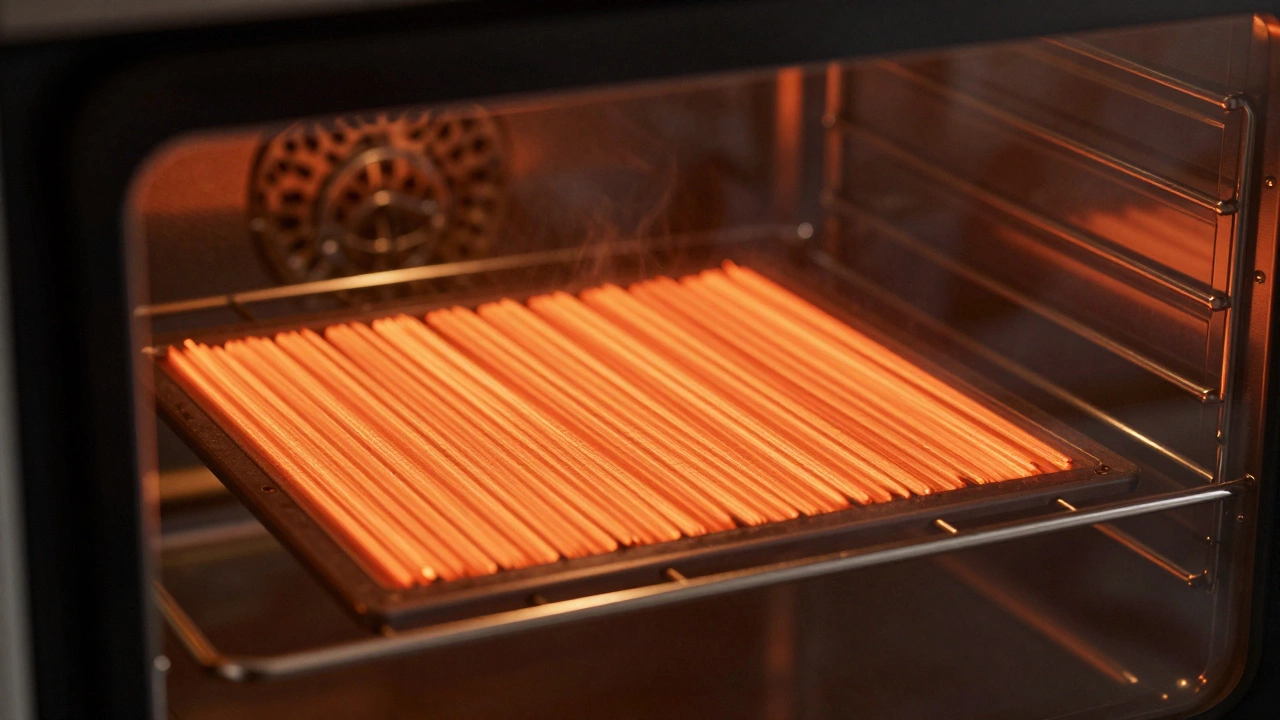
Look at the element when the oven is on
The easiest way to check is to turn the oven on and watch the element. Set it to bake at 180°C and wait five minutes. Open the door (carefully) and look at the heating element at the bottom of the oven. If it’s working properly, it should glow bright orange or red all the way across. You might see a slight flicker as it cycles on and off to maintain temperature-that’s normal.If you see dark spots, sections that aren’t glowing, or if the whole thing stays black and cold, then it’s dead. A broken element doesn’t always snap in half or melt dramatically. Sometimes, it just stops heating in one area. That’s enough to make your oven useless for baking or roasting evenly.
Check for visible damage
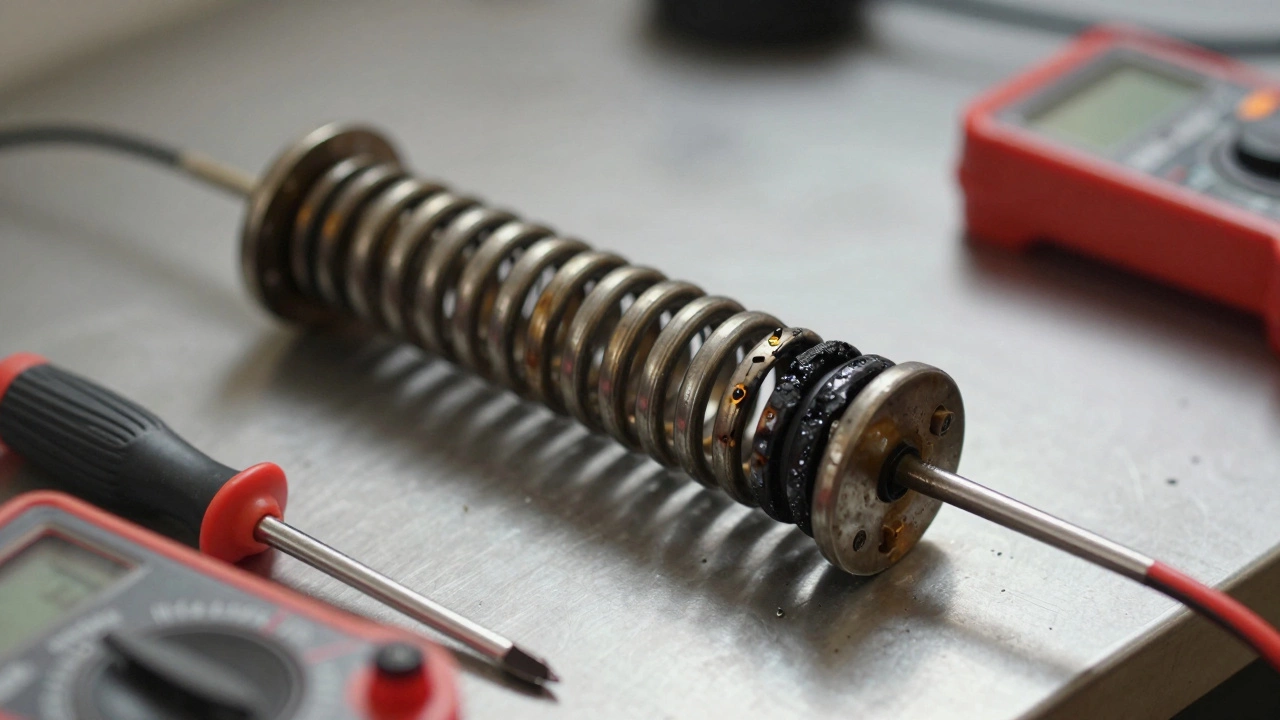
Turn off the oven and let it cool completely. Then, pull out the racks and take a close look at the element. Look for:- Cracks or splits in the metal coil
- Blisters or bulges where the metal has overheated
- Discoloration-blackened or burnt areas that stand out from the rest
- Loose or detached wires connected to the element
Even a tiny crack can break the electrical circuit. You don’t need to be an electrician to spot this. If the element looks like it’s been through a fire, it probably has. In older ovens, especially those over ten years old, the metal fatigues over time and just gives out.
Test for power with a multimeter
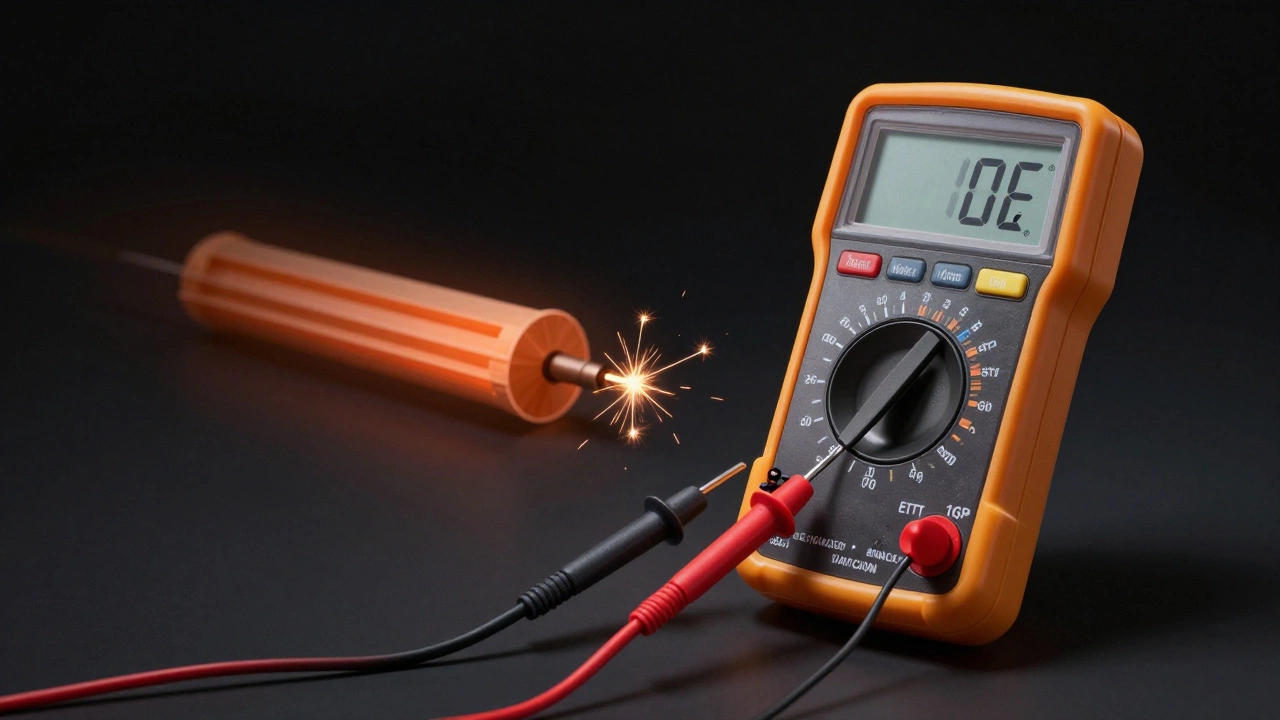
If you’re comfortable using a multimeter (and you’ve turned off the power at the breaker), you can test the element for continuity. This is the most accurate way to confirm it’s faulty.First, unplug the oven or shut off the circuit breaker. Remove the element by unscrewing the mounting screws and gently pulling it out-don’t yank the wires. Set your multimeter to ohms (Ω). Touch one probe to each terminal on the element. A good element will show a resistance reading between 20 and 120 ohms, depending on the model. If the meter reads zero (short) or infinity (open circuit), the element is broken.
You can also test for grounding. Put one probe on a terminal and the other on the metal casing of the oven. If the meter beeps or shows any reading, the element is shorted to the chassis. That’s a safety hazard. Replace it immediately.
Compare with the top element
Most ovens have two elements: one on the bottom for baking and one on the top for broiling. If your broil function works fine but the bake function doesn’t, that’s a strong sign the bottom element is the problem. If both are dead, it could be a thermostat, control board, or fuse issue. But if only the bottom one isn’t heating, the element is almost certainly to blame.I’ve seen this a dozen times in Dunedin homes. People assume the whole oven is failing. But nine out of ten times, it’s just one element. Replacing it costs under $50 and takes less than an hour. No need to replace the whole oven.
Listen for the click
When you turn the oven on, you should hear a faint click-sometimes two. That’s the relay switching power to the element. If you hear the click but no heat, that points to the element. If you hear nothing at all, the problem might be the control board or thermostat. But if the click happens and nothing heats up, the element is the likely culprit.Check for uneven cooking
A partially broken element doesn’t always stop working completely. It might still glow a little, but not enough to heat the oven properly. You’ll notice food cooking unevenly: one side burnt, the other raw. Cookies bake lopsided. Roasts take twice as long. If you’ve tried rotating trays and changing rack positions and nothing helps, it’s not your recipe-it’s the element.One customer in Portobello told me her roast chicken always came out underdone on the bottom. She thought her oven was just old. Turns out, half the element had burned out. She replaced it, and her next roast cooked perfectly in 75 minutes-same as the recipe said.
What doesn’t mean the element is broken
Not every oven problem means a failed element. Here’s what to rule out first:- Thermostat calibration: If your oven runs too cool, the element might be working fine, but the temperature sensor is off. Use an oven thermometer to check actual heat.
- Broken fan: In convection ovens, a broken fan can cause uneven heating. Listen for the fan spinning when the oven is on.
- Tripped thermal fuse: Some ovens have a safety fuse that blows if the oven overheats. If the element doesn’t get power at all, check the fuse near the element.
- Dirty oven: Heavy grease buildup can insulate the element and reduce heat transfer. Clean the oven first-you might be surprised.
Don’t jump to replacing the element until you’ve ruled these out. But if you’ve checked the basics and the element still isn’t glowing, it’s time to replace it.
How to replace it yourself
Replacing an oven element is one of the easiest appliance repairs you can do. You’ll need:- A new element (match the model number-check your oven’s manual or look up the part online)
- A screwdriver
- Pliers (if wires are stiff)
- An oven thermometer (to test after replacement)
Turn off the power. Remove the racks. Unscrew the element from the back wall. Disconnect the wires by pulling them off the terminals. Don’t cut them. Attach the new element, reconnect the wires, screw it in, and turn the power back on. Test it. If it glows evenly, you’re done.
Most elements last 5-10 years. If yours is older than that, it’s not a surprise it’s gone. Don’t wait for it to fail completely. Replace it before you’re stuck with cold food on Christmas Eve.
When to call a professional
You don’t need a technician for a broken element. But call one if:- You’re uncomfortable working with electricity
- The wires are melted or fused to the terminals
- The control panel shows error codes
- Multiple components aren’t working
Most appliance repair techs charge $100-$150 just to show up. If you can replace the element yourself, you’ll save that money every time.
Can a broken oven element cause a fire?
A broken element itself rarely causes a fire. But if the wiring is damaged, frayed, or touching metal, it can spark. If you see smoke, burning smells, or black marks near the element’s terminals, turn off the power immediately and don’t use the oven until it’s fixed. Safety first.
How long does an oven element usually last?
Most oven elements last between 5 and 10 years. Heavy use, frequent cleaning with harsh chemicals, or power surges can shorten that lifespan. In homes where ovens are used daily, elements often fail around the 7-year mark.
Is it cheaper to fix the element or buy a new oven?
Replacing an element costs $30-$70 for the part and takes under an hour. A new oven starts at $500 and up. Unless your oven is over 15 years old or has multiple broken parts, fixing the element is always the smarter choice.
Why is my oven heating up slowly?
A slow-heating oven usually means the element is weakening. It might still glow, but not brightly enough to heat the oven quickly. Clean the element first, then test it with a multimeter. If resistance is too high or uneven, replace it.
Can I use the oven if one element is broken?
You can use the broil element for quick tasks, but baking or roasting won’t work properly. Cooking will be uneven, and food will take much longer. It’s not dangerous, but it’s not practical either. Replace the element as soon as you can.