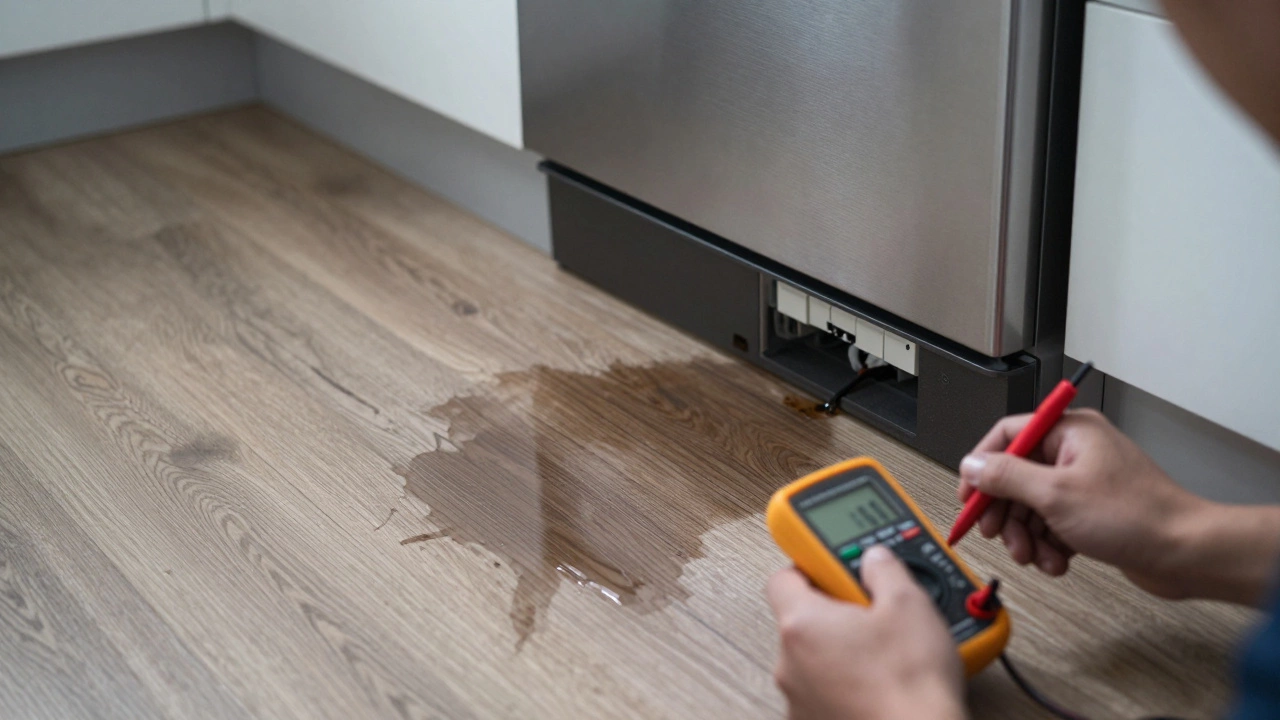
Dishwasher Problem Diagnostic Tool
Nothing ruins dinner plans faster than opening the kitchen cabinet to find a pool of water on the floor or realizing your plates are still covered in dried pasta sauce. It’s frustrating, messy, and often expensive if you call a technician immediately. But before you hand over your credit card, you can actually solve most common dishwasher issues yourself with a little bit of detective work.
I’ve spent years fixing appliances in Dunedin, where our hard water and older plumbing systems create unique challenges for household machines. The good news? Most dishwasher failures aren’t catastrophic mechanical breakdowns. They’re usually simple blockages, electrical glitches, or user error. By following a logical diagnostic path, you can pinpoint the problem quickly and decide whether it’s a quick DIY fix or time to call a pro.
Quick Summary / Key Takeaways
- Safety First: Always disconnect power at the switchboard before touching any internal components.
- The 80/20 Rule: Eighty percent of dishwasher problems are caused by clogged filters, blocked spray arms, or poor drainage.
- Listen and Look: Unusual noises often indicate foreign objects, while standing water points to drain pump or hose issues.
- Check the Basics: Ensure the door latch is secure and the water inlet valve isn’t kinked or frozen.
- When to Call a Pro: If the control board is dead, the heating element is broken, or there’s a leak from the tub itself.
Step 1: Safety and Initial Observation
Before you pull out any tools, you need to set the scene safely. Electricity and water don’t mix, so the very first step is to turn off the power to the appliance. In New Zealand, this means switching off the specific circuit breaker at your main switchboard. Don’t just unplug it if it’s hardwired; ensure the circuit is dead.
Next, observe the symptoms. Is the machine completely dead? Does it hum but not start? Is it filling but not draining? These clues are your roadmap. Write them down. For example, if the display shows an error code like 'E1' or 'F05', check your manual first. Modern brands like Bosch, Miele, and Fisher & Paykel use these codes to tell you exactly what’s wrong. If you don’t have the manual, a quick search for '[Brand] [Model] error code [Code]' will usually give you the answer instantly.
Step 2: Check the Water Supply
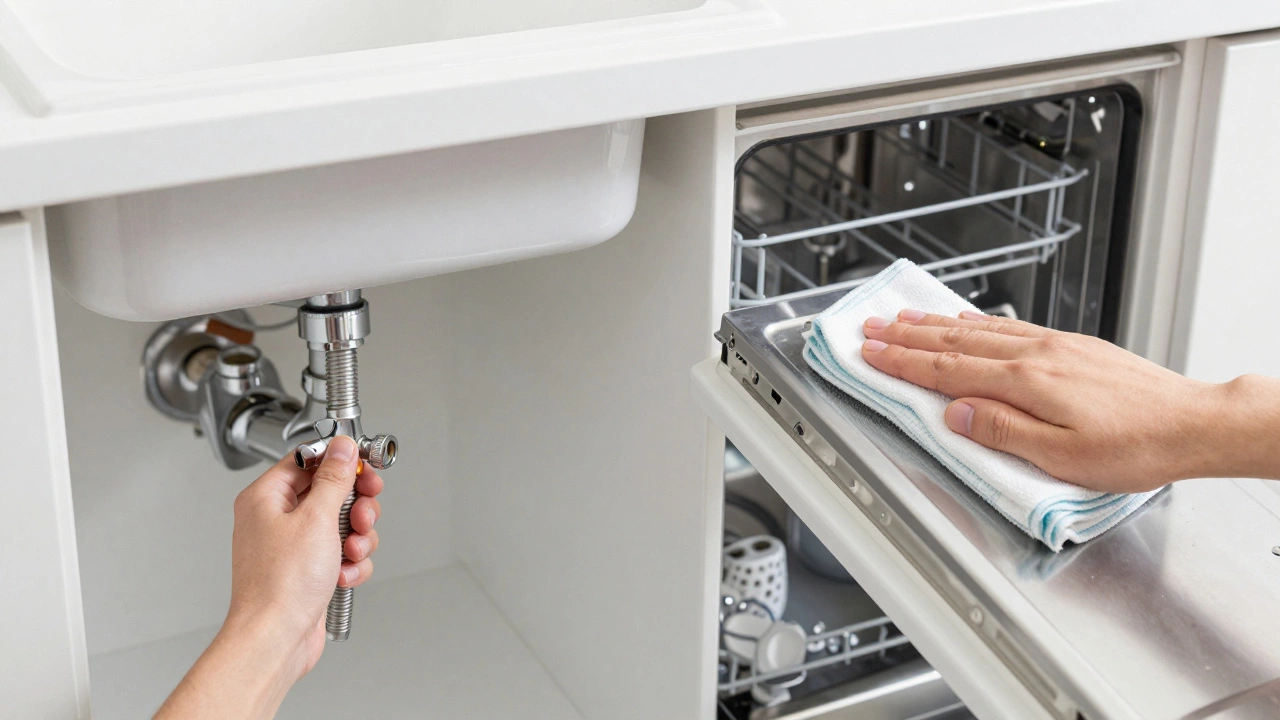
If your dishwasher isn’t filling up, the issue is almost always upstream. Start by checking the kitchen sink faucet above the unit. Turn on the hot water tap. Does water flow freely? If the tap is dry, your house supply is off, or the angle valve under the sink is closed. This valve controls water entry into the dishwasher. Make sure it’s fully open.
Next, inspect the inlet hose. This flexible tube connects the angle valve to the back of the dishwasher. Look for kinks, especially if the dishwasher was recently moved or installed. A sharp bend can restrict flow enough that the machine thinks it’s empty. Also, check the screen inside the inlet valve (where the hose connects to the machine). Over time, sediment from your pipes-common in areas with older infrastructure-can clog this tiny mesh screen. Unscrewing the hose and rinsing the screen under a tap often solves the 'no water' problem.
Step 3: Inspect the Filter and Spray Arms
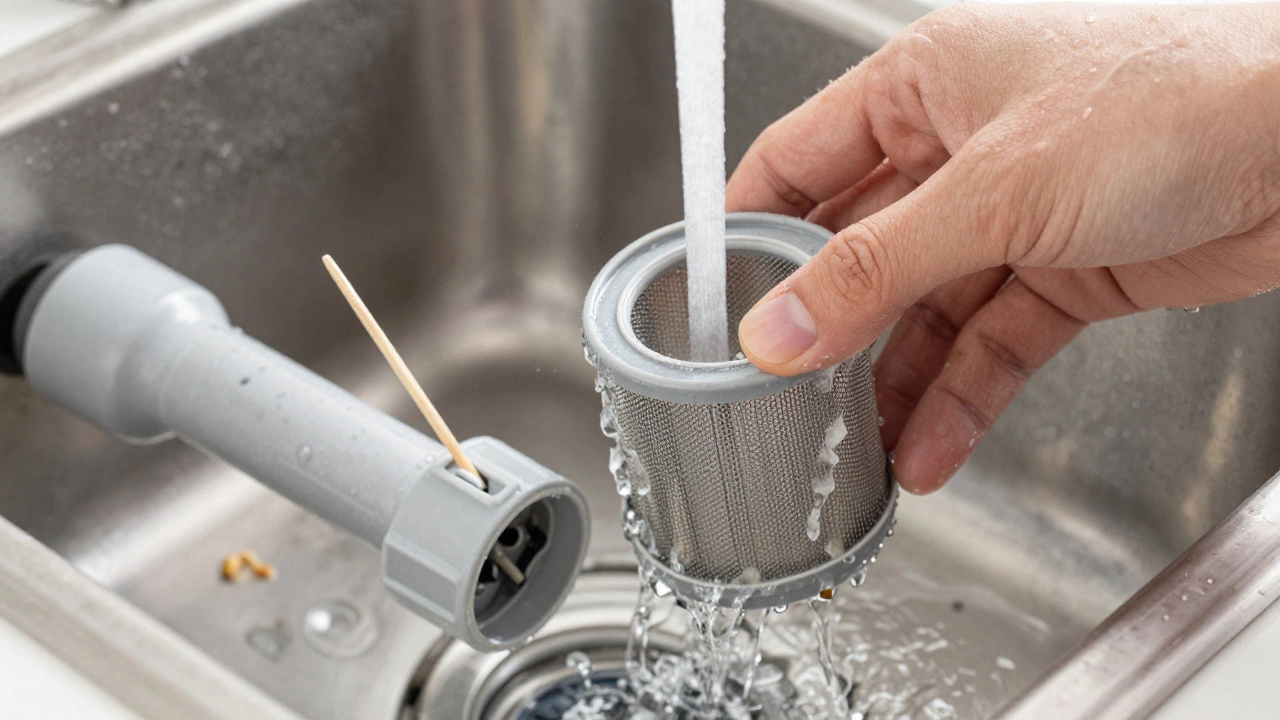
This is the most critical maintenance step. Every dishwasher has a filter assembly at the bottom of the tub. Its job is to catch food particles so they don’t recirculate onto your clean dishes. If this filter is clogged, water can’t circulate properly, leading to poor cleaning performance or even overflow.
To clean it, twist the cylindrical filter counter-clockwise and lift it out. Rinse it under warm water with a soft brush. Use dish soap if it’s particularly greasy. While you’re down there, check the spray arms. These rotating arms shoot water jets across the dishes. Look at the holes on the underside and sides. Are they blocked by coffee grounds, eggshells, or plastic bits? Use a toothpick or a thin wire to clear any obstructions. Spin the arms by hand; they should rotate freely without grinding against anything. If they’re stiff, something might be lodged in the bearing.
| Symptom | Likely Cause | DIY Fix Difficulty |
|---|---|---|
| Dishes not clean | Clogged filter, low detergent, incorrect cycle | Easy |
| Water not draining | Clogged drain hose, faulty air gap, bad pump | Medium |
| Loud grinding noise | Foreign object in pump, worn impeller | Hard |
| Leaking from front | Damaged door gasket, misaligned rack | Medium |
| No power/display dead | Trip breaker, blown fuse, failed control board | Hard |
Step 4: Troubleshooting Drainage Issues
If the cycle finishes but water remains in the bottom of the tub, the drain system is failing. There are three main culprits here: the drain hose, the garbage disposal connection, and the drain pump.
First, check if your dishwasher drains into a garbage disposal unit. Many people forget that disposals have a small plug in the side inlet port specifically for dishwashers. If this plug wasn’t removed during installation, water has nowhere to go. Remove the plug if it’s still there.
Second, inspect the drain hose. It runs from the back of the dishwasher to either the disposal or directly into the sink’s drain pipe. Ensure the hose isn’t kinked behind the cabinet. Also, check for a high loop. The hose should rise up to the level of the countertop before dropping down to the drain. This prevents dirty sink water from siphoning back into the dishwasher. If the hose lies flat on the floor, gravity can cause backflow.
If the hose is clear, the issue might be the drain pump. Listen closely when the drain cycle starts. Do you hear a humming sound? If yes, the pump motor is running but might be jammed by a small object like a glass shard or bone. You may need to access the pump housing (usually under the filter) to remove debris. If you hear nothing, the pump motor might be burnt out, or the relay on the control board has failed.
Step 5: Addressing Leaks
A puddle under the dishwasher is alarming but often traceable. Start by drying the area completely and running a short cycle. Watch carefully. Where does the water appear first?
If it leaks from the front bottom edge, check the door gasket. This rubber seal around the door can crack, tear, or get stuck with food debris. Clean it thoroughly with a damp cloth. If it’s brittle or torn, it needs replacement. Also, ensure the door is closing tightly. Sometimes, a large pot handle can prevent the latch from engaging fully, leaving a gap.
If the leak is coming from underneath, check the connections at the inlet valve and drain hose. Tighten any loose clamps. If water is spraying from the sides of the tub, the spray arm might be hitting a utensil and cracking the plastic housing. This is less common but serious.
Step 6: Electrical and Control Issues
If the dishwasher won’t start at all, check the basics again. Is the child lock engaged? Many modern models have a feature that disables the keypad to prevent accidental starts. Hold the 'Start' or 'Cancel' button for three seconds to unlock it.
If the display is blank, check your home’s residual current device (RCD) or circuit breaker. Did it trip? If resetting it doesn’t help, the issue could be internal. The thermal fuse protects the heating element from overheating. If it blows, the machine loses power. Testing this requires a multimeter. If you’re not comfortable using one, this is a job for a technician.
Another electrical culprit is the door switch. The dishwasher won’t run unless it detects the door is closed. If the switch is broken or misaligned, the machine stays off. You can sometimes test this by listening for a click when you close the door. No click might mean a mechanical failure in the latch assembly.
When to Call a Professional
You can fix many issues, but some require specialized tools and knowledge. Call a licensed appliance repair technician if:
- The control board is displaying erratic codes or no response after power cycling.
- The heating element is visibly broken or tests as open with a multimeter.
- There is a leak from the stainless steel tub itself (this usually means corrosion and requires full replacement).
- The drain pump motor is burnt out and needs replacement (involves disassembling the base).
- You suspect a gas leak (if you have a combination washer-dryer or other gas appliances nearby).
In Dunedin and much of New Zealand, labor costs for appliance repair can range from $100 to $200 per hour, plus parts. Weigh this against the cost of a new unit. If your dishwasher is over 10 years old and needs major repairs, buying a new energy-efficient model might be more economical in the long run.
Maintenance Tips to Prevent Future Problems
Prevention is cheaper than cure. Here’s how to keep your dishwasher running smoothly:
- Clean the filter monthly: Make it part of your routine cleaning schedule.
- Run a vinegar cycle quarterly: Place a cup of white vinegar in a dishwasher-safe bowl on the top rack and run a hot wash cycle. This removes mineral buildup and odors.
- Scrape, don’t rinse: Modern detergents need food soil to activate enzymes. Rinsing dishes too well can reduce cleaning efficiency. Just scrape off large chunks.
- Use the right detergent: Avoid using regular dish soap. It creates excessive suds that can overflow and damage the pump. Use pods, powder, or gel specifically designed for dishwashers.
- Check the spray arms annually: Ensure holes are clear and arms spin freely.
Why is my dishwasher making a loud grinding noise?
A grinding noise usually indicates a foreign object trapped in the drain pump or impeller. Common culprits include glass shards, bone fragments, or plastic pieces from packaging. Stop the cycle immediately, disconnect power, and inspect the filter and pump area for debris. If the noise persists after cleaning, the pump bearings may be worn out.
Can I use regular dish soap in my dishwasher?
Never use regular hand dish soap in a dishwasher. It creates massive amounts of suds that can overflow through the door seals and damage the electronic components. Only use detergents labeled specifically for dishwashers, which are low-sudsing and enzyme-based.
How do I reset my dishwasher if it’s frozen?
To reset most dishwashers, turn off the power at the circuit breaker for one minute, then turn it back on. Alternatively, hold the 'Start' or 'Cancel' button for 3-5 seconds. Some models require a specific button sequence, such as pressing 'High Temp', 'Normal', 'High Temp', 'Normal' in succession. Consult your user manual for brand-specific instructions.
Why is there standing water in the bottom of my dishwasher?
Standing water typically means a drainage issue. Check for clogs in the filter, kinks in the drain hose, or a blocked air gap/garbage disposal inlet. If these are clear, the drain pump may be faulty. Note that a small amount of water remaining after a cycle is normal for some models to keep seals lubricated.
Is it worth repairing an old dishwasher?
If your dishwasher is less than 7-10 years old and the repair cost is under 50% of the price of a new unit, it’s usually worth fixing. However, if it’s older, inefficient, or requires major component replacement like a control board or tub, replacing it with a newer, energy-efficient model is often more cost-effective and environmentally friendly.