Microwave Fuse Diagnostic Tool
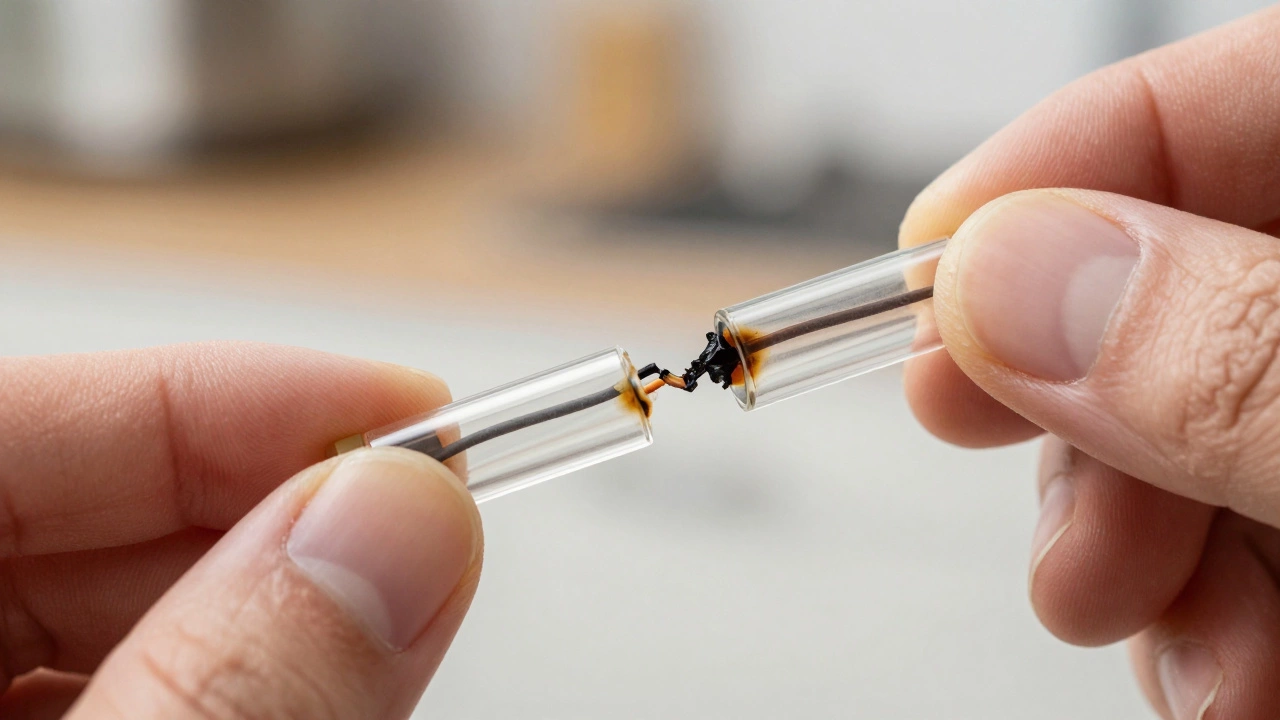
Your microwave suddenly stops working. The light doesn’t turn on, the door won’t lock, and it feels like a brick sitting on your counter. Before you toss it into the recycling bin or call for an expensive replacement, there’s one cheap component that might be saving your wallet: the microwave fuse, which is a small safety device designed to break the electrical circuit if too much current flows through the appliance. If this tiny glass or ceramic tube has melted inside, your microwave will appear completely dead.
Identifying a blown fuse isn’t magic, but it does require caution. Microwaves hold high-voltage capacitors that can shock you even after being unplugged. This guide walks you through how to safely determine if your fuse is the culprit, what tools you need, and when it’s time to call a professional.
The Quick Visual Inspection
Sometimes, the answer is staring right at you. Most microwaves use a thermal fuse or a standard cartridge fuse located near the control panel or behind the front casing. These fuses are usually clear glass or plastic tubes with metal ends. If you can access the fuse without taking apart the entire unit-often found near the door switch assembly-you can perform a visual check.
- Look for dark streaks: A healthy fuse wire inside the glass should look like a thin, continuous silver thread. If you see a blackened line, a gap in the wire, or smoke residue inside the tube, the fuse is blown.
- Check for bulging: If the glass looks swollen or cracked, the internal pressure from a surge likely destroyed it.
- Inspect the terminals: Burn marks on the metal caps where the fuse connects to the wiring harness indicate excessive heat, suggesting the fuse did its job by breaking the circuit.
If the fuse looks pristine, don’t get complacent. Some modern fuses fail internally without leaving obvious external signs. You’ll need to move to the next step: testing with a multimeter.
Gathering Your Tools
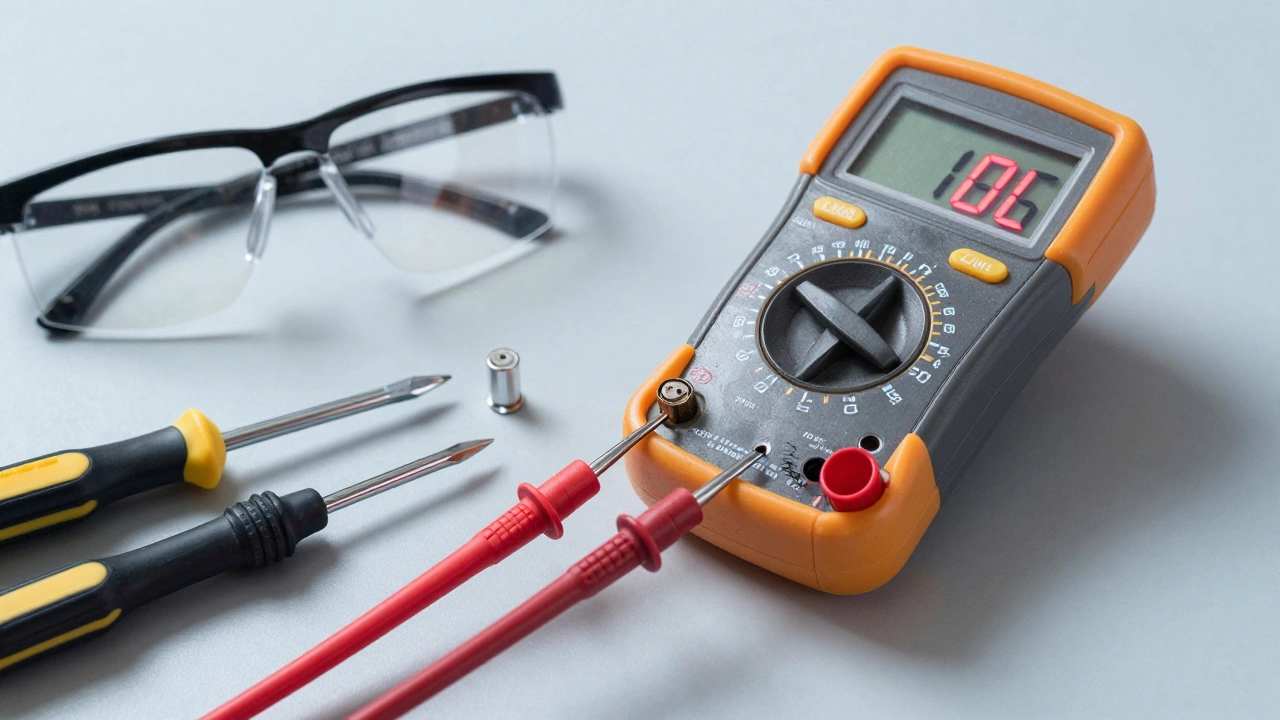
To accurately diagnose a fuse, you need more than just eyesight. You need a multimeter, which is an electronic measuring instrument used to measure voltage, current, and resistance in electrical circuits. Any basic digital multimeter will work. You also need a screwdriver set (usually Phillips head) to remove the outer case of the microwave. Safety glasses are non-negotiable here; you’re dealing with sharp metal edges and potentially live components.
Before you start unscrewing anything, unplug the microwave. Seriously. Don’t just turn it off; pull the plug from the wall outlet. This removes the primary power source, though it doesn’t eliminate all danger yet, as we’ll discuss shortly.
Safely Accessing the Fuse
Microwave designs vary wildly between brands like Samsung, Samsung Electronics, Panasonic, Panasonic Corporation, and LG, LG Electronics. Generally, the fuse is located near the control board or the door interlock switches. Here’s how to get to it:
- Remove the top cover: Many models have screws along the back edge of the top panel. Remove these, slide the top cover backward, and lift it off.
- Disconnect the waveguide cover: Inside, you’ll see a mica sheet protecting the magnetron. Carefully detach any clips holding this cover so you can access the side panels.
- Remove the side panels: Unscrew the side panels to expose the internal wiring. Look for a small cylindrical component connected to two wires, often labeled "F" or "Fuse" on the schematic diagram taped inside the cabinet.
Take a photo of the wiring before disconnecting anything. You’ll need to know exactly where each wire goes when you reassemble the unit.
Testing Continuity with a Multimeter
This is the definitive test. Set your multimeter to the continuity setting (usually indicated by a sound wave symbol) or the lowest resistance setting (Ohms, Ω). Touch the probes together first to ensure the meter works-it should beep or show zero resistance.
Now, touch one probe to each metal end of the fuse. Listen closely.
- Beep or low resistance: If the multimeter beeps or shows a reading close to zero ohms, the fuse is intact. The problem lies elsewhere, possibly in the door switches, control board, or high-voltage diode.
- No beep or infinite resistance: If the meter stays silent or displays "OL" (Open Loop), the fuse is blown. The circuit is broken, and electricity cannot flow to the rest of the appliance.
If the fuse is blown, note the rating printed on it. Common ratings are 10A, 15A, or 20A at 250V. You must replace it with an identical rating. Using a higher amperage fuse defeats the safety purpose and could cause a fire. Using a lower rating might blow again immediately.
Why Did the Fuse Blow?
A fuse doesn’t blow for no reason. It’s a sacrificial component protecting your home from electrical fires. Replacing a blown fuse without addressing the root cause is dangerous. Here are the most common culprits:
| Cause | Symptoms | Risk Level |
|---|---|---|
| Short Circuit in Magnetron | Fuse blows instantly upon startup | High |
| Faulty High-Voltage Diode | Fuse blows intermittently or after heating | Medium |
| Door Switch Failure | Fuse blows when door is closed | Medium |
| Power Surge | Fuse blows during storms or grid fluctuations | Low |
If the magnetron or high-voltage diode is shorted, replacing the fuse alone won’t fix the issue. The new fuse will blow immediately when you plug it in. In these cases, professional diagnosis is essential. These components handle thousands of volts and require specialized knowledge to test safely.
When to Call a Professional
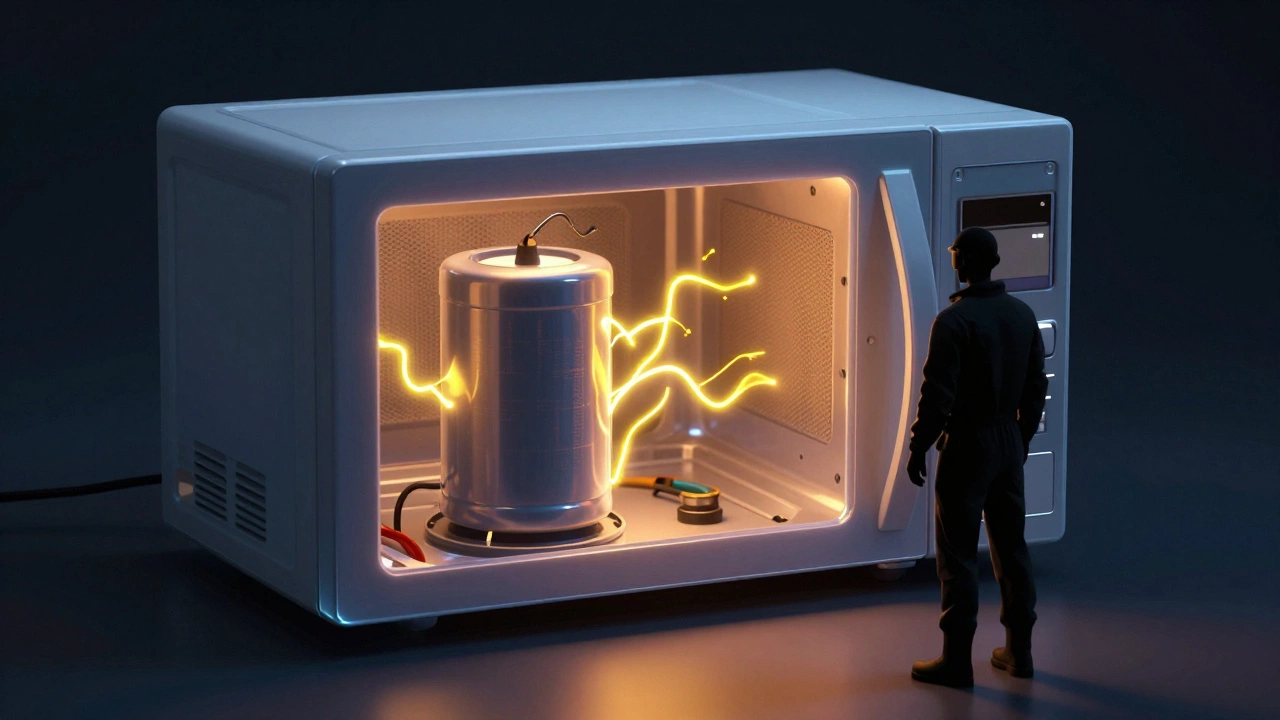
While checking a fuse is straightforward, microwave repair involves significant risks. If you’re uncomfortable opening the appliance, lack a multimeter, or suspect a component failure beyond the fuse, stop. Contact a certified appliance repair technician, who is a skilled professional trained to diagnose and fix household appliances safely. They have the tools to discharge capacitors safely and test high-voltage components without risking injury.
In Dunedin, New Zealand, many local technicians offer free diagnostics for simple issues like fuse checks. Even if they find a deeper problem, their expertise ensures your kitchen remains safe. Don’t gamble with high-voltage electronics. Your safety matters more than saving $50 on a repair bill.
Preventing Future Fuse Failures
Once your microwave is back up and running, take steps to protect it. Use a surge protector to guard against power spikes. Avoid running the microwave empty, as this reflects energy back into the magnetron, causing overheating. Regularly clean the interior to prevent arcing, which can damage internal components over time. And always listen to your appliance-if it smells like burning plastic or sparks visibly, unplug it immediately.
Can I bypass the microwave fuse?
Absolutely not. Bypassing the fuse removes the primary safety protection against electrical fires. If the fuse blows repeatedly, there is a serious underlying fault that needs professional attention.
How much does a microwave fuse cost?
A replacement fuse typically costs between $5 and $15 depending on the brand and amperage rating. However, labor costs for professional installation can range from $80 to $150.
Is it safe to open a microwave myself?
Only if you understand electrical safety and have discharged the high-voltage capacitor. For most homeowners, it’s safer to hire a professional due to the risk of severe electric shock.
What happens if I use a wrong-rated fuse?
Using a higher-rated fuse may not blow when it should, leading to overheating and potential fire hazards. A lower-rated fuse may blow unnecessarily, causing frequent interruptions.
How do I discharge the microwave capacitor?
Use an insulated screwdriver to bridge the capacitor terminals carefully. However, this is dangerous and should only be attempted by those with proper training and equipment.