Boiler Cost & Repair Calculator
Estimated Total Cost
*Estimates based on average 2026 NZD market rates.
Recommendation
Enter values above
Provide the age of your boiler and the quote from your engineer to see our advice.
There is nothing worse than waking up to cold water and no heat in the middle of a Dunedin winter. When your heating system fails, the immediate question isn't just "how do I fix it?" but "how much will this actually cost me?" If you are standing in front of a broken unit wondering whether to call for boiler repair or bite the bullet on a replacement, you need hard numbers, not guesses.
In 2026, the market for heating systems has shifted. With energy efficiency regulations tightening and parts becoming more specialized, the price tag for a new boiler varies wildly depending on what you choose. This guide breaks down exactly what you should expect to pay, from the cheapest swap-out to a full high-efficiency upgrade, so you can budget without getting burned.
The Quick Answer: Average Costs for a New Boiler
If you want the bottom line right now, here is the reality. For a standard home in New Zealand, replacing an old boiler with a modern equivalent typically costs between $3,500 and $7,500 NZD installed. This includes the unit itself, labor, and basic materials.
However, "standard" is a tricky word. Your final bill depends heavily on three things: the type of boiler you pick, the complexity of your current setup, and who does the work. A simple like-for-like swap of a combi-boiler might sit at the lower end, while upgrading to a system boiler with new radiators and pipework can push the price past $10,000.
| Boiler Type | Unit Cost (NZD) | Installation Labor (NZD) | Total Estimated Range (NZD) |
|---|---|---|---|
| Combi-Boiler (Like-for-Like) | $2,500 - $4,000 | $800 - $1,200 | $3,300 - $5,200 |
| System Boiler | $3,000 - $5,500 | $1,200 - $2,000 | $4,200 - $7,500 |
| Condensing Upgrade (Complex) | $3,500 - $6,000 | $1,500 - $2,500 | $5,000 - $8,500 |
| Biomass/Wood Pellet | $8,000 - $15,000+ | $2,000 - $4,000 | $10,000 - $19,000+ |
Understanding Boiler Types and Their Impact on Price
Not all boilers are created equal, and the type you choose dictates the bulk of your expense. In New Zealand, most homes use either Combi-boilers or System boilers. Knowing the difference saves you from paying for features you don't need.
Combi-boilers are compact units that heat water directly from the mains, providing instant hot water without needing a storage tank. They are popular in apartments and smaller houses because they save space. If you already have one, swapping it out is usually the cheapest option. You keep your existing pipes and radiators. The unit costs range from $2,500 to $4,000 depending on brand reputation and efficiency ratings.
System boilers are larger units that work with a separate hot water cylinder but do not require a cold water feed tank in the loft. These are better for larger homes with multiple bathrooms where several people use hot water simultaneously. Because they require a cylinder, the installation is more involved. The boiler itself runs $3,000 to $5,500, but you must factor in the cost of the cylinder and potential plumbing adjustments.
Then there are Condensing boilers are high-efficiency models that capture waste heat from exhaust gases, reducing fuel consumption by up to 20%. Since 2005, all new gas boilers sold in the UK and many other regions must be condensing. In New Zealand, while regulations vary, installing a non-condensing unit is generally discouraged due to higher running costs. A high-efficiency condensing model might cost more upfront ($500-$1,000 extra) but pays for itself in energy savings over three to five years.
Labor Costs: Why Installation Prices Vary So Much
You might see two quotes for the same boiler that differ by $1,500. Why? It’s rarely the hardware; it’s the labor. Installing a boiler is not just about bolting a box to the wall. It involves gas safety checks, pressure testing, and ensuring compliance with local building codes.
A standard installation takes one to two days. A qualified engineer will charge between $400 and $600 per day. If your job requires moving the flue pipe, adding a magnetic filter to protect the new unit, or upgrading your gas meter, those are add-ons. Expect to pay an extra $300-$600 for these tasks.
Also, consider the location. If you live in a central Dunedin area with easy parking and access, labor rates stay standard. If your property is remote or has difficult access (like a basement install or a second-story flat), engineers may charge a travel surcharge or premium for the extra time spent maneuvering equipment.
Repair vs. Replace: The 0 Rule
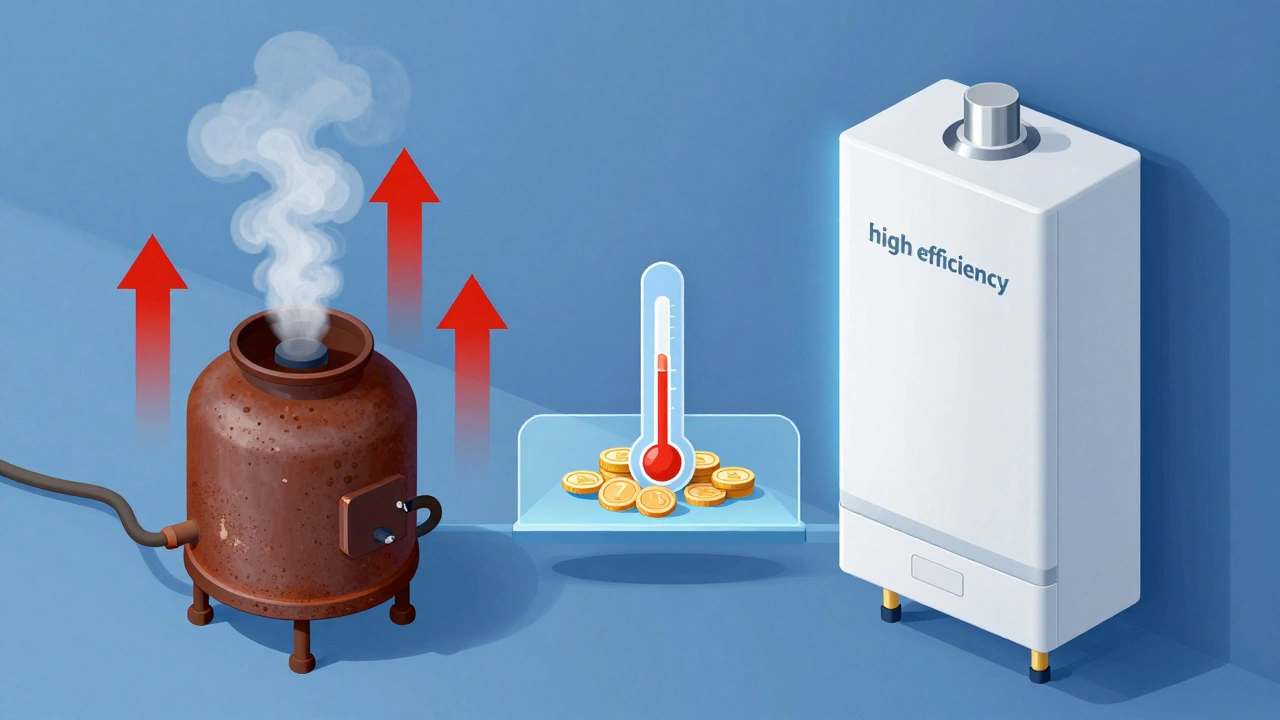
This is the most common dilemma homeowners face. Your boiler is making noise, losing pressure, or leaking. Do you fix it or buy new? Here is a practical rule of thumb used by many heating engineers: the 50% rule.
If the cost of the repair is more than 50% of the price of a new boiler, replace it. But there is a nuance. Age matters. If your boiler is less than 10 years old, a major repair (like replacing the heat exchanger) might be worth it. If it is older than 15 years, even a cheap repair is often a false economy. Old boilers lose efficiency every year. You might save $800 on a repair today, but spend $300 more in gas bills next winter compared to a new efficient unit.
Signs you should definitely replace rather than repair:
- Your boiler is over 15 years old.
- You are calling for repairs more than once a year.
- The repair quote exceeds $600-$800.
- Your energy bills have risen significantly without a change in usage.
- The unit is a non-condensing model (inefficient and harder to get parts for).
Hidden Costs That Catch People Off Guard
When budgeting, the boiler and labor are only half the story. Several hidden costs can inflate your final bill if you aren't prepared.
Flue Relocation: If you want to move the boiler to a different wall or room, you need a new flue path. Drilling through brickwork and sealing external vents can cost $500-$1,000.
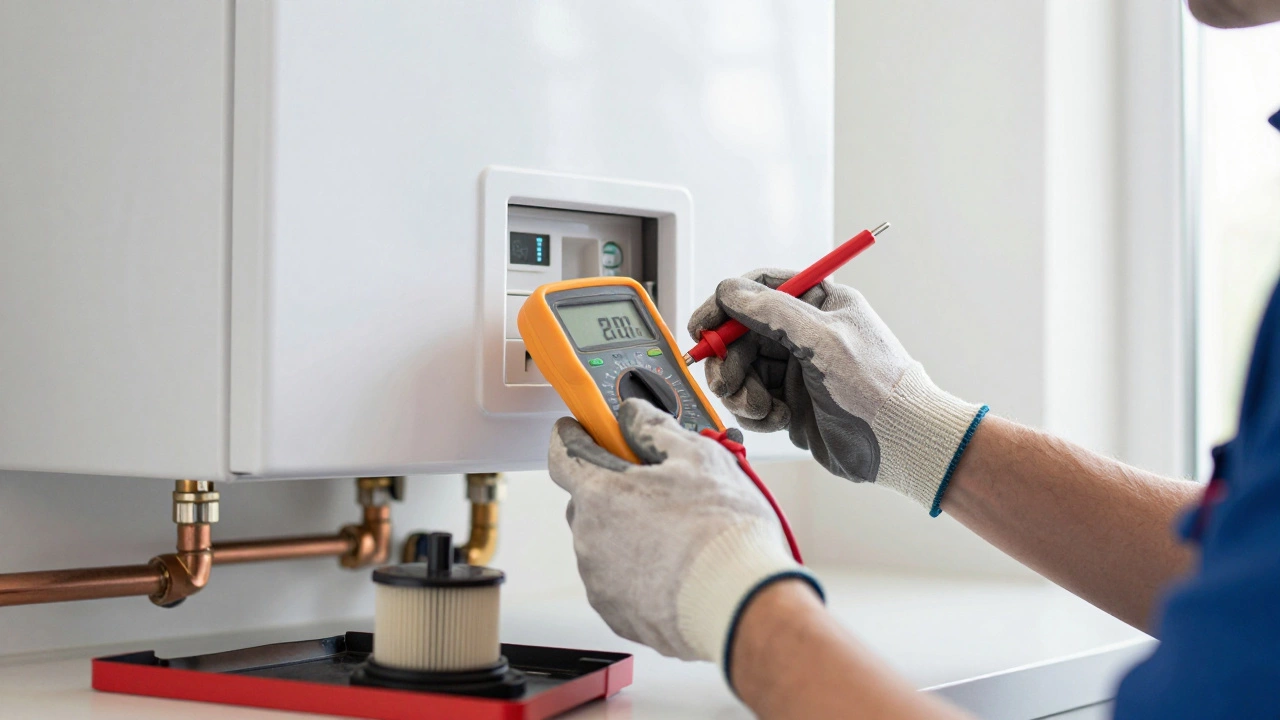
Magnetic Filters: Modern boilers hate sludge. Old pipes release magnetite (black rust) which clogs the new heat exchanger. Installing a magnetic filter (like a Sentinel or MagnaClean) costs around $150-$250 including labor. It is highly recommended to extend the life of your new investment.
Gas Meter Upgrade: If you are switching from an electric heater to a gas boiler, or upgrading to a larger unit, your current gas meter might not handle the load. An upgrade from your energy provider can cost $300-$600.
Water Pressure Boosters: In some areas, mains water pressure is low. If your new combi-boiler struggles to deliver hot water fast enough, you might need a booster pump. This adds another $400-$800 to the project.
Choosing the Right Brand: Value vs. Reputation
Brand names carry weight in pricing. Top-tier brands like Vaillant, Worcester Bosch, and Baxi command a premium. Their units often cost 10-20% more than budget brands. However, they offer better warranty support, easier availability of spare parts, and higher reliability scores.
Budget brands can be tempting, especially when cash flow is tight. But ask yourself: if the control board fails in year four, can your local engineer source the part? Often, budget brands have longer lead times for components, meaning your house stays colder for weeks while you wait for a shipment from overseas. For critical infrastructure like heating, paying slightly more for a reputable brand usually reduces long-term stress and downtime.
Maximizing Your Investment: Maintenance Tips
Once you’ve paid for the new boiler, protect that investment. The biggest killer of modern boilers is neglect. A simple annual service costs between $150 and $250. During this visit, an engineer cleans the burner, checks gas pressure, tests safety devices, and flushes the system if needed.
Skipping services voids most manufacturer warranties. More importantly, a dirty boiler works harder. A well-maintained condensing boiler operates at 90%+ efficiency. A neglected one drops to 70%, burning more gas for the same heat. That’s a direct hit to your wallet every month.
Keep your thermostat settings reasonable. Dropping the temperature by just 1°C can save up to 10% on annual heating costs. Use programmable timers to ensure you aren’t heating empty rooms during work hours.
Is it cheaper to repair or replace a 10-year-old boiler?
It depends on the repair cost. If the repair is under $500 and the boiler is otherwise healthy, repairing might be sensible. However, a 10-year-old boiler is approaching the end of its optimal lifespan. Efficiency has likely dropped, meaning higher gas bills. If the repair is over $500, replacement is usually the smarter financial decision long-term.
Can I install a new boiler myself to save money?
No, you should not attempt to install a gas boiler yourself. In New Zealand, working on gas appliances requires specific licensing. Improper installation can lead to carbon monoxide leaks, fire hazards, and invalidation of home insurance. Professional installation ensures safety compliance and validates the manufacturer's warranty.
How long does a typical boiler installation take?
A straightforward like-for-like replacement of a combi-boiler usually takes one day (8-10 hours). If you are changing the boiler type (e.g., from combi to system) or moving the unit's location, expect the job to take two to three days due to additional plumbing and gas work.
What is the most cost-effective boiler type for a small apartment?
For a small apartment or one-bedroom home, a combi-boiler is the most cost-effective choice. It eliminates the need for a hot water tank, saving space and reducing installation complexity. The upfront cost is lower, and since it heats water on demand, you avoid standby heat loss associated with tanks.
Are there government rebates for new boilers in New Zealand?
As of 2026, widespread national rebates specifically for residential gas boilers are limited compared to solar or heat pump incentives. However, some local councils or energy providers may offer efficiency grants or interest-free financing for high-efficiency upgrades. Always check with your local council or Energy Efficiency and Conservation Authority (EECA) for current programs.
Next Steps: Getting Accurate Quotes
To avoid surprises, get at least three written quotes from GasSafe-registered (or locally licensed) engineers. Ensure each quote breaks down the unit cost, labor, and any potential extras. Ask them to specify the exact model number of the boiler they propose. This allows you to compare efficiency ratings (look for the ERP rating) and warranty terms side-by-side. Don't just accept the lowest bid; look for the best balance of price, reputation, and after-sales support.