Microwave Repair Cost Calculator
Quick Repair Assessment
Repair Assessment Results
Enter your microwave details above to see your repair cost estimate.
Important Safety Notice
Microwaves contain high-voltage components that can remain charged for days after unplugging. If you don't have experience with electrical repairs, never attempt DIY repairs. Always hire a professional technician.
If your microwave suddenly stops working and you hear a quiet pop when you press start, chances are the fuse blew. It’s one of the most common reasons microwaves die - and it’s usually not as expensive or complicated as you might think. But how much does it actually cost to fix? And is it even worth repairing? Let’s cut through the noise and give you real numbers, real steps, and what you’ll actually pay in 2026.
Why Do Microwave Fuses Blow?
Microwaves use a fuse to protect the internal electronics from power surges. When something goes wrong - like a faulty high-voltage diode, a worn-out magnetron, or even just an old wiring connection - the fuse sacrifices itself to stop damage from spreading. It’s not a sign you’re using it wrong. It’s just wear and tear.
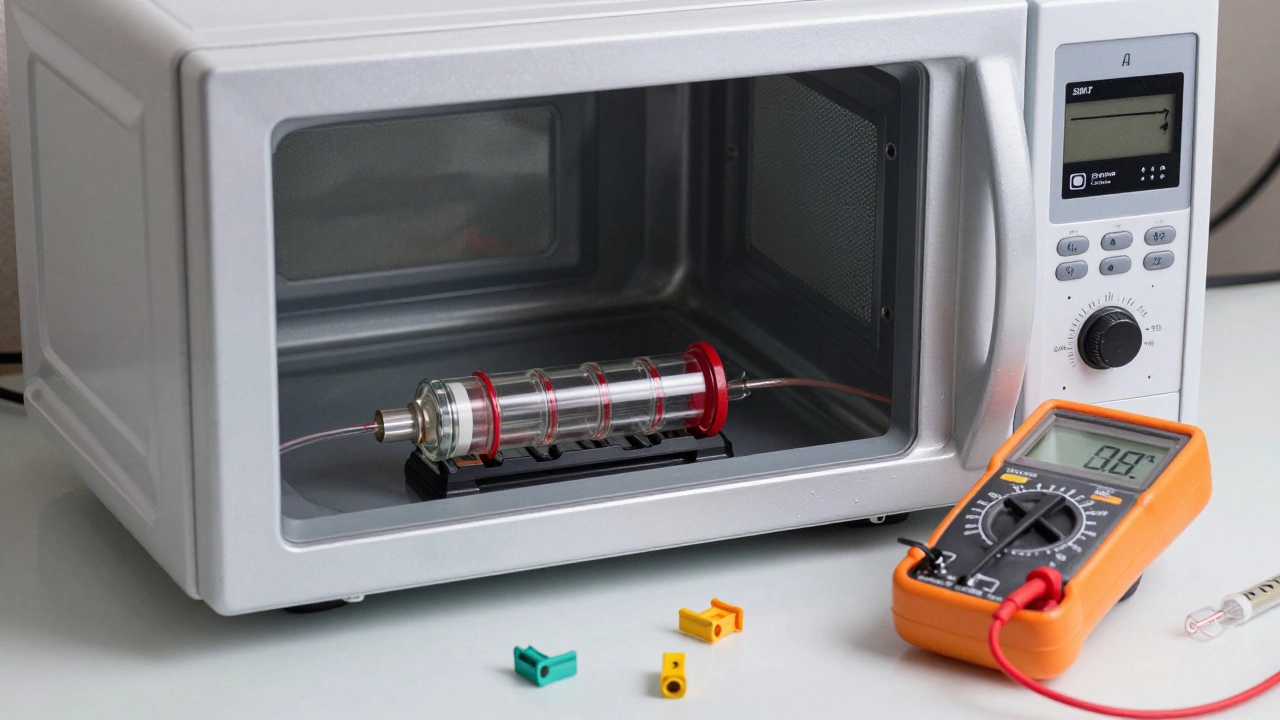
Most household microwaves have two fuses: a main fuse (usually near the power cord) and a thermal fuse (mounted on the magnetron or cavity). The main fuse handles electrical overload, while the thermal fuse shuts things down if the unit overheats. If the thermal fuse blows, it’s often because the cooling fan failed or the vents got clogged with grease. If the main fuse blew, it’s usually tied to another component that’s failing.
Cost Breakdown: DIY vs. Professional Repair
You’ve got two paths: fix it yourself or call a pro. Here’s what each costs right now.
- DIY repair: $5-$20 total
- Professional repair: $100-$250
The big difference? Labor. Parts for a microwave fuse - whether it’s the main fuse or thermal fuse - cost less than $10. You can buy them online from appliance parts stores like RepairClinic, AppliancePartsPros, or even Amazon. But if you hire someone, they’ll charge you $75-$125 per hour just to show up, test the unit, and replace the fuse.
Here’s the catch: most technicians won’t fix just the fuse. They’ll run a full diagnostic. If they find a bad magnetron ($80-$150) or a damaged high-voltage capacitor ($40-$70), they’ll tell you the whole microwave is on its last legs. That’s when you start wondering if it’s worth it.
What You’ll Pay for Parts Only
Let’s get specific. These are real prices from major U.S. parts suppliers as of early 2026:
| Fuse Type | Typical Price | Where to Buy |
|---|---|---|
| Main fuse (glass or ceramic) | $3-$8 | RepairClinic, Amazon |
| Thermal fuse (temperature-sensitive) | $5-$12 | AppliancePartsPros, eBay |
| High-voltage fuse (rare, built into magnetron) | $15-$25 | Manufacturer OEM only |
These aren’t specialty items. You can find them in under 48 hours. Just open the back panel, locate the fuse (it’s usually a small white or black cylinder), match the part number, and order it. No need to buy the whole microwave.
Is DIY Safe? Here’s What You Need to Know
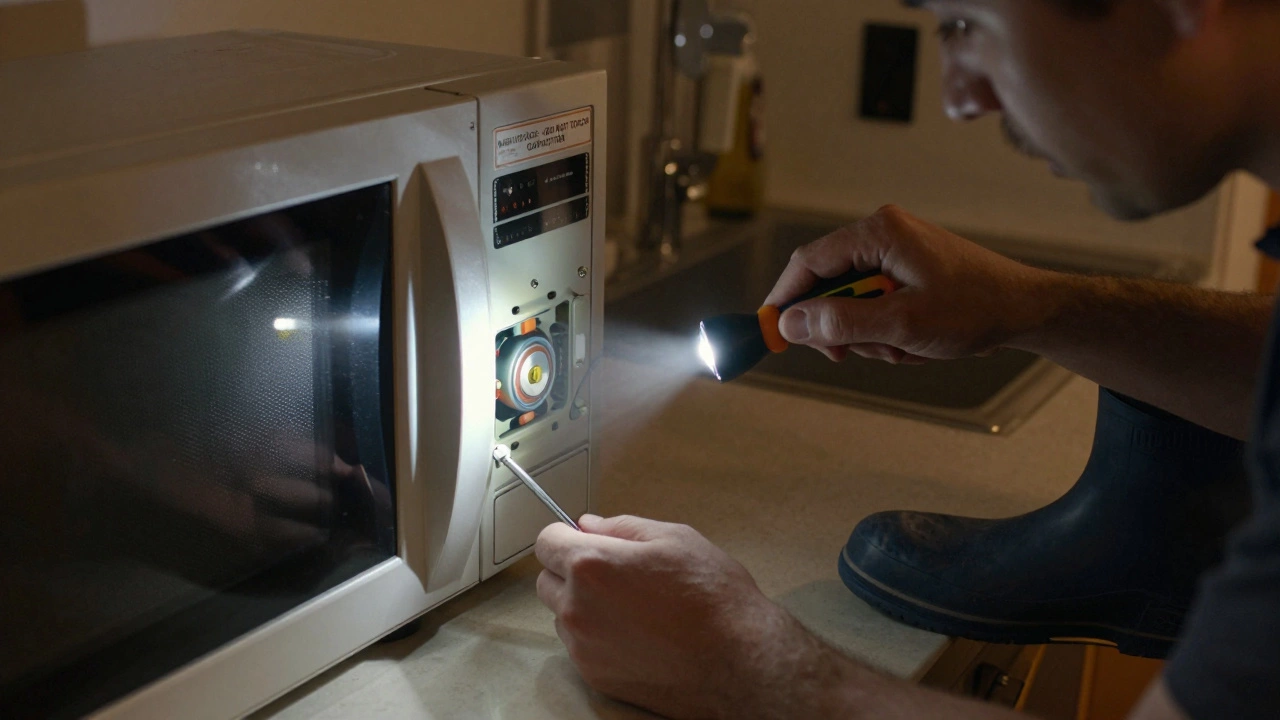
Yes, you can do this yourself - if you’re careful. But microwaves store high-voltage electricity even when unplugged. The capacitor can hold a lethal charge for days. That’s why most people avoid DIY.
If you’re going to try it:
- Unplug the microwave and leave it unplugged for at least 24 hours.
- Use insulated screwdrivers and wear rubber-soled shoes.
- Never touch the capacitor - it looks like a small metal can with wires sticking out.
- Use a multimeter to test the fuse before replacing it. A blown fuse reads as open circuit (no continuity).
- Replace it with the exact same type and rating. Don’t guess.
YouTube has dozens of videos showing step-by-step fuse replacement for common models like Panasonic, GE, Whirlpool, and Samsung. Look for videos with over 100,000 views - those are usually reliable.
When It’s Not Worth Fixing
Here’s the hard truth: if your microwave is older than 7 years, and the repair cost is more than half the price of a new one, walk away.
New countertop microwaves start at $60. Mid-range models with inverter tech and smart features cost $120-$200. If a technician says you need a new magnetron ($100) plus labor ($120), you’re looking at $220. That’s more than a brand-new microwave with a 1-year warranty.
Also, if the fuse blew twice in 6 months, something else is wrong. Replacing the fuse again won’t fix the root cause. That’s a sign the magnetron, diode, or capacitor is failing. At that point, it’s a money pit.
What to Do Before Calling a Technician
Don’t rush to call someone. Try this first:
- Check if the microwave has power. Plug something else into the same outlet.
- Look at the circuit breaker. A tripped breaker can mimic a blown fuse.
- Listen for the turntable motor. If it spins but nothing heats, the fuse might be fine - the magnetron is the issue.
- Smell the inside. A burnt odor means something overheated. That’s a clue.
If it’s dead silent, no lights, no sound - that’s classic fuse territory.
Why Repair Shops Charge So Much
Most appliance repair companies don’t make money on fuse replacements. They lose money on them. That’s why they’ll try to upsell you on a new microwave.
Here’s how it works: they drive to your house, spend 30 minutes testing, find the fuse, and replace it. If they charge $120, they make $100 after parts. But if they sell you a new microwave for $180, they get a $50 commission. That’s why they’ll say, “It’s not worth fixing.”
Some honest technicians will tell you the truth. But you have to ask: “Is this just the fuse? Or is there another part failing?” If they hesitate, they’re probably trying to upsell.
How Long Does a Replacement Last?
A properly replaced fuse should last as long as the microwave - 8 to 12 years. But if the underlying problem isn’t fixed, it’ll blow again. That’s why testing the rest of the system matters.
After replacing the fuse, run the microwave for 5 minutes on high. If it heats properly and doesn’t shut off, you’re good. If it cuts out after 2 minutes, the thermal fuse might be weak, or the cooling fan isn’t working.
Keep the vents clean. Dust and grease buildup cause overheating. Wipe them out every 3 months with a damp cloth. It’s the easiest way to prevent future fuse failures.
Final Verdict: Should You Repair It?
Here’s your decision tree:
- Under 7 years old? → Fix it. Even if it’s $150, it’s cheaper than a new one.
- Over 7 years old? → Replace it unless you’re handy and the part costs under $15.
- Blown fuse twice? → Replace the microwave. Something else is failing.
- Want to save money? → Do it yourself. Spend $10 on a fuse and 2 hours of your time.
Most people who fix their own microwave fuse never need to call a technician again. It’s one of the few appliance repairs that’s safe, cheap, and satisfying. You don’t need to be an electrician. Just patient, careful, and willing to follow instructions.