Extractor Fan Repair or Replacement Calculator
Fan Condition Assessment
Recommendation
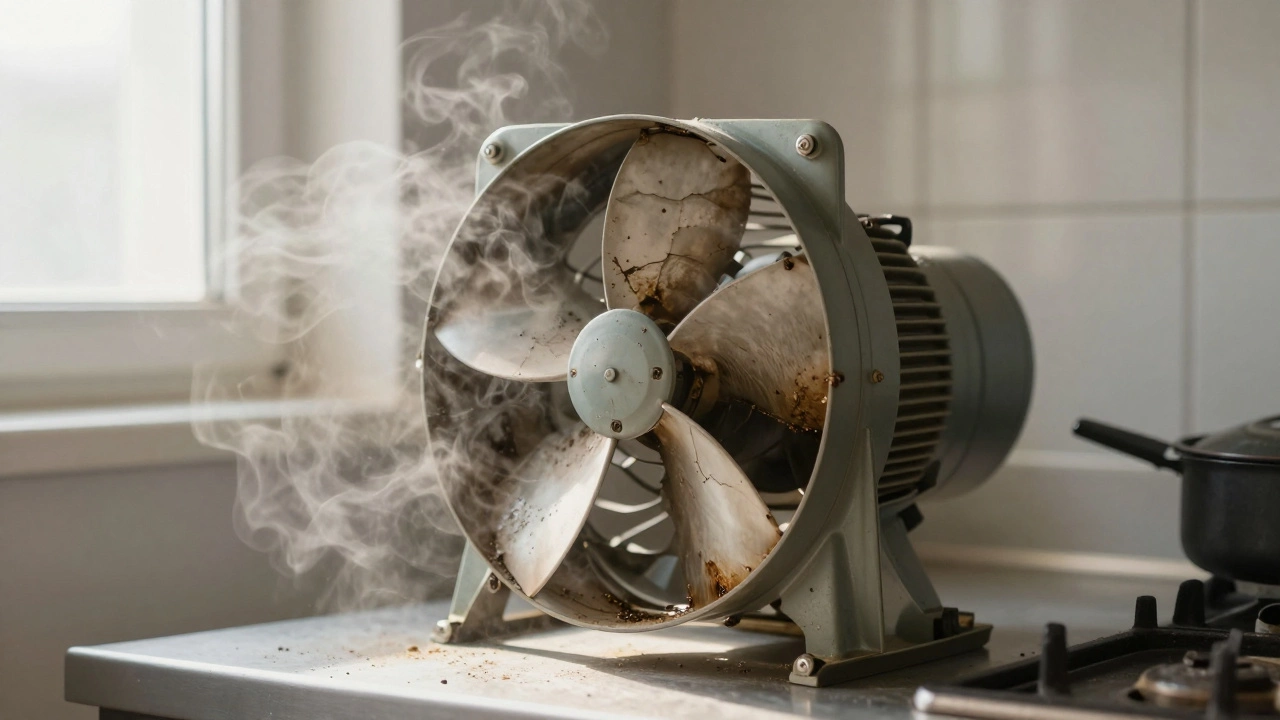
Extractor fans don’t just stop working one day out of nowhere. They fade. Slowly. Like an old car that starts rattling before it finally quits. If you’ve noticed your kitchen fan getting louder, spinning slower, or not pulling out steam like it used to, you’re not imagining it. Extractor fans do wear out-and knowing when and why helps you avoid bigger problems down the line.
How Long Do Extractor Fans Last?
Most extractor fans, if used daily and maintained lightly, last between 8 to 12 years. That’s the average. Some cheap models, especially those bundled with new kitchens, start failing after 5 years. Higher-end units with brushless motors can stretch past 15 years. But lifespan isn’t just about age-it’s about use. A fan in a busy home with daily frying, boiling, and baking wears out faster than one in a quiet apartment that only runs during occasional cooking.The motor is the first thing to go. It’s under constant stress. Every time you turn the fan on, the bearings heat up, the windings strain, and dust builds up inside. Over time, that dust turns into a sticky paste, especially if grease gets sucked in. That’s why you hear the fan whining or grinding-it’s not just old. It’s clogged.
Signs Your Extractor Fan Is Wearing Out
You don’t need a technician to tell you it’s failing. Look for these five clear signs:- Slower airflow - Steam lingers after cooking. You can still smell onions from last night’s dinner.
- Noise changes - A quiet hum becomes a buzz, rattle, or screech. That’s bearing wear or a warped blade.
- Intermittent operation - The fan turns on, then shuts off after a few minutes. Could be a failing capacitor or overheating motor.
- Visible grease buildup - If you can see a yellowish film on the filter or inside the housing, grease is clogging airflow and straining the motor.
- Electrical issues - Tripping breakers, flickering lights when the fan runs, or a burning smell. That’s not normal. That’s wiring or motor insulation breaking down.
One real-world example: A customer in Dunedin brought in a 10-year-old extractor fan that had been running non-stop during renovations. The motor was still spinning, but the airflow was barely there. Inside, the bearings were coated in hardened grease. Replacing the motor cost $180. Replacing the whole unit? $420. They chose the repair.
What Parts Wear Out the Fastest?
Not everything in an extractor fan fails at once. Here’s the order things typically break down:- Motor bearings - The most common failure point. They dry out, get dirty, then seize. No amount of cleaning fixes this.
- Capacitor - A small cylindrical part that helps the motor start. When it fails, the fan hums but doesn’t spin, or spins slowly.
- Blades - Plastic blades warp from heat and grease. Metal blades get unbalanced. Either way, vibration increases.
- Wiring and connections - Heat and moisture degrade insulation over time. Loose wires cause arcing, which smells like burnt plastic.
- Filters - These don’t break, but they clog. A clogged filter forces the motor to work harder, speeding up wear on everything else.
Replacing filters every 3-6 months cuts motor strain by up to 40%. That’s not a myth. It’s physics. More resistance = more heat = shorter life.
Can You Fix a Worn-Out Extractor Fan?
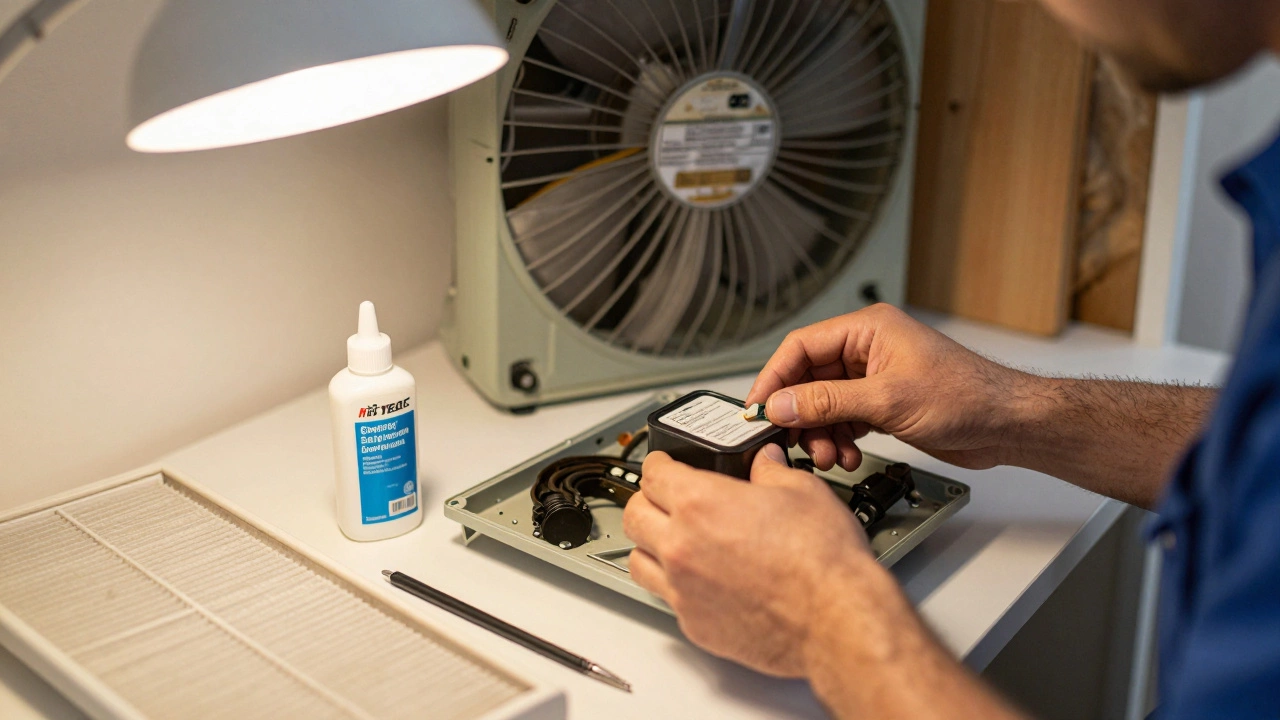
Yes-but only if the motor is still intact. Most repairs are simple:- Replace the capacitor - Costs $10-$20. Takes 20 minutes. Often brings a dead fan back to life.
- Clean and lubricate bearings - If the fan is less than 8 years old, a deep clean with isopropyl alcohol and a drop of food-safe lubricant can extend life by 2-3 years.
- Swap the motor - If the motor is dead but the housing and ducting are fine, a replacement motor costs $80-$150. Much cheaper than a whole new unit.
- Replace blades or filters - Easy DIY. Filters are $15. Blades are $30-$60 depending on model.
But if the housing is cracked, the ducting is rusted, or the fan is over 12 years old? It’s time to replace it. You’re not saving money by repairing-it’s just delaying the inevitable.
Why Replacement Is Often Better Than Repair
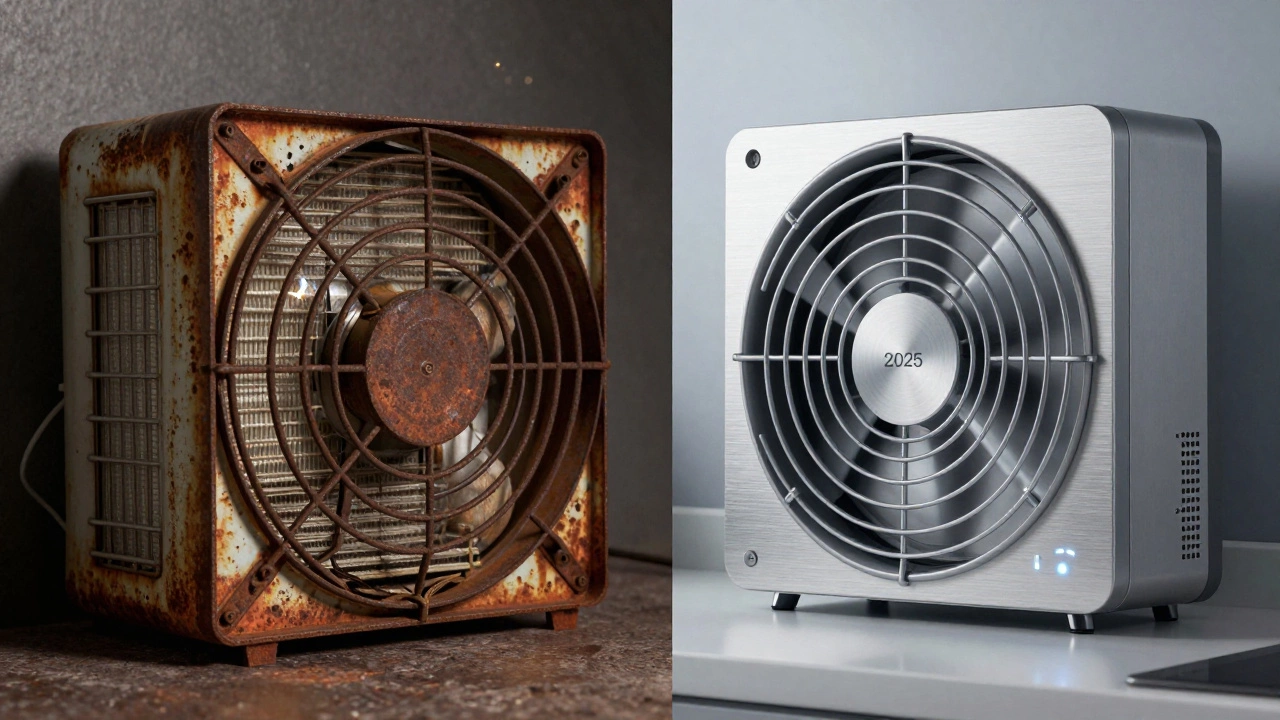
Modern extractor fans aren’t just quieter. They’re smarter. New models come with:- Brushless DC motors - Last longer, use less power, and run cooler.
- Auto-sensing humidity - Turns on when steam rises, turns off when it clears.
- Smart filters - Washable, reusable, and designed to trap grease better.
- Lower noise ratings - Under 40 decibels, compared to 60+ on older units.
One 2025 model tested in New Zealand homes reduced kitchen humidity by 70% faster than units from 2015. That’s not marketing-it’s measured data. And the energy savings? Up to 30% less electricity per year. If your fan is over 10 years old, replacing it pays for itself in 3-4 years.
How to Extend Your Fan’s Life
You can’t stop wear, but you can slow it down:- Wash filters monthly - Soak in hot soapy water, rinse, dry completely. Don’t just vacuum them.
- Check the ducting every 6 months - Make sure it’s not kinked, crushed, or blocked by bird nests.
- Don’t run it on high all the time - Use low or medium unless you’re searing steaks.
- Turn it on before you start cooking - Lets the fan clear air before grease and steam hit it.
- Keep the area around it clean - Grease on the wall near the fan? That’s a sign it’s pulling more than it should.
One homeowner in Dunedin cleaned her filters religiously and replaced the capacitor once. Her fan lasted 17 years. That’s rare-but it’s possible.
When to Call a Pro
You don’t need to be an electrician to handle filters or blades. But if you see any of these, stop and call someone:- Smoke or burning smell from the fan
- Sparks or flickering lights when it turns on
- Water leaking from the unit
- It won’t turn on at all, even after checking the fuse
These aren’t DIY fixes. They’re safety risks. A faulty extractor fan can overheat and ignite grease buildup. It’s happened. More than once.
Final Thought: It’s Not If-It’s When
Every extractor fan wears out. It’s not a matter of if. It’s a matter of when. The smart move isn’t waiting for it to die. It’s tracking its age, listening to its sounds, and cleaning it regularly. When it starts to struggle, you’ll know. And if you act early, you can save money, avoid mess, and keep your kitchen air clean.How long does an extractor fan typically last?
Most extractor fans last between 8 and 12 years with regular use. Cheaper models may fail after 5 years, while high-end units with brushless motors can last 15 years or more. Lifespan depends heavily on how often you cook, how well you clean the filters, and whether the fan is properly ventilated.
Can I repair a worn-out extractor fan, or should I replace it?
You can often repair a fan if it’s under 10 years old and the housing is intact. Common fixes include replacing the capacitor ($10-$20), cleaning the motor bearings, or swapping the blades. But if the motor itself is dead, the housing is cracked, or the unit is over 12 years old, replacement is usually more cost-effective and safer than repair.
What causes an extractor fan to stop working?
The most common causes are worn motor bearings, a failed capacitor, clogged grease filters, or damaged wiring. Grease buildup forces the motor to work harder, which overheats and wears out components faster. In older units, the insulation on wires breaks down from heat and moisture, leading to electrical faults.
How often should I clean my extractor fan filter?
Clean the filter every month if you cook daily, especially with oil or frying. For light cooking, every 2-3 months is enough. Wash it in hot soapy water, rinse thoroughly, and let it dry completely before reinstalling. A clogged filter can cut airflow by half and double the strain on the motor.
Is it worth upgrading to a new extractor fan?
Yes-if your current fan is over 10 years old. Modern fans use 30% less energy, run quieter (under 40 decibels), and often have automatic humidity sensors that turn on only when needed. They also trap grease better, reducing maintenance. The upfront cost pays for itself in lower bills and fewer repairs within 3-4 years.